UN Envoy Says Violence Rate Drops in Yemen amid Persisting Conflicts on Certain Fronts

UN Envoy Says Violence Rate Drops in Yemen amid Persisting Conflicts on Certain Fronts
TT

UN Envoy Says Violence Rate Drops in Yemen amid Persisting Conflicts on Certain Fronts

UN Envoy Says Violence Rate Drops in Yemen amid Persisting Conflicts on Certain Fronts

The UN Secretary-General's envoy to Yemen, Hans Grundberg, announced that hostilities on the frontlines have not returned to pre-truce levels, despite his assertion that fighting has continued on some frontlines.

In his briefing to the Security Council on Wednesday, the UN envoy said that all parties to the conflict are willing to seek solutions.

However, intermittent fighting and exchanges of fire have continued on some frontlines, particularly in Taiz, Marib, Dhale, Hodeida, Shabwa, and Saada, said Grundberg, noting that there have been public threats to return to war, without indicating who is making those threats.

The UN envoy renewed his appeal to the two parties to release all detainees based on the "all-for-all principle."

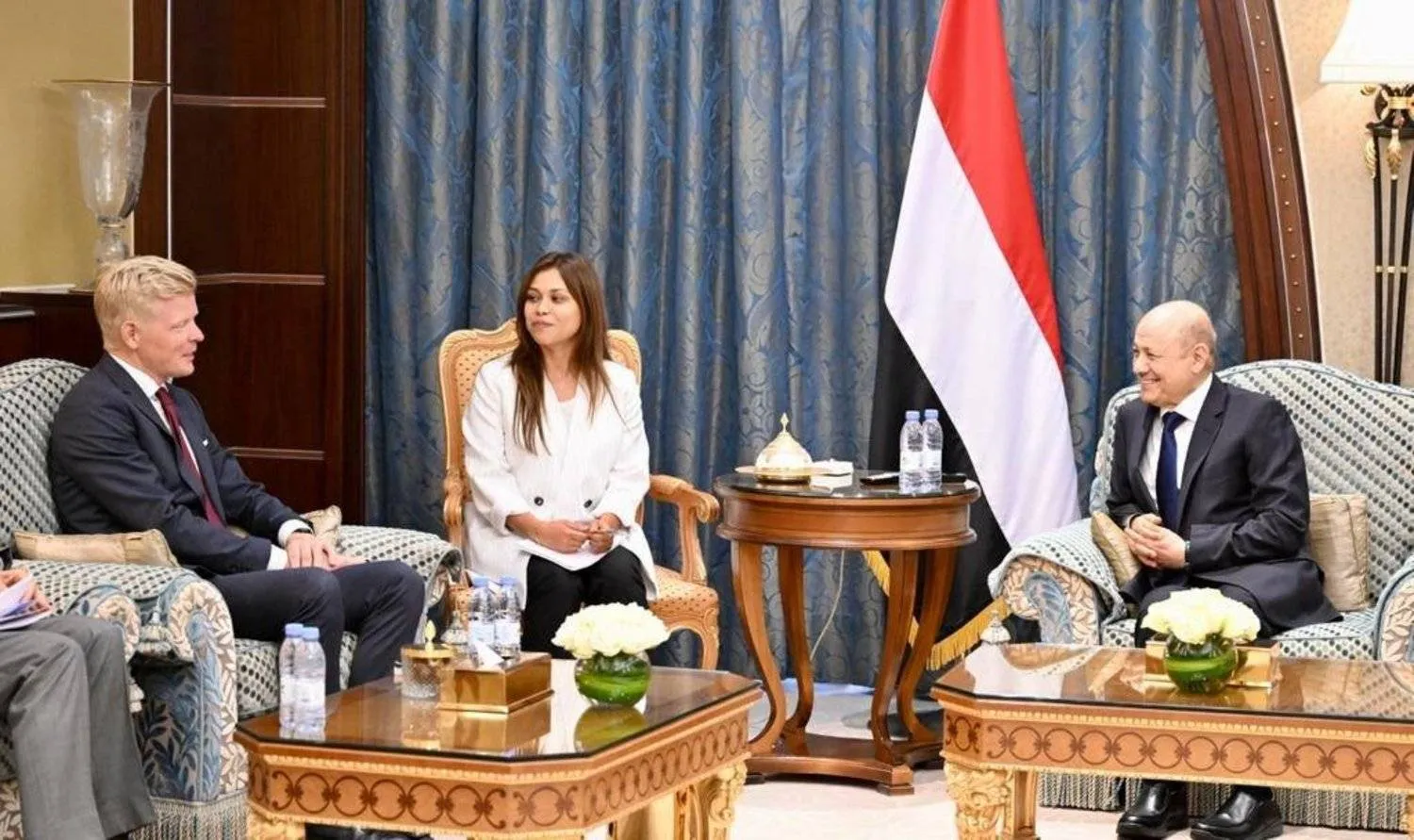
He reviewed his recent mediation efforts with the Yemeni parties and regional countries, including his visit last week to Riyadh, where he met with the head of the Yemeni Presidential Leadership Council, Rashad al-Alimi, and several senior Yemeni and Saudi officials.

Grundberg also traveled to Muscat to hold meetings with Houthi representatives and Omani officials to establish "a clear agreement" on the way forward that includes restarting an inclusive Yemeni political process.

"There have been public threats to return to war. This rhetoric is not conducive to maintaining a fruitful mediation environment," warned the envoy, calling on the parties to refrain from "escalatory rhetoric and to continue to use and build on dialogue channels established under the truce."

- No improvement without economy

Grundberg described the Yemeni economic situation as "increasingly dire," noting that both sides continue to "resort to antagonistic economic measures to weaken the other side" and warned that "these tactics primarily hurt civilians."

He praised Saudi Arabia's pledge of $1.2 billion earlier this month, saying it was a "welcome step," noting that "there will be no lasting improvement in the situation until the parties come together to discuss and agree on sustainable solutions to Yemen's economic and fiscal challenges."

He recalled the siege imposed on Taiz Governorate eight years ago, stressing that there was a "dire need for road openings in Taiz and other governorates to facilitate the freedom of movement of Yemenis who have faced restrictions to accessing their basic needs and engaging in economic opportunities."

Grundberg expressed concern about reports that activities of violent extremists have recently increased in the Abyan and Shabwa governorates, explaining that "political and economic instability are fertile grounds for violent extremist groups."

"The fragility of the situation and its impact on Yemeni women and men highlight the urgent need to reach a consensus on the way forward. My Office is working to convene the parties to address some of their immediate priorities to build confidence and move toward an inclusive and sustainable political settlement."

He emphasized that the Office of the Special Envoy of the Secretary-General for Yemen (OSESGY) "continues to explore options" with the parties to address the needs of all Yemenis, including regular public sector salary payments nationwide, improved service provision, affordable essential commodities, a functional banking system, and facilitating commercial activity.

The OSESGY continues engaging "with all parties on the technical elements required for a sustainable nationwide ceasefire."

The UN envoy urged the parties to "progress towards a more formal ceasefire."

He believed the comprehensive political process under the UN auspices should "provide a platform for a plurality of Yemenis from across the country to collectively discuss and determine their own future."

Grundberg reiterated that the continued unity and steadfast support of this Council and the international community, more broadly, have been a pivotal asset for his mediation efforts.

He cited the recent progress on FSO Safer, which showed how concerted international support and multilateral cooperation can bring tangible results.

"The removal of the oil from the FSO Safer to a new vessel has prevented an environmental and humanitarian catastrophe."


UN Experts Urge Israel to Protect West Bank Olive Farmers

Palestinian volunteers douse an olive tree set on fire by Israeli settlers, near the village of Turmus Ayya, north of Ramallah, in the Israeli-occupied West Bank on October 16, 2026.  Ahmad Gharabli, AFP
Palestinian volunteers douse an olive tree set on fire by Israeli settlers, near the village of Turmus Ayya, north of Ramallah, in the Israeli-occupied West Bank on October 16, 2026. Ahmad Gharabli, AFP
TT

UN Experts Urge Israel to Protect West Bank Olive Farmers

Palestinian volunteers douse an olive tree set on fire by Israeli settlers, near the village of Turmus Ayya, north of Ramallah, in the Israeli-occupied West Bank on October 16, 2026.  Ahmad Gharabli, AFP
Palestinian volunteers douse an olive tree set on fire by Israeli settlers, near the village of Turmus Ayya, north of Ramallah, in the Israeli-occupied West Bank on October 16, 2026. Ahmad Gharabli, AFP

UN rights experts on Monday called on Israel to protect Palestinian farmers in the West Bank as settler attacks worsen with the annual olive harvest.

"Palestinian farmers must be protected and able to access their land safely. Yet, year after year, the violence, destruction and restrictions intensify," the experts said in a statement.

"The olive harvest should be a time when farmers can enjoy, in safety and dignity, the food and livelihoods their nature and land provide, not another season of fear, loss, violence and destruction."

The experts urged Israel to ensure that its forces protect Palestinian farmers from settler attacks and refrain from interference with their access to land. They also urged the international community to "exercise maximum pressure to protect Palestinian civilians", reported AFP.

Israel has occupied the West Bank since 1967. About 500,000 Israelis live in the West Bank, alongside three million Palestinians.

Violence is surging in the territory ahead of Israel's bitterly fought October 27 elections. The vote coincides with Palestinians' annual olive harvest which has been repeatedly disrupted by Israeli settlers as Prime Minister Benjamin Netanyahu seeks to shore up his pro-settlement right-wing base.

According to the UN humanitarian agency OCHA, 178 settler attacks related to the 2025 olive harvest were recorded in the West Bank, affecting 88 Palestinian communities.

More than 6,000 trees and saplings were "vandalised", it said -- nearly double the number in 2024 and the highest figure in six years.

"The olive harvest is an essential source of food, income and livelihood for thousands of Palestinian families," the UN experts said.

"Olive trees take years to mature and can sustain families for generations. Their destruction deprives families of far more than a single harvest: it undermines local food systems, cultural practices and ways of life, as well as the right to food and the food sovereignty of Palestinian communities."

The seven signatories to the statement include Sofia Monsalve Suarez, special rapporteur on the right to food; and Francesca Albanese, special rapporteur on human rights in the occupied Palestinian territories.

The special rapporteurs are independent experts mandated by the Human Rights Council. They do not speak for the United Nations itself.


UK Urges Firms Not to Take Part in E1 Settlement Tender or Risk Sanctions

Israeli settlers (foreground) harvesting olives confront a Palestinian family outside the settlement of Alei Zahav, near the Palestinian town of Kafr al-Dik in the Israeli-occupied West Bank, on October 13, 2026. (AFP)
TT

UK Urges Firms Not to Take Part in E1 Settlement Tender or Risk Sanctions

Israeli settlers (foreground) harvesting olives confront a Palestinian family outside the settlement of Alei Zahav, near the Palestinian town of Kafr al-Dik in the Israeli-occupied West Bank, on October 13, 2026. (AFP)

British foreign minister Ed Miliband on Monday urged companies and individuals not to proceed with bids for the E1 West Bank settlement project on Monday, warning those involved in the ‌construction of ‌illegal settlements could face ‌sanctions.

"We ⁠urge businesses and ⁠individuals not to proceed with bids for E1 construction tenders," Miliband said in a statement. "They should be ⁠aware of legal ‌and ‌reputational consequences, including the risk ‌of involving themselves in ‌serious breaches of international law."

The E1 project would bisect the Israeli-occupied West Bank and ‌cut it off from East Jerusalem, fragmenting ⁠the ⁠land Palestinians hope will form the heart of a state.

Many Western states and campaign groups have opposed the project over concerns that it could undermine a future peace deal with the Palestinians.


Syrian State Media: Armed Groups Ban UN Delegation from Entering Sweida

Members of the National Guard affiliated with Sheikh Hikmat al-Hijri in Sweida (File photo: Sweida 24). 
TT

Syrian State Media: Armed Groups Ban UN Delegation from Entering Sweida

Members of the National Guard affiliated with Sheikh Hikmat al-Hijri in Sweida (File photo: Sweida 24). 

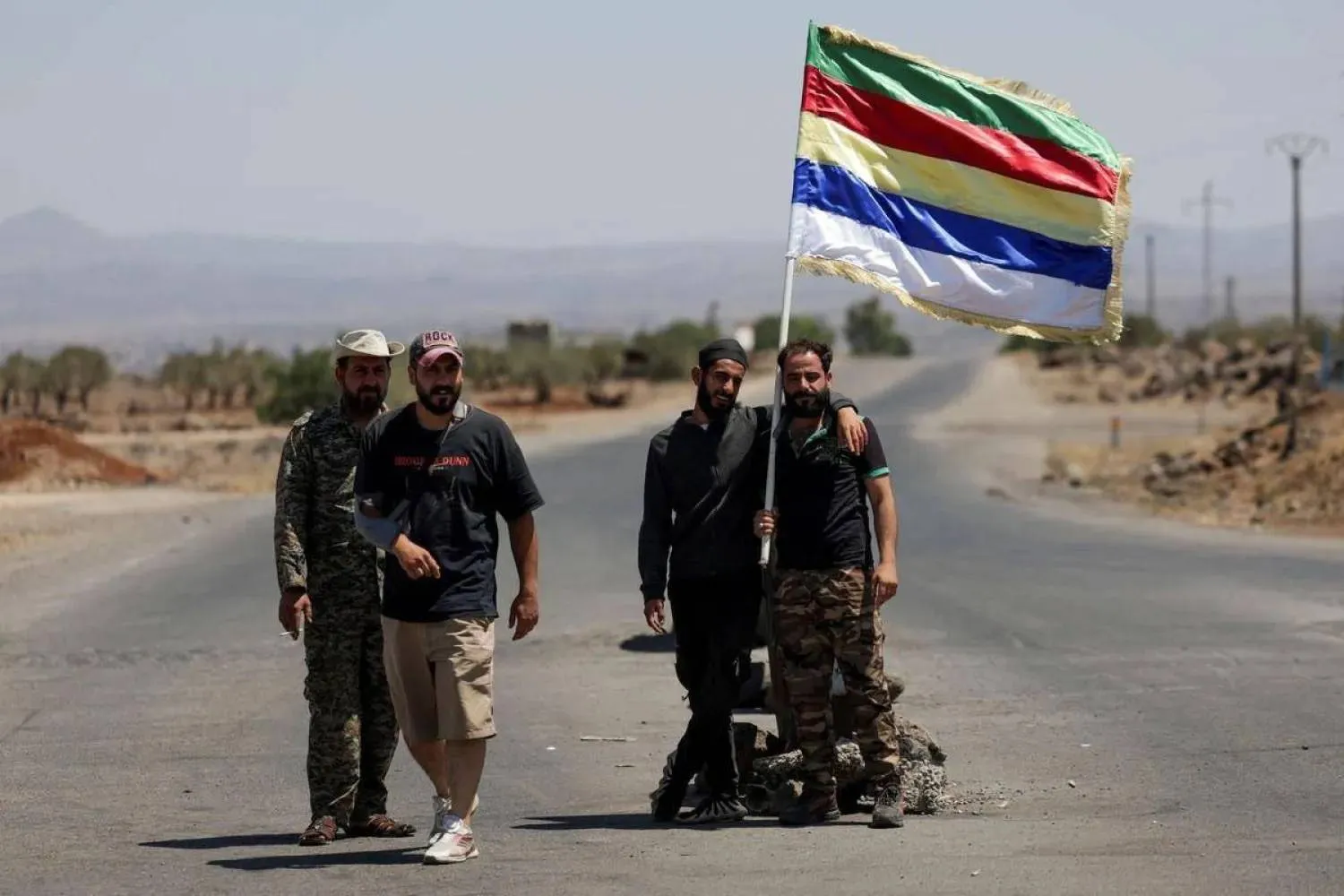
Groups described by Syrian state media as operating outside the law prevented a joint UN humanitarian delegation from entering the southern Syrian city of Sweida on Sunday, citing a lack of coordination with them, according to Syria’s Al-Ikhbariya television channel.

The delegation included representatives of the UN Office for the Coordination of Humanitarian Affairs (OCHA) and international organizations. Its visit had been coordinated with the Sweida branch of the Syrian Arab Red Crescent, whose team was expected to accompany the delegation on field visits to Sweida city, Shahba and the village of Ara.

Al-Ikhbariya reported that the groups stopped the delegation at the Umm al-Zeitoun checkpoint for two to three hours before informing its members that entry was prohibited.

The delegation had earlier passed through the Al-Matouna checkpoint, operated by the Sweida Security Directorate.

The broadcaster also recalled that groups affiliated with Druze spiritual leader Sheikh Hikmat al-Hijri had blocked commercial trucks carrying essential goods and fuel from entering Sweida province on September 10.

According to Al-Ikhbariya’s correspondent at the time, the restrictions on commercial convoys coincided with the groups preventing approximately 12,000 students from reaching examination centers to sit special make-up exams for students in Sweida.