Lebanon: Toxic Agricultural Pesticides Poison People’s Food

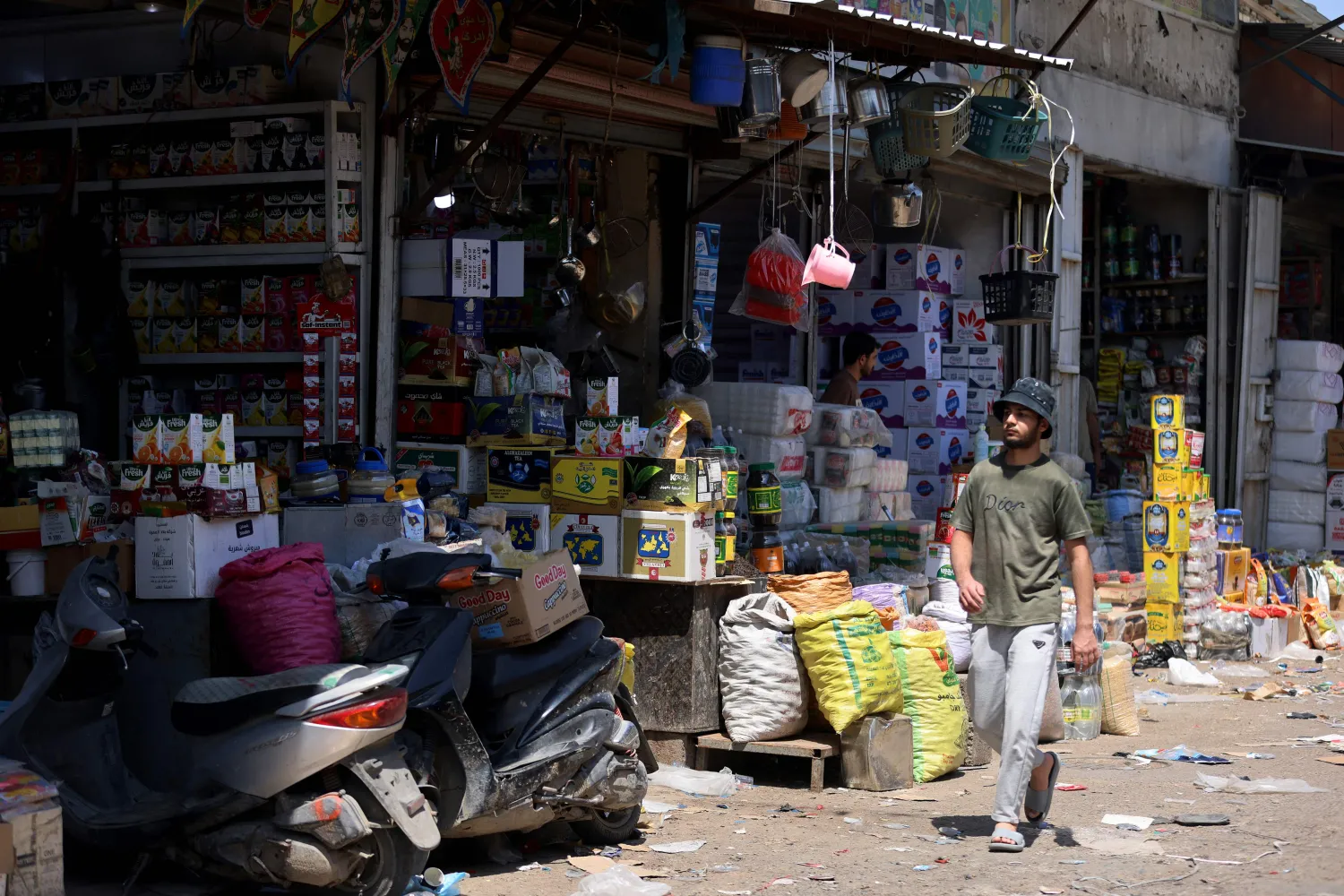
Lebanese farmers in the Bekaa Valley (NNA)
TT

Lebanon: Toxic Agricultural Pesticides Poison People’s Food

Lebanese farmers in the Bekaa Valley (NNA)

Lebanese MP Wael Abu Faour revealed the smuggling of obsolete and carcinogenic agricultural pesticides to Lebanon, either across the Syrian border or through the Beirut port, pointing to a major smuggler of Syrian nationality and his Lebanese partners in a number of regions.

In remarks to Asharq Al-Awsat, Abu Faour said that based on this information, he will report on Thursday the names of involved persons and companies to the Public Prosecution Court of Cassation.

He added that several means are used to smuggle these pesticides, whether “in barrels, through the port of Beirut, disguised as cleaning materials, to be repacked and sold to farmers later.”

Smugglers also used fraudulent approvals by some ministries, especially the Ministry of Health, as well as fake invoices, to suggest the dangerous substances are cleaning products for warehouses and homes, he noted.

“These pesticides are prohibited in most countries of the world, and in Lebanon, based on the decisions of the Ministries of Agriculture and Health,” the former health minister underlined, adding that those were being used by farmers, sometimes “out of ignorance, while others are aware of their danger but still use them out of lack of conscience.”

Many of the toxic products have been the subject of warnings by the World Health Organization and Food and Agriculture Organization because of their links to cancer and other life-threatening diseases, as well as poisoning and childhood illnesses.

Abu Faour stressed that the Lebanese were struggling because of the government’s inability to secure medicines, including cancer treatments.

He urged caretaker Prime Minister Najib Mikati to hold an emergency meeting with the concerned ministers, namely the ministers of health, environment, agriculture, interior and justice, to prevent, at a minimum, harm to Lebanese citizens, calling for quick measures by all security services to resolve this matter.


Israel Summons Italy Envoy Over Comments on Lebanon Attacks

A handout photo made available by the Lebanese Presidency press office shows Italy's Minister for Foreign Affairs Antonio Tajani speaking during a news conference after a meeting with Lebanese President Joseph Aoun (not pictured) at the Presidential Palace in Baabda, east of Beirut, Lebanon, 13 April 2026. (EPA/Lebanese Presidency)
TT

Israel Summons Italy Envoy Over Comments on Lebanon Attacks

A handout photo made available by the Lebanese Presidency press office shows Italy's Minister for Foreign Affairs Antonio Tajani speaking during a news conference after a meeting with Lebanese President Joseph Aoun (not pictured) at the Presidential Palace in Baabda, east of Beirut, Lebanon, 13 April 2026. (EPA/Lebanese Presidency)

Israel summoned Italy's ambassador Monday to protest after Foreign Minister Antonio Tajani condemned Israel's "unacceptable attacks" on civilians in Lebanon during a visit to Beirut, an Italian diplomatic source said.

Tajani, a senior member of Prime Minister Giorgia Meloni's government, visited Beirut on Monday for talks with Lebanese President Joseph Aoun and Foreign Minister Youssef Raggi.

Tajani wrote on X that he was there to "convey Italy's solidarity following Israel's unacceptable attacks against the civilian population".

He called for dialogue between Lebanon and Israel and a "necessary and lasting ceasefire" adding: "Another escalation like in Gaza must be avoided at all costs."

Lebanon was pulled into the Middle East war when Iran-backed group Hezbollah fired rockets at Israel on March 2, days after the opening salvo of US-Israeli strikes killed Iran's supreme leader Ali Khamenei.

Israel responded with massive strikes and a ground invasion.

Israel's military said Monday that a massive wave of strikes in Lebanon last week killed five Hezbollah commanders, as well as more than 250 of the Iran-backed group's fighters.

Italy's government summoned Israel's ambassador last week after saying Israeli forces fired warning shots at a convoy of Italian UN peacekeepers in Lebanon, damaging at least one vehicle but causing no injuries.


Israeli Troops Fire Tear Gas at Palestinian Schoolchildren in West Bank

 13 April 2026, Palestinian Territories, Hebron: Members of Red Crescent surround Palestinian children from Khirbet Umm al-Khair after Israeli settlers blocked the only road to their schools. (dpa)
13 April 2026, Palestinian Territories, Hebron: Members of Red Crescent surround Palestinian children from Khirbet Umm al-Khair after Israeli settlers blocked the only road to their schools. (dpa)
TT

Israeli Troops Fire Tear Gas at Palestinian Schoolchildren in West Bank

 13 April 2026, Palestinian Territories, Hebron: Members of Red Crescent surround Palestinian children from Khirbet Umm al-Khair after Israeli settlers blocked the only road to their schools. (dpa)
13 April 2026, Palestinian Territories, Hebron: Members of Red Crescent surround Palestinian children from Khirbet Umm al-Khair after Israeli settlers blocked the only road to their schools. (dpa)

Israeli forces fired tear gas at Palestinian schoolchildren staging a sit-in on Monday in the occupied West Bank, AFP footage showed, after settlers blocked access to their school.

The Israeli military confirmed to AFP it had dispersed an "unusual gathering", but did not specify whether its troops had fired tear gas at the children on the first day of class since the start of the Iran war.

The incident took place at Umm al-Khair, a small village in the southern West Bank region of Masafer Yatta.

Schoolchildren there had been due back in class on Monday for the first time in more than 40 days, after lessons were suspended following the outbreak of the Middle East war on February 28.

A group of schoolchildren and Palestinian residents had gathered near a barbed wire fence erected by Israeli settlers, which blocked access to the school, an AFP journalist reported.

Schoolchildren and some local adults were holding an open-air class as a sit-in to demand access when troops fired the tear gas, witnesses said.

"We were sitting and they threw a grenade (tear gas canister) at us. I got scared and started screaming and ran away," 12-year-old Sarah al-Hathaleen told AFP.

"I started crying. A woman hugged me and stayed with me. We were very scared."

Bassam Jabr, director of education for the Masafer Yatta area, confirmed the children were staging a sit-in at the time of the incident.

"Settlers are trying to tighten the noose on us in every way. One of these methods is cutting off the road for school students and expanding the settlement," Jabr said of settlers from the nearby Carmel settlement whose residents erected the fence.

"Sadly, there are no solutions. We will continue this sit-in today and tomorrow until we find a solution so the students can return to their schools," he said.

Israel's military said troops had been dispatched to the area.

"Soldiers were dispatched to the area of Umm Al-Khair due to reports of an unusual gathering of Palestinians in the area," the military told AFP.

"The gathering was dispersed and no injuries were reported," it said, without specifying whether tear gas had been fired.

AFP footage showed canisters being fired, with children screaming and fleeing.

"Last night we were excited for school today. The Israelis came and closed the road with barbed wire... we want to be back in school," said 11-year-old Rashid al-Hathaleen.

The Masafer Yatta region is a known hotspot for settler violence and Palestinian home demolitions.

It was in Umm al-Khair village that Palestinian activist Awdah Hathaleen was killed by a settler in August 2025.

Settler violence has also surged across the West Bank since the outbreak of the Iran war.

Excluding east Jerusalem, more than 500,000 Israelis now live in the West Bank in settlements that are illegal under international law, among some three million Palestinians.

Israel has occupied the West Bank since 1967.


Israel Army Ups Hezbollah Death Toll from April 8 Strikes to Over 250

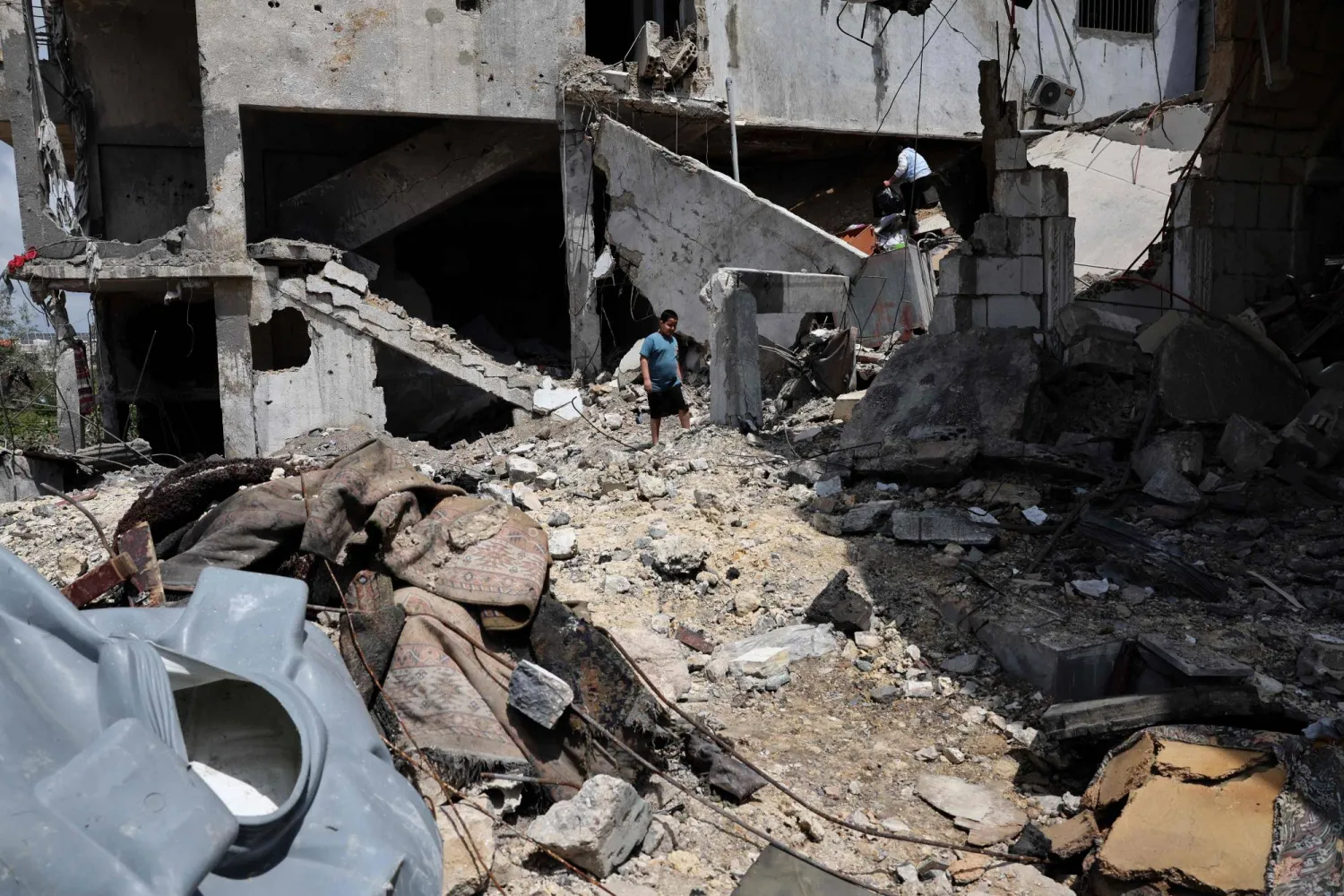
 12 April 2026, Lebanon, Beirut: People and civil defense workers search for human remains amid the debris of a collapsed building following an Israeli air strike at the Beirut seafront. (dpa)
12 April 2026, Lebanon, Beirut: People and civil defense workers search for human remains amid the debris of a collapsed building following an Israeli air strike at the Beirut seafront. (dpa)
TT

Israel Army Ups Hezbollah Death Toll from April 8 Strikes to Over 250

 12 April 2026, Lebanon, Beirut: People and civil defense workers search for human remains amid the debris of a collapsed building following an Israeli air strike at the Beirut seafront. (dpa)
12 April 2026, Lebanon, Beirut: People and civil defense workers search for human remains amid the debris of a collapsed building following an Israeli air strike at the Beirut seafront. (dpa)

Israel's military said Monday that a massive wave of strikes in Lebanon last week killed five Hezbollah commanders, as well as more than 250 of the Iran-backed group's fighters.

The Lebanese health ministry has said Wednesday's attacks killed more than 350 people in total and wounded more than 1,200.

Israel had previously put the number of Hezbollah members killed at around 180.

"During the largest strike conducted in Lebanon, more than 250 Hezbollah terrorists and commanders were eliminated" across the country, including in the country's south, the Bekaa region and Beirut, the military said in its statement Monday.

The military named five commanders killed, including Hassen Nasser, chief of Hezbollah's logistics support headquarters, and Abu Muhammad Habib, deputy commander of the group's missile unit.

The army said Monday that it continued to operate in Lebanon, with troops surrounding the southern town of Bint Jbeil.

Last week's punishing wave of strikes came on the same day as the start of a fragile two-week truce agreed between the US and Iran in the Middle East war, which has killed thousands across the region and plunged the global economy into turmoil.

Also on Monday, Israel's military said it had struck around 150 Hezbollah targets in Lebanon over the past 24 hours. 

"In the past 24 hours, approximately 150 Hezbollah terrorist organization targets were struck in numerous areas across southern Lebanon," the military said, adding that the targets included "military structures, anti-tank missile launch points, and terror command centers". 

Lebanon was pulled into the war when Hezbollah fired rockets at Israel on March 2, days after the opening salvo of US-Israeli strikes killed Iran's supreme leader Ali Khamenei.

Israel responded with massive strikes and a ground invasion.

While Iran and mediator Pakistan had insisted Lebanon was included under the ceasefire, Israel and the US have disputed this.

Israeli and Lebanese officials are set to hold negotiations on Tuesday in Washington.