Air Strike in Khartoum Kills 20 Civilians, Say Activists

A walks past a devastated a market area in al-Fasher, the capital of Sudan's North Darfur state, on September 1, 2023. (AFP)
TT

Air Strike in Khartoum Kills 20 Civilians, Say Activists

A walks past a devastated a market area in al-Fasher, the capital of Sudan's North Darfur state, on September 1, 2023. (AFP)

Residents of Khartoum awoke Sunday to artillery and rocket fire, hours after an air strike in the city's south killed at least 20 civilians including two children, according to Sudanese activists.

"The death toll from the aerial bombardment" in southern Khartoum "has risen to 20 civilian fatalities," according to a statement by the neighborhood's resistance committee. They are among many volunteer groups that used to organize pro-democracy demonstrations and now provide assistance to families caught in the crossfire between the army and paramilitary fighters.

In an earlier statement, they said the victims included two children, and warned that more fatalities went unrecorded, as "their bodies could not be moved to the hospital because they were severely burned or torn to pieces in the bombing".

Since war began between the regular army and the paramilitary Rapid Support Forces on April 15, around 5,000 people have been killed, according to estimates from the Armed Conflict Location & Event Data project.

The Sudanese Armed Forces control the skies and have carried out regular air strikes while RSF fighters dominate the streets of the capital.

Western countries have accused the paramilitaries and allied militias of killings based on ethnicity in the western Darfur region, and the International Criminal Court has opened a new probe into alleged war crimes.

The army has also been accused of abuses, including a July 8 air strike that killed around two dozen civilians.

More than half of Sudan's 48 million people now require humanitarian aid and protection, and six million are "one step away from famine", according to the United Nations.

Despite insecurity, looting and bureaucratic obstacles, the world body says it has been able to get aid to millions of those in need.

The war has internally displaced around 3.8 million people, the UN says, while another million have crossed borders into neighboring countries.

Among the displaced are nearly 2.8 million from Khartoum, according to the International Organization for Migration. That is more than half the capital's pre-war population of around five million.

Those who remain shelter from the crossfire, rationing water and electricity.

In Khartoum, resistance committees have been some of the only sources of relief, helping dig survivors out of the rubble of bombed buildings, braving gunfire on the streets to deliver medicine and documenting atrocities committed by both sides.

Nearly five months in, the violence shows no signs of abating.

Witnesses on Sunday again reported the army targeting RSF positions in northern Khartoum with "artillery and rocket fire".


Egypt, Iran FMs Discuss Regional Developments

Egypt's Foreign Minister Badr Abdelatty speaks during a plenary session of the International Institute for Strategic Studies (IISS) Manama Dialogue 2026 in Manama on October 31, 2026. (AFP)
TT

Egypt, Iran FMs Discuss Regional Developments

Egypt's Foreign Minister Badr Abdelatty speaks during a plenary session of the International Institute for Strategic Studies (IISS) Manama Dialogue 2026 in Manama on October 31, 2026. (AFP)

Egyptian Foreign Minister Badr Abdelatty held telephone talks on Thursday with his Iranian counterpart Abbas Araghchi on the latest regional developments and efforts to ease tensions, reported dpa.

An Egyptian Foreign Ministry spokesman said the ministers exchanged views on the latest developments and concerns over the possibility of renewed military conflict and its impact on regional and international security and stability.

Abdelatty underlined the importance of prioritizing diplomatic solutions and urged all parties to demonstrate the necessary openness to reach a political settlement to the crisis.

He stressed that exercising flexibility and arriving at compromises would serve the interests of all sides and prevent the region from sliding into a new wave of escalation, which could otherwise yield severe political, economic, and humanitarian repercussions for the region and the entire world.


Yemen Warns against Houthis Using Red Sea to Extort Int’l Community

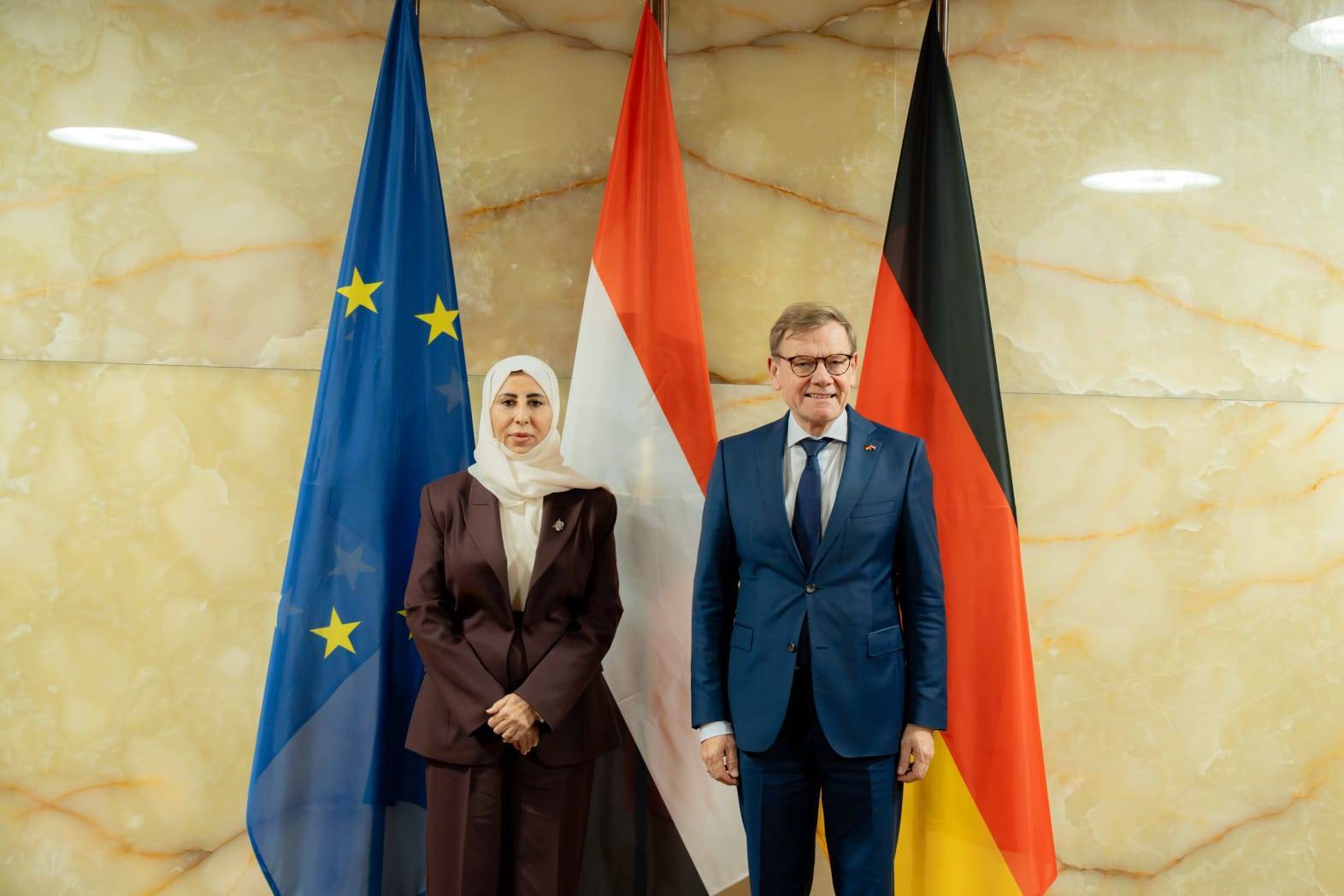
The Yemeni and German delegations meet in Berlin. (Yemeni government media)
TT

Yemen Warns against Houthis Using Red Sea to Extort Int’l Community

The Yemeni and German delegations meet in Berlin. (Yemeni government media)

The Yemeni government warned of an expanding threat posed by the terrorist Houthi militia to regional security and international navigation, citing growing Iranian involvement in managing Houthi military operations and growing ties with terrorist organizations in the Horn of Africa. The warning coincided with continued Houthi attacks on civilians and the tightening of the siege on the city of Taiz.

Yemeni Foreign Minister Afrah Al-Zouba presented these concerns during a series of meetings in Berlin with German officials and experts at think tanks and research centers specialized in Yemeni affairs.

The discussions addressed the developments of the Houthi escalation since last June, as well as its military, humanitarian, and security repercussions on Yemen and the wider region.

Al-Zouba stated that the Houthis intensified their attacks following the landing of an aircraft belonging to Iran's Mahan Air, which is linked to the Iranian Revolutionary Guard Corps (IRGC), at Hodeidah airport.

She explained that the plane carried Iranian experts, funds, and advanced weaponry to support Houthi military operations, in direct violation of Yemeni sovereignty and international laws and resolutions.

The escalation reached the west coast and Bab al-Mandeb regions prior to a government deployment under Operation Dawn of Yemen.

Authorities cautioned against renewed efforts by the militia to expand along the west coast, threaten shipping lanes in the Red Sea and Bab al-Mandeb Strait, and leverage maritime corridors to pressure the international community.

Meeting with German Foreign Minister Johann Wadephul, Al-Zouba warned that the Houthi threat extends beyond Yemen's borders, pointing to the militia’s targeting of Saudi territory and international shipping lanes, and the resulting risks to regional security and global energy and food supplies.

Yemeni Foreign Minister Afrah Al-Zouba meets with her German counterpart Johann Wadephul. (Yemeni government media)

She presented the Yemeni government's announcements regarding the participation of experts from the IRGC and Hezbollah in managing Houthi operations, in addition to the group's links with terrorist organizations in the Horn of Africa, chief among them the Somali Al-Shabaab movement.

These ties raise the level of threat to maritime security and regional stability, she warned.

The two sides discussed ways to develop the capabilities of the Yemeni Coast Guard to protect territorial waters and secure international trade routes, while strengthening bilateral consultation and information exchange regarding security developments in Yemen and the region.

Al-Zouba delivered a written letter from Chairman of the Presidential Leadership Council Dr. Rashad Al-Alimi to German Chancellor Friedrich Merz.

The message addressed bilateral relations, regional issues, and the latest updates on the situation in Yemen.

On the humanitarian level, Al-Zouba highlighted the Houthi siege on the city of Taiz, the targeting of civilian and health facilities, and the resulting closure of medical centers, medicine shortages, and lack of safe corridors, warning of catastrophic impacts on civilians.

She detailed the Houthi recruitment of child soldiers, indiscriminate landmine deployment, and the ongoing detention of UN and humanitarian personnel, noting the death of several detainees including UN staff member Mohammed Ibrahim Al-Shami.


Houthis Under Govt Pressure in al-Jawf, Lahj

Yemeni troops hold a position during clashes with Iran-backed Houthis in Yemen's northwestern al-Jawf province on November 2, 2026. (AFP)
TT

Houthis Under Govt Pressure in al-Jawf, Lahj

Yemeni troops hold a position during clashes with Iran-backed Houthis in Yemen's northwestern al-Jawf province on November 2, 2026. (AFP)

Yemeni government forces have advanced to a new phase of offensive operations against the Houthis in al-Jawf and Lahj governorates, according to military developments reflecting the expanding scope of Operation Dawn of Yemen.

The shift to offensive maneuvers coincided with government forces thwarting Houthi attempts to recapture previously lost positions in Marib and Taiz.

In the latest field updates, government forces successfully secured their positions across strategic mountain ranges in eastern Al-Jawf. This follows tactical advances into areas formerly controlled by the terrorist Houthi group.

Military officials said the breakthrough reinforces current positions and establishes the necessary conditions to sustain the advance toward al-Hazm, the governorate's capital.

Armed forces spokesman Majed al-Nuzaili said troops managed to recapture positions from the Houthis in several regions in al-Jawf.

He stressed that the operations will continue to reclaim positions from the group.

Government forces have advanced through the al-Dahidha mountain range, breaching Houthi fortifications and seizing military equipment. Airstrikes and drone operations also targeted Houthi strongholds and weapons depots across several locations.

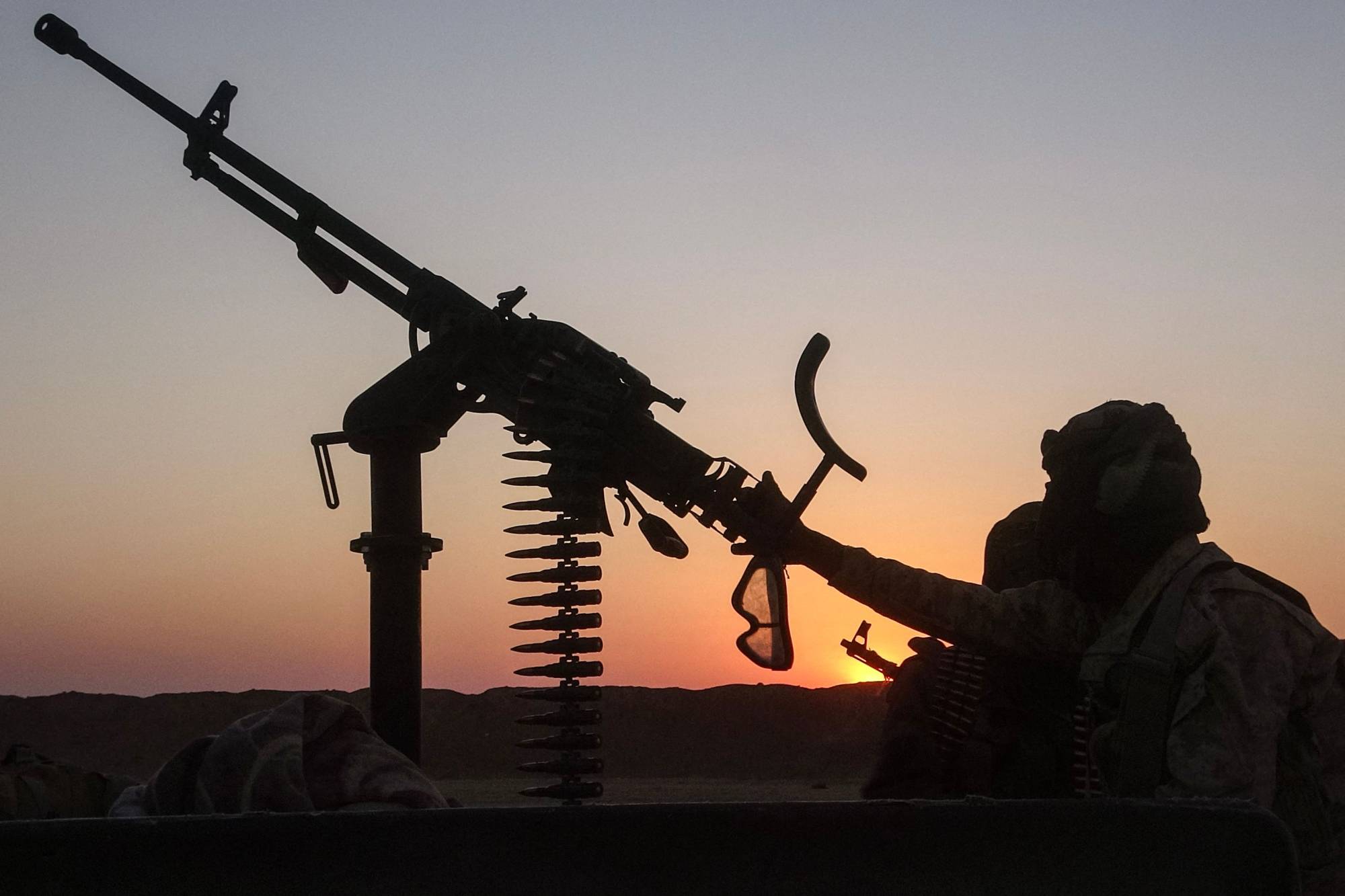
Yemeni forces sit on a pick-up truck mounted with a heavy machine-gun as they hold a position during clashes with Iran-backed Houthis in Yemen's northwestern al-Jawf province on November 2, 2026. (AFP)

This territorial gain holds strategic importance due to the mountainous terrain and its proximity to routes leading to al-Hazm, the Houthis' primary administrative and military hub in the governorate. Government forces are currently working to secure these newly recaptured positions before pressing forward with further operations.

In an attempt to contain this advance, the Houthi group launched a broad attack on government force positions in the Halhalan area. However, government forces managed to repel the assault and force the militants to retreat, said government military sources.

In Lahj, government forces have regained the initiative after reorganizing their military deployment along the Tur al-Baha axis, launching a swift counteroffensive to recapture areas seized by the Houthi group in the al-Maqatirah district.

Supported by warplanes, government troops breached the border of the district and advanced into Bani Abdan village, where heavy fighting continues in the surrounding vicinity. Military operations also expanded to target Houthi positions in the Hayfan and al-Zuraiqah al-Sham regions of the neighboring Taiz governorate.

These latest field updates indicate that government forces have successfully shifted from containing the initial Houthi push in al-Maqatirah to executing direct offensive operations to reclaim lost ground.

Military officials said the transition follows a strategic reinforcement of troops and a reorganization of the military command along the Tur al-Baha axis, effectively shifting the balance of power on this front.