


Hearings in $1 Billion Lawsuit Filed by Auto Tycoon Ghosn against Nissan Starts in Beirut

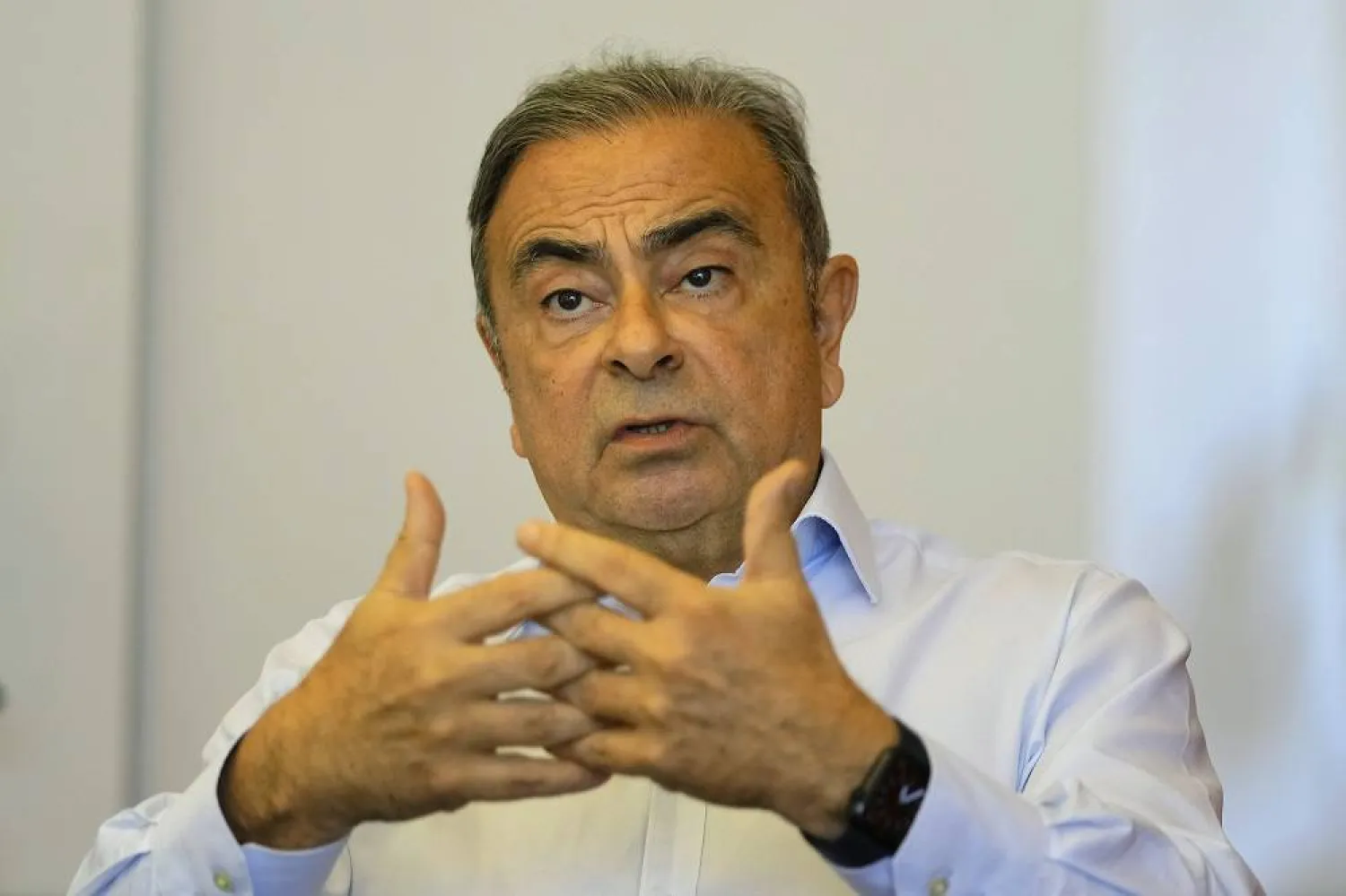
Former Nissan executive Carlos Ghosn speaks during an interview with The Associated Press in Beirut, Lebanon, on June 23, 2023. (AP)
TT

Hearings in $1 Billion Lawsuit Filed by Auto Tycoon Ghosn against Nissan Starts in Beirut

Former Nissan executive Carlos Ghosn speaks during an interview with The Associated Press in Beirut, Lebanon, on June 23, 2023. (AP)

Hearings in the $1 billion lawsuit filed by auto tycoon Carlos Ghosn against Nissan and other defendants started in Beirut on Monday with lawyers of both sides meeting the judge in charge of the case, judicial officials said.

The former Nissan CEO filed the case against Nissan in May in Beirut, alleging he was detained in Japan in 2018 on false charges because of what he calls the automaker's disinformation against him. The 69-year-old Ghosn is seeking half of the $1 billion in damages and half for compensation including salary, retirement funds and stock options.

Ghosn is also seeking monetary compensation from a Nissan affiliate based in Lebanon, as well as from entities that took part in the investigation leading up to his arrest.

He was arrested in Japan in November 2018 on charges of breach of trust, misusing company assets for personal gains and violating securities laws by not fully disclosing his compensation. In December 2019, he jumped bail in Japan in a daring escape by hiding in a box spirited aboard a private jet out of the country.

He now lives in Lebanon, which has no extradition treaty with Japan and does not extradite its citizens. Renault and Nissan have both been distancing themselves from the Ghosn scandal. Ghosn has citizenship in Lebanon, France and Brazil.

In a session that lasted about four hours at the Palace of Justice in Beirut, lawyers representing Ghosn and Nissan met with Judge Sabbouh Suleiman at the Beirut prosecutor’s office, the officials said on condition of anonymity in line with regulations. None of the lawyers or the judge spoke to reporters.

A date was expected to be set for the next session.

Ghosn led Japanese automaker Nissan for two decades, rescuing it from near-bankruptcy before his 2018 arrest.

He is now wanted in Japan and France. Since he fled to Lebanon, Beirut has received three notices from Interpol based on arrest warrants for him from those countries. In France, he is facing a number of legal challenges, including tax evasion and alleged money laundering, fraud and misuse of company assets while at the helm of the Renault-Nissan alliance.

The office of Ghosn’s lawyer declined to comment on the case when contacted by The Associated Press.

Ghosn claims to be the victim of a character assassination campaign led by Nissan with the complicity of the Japanese government, aided by accomplices in France.



UN Condemns Israel's Moves against Agency for Palestinian Refugees

UNRWA center targeted by Israeli shelling in northern Gaza (DPA)
TT

UN Condemns Israel's Moves against Agency for Palestinian Refugees

UNRWA center targeted by Israeli shelling in northern Gaza (DPA)

The United Nations warned Tuesday that recent actions by Israel against the UN agency for Palestinian refugees risked depriving millions of people of basic services such as education and healthcare.

Israel's parliament passed new legislation on Monday formally stripping the United Nations Relief and Works Agency (UNRWA) of diplomatic immunity, and barring Israeli companies from providing water or electricity to the agency's institutions, AFP reported.

According to UNRWA, the legislation also grants the Israeli government the authority to expropriate the agency's properties in East Jerusalem, including its headquarters and main vocational training center.

UNRWA chief Philippe Lazzarini condemned the legislation as "outrageous", decrying it on social media as "part of an ongoing, systematic campaign to discredit UNRWA and thereby obstruct the core role that the agency plays providing human-development assistance and services to Palestine refugees".

Filippo Grandi, the outgoing head of the UN refugee agency, UNHCR, and a former UNRWA chief, also criticised the move as "very unfortunate".

In an interview with AFP, he highlighted that UNRWA, unlike other UN agencies, provides basic public services such as education and healthcare to the millions of registered Palestinian refugees it serves across Gaza and the West Bank, as well as in Lebanon, Jordan and Syria.

"If you deprive those people of those services... then you had better find a substitute," he said, warning: "I think it would be very difficult."

"At the moment, there is a great risk that millions of people will be deprived of basic services if UNRWA is further deprived of space to work, and resources to work."

Israel has been ratcheting up pressure on UNRWA over the past two years.

It has accused the agency of providing cover for Hamas militants, claiming that some UNRWA employees took part in the militant group's October 7, 2023 assault on Israel, which sparked the war in Gaza.

A series of UN-linked internal and external investigations found some "neutrality-related issues" at UNRWA, but stressed Israel had not provided conclusive evidence for its headline allegation.

Grandi criticised the torrent of accusations that have swirled around the agency.

"UNRWA is a very indispensable organization in the Middle East," he said.

"Contrary to much of the frankly baseless rhetoric that we have heard in the past couple of years, UNRWA is a force for peace and stability," he added.

"In a region in which you need every bit of stability and efforts towards peace, it would be really irresponsible to let such an important organization decline further."


Syria Imposes Night Curfew on Port City of Latakia

People watch as Syrian Security forces are deployed after clashes erupted during a protest in the city of Latakia, Syria, 28 December 2025. EPA/AHMAD FALLAHA
TT

Syria Imposes Night Curfew on Port City of Latakia

People watch as Syrian Security forces are deployed after clashes erupted during a protest in the city of Latakia, Syria, 28 December 2025. EPA/AHMAD FALLAHA

Syrian authorities imposed an overnight curfew in the coastal city of Latakia on Tuesday.

Authorities announced a "curfew in Latakia city, effective from 5:00pm (1400 GMT) on Tuesday, December 30, 2025, until 6:00am (0300 GMT) on Wednesday, December 31, 2025".


Jailed Turkish Kurd Leader Calls on Government to Broker Deal for Syrian Kurds

(FILES) Supporters display a poster depicting jailed leader of the Kurdistan Workers' Party (PKK) Abdullah Ocalan, after he called on the Kurdistan Workers' Party (PKK) to disarm and dissolve itself in Diyarbakir, southeastern Türkiye, on February 27, 2025. (Photo by Yasin AKGUL / AFP)
TT

Jailed Turkish Kurd Leader Calls on Government to Broker Deal for Syrian Kurds

(FILES) Supporters display a poster depicting jailed leader of the Kurdistan Workers' Party (PKK) Abdullah Ocalan, after he called on the Kurdistan Workers' Party (PKK) to disarm and dissolve itself in Diyarbakir, southeastern Türkiye, on February 27, 2025. (Photo by Yasin AKGUL / AFP)

Jailed Turkish Kurd leader Abdullah Ocalan said Tuesday that it was "crucial" for Türkiye’s government to broker a peace deal between the Kurdish-led Syrian Democratic Forces (SDF) and the Damascus government.

Clashes between Syrian forces and the SDF have cast doubt over a deal to integrate the group's fighters into the army, which was due to take effect by the end of the year, reported AFP.

Ocalan, founder of the Kurdistan Workers' Party (PKK) group, called on Türkiye to help ensure implementation of the deal announced in March between the SDF and the Syrian government.

"It is essential for Türkiye to play a role of facilitator, constructively and aimed at dialogue," he said in a message released by Türkiye's pro-Kurdish DEM party.

"This is crucial for both regional peace and to strengthen its own internal peace," Ocalan, who has been jailed for 26 years, added.

"The fundamental demand made in the agreement signed on March 10 between the SDF and the government in Damascus is for a democratic political model permitting (Syria's) peoples to govern together," he added.

"This approach also includes the principle of democratic integration, negotiable with the central authorities. The implementation of the March 10 agreement will facilitate and accelerate that process."

The backbone of the US-backed SDF is the YPG, a Kurdish group seen by Türkiye as an extension of the PKK.

Türkiye and Syria both face long-running unrest in their Kurdish-majority regions, which span their shared border.

In Türkiye, the PKK agreed this year at Ocalan's urging to end its four-decade armed struggle.

In Syria, Sharaa has agreed to merge the Kurds' semi-autonomous administration into the central government, but deadly clashes and a series of differences have held up implementation of the deal.

The SDF is calling for a decentralized government, which Sharaa rejects.

Turkish Foreign Minister Hakan Fidan, whose country sees Kurdish fighters across the border as a threat, urged the SDF last week not to be an "obstacle" to stability.

Syrian Kurdish leader Mazloum Abdi said Thursday that "all efforts" were being made to prevent the collapse of talks.