


Israel Ramps up Strikes on Gaza as US Advises Delaying Ground Offensive to Allow Talks on Captives

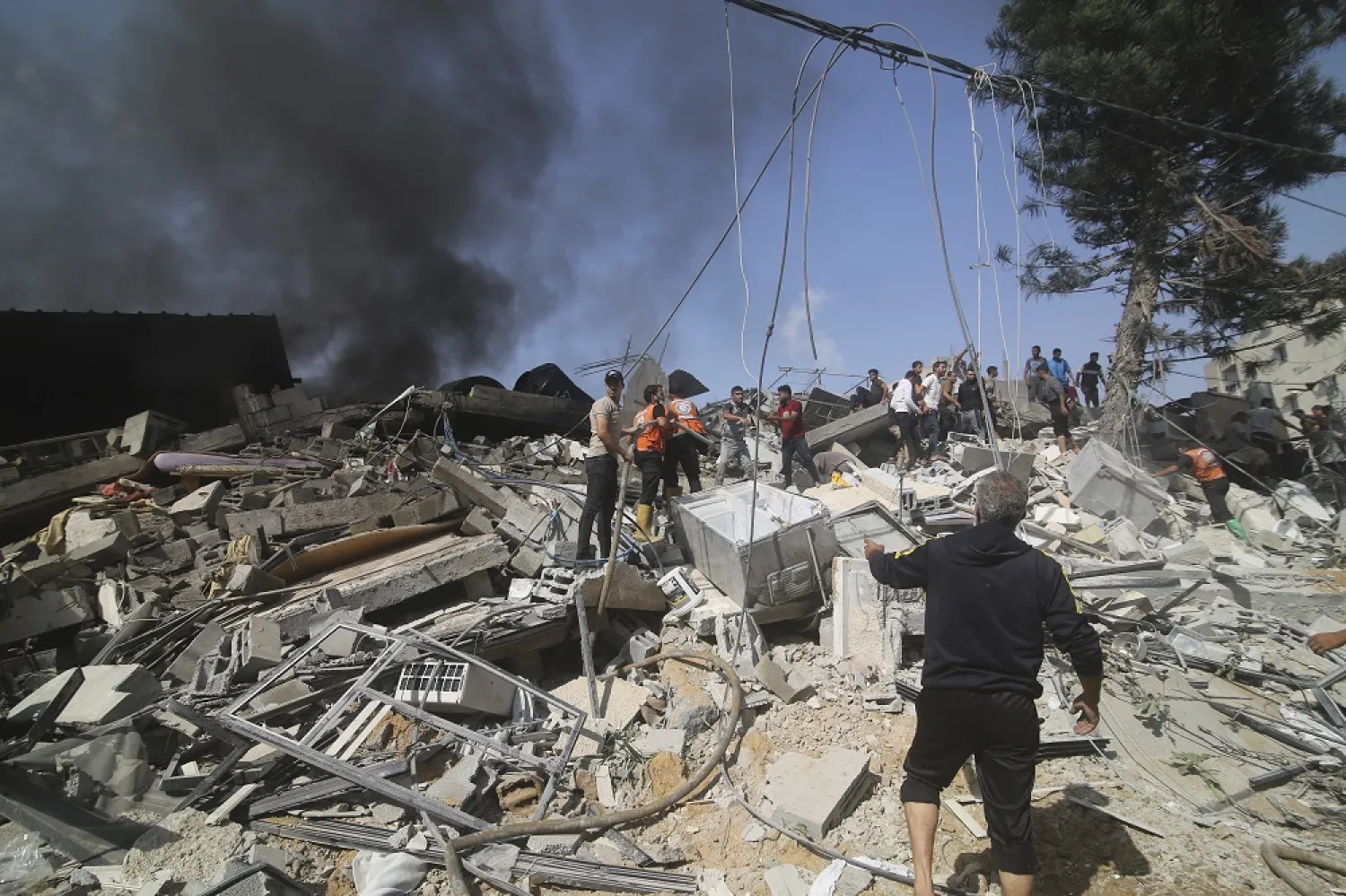
Palestinians look for survivors of the Israeli bombardment of the Gaza Strip in Rafah on Monday, Oct. 23, 2023. (AP)
TT

Israel Ramps up Strikes on Gaza as US Advises Delaying Ground Offensive to Allow Talks on Captives

Palestinians look for survivors of the Israeli bombardment of the Gaza Strip in Rafah on Monday, Oct. 23, 2023. (AP)

Israel ramped up its airstrikes Monday in Gaza, where the death toll was rising rapidly, and the United States advised Israel to delay an expected ground invasion to allow more time to negotiate the release of hostages taken by Hamas militants.

A third small aid convoy from Egypt entered Gaza, where the population of 2.3 million has been running out of food, water and medicine under Israel's two-week seal. Israel was still barring the entry of fuel, and Gaza hospitals say they are struggling to keep generators running to power life-saving medical equipment and incubators for premature babies.

Heavy airstrikes demolished buildings across Gaza, including in areas where Palestinians have been told to seek refuge, killing hundreds and sending new waves of wounded into already packed hospitals, according to Palestinian officials and witnesses.  

After a strike in Gaza City, a woman with blood on her face wept as she clasped the hand of a dead relative. At least three bodies were sprawled on the street, one lying in a gray stream of water.

Israel is widely expected to launch a ground offensive in Gaza following Hamas’ brutal Oct. 7 rampage into southern Israeli communities. That is raising fears of the war spreading beyond Gaza and Israel, as Iranian-backed fighters in the region are warning of possible escalation, including targeting US forces deployed in the Mideast.

The US has urged Iranian-backed Hezbollah in Lebanon and other groups not to join the fight. Israel has frequently traded fire with Hezbollah, which is armed with tens of thousands of rockets. Israeli warplanes have struck targets in the occupied West Bank, Syria and Lebanon in recent days.

The US has advised Israeli officials that delaying the expected ground offensive would give Washington more time to work with regional mediators on securing the release of people captured by Hamas during its deadly incursion, according to a US official.

The official, who requested anonymity to discuss the private discussions, said it was unclear how much the argument will “move the needle” on Israeli thinking. Hamas released an American woman and her teenage daughter last week in what it said was a humanitarian gesture mediated by Qatar.

Tanks and troops have been massed at the Gaza border, and Israel says it has stepped up airstrikes in order to reduce the risk to troops in the next stages. A ground excursion is likely to dramatically increase casualties in what is already the deadliest by far of five wars fought between Israel and Hamas in less than 15 years.

More than 1,400 people in Israel have been killed — mostly civilians slain during the initial Hamas attack. At least 222 people were captured and dragged back to Gaza, including foreigners, the military said Monday, updating a previous figure.

More than 5,000 Palestinians, including some 2,000 minors and around 1,100 women, have been killed, the Hamas-run Health Ministry said Monday. That includes the disputed toll from an explosion at a hospital last week. The toll has climbed rapidly in recent days, with the ministry reporting 436 additional deaths in just the last 24 hours.

Israel said it had struck 320 militant targets throughout Gaza over the last 24 hours in preparation for “a maneuver,” an apparent reference to a ground operation. The military says it does not target civilians, and that Palestinian militants have fired over 7,000 rockets at Israel since the start of the war.

The Israeli military released footage showing what it said were attacks on Hamas infrastructure. Flashes of yellow light were followed by an explosion that sent gray smoke and debris shooting upward as multi-story buildings collapsed or toppled over.

Israel carried out limited ground forays into Gaza, and on Sunday, Hamas said it had destroyed an Israeli tank and two armored bulldozers inside the territory it has ruled since 2007. The Israeli military said a soldier was killed and three others were wounded by an anti-tank missile during a raid inside Gaza.

The military said the raid was part of efforts to rescue hostages abducted in the Oct. 7 attack. Hamas hopes to trade the captives for Palestinian prisoners held by Israel.

On Monday the Palestinian Red Crescent said 20 trucks entered Gaza carrying food, water, medicine and medical supplies, through the Rafah crossing with Egypt, the only way into Gaza not controlled by Israel. It was the third delivery in as many days, each around the same size.

An airstrike hit a residential building some 200 meters (yards) from the UN headquarters in Rafah on Monday, killing and wounding several people, according to an Associated Press reporter at the scene, underscoring the perils of humanitarian operations.

Abu Youssef Al-Najjar Hospital, in Rafah, registered 61 deaths since Monday morning, the hospital’s spokesperson said, following a day of intense airstrikes in southern Gaza. With no room in the morgue for the bodies, “more than half of them are lying on the (hospital) ground,” spokesperson Talaat Barghout said.

In a Sunday phone call, Netanyahu and US President Joe Biden “affirmed that there will now be continued flow of this critical assistance into Gaza,” the White House said in a statement.

Relief workers said far more aid was needed to address the spiraling humanitarian crisis in Gaza. Much of the population is drinking dirty water; the lack of fuel has crippled water and sanitation systems. The UN humanitarian agency said 20 trucks amounts to 4% of an average day’s imports before the war.

More than half the territory’s population have fled their homes, and hundreds of thousands are sheltering in UN-run schools and tent camps.

The World Health Organization said seven hospitals in northern Gaza have been forced to shut down due to damage from strikes, lack of power and supplies, or Israeli evacuation orders.

Israel repeated its calls for people to leave northern Gaza, including by dropping leaflets from the air. It estimated 700,000 have already fled. But hundreds of thousands remain. That would raise the risk of mass civilian casualties in any ground offensive.

Secretary of State Antony Blinken said Israel “can't go back to the status quo” in which Hamas controls Gaza and is able to threaten it, but that Israel has “absolutely no intent” to govern Gaza itself.  

Speaking to NBC’s “Meet the Press” on Sunday, he said the question of how Gaza will be governed needs to be worked out "even as Israel is dealing with the current threat.”

Israel captured Gaza, along with the West Bank and east Jerusalem, in the 1967 Mideast war. The Palestinians want all three territories for a future state. Israel withdrew troops and settlers from Gaza in 2005, but Israel has imposed a blockade of varying degrees since Hamas seized power from rival Palestinian forces in 2007.

Egypt Fuel Tanker Crash Ignites Massive Fire on Highway, At Least 31 Dead

People gather near the scene of a fuel tanker fire in the Warraq district near Imbaba, Giza Governorate, Egypt, 25 November 2026. EPA/MOHAMED HOSSAM
TT

Egypt Fuel Tanker Crash Ignites Massive Fire on Highway, At Least 31 Dead

People gather near the scene of a fuel tanker fire in the Warraq district near Imbaba, Giza Governorate, Egypt, 25 November 2026. EPA/MOHAMED HOSSAM

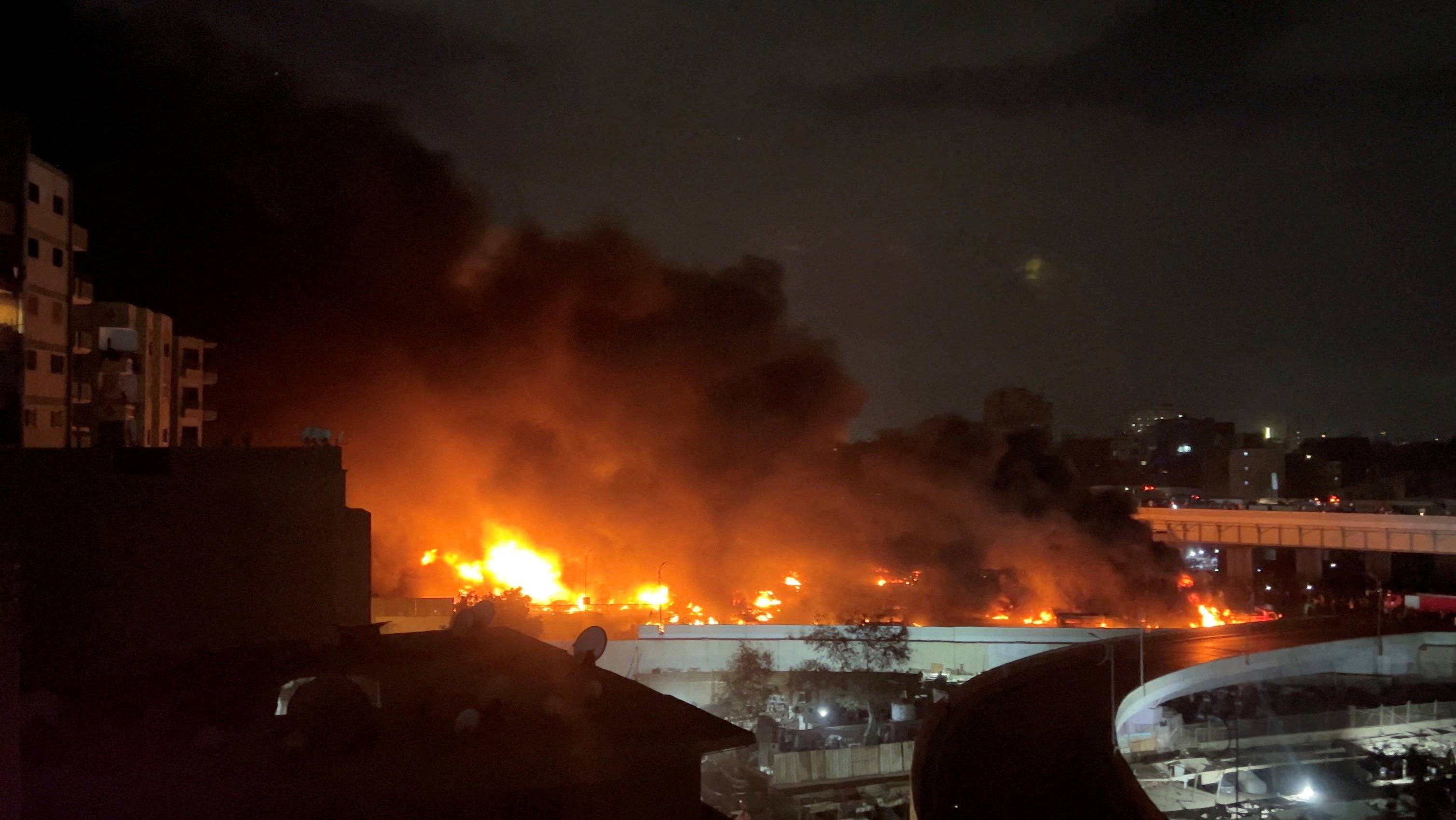
A crash involving a fuel tanker ignited a massive fire on a major highway surrounding Cairo on Wednesday, killing at least 31 people, Egyptian authorities said.

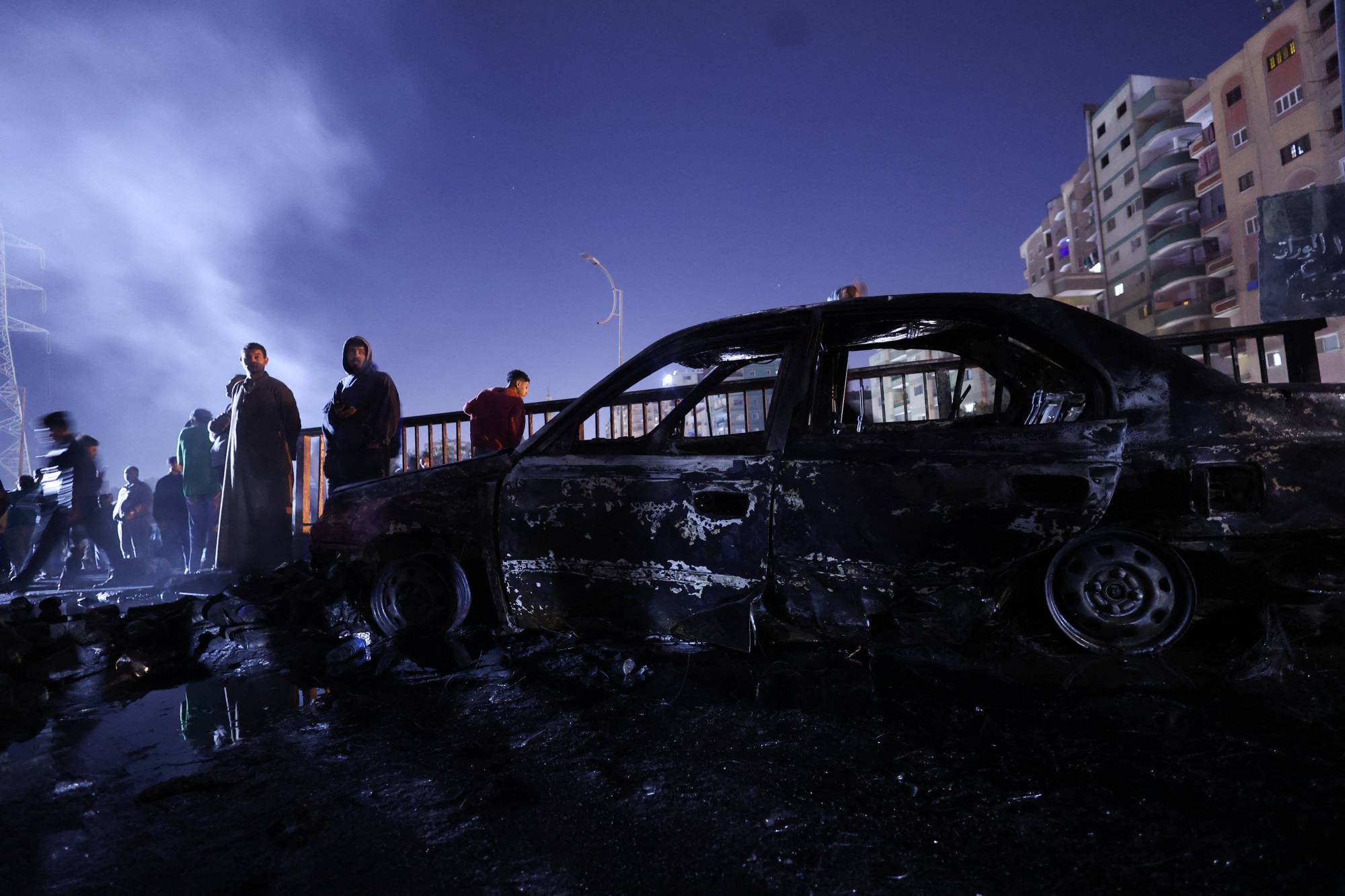
The blaze on Ring Road, a key artery that encircles the Egyptian capital, also injured at least 21 people and left more than two dozen cars and motorcycles charred, according to the latest figures released by the Health Ministry.

People stand next to the charred remains of a vehicle at the site where a vehicle carrying petroleum products overturned and caught fire on a major ring road in Cairo, Egypt, November 25, 2026. REUTERS/Amr Abdallah Dalsh

The stretch of the highway where the crash occurred was in Warraq, a densely populated neighborhood in Giza, part of the Greater Cairo area, according to the Health Ministry.

Egyptian President Abdel-Fattah el-Sissi expressed his condolences to the victims in a statement. The Public Prosecutor’s office said DNA investigations were underway to identify the victims.

Health Minister Khaled Abdel Ghaffar said the injured were taken to nearby hospitals. He said the death toll was preliminary, raising concerns it could rise further. Initial statements said 25 people were injured, but that figure was later revised to 21.

A fire burns at the site where a vehicle carrying petroleum products overturned and caught fire on a major ring road in the Warraq district, Giza, Egypt, November 25, 2026, in this screengrab obtained from social media video. Habiba Abd El Aziz/via REUTERS

A spokesperson for the Egyptian Cabinet told local media that Prime Minister Mostafa Madbouly had ordered an investigation into the causes of the accident.

He said the government was awaiting a full clarification before determining "future measures regarding the transport of petroleum products and ensuring safety and security during such transport operations.”


Al-Zaidi’s Crackdown Gains Legal Backing, No Plans to Send Troops to Kurdistan

Flames rise from flare stacks at oilfields in Kirkuk, Iraq, in October 2017. (Reuters)
TT

Al-Zaidi’s Crackdown Gains Legal Backing, No Plans to Send Troops to Kurdistan

Flames rise from flare stacks at oilfields in Kirkuk, Iraq, in October 2017. (Reuters)

Iraq’s government has secured legal backing for its decisions on border crossings in the Kurdistan Region and oilfields in disputed territories, vowing to press ahead with its anti-smuggling crackdown while ruling out a military deployment to the region.

An authorized government source said Baghdad had no plans to send troops into Kurdistan to tighten control over border crossings, stressing that smuggling would be tackled through constitutional mechanisms and coordination between federal authorities in Baghdad and regional authorities in Erbil.

The assurances followed mounting Kurdish fears of a federal military deployment after intelligence reports uncovered routes used to smuggle oil from Kirkuk and Sulaimaniyah in northern Iraq to Iran and onward to Afghanistan.

Kurdish platforms circulated videos purportedly showing Peshmerga units deploying along a road linking cities in the Kurdistan Region with other Iraqi provinces. The footage could not be independently verified.

Will Baghdad send troops to Kurdistan?

The Iraqi source dismissed reports that Prime Minister Ali al-Zaidi was mobilizing troops to seize control of the region’s official and unofficial border crossings.

“There are absolutely no such intentions ... It will not happen because there is no need for such action,” the source told Asharq Al-Awsat.

The source urged parties to the dispute to “avoid escalatory rhetoric and resort to official channels to find solutions consistent with existing laws.”

“The dispute between the region and the federal government is primarily over border crossings used for smuggling. These must be brought under control through cooperation between Baghdad and Erbil, in accordance with the constitution,” the source said.

While suggesting the crisis was headed toward a resolution, the source stressed that Baghdad insisted on having full knowledge of all activity at those crossings, as it does elsewhere in the country, where it has drawn up a comprehensive plan to secure crossings and stamp out all forms of smuggling.

Al-Zaidi on Tuesday ordered federal authorities to take control of border crossings administered by the Kurdistan Region following an oil-smuggling investigation at the state-run North Oil Company.

The move sparked anger in Erbil.

Kurdistan Democratic Party (KDP) leader Masoud Barzani sent a message to Baghdad urging adherence to constitutional principles and wisdom in resolving disputes, rejecting decisions driven by “personal whims.”

“Iraqi Kurdistan has legitimate and inherent rights and will not submit to decisions that violate the constitution,” Barzani said.

Kurdistan Regional Government (KRG) Prime Minister Masrour Barzani described Baghdad’s decisions as “unacceptable in any way,” but stressed that the door remained open for dialogue with the federal government to reach a mutual agreement.

‘Foreign dictates’

The Iraqi government rejected accusations that it was acting under “foreign dictates,” insisting that it exercised its constitutional powers and responsibilities with complete independence.

“Iraq is a fully sovereign, democratic federal state that derives its powers and the legitimacy of its institutions from the constitution and the will of its people,” it said in a statement.

The government said Iraqi decision-making was an exclusively national matter and that its actions within the country’s internationally recognized borders reflected its independent will and were grounded solely in its constitutional powers and legal responsibilities.

They were not a response to encouragement, dictates or instructions from any foreign party, it added.

The government stressed that it neither derived the legitimacy of its decisions from the positions or policies of other countries nor awaited anyone’s encouragement to exercise its constitutional and sovereign responsibilities.

Its actions, it said, were guided by Iraq’s interests, the rights of its people and the requirements of its security and stability.

The Kurdistan Region’s Council of Ministers on Wednesday renewed its criticism of what it called “military language and threats” in a statement issued in the name of the spokesperson for the commander-in-chief of the Iraqi armed forces.

It demanded the full implementation of Iraq’s constitution, particularly Article 140.

In a statement following a meeting chaired by Masrour Barzani, the council said Baghdad’s recent measures had dominated discussions.

It expressed concern and dismay over the spokesperson’s statement, describing it as a constitutional violation, an infringement of the region’s constitutional rights, a sign of disregard for federalism and an attempt to return Iraq to centralized rule.

The KRG called for the establishment of Iraq’s Federation Council and the reconstitution of the Federal Supreme Court in accordance with constitutional provisions to ensure representation of all segments of Iraqi society.

Legal backing

Al-Zaidi’s decisions on Kurdistan gained legal backing on Wednesday when Iraq’s Federal Supreme Court ruled that Baghdad could deploy federal forces to secure the country’s international borders, including those in territories administered by the Kurdistan Region.

The court said federal authorities could also oversee government departments operating at all border crossings, including those in Kurdistan.

State television reported that the court stressed the need for Baghdad to coordinate with regional and provincial governments on customs administration.

The court said establishing a unified national system to automate border crossings and customs operations, linking them electronically to relevant federal ministries and agencies nationwide, including in Kurdistan, and setting technical, financial and customs standards for their operation fell within federal jurisdiction.

These powers, it said, were part of the federal authorities’ mandate to formulate fiscal and customs policies and regulate trade across regional and provincial borders.

The court also affirmed that the federal government, together with the governments of producing regions and provinces, was responsible for managing extracted oil and gas, which belong to all Iraqis.

It upheld the constitutional and legal powers of the federal Oil Ministry and relevant federal oversight bodies to supervise, monitor and audit oil and gas fields, operations and contracts involving production, extraction, marketing and exports.

Iraq’s Supreme Judicial Council, meanwhile, called on the federal government, the KRG and all political forces concerned to abide by the country’s permanent constitution.

Joint committee for dialogue

In Baghdad, a KDP delegation led by Hoshyar Zebari, a member of the party’s Politburo executive committee, met Iraqi Parliament Speaker Haibat al-Halbousi on Tuesday evening.

Delegation member Abdul Mohsen al-Saadoun said on Wednesday that the talks focused on the prime minister’s recent decisions and statements concerning Kurdistan.

The delegation urged Halbousi, as head of the legislative branch, to fulfill his responsibilities and take a clear stand on any demand or violation at odds with the Iraqi constitution, Saadoun said.

“There must be a joint committee between Erbil and Baghdad so that any problem or new development can be addressed through dialogue,” he added.

Al-Zaidi’s decisions continued to fuel political tensions.

KDP member Vian Sabri told Asharq Al-Awsat that Baghdad had resorted to “escalatory rhetoric against the region to settle routine disputes that could be resolved through dialogue and in accordance with the constitution.”

“Viewing matters through the lens of control and centralization, and treating relations between Baghdad and Erbil as a contest in which one side seeks to impose its will on the other, are precisely what fuel Kurdistan’s fears and deepen mistrust,” she said.

Mahmoud Khoshnaw, a senior official in the Patriotic Union of Kurdistan (PUK), said what angered the Kurds about al-Zaidi’s decisions was that he had approached smuggling as though the region itself was involved in or supported the activity, when several issues needed clarification.

“The federal government’s recent decisions were ill-judged, particularly its use of military language in addressing the region, which could affect the extent of Kurdistan’s support for al-Zaidi,” Khoshnaw said.

Iraqi politician Khamis al-Khanjar proposed on Wednesday forming a high-level committee within the State Administration Coalition, which brings together Shiite, Kurdish and Sunni political forces, to resolve disputes between Baghdad and Erbil.

He also called for expediting the passage of an oil and gas law.


Lebanon Judge Issues Warrants for Five Detained Hezbollah Members

A Hezbollah supporter holds up a Hezbollah flag in Beirut, Lebanon, on July 26, 2025. (AP)
TT

Lebanon Judge Issues Warrants for Five Detained Hezbollah Members

A Hezbollah supporter holds up a Hezbollah flag in Beirut, Lebanon, on July 26, 2025. (AP)

A Lebanese judge on Wednesday issued arrest warrants for five Hezbollah members detained this month in the country's north and ordered three others to be brought in for questioning, a judicial official told AFP.

The move came as pressure mounts on the Iran-backed group to surrender its weapons, after it was weakened by two wars with Israel in recent years.

Lebanon's government decided last year to disarm the group after a November 2024 Israel-Hezbollah ceasefire. An Israel-Lebanon deal agreed this year after the latest war erupted also involves the group's disarmament.

The judicial source said that a judge on Wednesday questioned the five men for several hours, issued formal "arrest warrants against them" and ordered security forces to bring "three Hezbollah members connected with this cell" in for questioning.

Security forces had detained the five in a mountainous area between Batroun and Bsharre in northern Lebanon, a region far from Hezbollah's main strongholds, in possession of "maps and documents", a judicial official had previously told AFP.

Judicial proceedings were subsequently launched against them for allegedly "forming an armed group, recruiting members, equipping them and supplying them with weapons".

On Tuesday, Hezbollah lawmaker Hussein al-Hajj Hassan said that the five, and others arrested over a truckload of explosives seized last month, had been "unjustly and forcibly detained", accusing authorities of "committing grave and dangerous errors against their people".

In October, authorities seized half a ton of explosives that Hezbollah subsequently said "belong to the resistance" against Israel, demanding that the shipment be returned.
