France’s Macron Says He Stands in Solidarity with Israel’s Fight Against ‘Terrorism’ 

French President Emmanuel Macron, left, shakes hands with Israel's President Isaac Herzog after their talks in Jerusalem, Tuesday, Oct. 24, 2023. (Reuters)
TT

France’s Macron Says He Stands in Solidarity with Israel’s Fight Against ‘Terrorism’ 

French President Emmanuel Macron, left, shakes hands with Israel's President Isaac Herzog after their talks in Jerusalem, Tuesday, Oct. 24, 2023. (Reuters)

French President Emmanuel Macron vowed on Tuesday not to leave Israel isolated in its fight against militants, but warned against the risks of a regional conflict as he arrived in Israel. 

After meeting with families of French victims at Tel Aviv airport, Macron told President Isaac Herzog in Jerusalem that France stood "shoulder to shoulder" with Israel and that the first objective should be to free hostages in Gaza. 

"I want you to be sure that you're not left alone in this war against terrorism," Macron said. "It is our duty to fight against terrorism, without any confusion and without enlarging this conflict." 

Beyond showing solidarity with Israel, Macron wanted to make "proposals that are as operational as possible" to prevent an escalation, to free hostages, and guarantee Israel's security and work towards a two-state solution, presidential advisers said. He will push for a humanitarian truce, they added. 

Macron's visit comes after European Union foreign ministers on Monday struggled to agree on a call for a "humanitarian pause" in the war between Israel and Palestinian militant group Hamas to allow much more aid to reach civilians. 

Macron was also due to meet Israeli Prime Minister Benjamin Netanyahu and centrist opposition leaders Benny Gantz and Yair Lapid, the Elysee said. 

Mahmoud Abbas's office said Macron would meet with the Palestinian president in Ramallah, West Bank. 

However, Macron's ability to influence events in the region appears limited by what some analysts say is a shift towards a more pro-Israel Anglo-American line, in contrast with the traditionally distinctive and more pro-Arab French Gaullist approach. 

"France's soft power south of the Mediterranean has considerably faded," said Karim Emile Bitar, a Beirut-based foreign policy expert at French think tank IRIS. 

"We're under the impression that nothing distinguishes France from other Western countries now," he said. 

The French government's decision to adopt a blanket ban on pro-Palestinian protests, before it was struck down by courts, is one reason Macron has lost credit in the Arab world, he said. 

French officials contest the idea that Macron's policy is biased. They say Macron has constantly reaffirmed the rights of Palestinians and the position of a two-state solution. "It's a goal France has never veered from," the adviser said. 

Thirty French citizens were killed on Oct. 7 and nine are still missing. One appeared in a video released by Hamas, but the fate of the others remains unknown. 

Macron has vowed that France would "not abandon any of its children" in Gaza and has expressed hope that Qatar's mediation can help free hostages. 

Macron's visit will also have a special resonance at home, where France's large Muslim and Jewish communities are on tenterhooks following the killing of a teacher by an extremist militant that French officials have linked to the events in Gaza. 

The French leader will have to tread a fine line during his tour of the region, the Israeli-Palestinian conflict having often stoked tension back home and France's fractious opposition being ready to pounce on any faux pas.  


Syria Closes ISIS-linked al-Hol Camp after Emptying it

18 February 2026, Syria, Al-Hol: A view of al-Hol camp. Photo: Moawia Atrash/dpa
TT

Syria Closes ISIS-linked al-Hol Camp after Emptying it

18 February 2026, Syria, Al-Hol: A view of al-Hol camp. Photo: Moawia Atrash/dpa

Syrian authorities have closed al-Hol camp, which long housed relatives of suspected ISIS militants, after emptying the formerly Kurdish-controlled facility, a camp official told AFP on Sunday.

"All Syrian and non-Syrian families were relocated," Fadi al-Qassem, the official appointed by the government to manage al-Hol's affairs told AFP.

Al-Hol, located in a desert region of Hasakeh province, had been Syria's largest camp housing relatives of suspected ISIS fighters.

Last month, the government took over the camp from its Kurdish administrators, who had long run it, as Kurdish forces ceded territory and Damascus extended its control across swathes of Syria's northeast.

Since then, thousands of family members of foreign militants have left for unknown destinations.

The facility had housed some 24,000 people, mostly Syrians but also Iraqis and more than 6,000 other foreigners of around 40 nationalities.

Qassem said security forces were searching the tents for any remaining families.

Earlier this week, authorities had started evacuating the remaining residents, taking them to a camp in Akhtarin, in the north of Aleppo province.

Some of the families were taken elsewhere, Qassem said, without specifying the location.

"The camp's residents are children and women who need support for their reintegration," he added.

A source in a humanitarian organization that was active in the camp told AFP: "We evacuated all our teams working inside the camp, dismantled all our equipment and prefabricated rooms and moved them out of the camp".

Last week, the US military said it had completed the transfer of thousands of ISIS suspects, including many Syrians but also Westerners, to Iraq, after they were held in Kurdish-run prisons in northeast Syria for years.


Palestinian Foreign Ministry Condemns US Ambassador to Israel’s Statements

The Israeli settlement of Har Homa, seen from the West Bank city of Bethlehem, Tuesday, Dec. 17, 2024. (AP)
TT

Palestinian Foreign Ministry Condemns US Ambassador to Israel’s Statements

The Israeli settlement of Har Homa, seen from the West Bank city of Bethlehem, Tuesday, Dec. 17, 2024. (AP)

The Palestinian Ministry of Foreign Affairs and Expatriates condemned statements by the US ambassador to Israel, in which he claimed that Israel has the right to exercise control over the entire Middle East.

The ministry emphasized that these provocative statements constitute a blatant call for aggression against the sovereignty of states.

It added that they support the continuation of the occupation’s war of genocide and displacement, as well as the implementation of its annexation and expansionist plans against the Palestinian people, SPA reported.

The Palestinian foreign ministry pointed out that the statements contradict religious and historical facts and international law, SPA reported.

It called on the US administration to take a clear stance regarding its ambassador to Israel’s remarks, which are completely at odds with the US president’s position rejecting the annexation of the West Bank.


Israel Carries Out More Strikes in Lebanon amid Lack of Int’l Assurances on Wider Regional Escalation

People gather near a building damaged in an Israeli strike in the village of Bednayel in eastern Lebanon, 21 February 2026. EPA/WAEL HAMZEH
TT

Israel Carries Out More Strikes in Lebanon amid Lack of Int’l Assurances on Wider Regional Escalation

People gather near a building damaged in an Israeli strike in the village of Bednayel in eastern Lebanon, 21 February 2026. EPA/WAEL HAMZEH

Lebanese officials say the country has yet to obtain firm or decisive Western guarantees that it will be spared from a larger confrontation in the region as speculation grows over a potential US strike on Iran.

Chief concerns center on whether Hezbollah would be targeted as part of any large-scale strike, or whether the group might intervene militarily alongside Tehran.

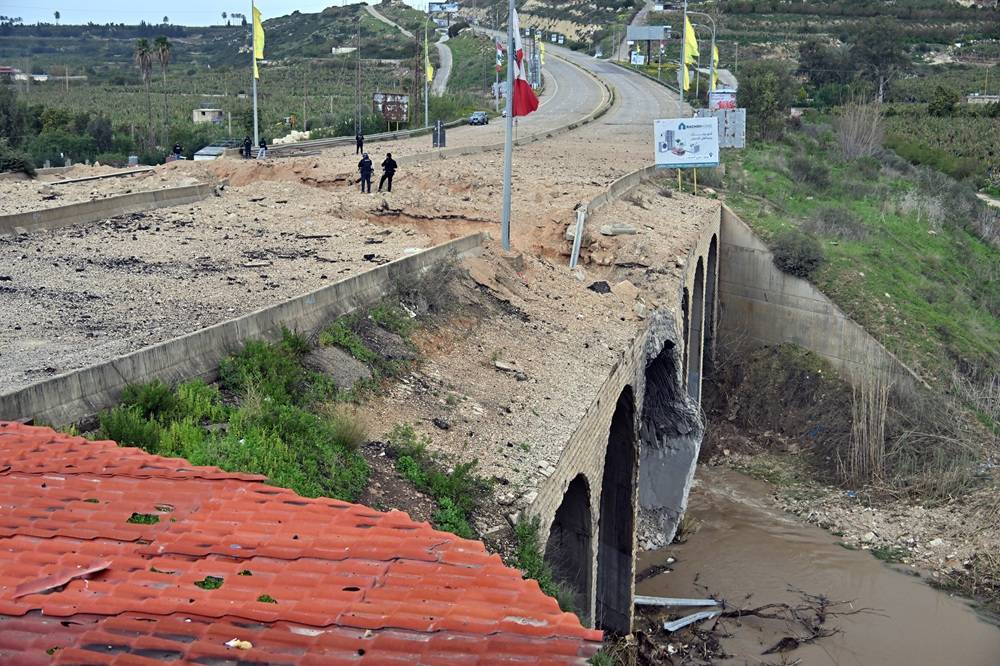
Ministerial sources said Israeli airstrikes on Hamas in the Ain al-Hilweh Palestinian refugee camp in southern Lebanon, as well as overnight raids targeting Hezbollah in the eastern Bekaa Valley fall within the pattern of ongoing military operations Lebanon, particularly targeted assassinations against figures linked to both groups.

The sources told Asharq Al-Awsat Lebanon has not received explicit Western assurances that it would not be drawn into a wider confrontation if the conflict expands.

On Hezbollah’s position, the sources noted that the group has not offered a clear position on how it would respond to potential developments.

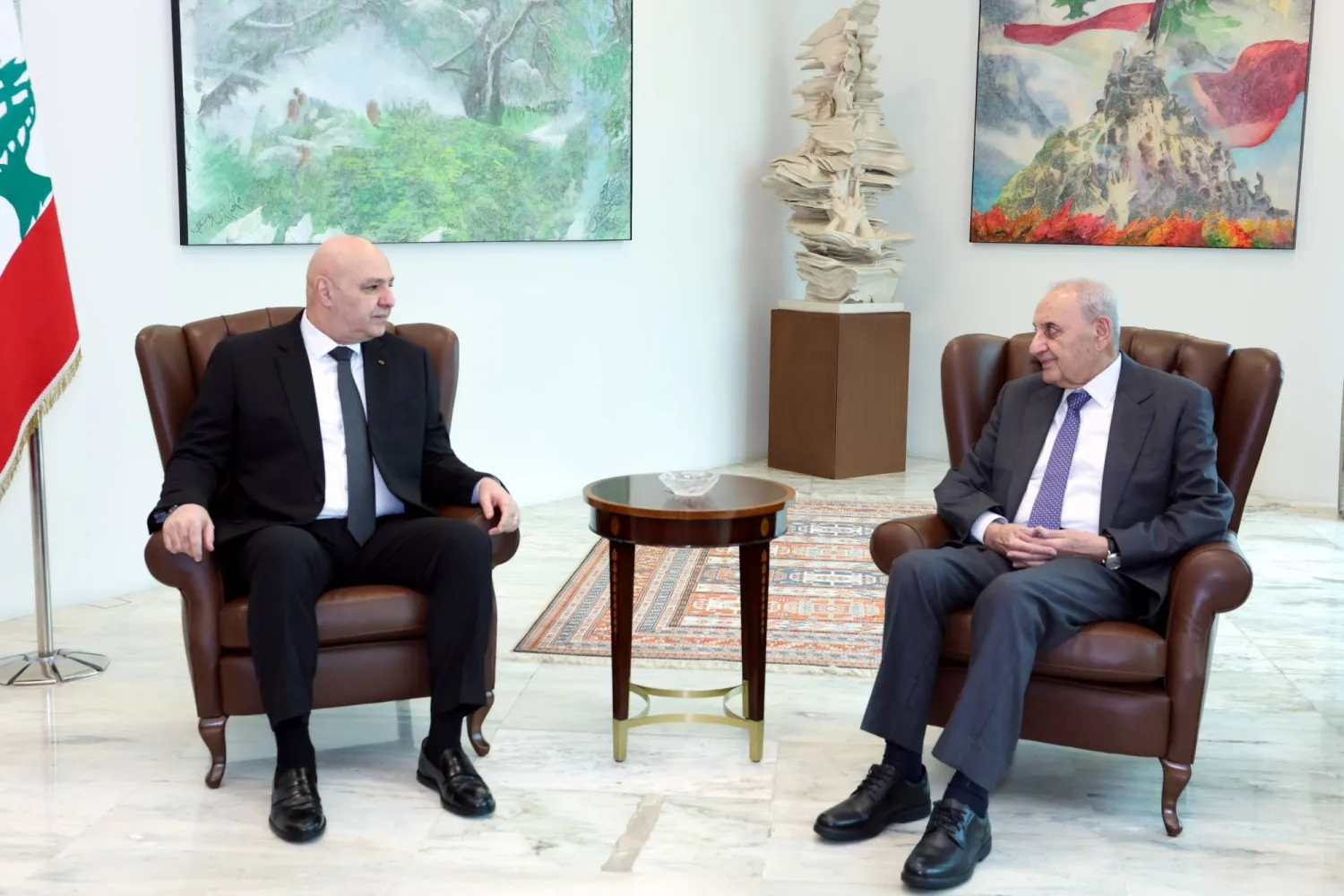
They pointed to behind-the-scenes efforts led primarily by Parliament Speaker Nabih Berri who believes “Hezbollah will not take any step if Iran is struck.”

Although Hezbollah has previously declared it “would stand idle” in case of escalation, the sources said the party has not announced any specific military plans.

Statements made by its officials have been vague, they added, citing remarks by head of Hezbollah’s parliamentary bloc Mohammad Raad, who stressed on Friday the party’s commitment to “the security and stability of the country and the continuation of normal life.”

In Lebanon’s official response, President Joseph Aoun strongly condemned the Israeli raids carried out overnight by land and sea, which targeted the Sidon area and towns in the Bekaa.

He described the continued attacks as “blatant aggression” aimed at sabotaging Lebanon’s diplomatic efforts with brotherly and friendly nations - foremost among them the United States - to consolidate stability and halt Israeli hostilities.

Aoun said the strikes were a renewed violation of Lebanon’s sovereignty and a clear breach of international obligations, particularly United Nations Security Council Resolution 1701, which calls for a cessation of hostilities and full implementation of its provisions.

The president renewed his appeal to countries supporting regional stability to assume their responsibilities by pressing for an immediate halt to the attacks and ensuring respect for international resolutions in a way that preserves Lebanon’s sovereignty, security, and territorial integrity, and prevents further escalation.