Norway Urges Israel to Release Full Palestinian Tax Transferhttps://english.aawsat.com/arab-world/4666381-norway-urges-israel-release-full-palestinian-tax-transfer
Norway Urges Israel to Release Full Palestinian Tax Transfer
Prime Minister of Norway Jonas Gahr Stoere addresses the 77th Session of the United Nations General Assembly at UN Headquarters in New York City, US, September 22, 2022. (Reuters)
TT
TT
Norway Urges Israel to Release Full Palestinian Tax Transfer
Prime Minister of Norway Jonas Gahr Stoere addresses the 77th Session of the United Nations General Assembly at UN Headquarters in New York City, US, September 22, 2022. (Reuters)
Norwegian Prime Minister Jonas Gahr Stoere urged Israel on Monday to release the full tax transfer it is withholding from the Palestinian Authority (PA), saying the payment was "critical" for the welfare the Palestinian population.
Norway is the chair of the international donor group to the Palestinian territories, known as the Ad Hoc Liaison Committee. It was a facilitator in the 1992-93 talks between Israel and the Palestine Liberation Organization that led to the Oslo Accords providing for limited Palestinian self-rule.
On Nov. 2, Israel said it would proceed with a tax revenue transfer to the PA in the Israeli-occupied West Bank but would withhold funds bound for Hamas-ruled Gaza, where the PA helps cover public sector wages and pay for electricity.
Israel's decision came after an internal cabinet debate over whether to make the transfer as Israel battles Hamas militants that rule the Gaza Strip.
On Nov. 6, the PA said it would not accept a partial transfer from Israel. It is estimated to spend some 30% of its budget in Gaza, where it also pays for medicine and social assistance programs.
"We call on Israel to maintain the agreed transfer of what is Palestinian value creation, because these are taxes and VAT and financial sources (of income)," Stoere told Reuters in an interview in Oslo.
The tax transfer helped deliver essential services in Gaza and in the West Bank, he said, so withholding it was "directly affecting the welfare and health of the Palestinian population".
"Norway has been very clear that any development towards (the) breakdown of the PA will only serve the extremist forces on the Palestinian side," he added.
Stoere did not say how much the withholding of money was worth but said it was "a substantial amount".
The Western-backed PA exercises limited self-rule in the West Bank but does not administer Gaza, where rival Hamas seized control in a brief civil war in 2007. The PA still has thousands of Gaza civil servants on its payroll.
From Air to Ground, Taiz Front Lines Repel Houthi Advancehttps://english.aawsat.com/arab-world/5325231-air-ground-taiz-front-lines-repel-houthi-advance
From Air to Ground, Taiz Front Lines Repel Houthi Advance
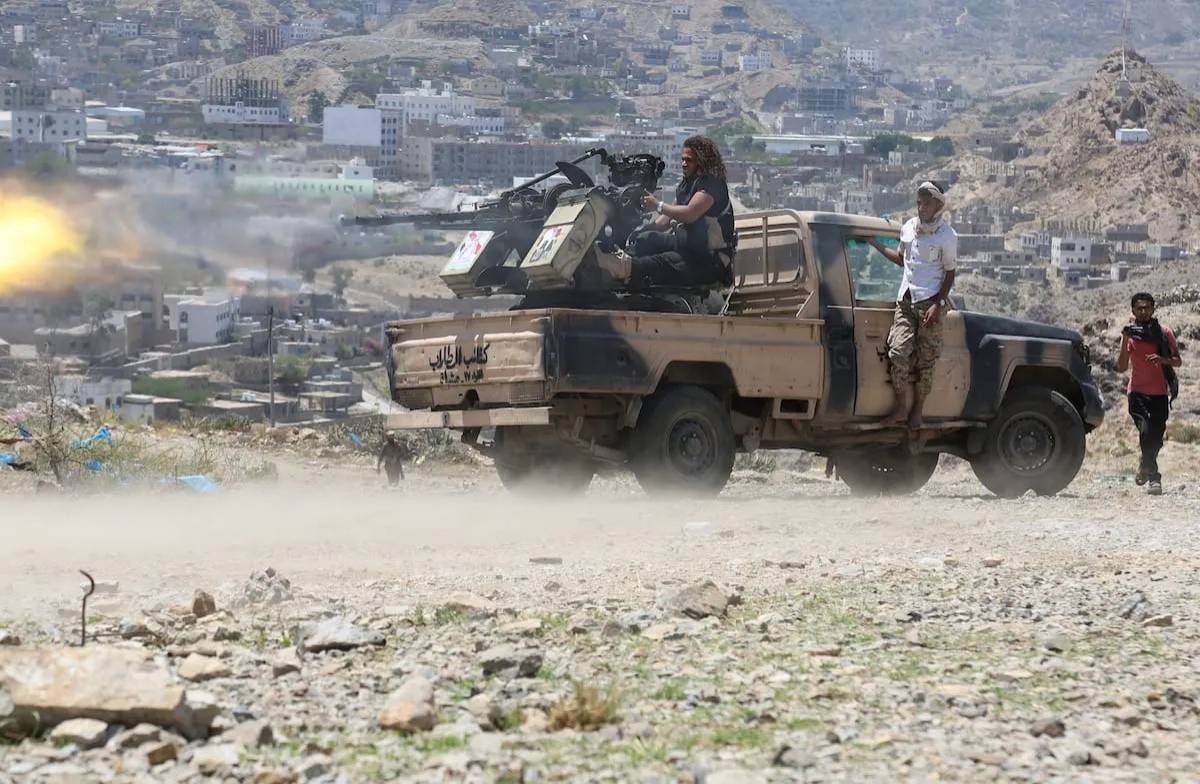
Yemeni army troops fight fierce battles against the Houthis across the Taiz and western Lahj fronts (Military media)
Government forces intensified operations across Yemen’s Taiz province over the past few hours, targeting Houthi movements and reinforcements under heavy air cover and recapturing positions the group had infiltrated as fighting entered a pivotal phase.
Successive Yemeni army statements reported 75 airstrikes on Houthi positions and movements in Taiz over 24 hours.
The strikes came in successive waves targeting concentrations of fighters, vehicles, military equipment, reinforcements, weapons depots, command-and-control centers and supply points, according to statements by armed forces spokesman Col. Majed al-Nuzaili.
The airstrikes extended across a broad stretch of Taiz's front lines, rather than concentrating on a single sector.
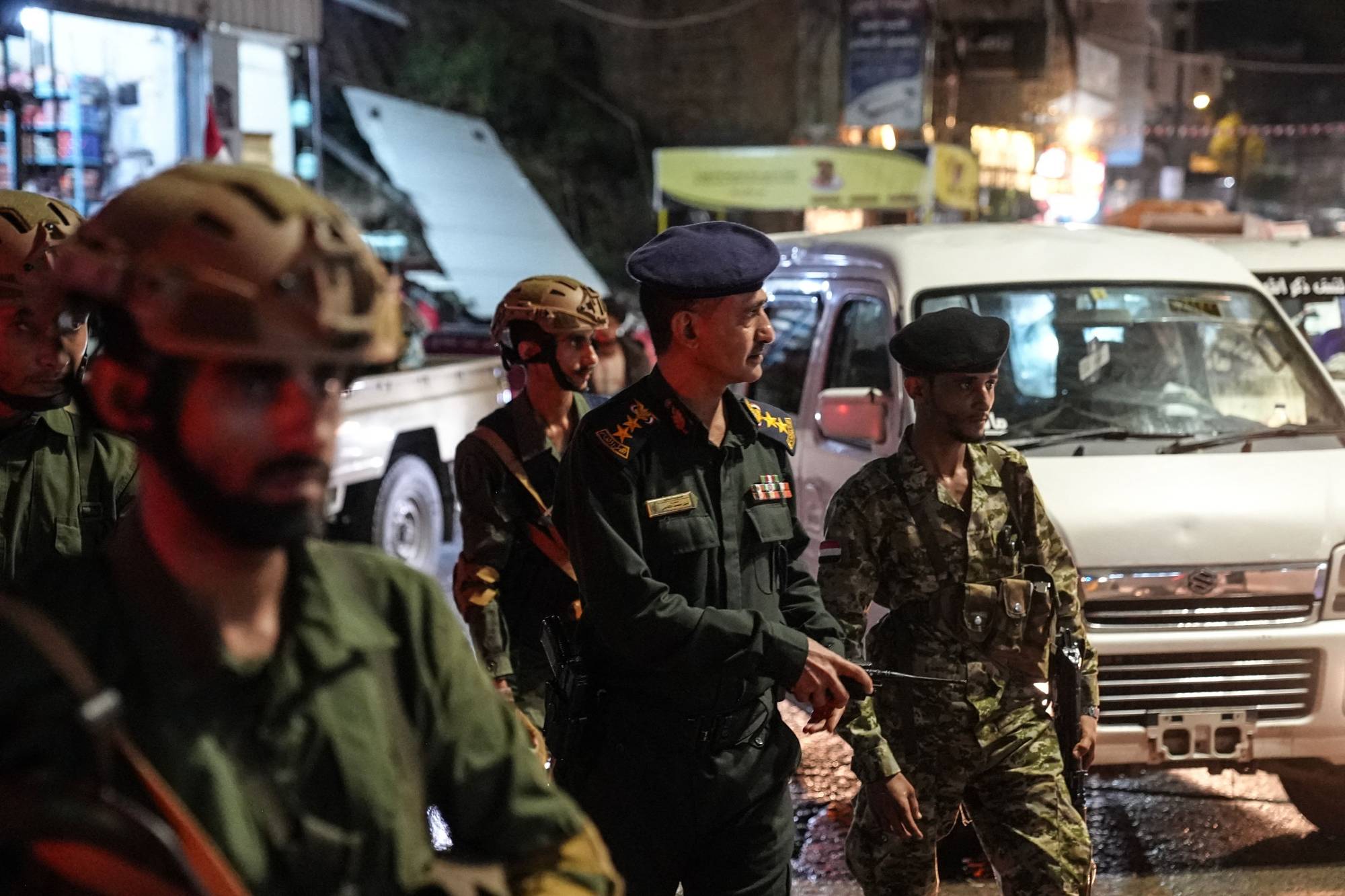
Security forces of the Yemeni government patrol a street and set up checkpoints in Taiz late on September 27, 2026. (Photo by AFP)
Strikes also hit Sanaa, Saada and Hajjah, indicating a widening confrontation and an effort by government forces to disrupt the movement and supply routes the Houthis use in their operations.
The strikes targeted Humair, Bani Bakari, Sami, al-Aqroudh, Sixty Street, al-A'mour and al-Wazi'iyah in Taiz, as well as Midi and Bani Hassan in Hajjah. A second wave targeted al-Rad'ah, al-Aqroudh, Bani Bakari, al-Kadhah, Mount Nu'man, al-Ajram and al-Marzam in Taiz.
The largest wave, comprising 27 airstrikes, targeted a missile depot, command-and-control centers, forward supply and weapons distribution points, concentrations of fighters, vehicles and military equipment.
It hit positions on Sixty Street north of Taiz city; Bani Omar; Humair in Maqbanah; eastern al-Wazi'iyah; al-Ahkoum and al-Athawir in Hayfan; al-Kadhah; Mount Nu'man; al-Kuraifat; Aqabat Munif; al-Tashrifat; al-Aqroudh; Sami; and al-Shaqab in Sabir al-Mawadim.
In another wave, Yemen's armed forces announced 15 airstrikes in Taiz, targeting Ras Dariz, al-A'mour, Jashi Athawir, Ras Hami at al-Khazzan on the al-Ka'awish front, and al-Junaid village in Hayfan. The military said the strikes neutralized dozens of fighters and reinforcements and destroyed equipment and vehicles.
The military statements suggest the strikes went beyond limited air support for front-line troops, forming part of operations targeting the Houthis' movement, supply and command networks across multiple fronts.
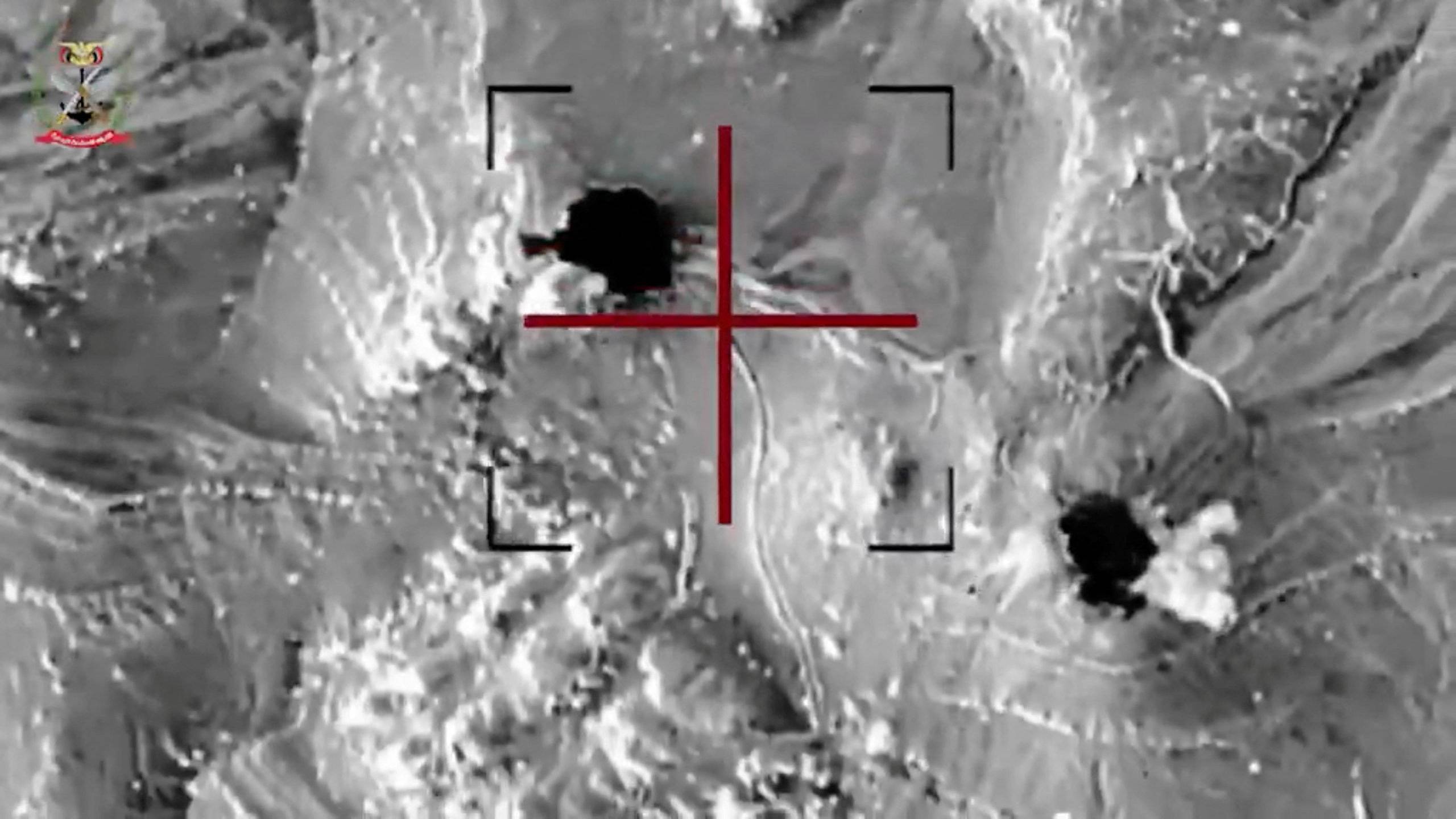
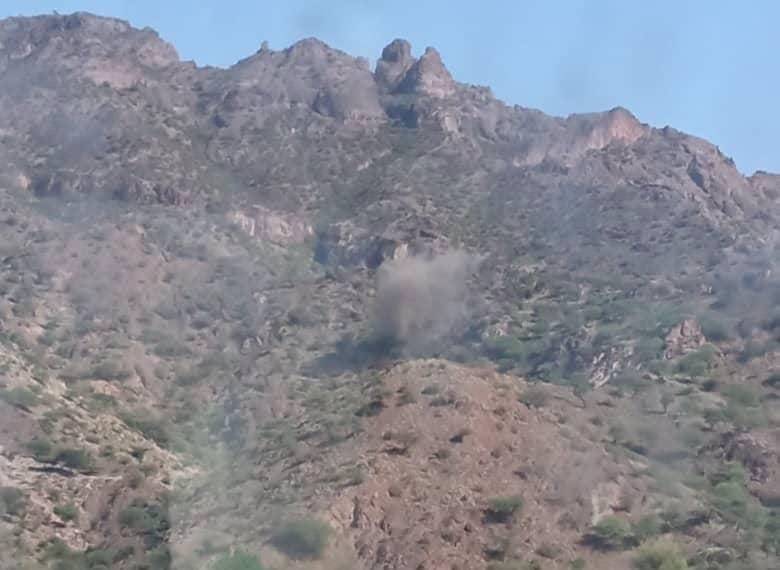
Smoke rises from explosions during what the Yemeni Armed Forces said were strikes targeting Houthi militia personnel, equipment and movements, at a location given as Taiz, Yemen in this still image from video released October 1, 2026. Media Center of the Yemeni Armed Forces/Handout via REUTERS
Attacks repelled
The strikes coincided with fierce clashes involving government forces and the Popular Resistance on several Taiz fronts, particularly Bani Bakari in Jabal Habashi, Humair in Maqbanah and al-Aqroudh southeast of the province, as well as al-Kadhah, Mount Han and the northern and eastern fronts of Taiz city.
Military sources said government forces repelled Houthi attacks and forced the attackers to retreat. On the Sami front southeast of the province, government forces and the Popular Resistance also repelled a Houthi assault before reinforcing their positions, while the Houthis withdrew toward Dimnat Khadir.
Sources said about 20 Houthi fighters were captured on the Sami front, along with Houthi vehicles. In al-Aqroudh, they reported that government fire killed about 30 Houthi fighters and wounded about 50 others.
A separate military tally put Houthi losses at about 100 fighters killed, dozens wounded and others captured following the group's attacks on several fronts in the province. Military vehicles were also disabled and weapons depots destroyed, according to the tally.
Taiz mountains formed a natural barrier against the Houthi advance (Military media)
Field assessments suggested the Houthi plan was to seize parts of rural Taiz and impose a siege on the city, with the group massing dozens of battalions for the operation.
Government forces and the Popular Resistance held their positions before some units began recapturing sites the Houthis had infiltrated in al-Shamayatayn, Jabal Habashi and Sami.
Beyond repelling the attacks, government forces, backed by the Popular Resistance and local residents, announced they had recaptured important areas in the Bani Omar subdistrict of al-Shamayatayn, south of Taiz.
Sources said the forces recaptured Dar al-Rahah and advanced toward Shi'b al-Darahim, while the Houthis suffered losses in personnel and equipment and several of their fighters were captured. Fighting continued at other positions.
Government forces say they have so far thwarted the plan to seize parts of rural Taiz and besiege the city. The fronts remain vulnerable to renewed attacks, particularly as Houthi military movements continue along roads linking different parts of the province.
Restrictions on Houthi movement routes
The developments coincided with continued airstrikes on routes used by the Houthis, extending the fighting beyond direct clashes over positions to attacks on reinforcements, vehicles and sources of supply.
Yemen's armed forces also announced broad precautionary measures to protect civilians, urging residents, drivers and civilian transport operators to avoid roads used by the Houthis to move fighters and military supplies until further notice.
The list included the Sanaa–Dhamar–Ibb–al-Qa'idah–al-Hawban–al-Qasr roundabout route and the al-Hawban–al-Dimnah–al-Rahidah–Hayfan–al-Qubaytah–al-Mafalis route.
It also included roads connecting Sharab, al-Rubai, al-Barh, al-Kadhah, al-Wazi'iyah, Mawza and Mokha, as well as roads through al-Aqroudh, Sami, al-Ayyar and Jabal Habashi.
The warnings indicated the widening scope of military movements. The armed forces stressed that the measures were temporary and precautionary and that protecting civilians and their property was a priority.
In a parallel development, air defenses announced they had intercepted and shot down Houthi suicide drones over Aden, Yemen's temporary capital. The army spokesman said the drones were downed before reaching their targets in civilian areas and neighborhoods.
Strikes were also announced against high-value targets in Sanaa and 11 high-value military targets in Saada, signaling an expansion of operations beyond the Taiz fronts into the Houthi heartland.
The Houthis' attempt to control Taiz cost them hundreds of deaths and injuries in a week (Military media)
Presidential consultations
Alongside the developments on the battlefield, Presidential Leadership Council Chairman Rashad Mohammed al-Alimi held extensive consultations on the situation in Taiz.
He received briefings on the operations from council members Abdulrahman al-Muharrami and Mahmoud al-Subaihi, the defense minister, the chief of the General Staff, the commander of the Fourth Military Region, and military and security officials in the province.
The briefings covered troop readiness, efforts to secure roads and supply lines, responses to attempted infiltrations and breaches, and Houthi losses from the fighting and airstrikes.
Al-Alimi said government forces would continue operations according to established plans.
The Houthis had started the war and the armed forces would end it, he said, according to official media, with the aim of restoring state institutions, recovering the capital Sanaa and ending the coup.
He also urged residents of Houthi-controlled areas to resist mobilization campaigns and prevent their children from being drawn into attacks he described as doomed to fail.
He renewed the state's commitment to what he called the "Safe Return Initiative," saying its doors remained open to those who chose to side with the state and its institutions.
Israeli Troops Block Olive Harvest in West Bankhttps://english.aawsat.com/arab-world/5325201-israeli-troops-block-olive-harvest-west-bank
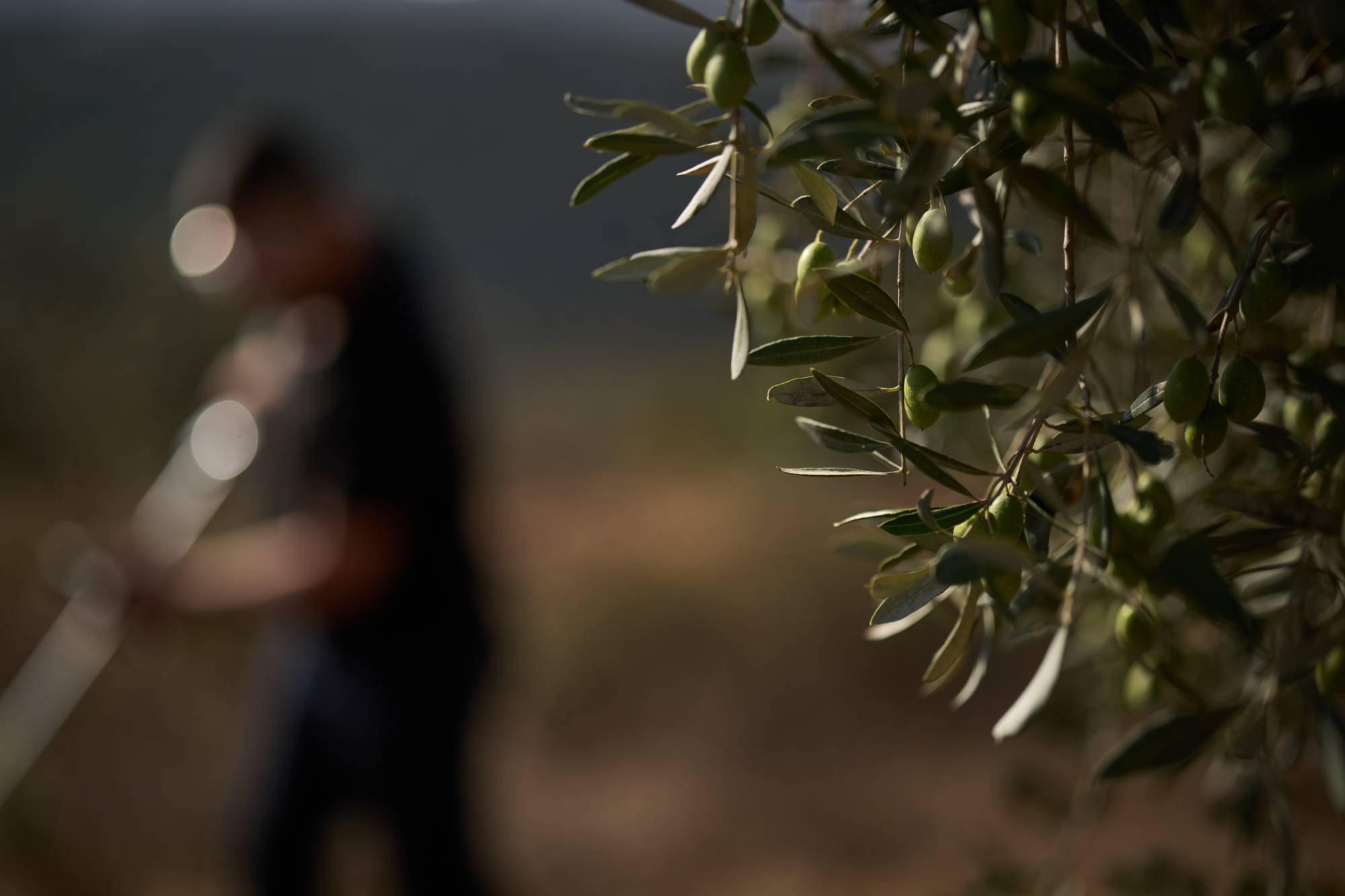
A Palestinian takes part in a community action to clear the area around the olive trees in preparation for the upcoming harvest season on the outskirts of the West Bank town of Birzeit, Friday, Oct. 2, 2026, in an area that, according to residents, they were unable to access last year due to Israeli army restrictions and settler attacks. (AP Photo/Leo Correa)
A Palestinian takes part in a community action to clear the area around the olive trees in preparation for the upcoming harvest season on the outskirts of the West Bank town of Birzeit, Friday, Oct. 2, 2026, in an area that, according to residents, they were unable to access last year due to Israeli army restrictions and settler attacks. (AP Photo/Leo Correa)
Israeli soldiers have barred Palestinian farmers and activists from harvesting olives in the northern West Bank, according to video footage obtained by The Associated Press.
The footage showed soldiers firing shots in the air and tear gas toward the Palestinian farmers and activists, while settlers were also seen in the area.
A Palestinian takes part in a community action to clear the area around the olive trees in preparation for the upcoming harvest season on the outskirts of the West Bank town of Birzeit, Friday, Oct. 2, 2026, in an area that, according to residents, they were unable to access last year due to Israeli army restrictions and settler attacks. (AP Photo/Leo Correa)
Israel's military said troops were deployed following reports of a confrontation, which was dispersed. It added that a security official at the scene fired shots into the air earlier, without elaborating. The military said no one was injured.
The olive harvest season in the West Bank is usually marred by tensions between Palestinian farmers and settlers. Israel has imposed new rules this year, prohibiting Palestinians from harvesting in what’s known as Area C, which is under Israeli security control and encompasses the majority of the territory’s agricultural lands.
Former Sudanese President Omar Hassan al-Bashir inside a cage in a Khartoum court during his corruption trial on August 31, 2019 (Reuters)
Sudan's former president Omar al-Bashir is seeking permission to travel abroad for medical treatment, his lawyer told AFP on Friday, saying the jailed ex-ruler requires tests unavailable in war-ravaged Sudan.
Bashir, 82, was recently transferred from a hospital in the northern city of Merowe to Aliaa Specialist Military Hospital in Omdurman, across the Nile from the capital Khartoum, after suffering health complications, his lawyer Mohamed El-Hassan El-Amin said.
El-Amin added that Bashir's condition "requires medical tests and cardiac imaging that are not currently available in Sudanese hospitals".
"There is no specific country being sought for treatment. He could travel to any country able to provide the required care," he told AFP.
In a statement on Wednesday, Bashir's family said his health had deteriorated to the point that treatment abroad had become "urgent", without disclosing details of his condition.
Bashir seized power in 1989 and ruled Sudan for three decades before being ousted in April 2019 following months of mass protests.
The International Criminal Court has accused him of genocide, war crimes and crimes against humanity over the Darfur conflict that erupted in 2003.
لم تشترك بعد
انشئ حساباً خاصاً بك لتحصل على أخبار مخصصة لك ولتتمتع بخاصية حفظ المقالات وتتلقى نشراتنا البريدية المتنوعة