Jordan Nixes Power For Water Deal With Israel Over Gaza War, FM Says

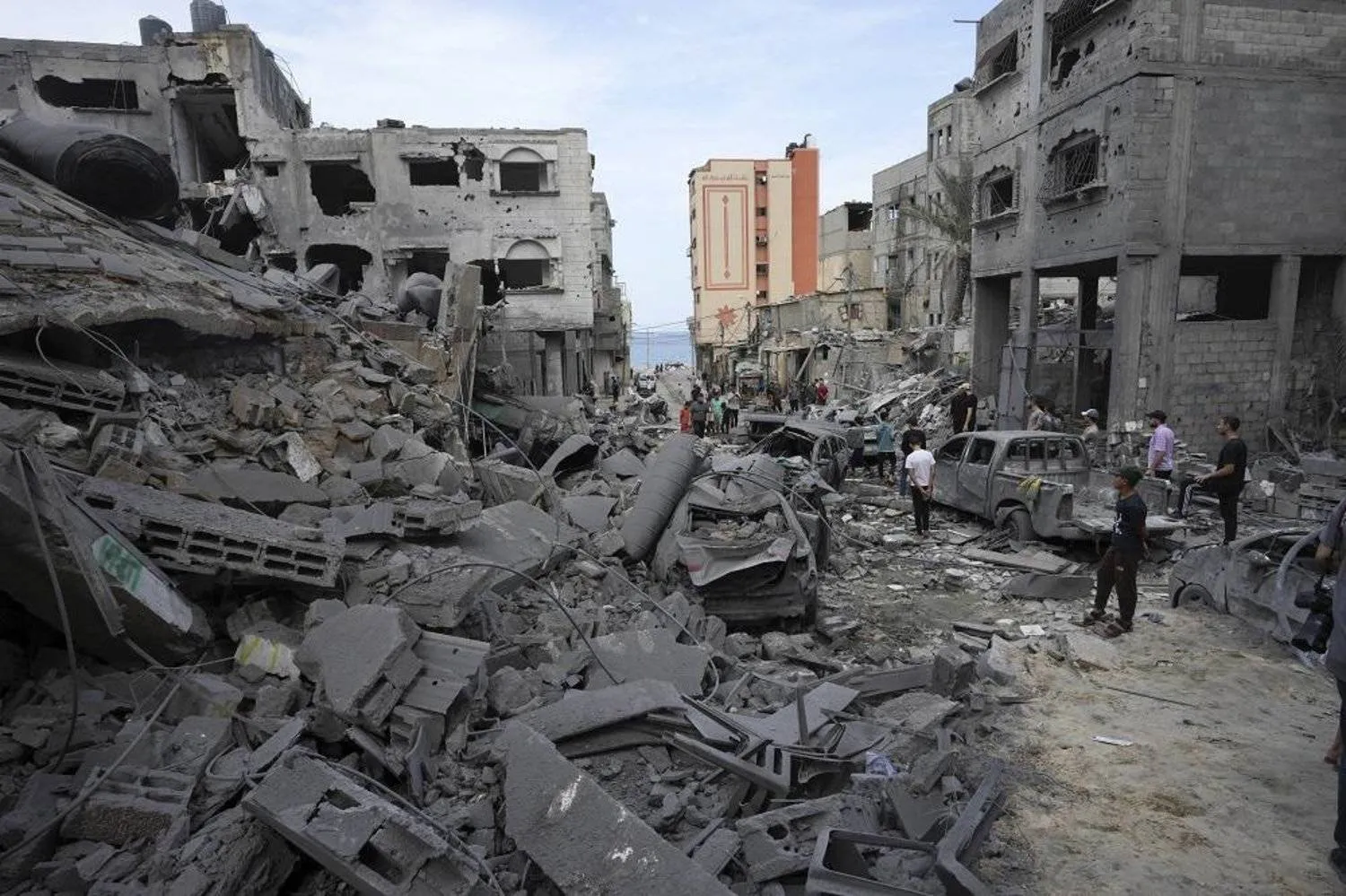
Palestinians inspect the rubble of the Sousi Mosque destroyed after it was hit by an Israeli airstrike at Shati refugee camp in Gaza City, early Monday, Oct. 9, 2023. (AP)
TT

Jordan Nixes Power For Water Deal With Israel Over Gaza War, FM Says

Palestinians inspect the rubble of the Sousi Mosque destroyed after it was hit by an Israeli airstrike at Shati refugee camp in Gaza City, early Monday, Oct. 9, 2023. (AP)

Jordan announced Thursday that it was dropping a planned deal with Israel to exchange solar energy for desalinated water, saying the Gaza war had made it unthinkable.

"The energy for water deal was supposed to have been done last month, but we are not going to sign it," Foreign Minister Ayman Safadi told Qatar-based news channel Al Jazeera in an interview.

"Can you imagine a Jordanian minister sitting down with an Israeli minister to sign an agreement while Israel is killing our own in Gaza?" AFP quoted Safadi saying.

"What Israel is doing has created a climate of hatred in which there can be no normal peaceful relations."

The two countries signed a declaration of intent to exchange Jordanian solar energy for Israeli desalinated water in Dubai in November 2021 as part of an agreement brokered by the United States.

But nearly six weeks of unrelenting Israeli bombardment of Gaza in response to the shock attack by Palestinian militants on October 7 that killed more than 1,200 people have sparked a wave of anger in the kingdom.

Thousands have taken to the streets demanding the abrogation of its 1994 peace treaty with Israel and the closure of the Israeli embassy.


Family of Tunisian Lawyer Ahmed Souab Announces His Release

The Tunisian flag flies over the Palace of Justice building in the capital, Tunis, on May 13, 2024 (Reuters).
TT

Family of Tunisian Lawyer Ahmed Souab Announces His Release

The Tunisian flag flies over the Palace of Justice building in the capital, Tunis, on May 13, 2024 (Reuters).

The family of prominent Tunisian lawyer Ahmed Souab said the Court of Appeal decided on Monday to release him.

Souab, a strong critic of President Kais Saied, had been serving a five-year prison sentence.

Tunisia’s judicial counterterrorism unit issued a warrant in April 2025 ordering the imprisonment of the well-known lawyer after he criticized the judiciary during the trial of a number of politicians accused in the “conspiracy against state security” case.


US Pulling Non-essential Staff from Embassy in Beirut amid Iran Tensions

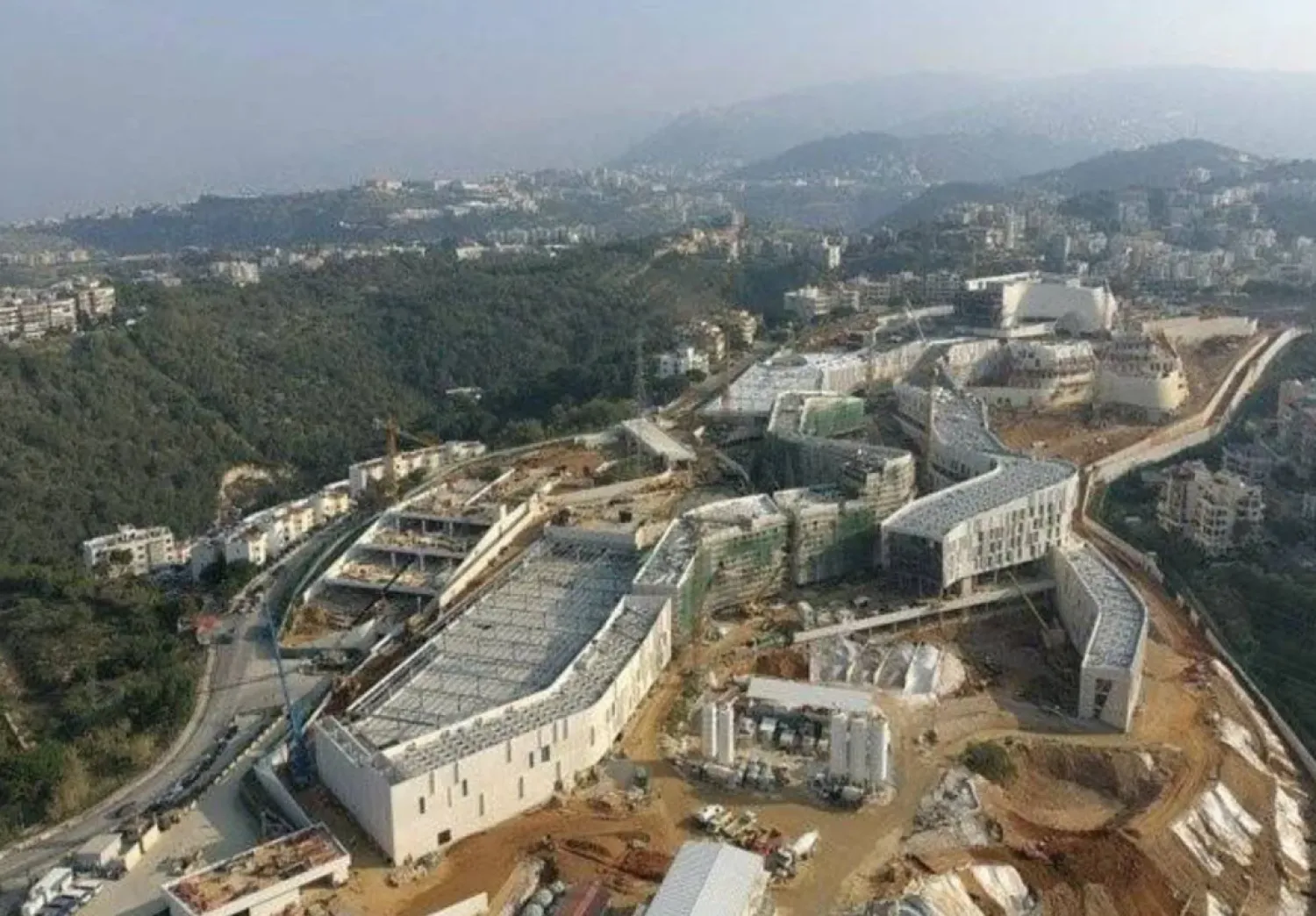
The new US embassy in Lebanon (US embassy Beirut Twitter account)
TT

US Pulling Non-essential Staff from Embassy in Beirut amid Iran Tensions

The new US embassy in Lebanon (US embassy Beirut Twitter account)

The State Department is pulling out non-essential government personnel and their eligible family members from the US embassy in Beirut, a senior State Department official said on Monday, amid growing concerns about the risk of a military conflict with Iran.

"We continuously assess the security environment, and based on our latest review, we determined it prudent to reduce our footprint to essential personnel," said a senior State Department official, speaking on the condition of anonymity.

"The Embassy remains operational with core staff in place. This is a temporary measure intended to ensure the safety of our personnel while maintaining our ability to operate and assist US citizens," the official said, AFP reported.

A source at the US embassy said 50 people had been evacuated, while an official at Beirut airport said 32 embassy staff, along with family members, had flown out of Beirut airport on Monday.

The US has built up its military presence in the Middle East, with President Donald Trump warning on Thursday that "really bad things will happen" if no deal is reached to solve a longstanding dispute over Tehran's nuclear program.

US interests were repeatedly targeted in Lebanon in the 1980s during the 1975-90 civil war, during which the US held the Iran-backed Hezbollah responsible for attacks including the 1983 suicide bombing against the US Marines headquarters in Beirut that killed 241 servicemen, and a 1983 suicide attack on the US embassy in Beirut that killed 49 embassy staff.


Morocco Flood Evacuees Mark Muted Ramadan Away from Home

© Abdel Majid BZIOUAT / AFP
TT

Morocco Flood Evacuees Mark Muted Ramadan Away from Home

© Abdel Majid BZIOUAT / AFP

When floods forced Ahmed El Habachi out of his Moroccan village, he thought the displacement was temporary. Weeks later, he broke his Ramadan fast in a tent, wondering when he would return home.

During the Muslim holy month of Ramadan, families traditionally gather over joyous feasts to break the daytime fast.

But the floods that battered northwestern Morocco in recent weeks have left evacuees like Habachi with little to celebrate.

"We prepare Iftar with whatever we can lay our hands on," the 37-year-old told AFP, referring to the fast-breaking meal.

"After all, it's not like we're home," he said, standing outside his blue tent marked "B190" in a makeshift camp set up by authorities near the city of Kenitra.

Just before sunset, women gathered around small stoves. They made do with no running water, and soon the smell of grilled fish wafted through the site.

The families then retreated to their tents for Iftar, with candles providing light for lack of electricity.

The heavy downpours have displaced over 180,000 people as of last week, authorities said, with at least four people killed.

- 'Two or three months' -

Most evacuees in the region have been allowed to return home, but that was not yet an option for Habachi and his children.

"Where would we sleep? There's still mud up to the knees," he said, showing cell phone videos of his home in Ouled Amer, some 35 kilometres (22 miles) away.

He said flooding from a nearby river swept away half of the walls of his house.

"We'll need two or three months to get back to normal," he added.

The camp managers serve each family water and a bag of rice per day.

Fatima Laaouj, 60, said this year's Ramadan was "nothing like what we were used to".

"We lack everything: bread, harira (traditional soup), milk... How can we buy anything when we have no money?" said Laaouj, who picks raspberries for a living.

"We don't have work anymore. The farmland is all destroyed," she added.

Not far from the camp, in the town of Mograne which was swamped by the neighboring Sebou River, villagers still waded through deep mud.

Several homes showed signs of flooding, with walls torn open and floors soaked.

Families had left their belongings stored on top of wardrobes out of fear the water could rise again.

- 'Usually, there's joy' -

After two weeks at the camp, 42-year-old Yamna Chtata returned to find her home turned into a pool of mud, with walls threatening to collapse.

Her voice choked with sobs, she said she was forced to observe Ramadan out of her own home for the first time in the two decades she has lived there.

"We are not celebrating... I have two daughters who are unwell because of the severity of the situation," she said.

Mansour Amrani, a 59-year-old factory security guard, was on his way to the local mosque to fetch drinking water.

That day, he planned to make couscous for his wife and three daughters to break the fast.

"Usually, there's joy when we make couscous," he said. "Today, it's no longer the case. We're afraid the house will collapse on our heads."

Abdelmajid Lekihel, a 49-year-old street vendor, believed it would take time for things to return to normal.

"Food products are no longer available like before," he said, adding that shortages at the local market made preparing the traditional Ramadan meals difficult.

Plus, lingering mud "prevents us from going to see a neighbour, a family member, a friend", he said.

"We're living one day at a time."