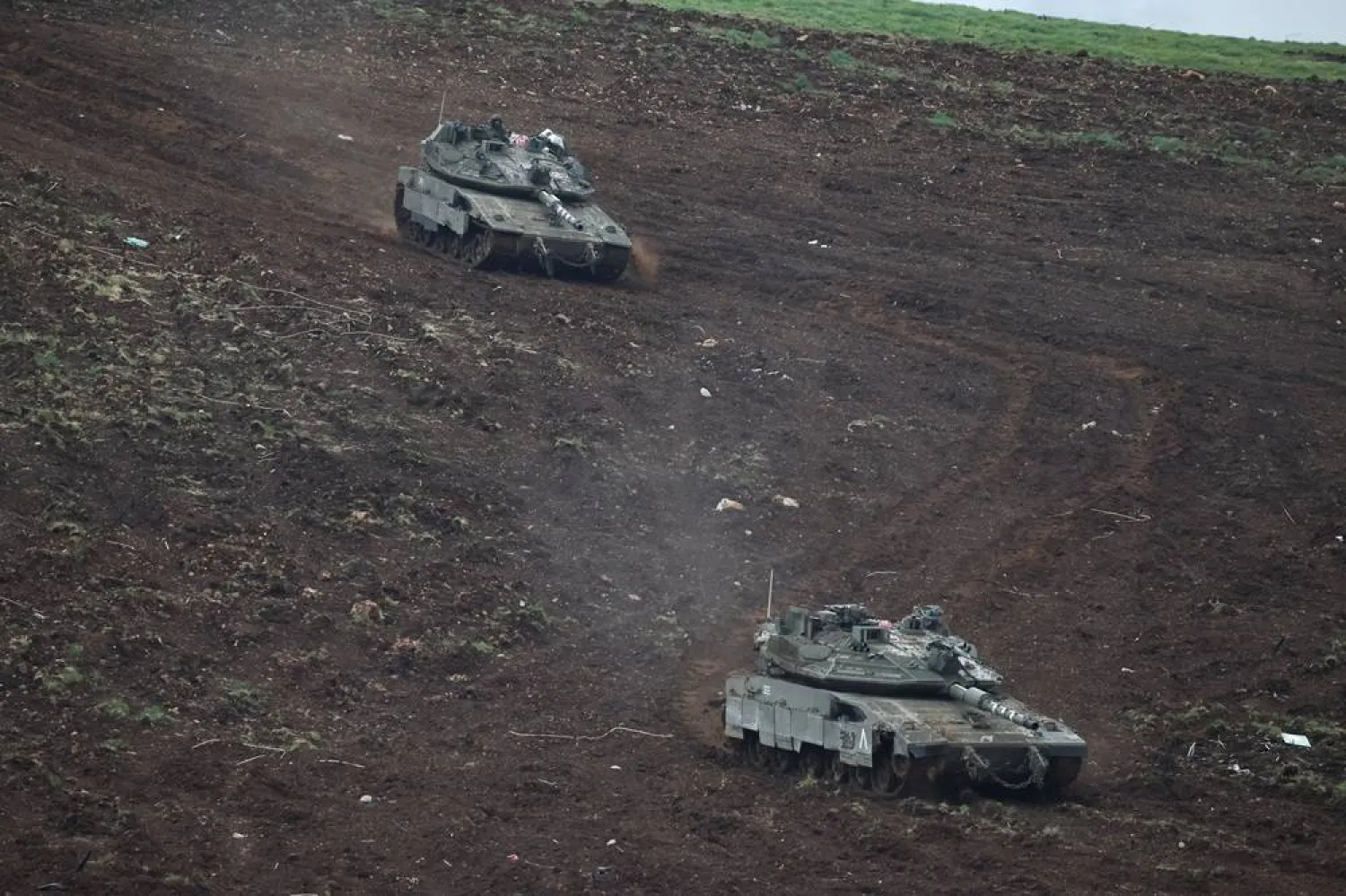
Hezbollah has scaled back attacks deep inside Israel as it focuses on confronting expanding Israeli ground incursions into southern Lebanon, while Israel has widened its list of targets across Lebanese territory.
By Saturday afternoon, Hezbollah had issued 22 statements claiming attacks against Israeli forces. Most operations targeted Israeli military positions along the border, air-defense and surveillance systems, and northern Israeli settlements.
The group also said it struck Israeli soldiers and vehicles inside Lebanese territory, including near the municipality of Khiam, the town of Maroun al-Ras, and newly established Israeli positions at Blat and Nimr al-Jamal opposite the border town of Alma al-Shaab. Hezbollah also reported attacks around the Khiam detention center, west of Blida and near Khazzan Hill in Adaisseh.
Efforts to repel Israeli ground advances now appear to top Hezbollah’s battlefield priorities after the Israeli army launched incursions along at least four axes, according to sources in southern Lebanon. They said Hezbollah had mobilized forces since the start of the war in preparation for a possible ground confrontation.
Israeli forces have sought to prevent reinforcements of fighters and equipment from reaching Hezbollah units in the south. Airstrikes severed key routes by hitting two bridges and two crossings linking areas south of the Litani River with those to the north, as well as roads between villages.
Sources stressed that these steps broaden Israel’s target list. “Israel also appears to be trying to empty the area by targeting ambulances and civil defense units in the south,” one source said.
Lebanon’s National News Agency reported that Israeli warplanes launched two airstrikes shortly after midnight on the Khardali road and bridge linking Nabatieh and Marjayoun near a Lebanese army checkpoint. The strikes left a large crater and completely cut the road.
Medical Facilities Targeted
Israeli strikes on ambulance centers and medical facilities since the start of the war have killed 22 paramedics, according to Lebanese officials.
The deadliest attack occurred Friday when an Israeli strike hit a primary health care center run by Lebanon’s Ministry of Public Health in the town of Burj Qalaouiyeh, killing 12 doctors, paramedics and nurses. The Health Ministry described the strike as a “flagrant attack on the country’s official health care network.”
Another strike hit a gathering point for the Islamic Health Authority and the Al-Risala Scouts Association in the town of Souwaneh, killing two people.
The Israeli military said Hezbollah was using ambulances and medical facilities for military purposes and accused the group of transporting rockets and other weapons in civilian trucks along Lebanon’s coastal areas.
Heavy Strikes Across the South
Israeli airstrikes also intensified across southern Lebanon, targeting towns including Majdal Zoun, Yater, Taybeh, Sajd in the Iqlim al-Tuffah region and Zawtar al-Sharqiyah in the Nabatieh district, where a strike destroyed a house belonging to the Harb family.
Two heavy strikes hit the town of Khiam in the Marjayoun district, while Naqoura came under artillery fire and warplanes targeted Kharayeb.
In the Hasbaya district, Israeli artillery shelled the outskirts of Shebaa. Later, Israeli forces targeted Bint Jbeil, Ainata, Aitaroun and the outskirts of Maroun al-Ras as clashes intensified with Hezbollah fighters along several fronts. The Wadi al-Hujayr area also came under artillery fire.
The escalation also affected UN peacekeepers. Kandice Ardiel, spokeswoman for the United Nations Interim Force in Lebanon, said a UN position near Mais al-Jabal was hit, likely by heavy machine-gun fire, sparking a fire at the site and slightly injuring a peacekeeper.
UNIFIL said it had opened an investigation and reminded all parties of their obligation to ensure the safety of peacekeepers at all times.