


Le Drian Pushes for Extending LAF Commander’s Term, Clashes with Bassil

French presidential envoy Jean-Yves Le Drian meets with head of the Free Patriotic Movement MP Gebran Bassil.(Photo: FPM website)
TT

Le Drian Pushes for Extending LAF Commander’s Term, Clashes with Bassil

French presidential envoy Jean-Yves Le Drian meets with head of the Free Patriotic Movement MP Gebran Bassil.(Photo: FPM website)

French presidential envoy Jean-Yves Le Drian continued his meetings with Lebanese politicians on Thursday, focusing on the necessity of maintaining calm in the South, avoiding sliding into a wide war, and extending the tenure of the Lebanese Army commander.

Local media said that the Lebanese Army talks led to a clash between the French diplomat and the head of the Free Patriotic Movement (FPM) MP Gebran Bassil.

According to informed sources, Le Drian emphasized the need to avoid vacuum in the position of army command, proposing an extension of the term of General Joseph Aoun. The majority of the political blocs favor this option, with the exception of the FPM, which is pushing for the appointment of a new commander.

This conflict with the FPM contributed to tension with Bassil, as the meeting between the two officials did not last more than 10 minutes.

Local channel LBC reported that Le Drian’s meeting with Bassil “ended in a dispute over the extension of the army commander’s term,” and that the FPM leader “rejected French intervention in this matter, being an internal issue.”

Meanwhile, Le Drian stressed the need to avoid such vacuum, especially under the current regional developments.

The French envoy started his tour on Thursday by meeting with the head of the Hezbollah parliamentary bloc, MP Mohammad Raad, in Beirut’s southern suburbs. Discussions touched on the presidential issue, the border developments, and the army commander’s tenure extension. He then met with Bassil, and left without making any statement.

Le Drian also held a lengthy meeting with the head of the Kataeb Party, MP Sami Gemayel, which the latter described as positive, pointing to a qualitative development in the French position.

Gemayel expressed concerns over Lebanon’s security, saying: “We are in a state of war, and we need a comprehensive national military institution that can protect Lebanon, and is capable of playing an important role in implementing Resolution 1701 and establishing Lebanon’s sovereignty over all its lands, and for this military institution to be strong and stable...”

The French envoy also met with MPs Michel Mouawad, Fouad Makhzoumi, Marc Daou, Michel Douaihy and Waddah Al-Sadiq, and members of the National Moderation bloc.

On Thursday evening, Le Drian hosted a dinner at the headquarters of the French Embassy in Beirut, attended by ambassadors of the member states of the Group of Five for Lebanon, which includes the Kingdom of Saudi Arabia, Egypt, Qatar, the United States, and France, to brief them on the discussions he had in Lebanon.


Iraq’s Top Court Says Baghdad Can Deploy Troops to Secure Borders in Kurdistan Region

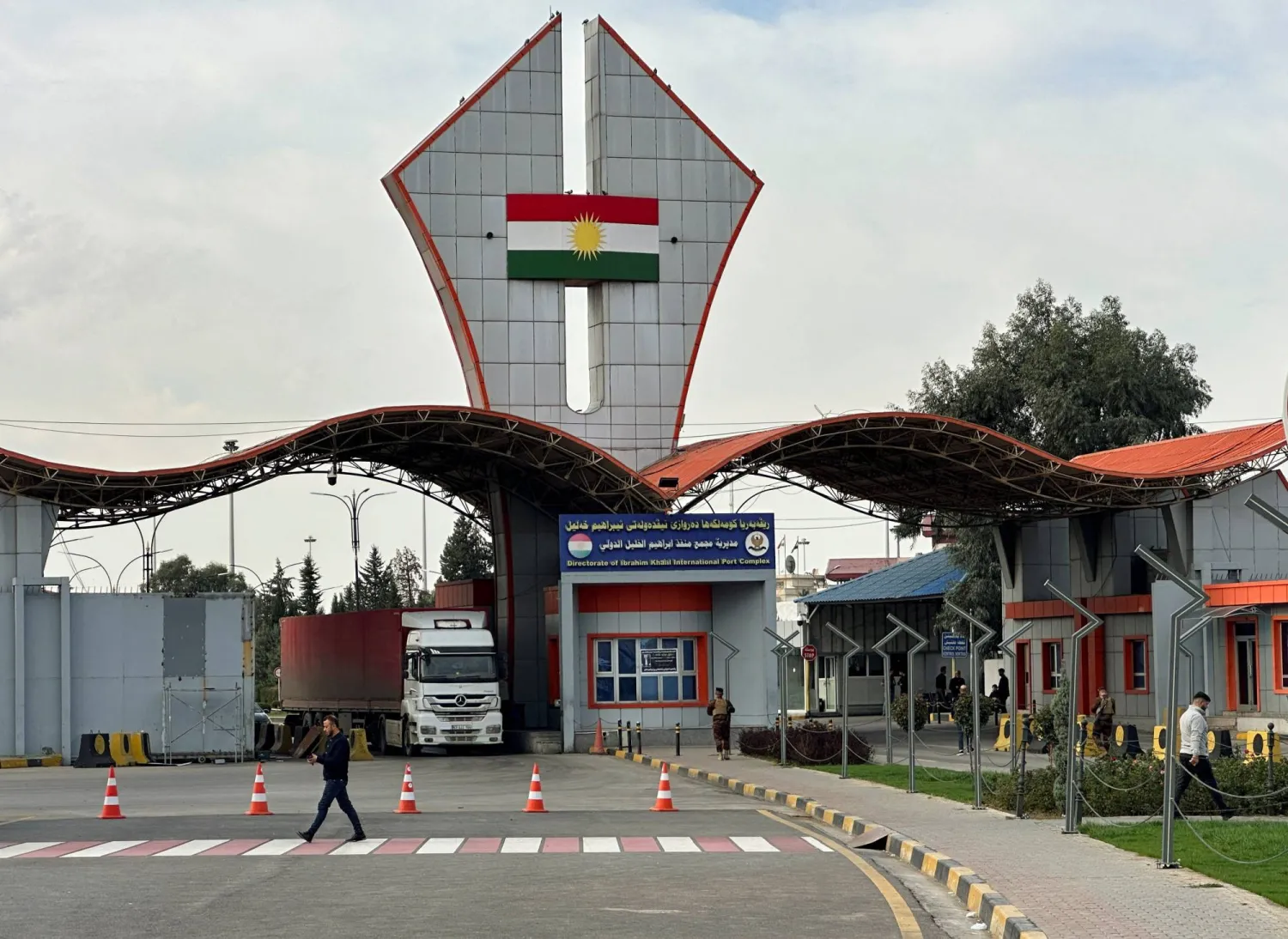
The Ibrahim Khalil border crossing between Iraq and Türkiye, on the outskirts of Zakho, in Duhok province, Iraq, November 24, 2026. (Reuters)
TT

Iraq’s Top Court Says Baghdad Can Deploy Troops to Secure Borders in Kurdistan Region

The Ibrahim Khalil border crossing between Iraq and Türkiye, on the outskirts of Zakho, in Duhok province, Iraq, November 24, 2026. (Reuters)

Iraq's highest court ruled on Wednesday that Baghdad can deploy federal forces along all international borders, including in the semi-autonomous Kurdistan region, backing Prime Minister Ali al-Zaidi's push to assert more central control. 

Al-Zaidi ordered federal authorities on Tuesday to take over border crossings run by the Kurdistan Regional Government, and has also demanded authority over oil fields controlled by Kurdish security forces, following a probe into smuggling at the state-run North Oil Company. 

The moves escalate tensions with the Kurdish authorities, and have been seen as part of a two-pronged pitch to assert central government authority, just a week after he also took on Kataib Hezbollah, a powerful armed faction aligned with Iran. 

The court decision, reported by Iraqi state TV, appears to be a victory for al-Zaidi, a 41-year-old multimillionaire businessman and political novice who came to power in a compromise just six ‌months ago. 

But political ‌analysts say it may yet prove difficult to implement moves that challenge the interests of ‌factions ⁠that have accrued substantial ⁠power over decades of ethnic and sectarian warfare, such as the Kurds and heavily armed factions loyal to Iran. 

London-based Renad Mansour, Deputy Director of the Middle East and North Africa Program and Director of the Iraq Initiative at Chatham House, said al-Zaidi is trying to establish a centralized political order. 

“Iraq's judiciary is very much supportive of the government's campaign... And the judiciary is important because if you look at the decisions being made, most of them come down to legal definitions. Most of them come down to corruption, illegality, sovereignty. These are hugely legal terms...,” he said. 

“So what this drive is about is the Iraqi government trying to reclaim some sovereignty... because it's such a fragmented state ⁠where there isn't a center.” 

A senior Shiite politician close to al-Zaidi told Reuters the prime ‌minister is focused on dismantling the model of a state within a state ‌that has prevailed in Iraq, a major global oil producer. 

Al-Zaidi’s strategy seeks to restrain armed factions who operate ‌above state authority and draw clearer limits on the Kurdistan region's independent exercise of authority over strategic economic and security matters, ‌the politician said. 

KURDISTAN REJECTS 'THREATS' 

The Federal Supreme Court ruled that federal authorities could oversee agencies operating at all border crossings, including those in the Kurdistan region, though they must coordinate with regional and provincial governments on customs administration, state television reported. 

The court said the federal oil ministry can also oversee and audit oil and gas fields, while Baghdad shares responsibility for managing the oil and gas they produce with regional governments and producing provinces, ‌state TV reported. 

Al-Zaidi has directed the federal oil ministry to manage oil fields under Kurdish security control in Kirkuk, Nineveh, Diyala and Salahuddin provinces, all of which are outside the ⁠Kurdistan region but have seen areas ⁠come under Kurdish forces' authority. 

The Kurdistan Regional Government on Wednesday rejected what it called "military language and threats" in a statement from the spokesman for the Iraqi military announcing the new measures. It said it was working with federal authorities to combat corruption and called for an end to oil smuggling across Iraq. 

Iraq's state news agency, citing what it said was an Iraqi government intelligence report, said oil belonging to the state-owned North Oil Company was being diverted and smuggled from Kirkuk, as well as from Sulaymaniyah inside Kurdistan, to Iran and onward to Afghanistan. 

A senior Iraqi security source close to recent military and security developments told Reuters a direct military confrontation with Kurdish regional forces was not an option for Baghdad, but the coming days could witness the deployment of additional federal forces in the vicinity of oilfields the government wants brought under central control. 

Oil smuggling allegations were also behind al-Zaidi's confrontation last week with Kataib Hezbollah. 

He ordered troops to stand by to enter the city of Jurf al-Sakhar in the Euphrates valley south of Baghdad, a Kataib Hezbollah stronghold. The group initially responded with defiance but allowed soldiers into the city under a compromise brokered by Shiite politicians. 


UN Warns of Growing Risk of Atrocities by Israel Against Palestinians

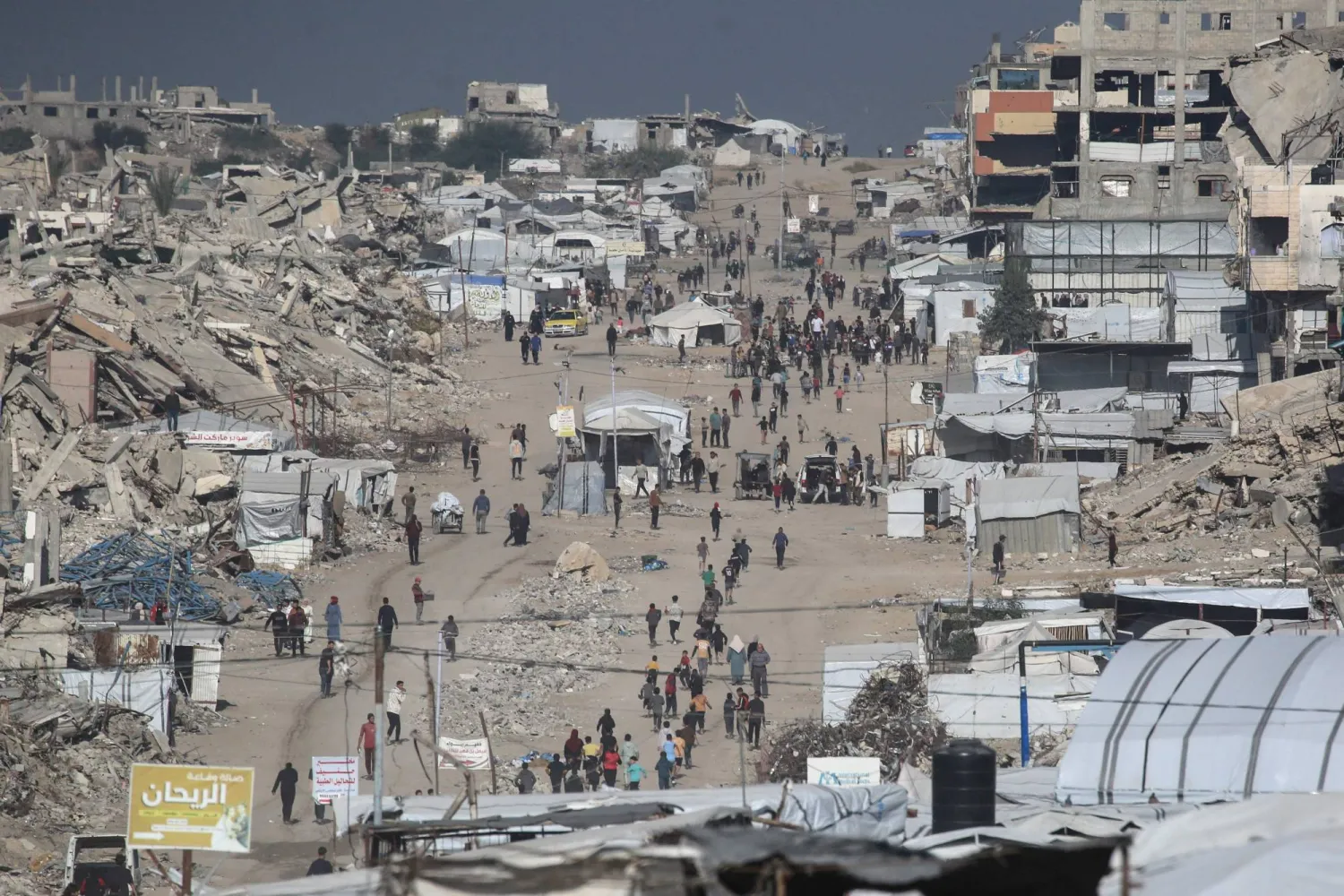
Displaced Palestinian children participate in a "Will and Life" race in Jabalia, northern Gaza Strip, on November 22, 2026. (AFP)
TT

UN Warns of Growing Risk of Atrocities by Israel Against Palestinians

Displaced Palestinian children participate in a "Will and Life" race in Jabalia, northern Gaza Strip, on November 22, 2026. (AFP)

The United Nations warned Wednesday of a growing risk of atrocity crimes being committed by Israel against the Palestinians, and urged all states to take immediate preventative action. 

UN rights chief Volker Turk said ongoing Israeli attacks, policies and violations against Palestinians indicated a "widening risk of further atrocity crimes" in the West Bank and the Gaza Strip. 

"Israeli government representatives at highest levels have time and again spelled out policies of annexation, ethnic cleansing and collective punishment in the West Bank," he said in a statement. 

"Across society, the incitement to hatred and to perpetration of violations amounting to atrocity crimes -- war crimes, crimes against humanity and even genocide -- has been appalling." 

Turk said his office had repeatedly warned about the risk of Israel's actions in Gaza posing a "real threat to the continued existence" of the Palestinians as a group. 

Most of Gaza's population of 2.1 million live displaced in tents or makeshift shelters in the territory, where Israel's military says it controls more than 60 percent of the land. 

"I am extremely worried about the increasingly widespread and systematic nature of the violations being perpetrated across both the West Bank and Gaza," Turk said. 

"Our warnings have not been heeded, and atrocity crimes continue to recur," said the UN high commissioner for human rights. 

"Civilians continue to be killed, and hundreds of thousands of Palestinians have been forcibly displaced, with senior Israeli officials indicating intent for such displacement to be permanent." 

Violence in the West Bank, occupied by Israel since 1967, has surged since Hamas's October 7, 2023 attack on Israel, which triggered the Gaza war. 

"All states have the obligation to act, now, to prevent further atrocity crimes against the Palestinians," said Turk. 

"There must be independent investigations, and those responsible must be held to account. The work of the international courts in this regard must be supported by all states." 

Turk also reminded Hamas and other Palestinian armed groups of their obligations under international law, including to protect civilians and to respect the safety of humanitarian operations. 


Drone Strikes Kill 19 Civilians in Southeastern Sudan

People watch the debris following a drone strike in the 72 neighborhood West of Omdurman, in Khartoum, Sudan, Sunday, Nov. 22, 2026. (AP Photo/Marwan Ali)
TT

Drone Strikes Kill 19 Civilians in Southeastern Sudan

People watch the debris following a drone strike in the 72 neighborhood West of Omdurman, in Khartoum, Sudan, Sunday, Nov. 22, 2026. (AP Photo/Marwan Ali)

Drone strikes by Sudan's Rapid Support Forces killed 19 civilians and wounded 20 others in two cities in Blue Nile state on Tuesday, Sudanese human rights group Emergency Lawyers said on Wednesday.

Residents who witnessed the attacks confirmed to Reuters that drone strikes had taken place.

Nineteen ⁠people, including six ⁠women, died in the state capital Damazin, where drones struck three residential neighborhoods on Tuesday night, Emergency Lawyers said in a statement on Facebook. The dead and 15 ⁠wounded in the city were members of three families, the group added.

Five other civilians were wounded earlier that day in Roseires, where the group said drones targeted the dam and power facilities. It warned that the attacks could disrupt electricity supplies across Blue Nile, which borders South Sudan and Ethiopia, ⁠and ⁠damage the national grid.

Both cities have taken in people fleeing fighting elsewhere in the southeastern state, including Bau and Geissan, Emergency Lawyers said.

The RSF said in August it had captured Geissan, part of a front along the Ethiopian border in its war with Sudan's army, which began in April 2023.