


Gaza War Extends into Beirut with Killing of Hamas Leader 

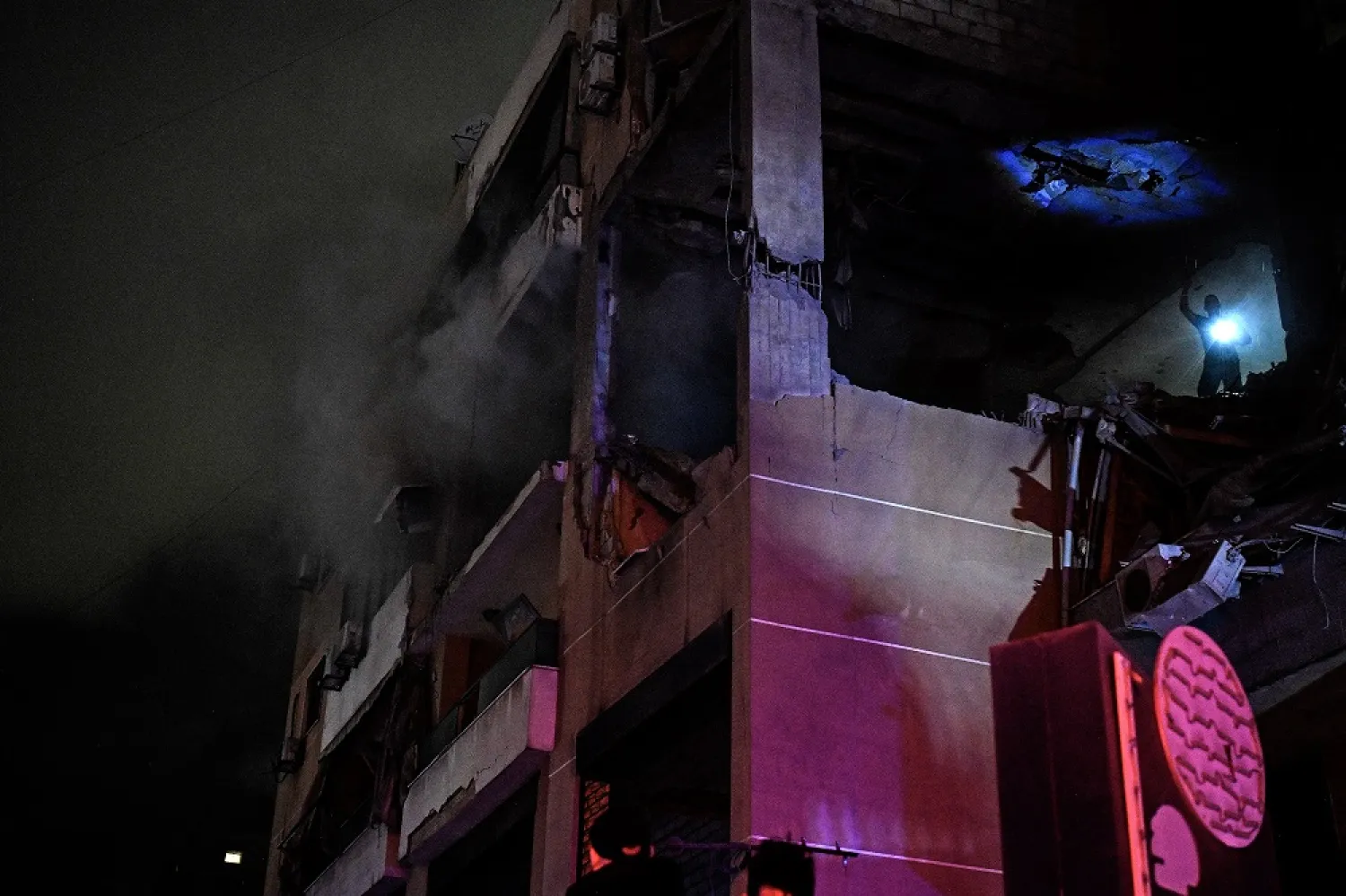
Smoke billows from a destroyed building at the site of an explosion in the southern suburb of Dahiyeh, Beirut, Lebanon, 02 January 2024. (EPA)
TT

Gaza War Extends into Beirut with Killing of Hamas Leader 

Smoke billows from a destroyed building at the site of an explosion in the southern suburb of Dahiyeh, Beirut, Lebanon, 02 January 2024. (EPA)

Israeli forces intensified their bombing of the Gaza Strip on Wednesday and told civilians to leave a refugee camp in the north of the Palestinian enclave after the war stretched into Lebanon with the killing in Beirut of the Hamas deputy leader. 

Israel has neither confirmed nor denied that it killed Saleh al-Arouri in a drone strike in the Lebanese capital on Tuesday. But military spokesperson Rear Admiral Daniel Hagari said Israeli forces were in a high state of readiness and prepared for any scenario. 

The assassination was a further sign that the nearly three-month war between Israel and Hamas was spreading across the region, drawing in the occupied West Bank, Hezbollah forces on the Lebanon-Israel border, and even Red Sea shipping lanes. 

Arouri, 57, who lived in Beirut, was the first senior Hamas political leader to be assassinated since Israel began its offensive against the militant group in response to its deadly rampage into Israeli towns on Oct. 7. 

Hamas politburo member Hossam Badran said in a eulogy for Arouri: "We say to the criminal occupation (Israel) that the battle between us is open." 

Israel had long accused him of orchestrating attacks on its citizens. But a Hamas official said he was also "at the heart of negotiations" conducted by Qatar and Egypt over the outcome of the Gaza war and the release of Hamas-held Israeli hostages. 

Hezbollah chief Hassan Nasrallah was due to make a speech in Beirut on Wednesday afternoon. Previously he had warned Israel against carrying out assassinations on Lebanese soil, vowing a "severe reaction". 

The heavily armed Iran-backed Hezbollah, a Hamas ally, has been exchanging near-daily fire with Israel across Lebanon's southern border since the Gaza war began. More than 100 Hezbollah fighters and two dozen civilians have been killed on Lebanese territory, as well as at least nine Israeli soldiers in Israel. 

Following Arouri's killing, the UN peacekeeping mission in Lebanon said it was deeply concerned about the possibility of an escalation "that could have devastating consequences for people on both sides of the border". 

Refugee camp under fire 

In Gaza itself, Israeli forces bombed Al-Nusseirat refugee camp in the northern part of the Hamas-ruled enclave overnight and into Wednesday, destroying several multi-floor buildings, residents and Palestinian media said. 

Israeli planes also dropped leaflets on Al-Nusseirat ordering people to leave seven districts. 

"You are in a dangerous combat area. The IDF is operating heavily in your area of residence. For your safety the IDF urge you to immediately evacuate this area and leave towards the known shelters in Deir Al-Balah (west)," the leaflets said. 

Israeli war planes and tanks also stepped up attacks on the Al-Bureij refugee camp. 

Hamas' armed wing said it had killed 10 Israeli soldiers in fighting in Al-Bureij and hit five tanks and troop carriers. The Israeli military said the number of its soldiers killed since its first incursion into Gaza on Oct. 20 had reached 177. 

In the Al-Maghazi refugee camp, health officials said at least four people were killed in an Israeli air strike on a house. They said three people were also killed in an air strike on a house in Rafah in the south of the Gaza Strip. 

Israel says it tries to avoid harm to civilians. But the total recorded Palestinian death toll has now reached 22,185, according to the Gaza health ministry. 

The war was triggered by a cross-border Hamas assault on Israeli towns on Oct. 7 in which Israel says 1,200 people were killed and some 240 hostages taken back to Gaza. 

Since then, Israeli bombardments have laid waste to much of the enclave. Its 2.3 million residents are engulfed in a humanitarian disaster in which thousands have been left destitute, crammed into shrinking areas in the hope they are safe and threatened by famine due to a lack of food supplies. 

'Veins of resistance' 

Hundreds of Palestinians took to the streets of Ramallah and other towns in the West Bank to condemn Arouri's killing, chanting, "Revenge, revenge". 

Iranian foreign ministry spokesman Nasser Kanaani said Arouri's killing would "ignite another surge in the veins of resistance and the motivation to fight against the Zionist occupiers..." 

Shortly before Arouri's killing, Hamas' paramount leader Ismail Haniyeh, who is also based outside Gaza, said the movement had delivered its response to an Egyptian-Qatari ceasefire proposal. 

He reiterated that Hamas' conditions entailed "a complete cessation" of Israel's offensive in exchange for further releases of hostages. 

Israel believes 129 hostages remain in Gaza after some were released during a brief truce in late November and others were killed during air strikes and rescue or escape attempts. 

Israel has vowed to keep fighting until it has wiped out Hamas, but it is unclear what it plans to do with the enclave should it succeed, and where that leaves the prospect of an independent Palestinian state. 


Attacks in Baghdad Breach Fragile Militia Truce

An Iraqi armored vehicle near the US Embassy in Baghdad (AFP)
TT

Attacks in Baghdad Breach Fragile Militia Truce

An Iraqi armored vehicle near the US Embassy in Baghdad (AFP)

A wave of coordinated attacks struck Baghdad in a sharp escalation of Iraq’s security tensions, pointing to a shift in armed factions’ tactics and signaling that an undeclared truce may have effectively collapsed, with the US’s “Victory Base” being among the targets.

The attacks began with a strike on the headquarters of Iraq’s Intelligence Service in the Mansour district. Security sources said the blast hit the communications tower and server systems inside the compound, killing two officers and wounding several personnel, some critically.

The Security Media Cell said a drone crashed inside the compound at 10:15 a.m., striking the communications tower, while air defenses moved quickly to engage it.

The Intelligence Service mourned one of its officers, describing the attack as a “terrorist” act carried out by outlaws. It said the strike was a failed attempt to disrupt its work and vowed to pursue those responsible and bring them to justice.

The repeated use of the term “terrorism” in official statements tied to attacks attributed to armed factions underscores rising friction between the government and these groups.

The escalation came two days before the end of a five-day truce announced by Kataib Hezbollah, which pledged not to target the US Embassy in Baghdad under mediation led by Supreme Judicial Council head Faiq Zaidan and National Security Adviser Qassem al-Araji.

The understanding appeared limited to the embassy, excluding other locations such as logistical support facilities near Baghdad airport.

Sources said the United States did not provide a clear response to the truce conditions, while the US chargé d’affaires denied the presence of weapons at Victory Base, saying it serves as a diplomatic support center.

Violence also flared outside Baghdad. The Al-Haliwa military airport in Tuz Khurmatu, east of Salahuddin province, was hit in an attack marked by four explosions.

The site hosts units from the 4th Regiment of the 52nd Brigade of the Popular Mobilization Forces. Initial reports pointed to no casualties, but the PMF later said one of its fighters was killed and others wounded, describing the strike as a “Zionist-American bombardment.”

Security forces imposed a cordon and launched an investigation.

In a parallel development, Ashab al-Kahf claimed a drone attack on Victory Base, located near Baghdad’s international airport, warning civilians to stay away from areas hosting US presence and saying its operations would intensify.

The claim is significant, suggesting the truce has effectively ended, even without a formal announcement.

US sources say the site referred to as Victory Base has not been an official military base since 2011, when the complex was handed over to Iraqi authorities. It is now used as a diplomatic support facility rather than a standalone combat base.

The developments point to growing signs that armed factions are rotating roles in carrying out attacks to obscure responsibility and complicate attribution, particularly in Baghdad, where targets span government facilities and sites linked to the US presence.

The escalation comes against a wider regional backdrop. Since fighting erupted between Iran, the US and Israel on Feb. 28, Iraqi factions close to Tehran have stepped up attacks on diplomatic sites and military bases in Iraq and the Kurdistan region, drawing a series of US strikes in response.

On March 19, 2026, Hadi al-Amiri, head of the Badr Organization, accused the US and Israel of carrying out attacks on PMF positions and called on Iraqi authorities to take firm measures to prevent further strikes, as tensions show no sign of easing.


European Nations Decry ‘Increasing Settler Terror’ in West Bank

Israeli soldiers take position as Israeli settlers barricade themselves in Joseph's Tomb in Nablus, March 17, 2026. (EPA)
TT

European Nations Decry ‘Increasing Settler Terror’ in West Bank

Israeli soldiers take position as Israeli settlers barricade themselves in Joseph's Tomb in Nablus, March 17, 2026. (EPA)

Diplomats from 13 European countries and Canada on Saturday slammed growing "terror" by settlers against Palestinians in the Israeli-occupied West Bank, after a surge in deadly attacks.

Since the start of March, six Palestinians have been shot dead in settler attacks in the West Bank, according to a tally of data from the Ramallah-based health ministry.

"We strongly condemn increasing settler terror and violence by the Israeli security forces inflicted upon Palestinian communities," said a joint statement from the diplomatic missions of countries including France, Spain and Britain.

"We are especially appalled by the killings of Palestinians over these past weeks. This violence by settler militias, aimed at taking over land and creating a coercive environment, forcing Palestinians to leave their homes, must end."

The statement called on the Israeli authorities to "prevent and prosecute the lethal violence, raids and attacks".

Israel's military chief Lieutenant General Eyal Zamir on Wednesday criticized the increase in settler attacks in the West Bank, calling it "morally and ethically unacceptable".

Alongside roughly three million Palestinians, more than 500,000 Israelis live in settlements and outposts in the West Bank, which are illegal under international law.

While most Israeli settlers do not engage in violence, a small but militant fringe has been linked to attacks on Palestinians.

More broadly, violence in the West Bank, which Israel has occupied since 1967, has risen sharply since the October 7, 2023, Hamas attack on Israel triggered the Gaza war.

It has continued despite the ceasefire and spiked since the start of the war against Iran.

According to an AFP tally based on Palestinian health ministry figures, Israeli troops or settlers have killed at least 1,050 Palestinians -- many of them gunmen, but also scores of civilians -- in the West Bank since the start of the Gaza war.

Israeli troops last week shot dead two children and their parents in a car, Palestinian authorities said. The Israeli military and police said soldiers opened fire on a vehicle over a perceived safety threat, killing four people inside.

Official Israeli figures say 45 Israelis, including soldiers and civilians, have also been killed in Palestinian attacks or during Israeli military operations.


Jordan Says 240 Missiles, Drones Fired at Kingdom Since Start of Middle East War

 Streaks of fire and light cross the night sky as an Israeli interceptor strikes an Iranian missile amid the US-Israeli conflict with Iran, over Tel Aviv, Israel, March 18, 2026. (Reuters)
Streaks of fire and light cross the night sky as an Israeli interceptor strikes an Iranian missile amid the US-Israeli conflict with Iran, over Tel Aviv, Israel, March 18, 2026. (Reuters)
TT

Jordan Says 240 Missiles, Drones Fired at Kingdom Since Start of Middle East War

 Streaks of fire and light cross the night sky as an Israeli interceptor strikes an Iranian missile amid the US-Israeli conflict with Iran, over Tel Aviv, Israel, March 18, 2026. (Reuters)
Streaks of fire and light cross the night sky as an Israeli interceptor strikes an Iranian missile amid the US-Israeli conflict with Iran, over Tel Aviv, Israel, March 18, 2026. (Reuters)

The Jordanian army said on Saturday that 240 missiles and drones had targeted the kingdom since the Middle East war began last month, most of which were intercepted.

"The total number of missiles and drones fired towards the kingdom since the start of the war has reached 240," the army said in a statement.

"The Royal Air Force successfully intercepted and destroyed 222 missiles and drones, while 18 missiles and drones were not intercepted by the air defenses," it added.

The military's media office, meanwhile, said 36 missiles and drones had targeted the kingdom over the past week.

"Fourteen missiles and 21 drones were intercepted and destroyed, while defenses were unable to thwart one attack," it added.

Since the United States and Israel launched strikes on Iran on February 28, the Islamic republic has struck countries across the region, including Jordan.

Iran has targeted US interests in the region, but attacks have also hit civilian infrastructure.

Jordan has recorded no deaths since the start of the war, with health authorities previously reporting 29 injured, all of whom have since been discharged from hospital.
