
22 Palestinians Receiving Medical Care in Israel Ordered to Leave

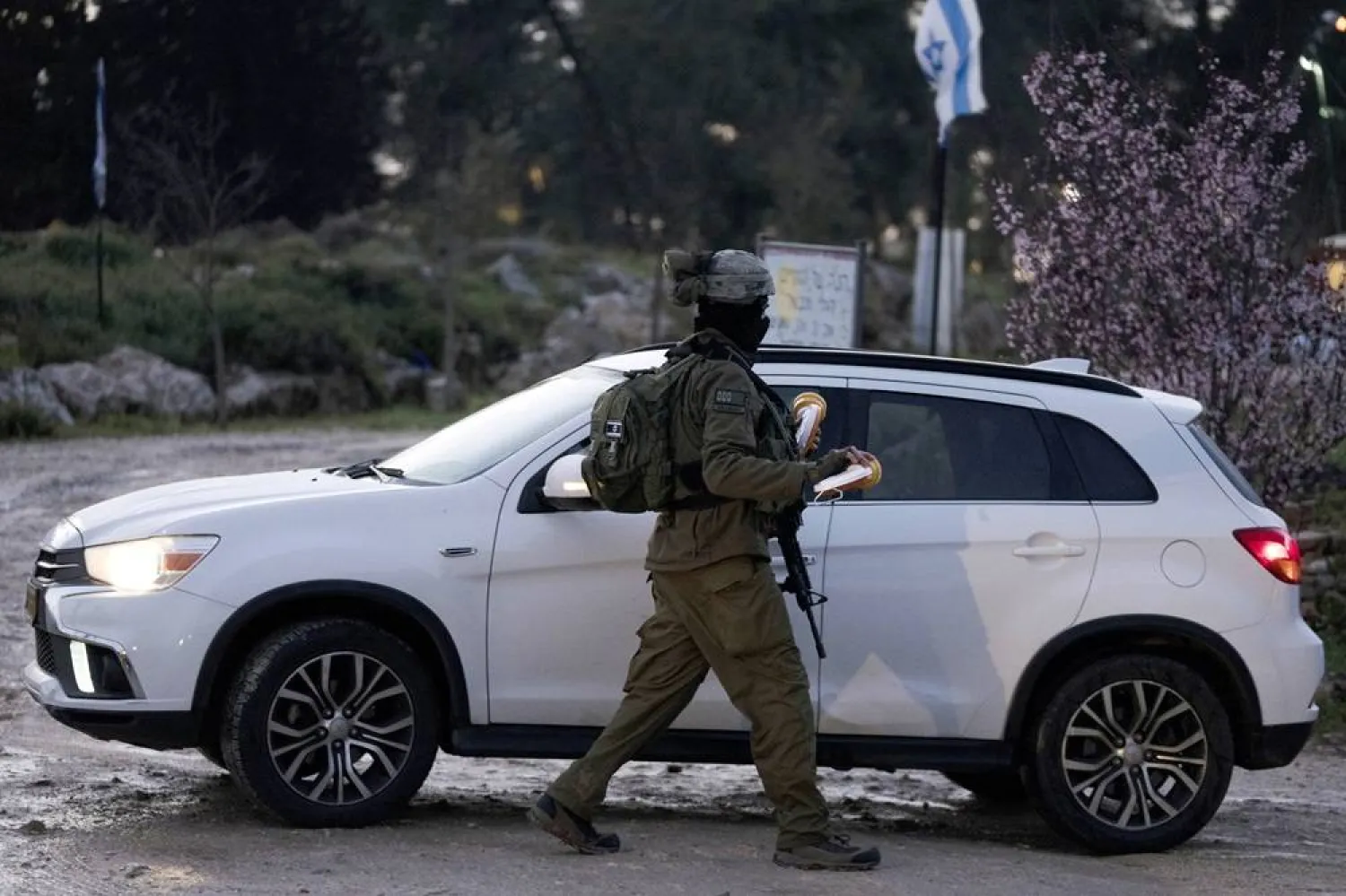
An Israeli soldier secures the entrance to a forest area that was the site of a shooting near the West Bank settlement of Migdal Oz, Tuesday, March 19, 2024. (AP)
TT

22 Palestinians Receiving Medical Care in Israel Ordered to Leave

An Israeli soldier secures the entrance to a forest area that was the site of a shooting near the West Bank settlement of Migdal Oz, Tuesday, March 19, 2024. (AP)

Israeli authorities have ordered a group of Palestinian medical patients who received treatment for life-threatening illnesses in Israel to return to the war-torn Gaza Strip, saying they no longer are in need of care.

Physicians for Human Rights-Israel, a local advocacy group, said at least 22 Palestinians are affected by the order. It said they include cancer patients, babies, new mothers and older people.

Before the war erupted last October, Israel allowed Palestinians with serious conditions to enter the country for treatment not available in Gaza. Those services have all but halted since the Oct. 7 cross-border attack by Hamas.

Nearly six months of fighting have displaced over 80% of Gaza’s population, destroyed tens of thousands of homes and left the territory’s health care system barely functioning. Physicians for Human Rights-Israel said the Israeli evacuation order has endangered the lives of recovering patients.

“Returning residents to Gaza during a military conflict and a humanitarian crisis is against international law and poses a deliberate risk to innocent lives,” the group said. “All the more so when it concerns patients who may face a death sentence due to insanitary conditions and hunger, along with the unlikely availability of medical care.”

Aseel Abu Raas, a spokeswoman for the group, said COGAT, the Israeli defense agency responsible for Palestinian civilians, had ordered the patients to leave by 3 a.m. Thursday.

In a statement, COGAT said Palestinians who do not need medical treatment will be returned to Gaza while those still needing treatment will stay, but did not elaborate.

Officials at two of the affected hospitals, Augusta Victoria and Makassed, east Jerusalem institutions that serve the Palestinian population, did not immediately return messages seeking comment. Sheba Hospital, a major Israeli institution, declined comment.

Israel previously rounded up and deported several thousand Palestinian laborers from Gaza who had been working in Israel before the war.

It remains unclear how many Palestinian medical patients remain in Israel for treatment.


Lebanon President Says Israeli Withdrawal 'Non-negotiable'

FILED - 16 February 2026, Lebanon, Beirut: Lebanese President Joseph Aoun speaks during a press conference. Photo: Markus Lenhardt/dpa
TT

Lebanon President Says Israeli Withdrawal 'Non-negotiable'

FILED - 16 February 2026, Lebanon, Beirut: Lebanese President Joseph Aoun speaks during a press conference. Photo: Markus Lenhardt/dpa

Lebanese President Joseph Aoun on Monday said Israel's withdrawal from the country's south was a "non-negotiable" demand that authorities would pursue through negotiations, days ahead of a new round of talks in Washington.

In a statement commemorating Israel's previous withdrawal from south Lebanon in 2000 after some two decades of occupation, Aoun said that "this year, the anniversary of the liberation comes as Lebanon is weighed down by a painful reality."

"Israeli attacks have not stopped and our dear southern villages are still suffering under a renewed occupation," he said.

Israeli troops who invaded Lebanon during the latest war with Hezbollah began on March 2 are operating inside a self-declared "yellow line" running around 10 kilometers (six miles) deep inside Lebanese territory.

Israel's military has also been conducting heavy strikes well beyond that area despite a ceasefire supposed to be in force since April 17.

"Lebanon will not accept this reality," Aoun said.

"The path to a full Israeli withdrawal will remain an uncompromised, constant national demand that the Lebanese state works to achieve through the option of negotiations," he added.

Lebanon and Israel began landmark US-brokered talks last month and are preparing for a fourth round in early June, preceded by a meeting between military delegations at the Pentagon on May 29.

Hezbollah chief Naim Qassem on Sunday reiterated his opposition to the direct talks with Israel and his group's refusal to disarm, as it keeps up attacks on Israeli targets in south Lebanon and across the border.

"If this government is incapable of guaranteeing sovereignty, it should go," Qassem said, adding: "Where is the sovereignty if America runs the cogs of the Lebanese state?"

Aoun said that negotiations were "neither a concession nor a surrender".

"The liberation of the south is a duty borne by the state with the support of its people," the president added.

Lebanese authorities have committed to disarming Hezbollah and they prohibited its military activities after it drew Lebanon into the Middle East war with rocket fire at Israel, in retaliation for strikes that killed Iran's supreme leader.

On Sunday, US Secretary of State Marco Rubio condemned what he called Hezbollah's "reckless call to overthrow Lebanon's democratically elected government", accusing it of "actively trying to drag Lebanon back into chaos and destruction."

Qassem had said that "the people have the right to go down onto the streets and to bring down the government" in response to Israeli attacks and US sanctions on the Hezbollah-linked Al-Qard Al-Hassan financial institution, which Washington wants Beirut to shut down.


Sources to Asharq Al-Awsat: New Syrian Parliament to Convene on June 8

People walk past the parliament building in Damascus on October 1, 2025. (AFP)
TT

Sources to Asharq Al-Awsat: New Syrian Parliament to Convene on June 8

People walk past the parliament building in Damascus on October 1, 2025. (AFP)

Syria’s new parliament will hold its first session on the preliminary date of June 8 after the approval of President Ahmed al-Sharaa's final share of seats in the legislature, sources told Asharq Al-Awsat.

The president boasts 70 seats in the 210-member parliament.

The sources said the final list of the share is being finalized with some amendments expected if some of the lawmakers, who won in recent elections, are unable to assume their duties.

The list includes figures from across Syrian segments. Efforts were made to “fill gaps” that were a result of the elections to raise the level of representation of major cities that have high populations.

Efforts were also sought to increase the number of females in parliament.

The statements mean that the president’s share was subject to negotiations with the Kurdish Syrian Democratic Forces (SDF). They revealed that the government agreed to “appeasing” the Kurdish forces by raising the level of parliamentary representation of the eastern region.

They spoke of the possibility of raising to more than ten representatives of eastern regions that used to be held by the SDF. Representation could also be increased in Manbij east of Aleppo through a presidential appointment. The same could apply for the two Ghouta regions in the Damascus countryside and for Druze and Christian segments.

Asharq Al-Awsat also learned that some members of the parliament may propose changing the official name of the legislature, known as the “People’s Assembly” that is associated with the ousted Assad regime, to “Syrian parliament”.

Such a change requires the approval of the majority of MPs, which is already available, said the sources.


Israel Seeks to Exclude its Occupation of South Lebanon from US–Iran Agreement

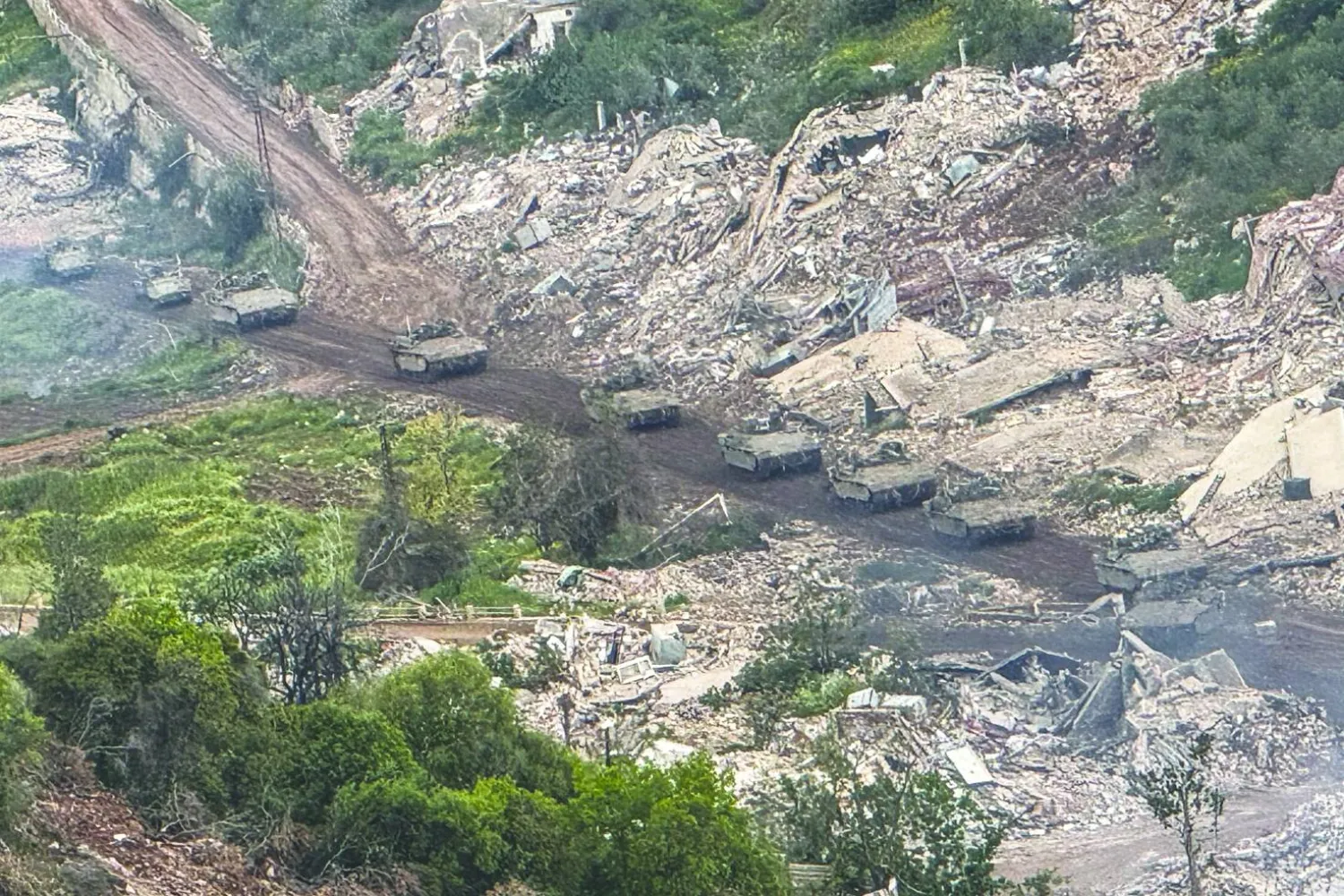
Israeli military vehicles drive on a Lebanese road towards the Israel-Lebanon border, as seen from northern Israel, May 4, 2026. REUTERS/Avi Ohayon
TT

Israel Seeks to Exclude its Occupation of South Lebanon from US–Iran Agreement

Israeli military vehicles drive on a Lebanese road towards the Israel-Lebanon border, as seen from northern Israel, May 4, 2026. REUTERS/Avi Ohayon

Israel reportedly is trying to separate its occupation of parts of southern Lebanon from the anticipated agreement between the United States and Iran.

An Israeli source said on Sunday that the preliminary US-Iran agreement, which would also stipulate a ceasefire in Lebanon, grants Israel “the right to defend itself against attacks by Hezbollah.” To that end, the Israeli army would remain in the 600 square kilometers areas it occupied in southern Lebanon over the past year, extending 10 to 15 kilometers beyond the border between the two countries.

According to Israel’s Kan11 broadcaster, PM Benjamin Netanyahu had expressed concern during talks with US President Donald Trump on Saturday over “linking a ceasefire agreement in Lebanon with the agreement in Iran”. But Trump had reportedly "appeased" Netanyahu saying the US is directly monitoring the direct talks between the Lebanese and Israeli governments, assuring his keenness on preserving Israeli interests.

The channel quoted “a source familiar with the details” as saying that “Israel received a green light not only to remain on Lebanese territory, but also to retain 25 military positions until the negotiations are successfully concluded and the objective of disarming Hezbollah is achieved.”

Israeli media outlets quoted a political official on Sunday as saying that Netanyahu had stressed during his talks with Trump that “Israel will preserve its freedom of action against threats on all fronts, including Lebanon,” claiming that Trump “reiterated his support for this principle.”

For his part, Trump had stressed that he would “stand firm” in the negotiations regarding the disarmament of Hezbollah and “Israel’s right to respond forcefully to any violation of the ceasefire in Lebanon”, according to the source.

The official said Netanyahu will brief the cabinet and security chiefs on Israel’s position, stressing that Israel will remain in Lebanese territory and continue its operations against Hezbollah as long as negotiations are ongoing.

He added that Israel is committed to the ceasefire and does not strike all Hezbollah-linked locations, such as Beirut, but, backed fully by the United States, it targets Hezbollah cells and drones preparing attacks through so-called “preemptive strikes”.

Since October 2024, Israel continues its military operations and occupation of parts of south Lebanon despite a ceasefire agreement reached in November 2024.

Hezbollah launched six drones toward the Galilee, which Israel used as a pretext to escalate its incursion and expand its occupation, destroying villages, displacing 1.2 million Lebanese, and killing over 3,000 people.

Hezbollah’s operations displaced tens of thousands of Israelis in the north and killed 30, including 22 soldiers.