


Israel Plans to Adjust Gaza War Tactics after Killing Aid Workers

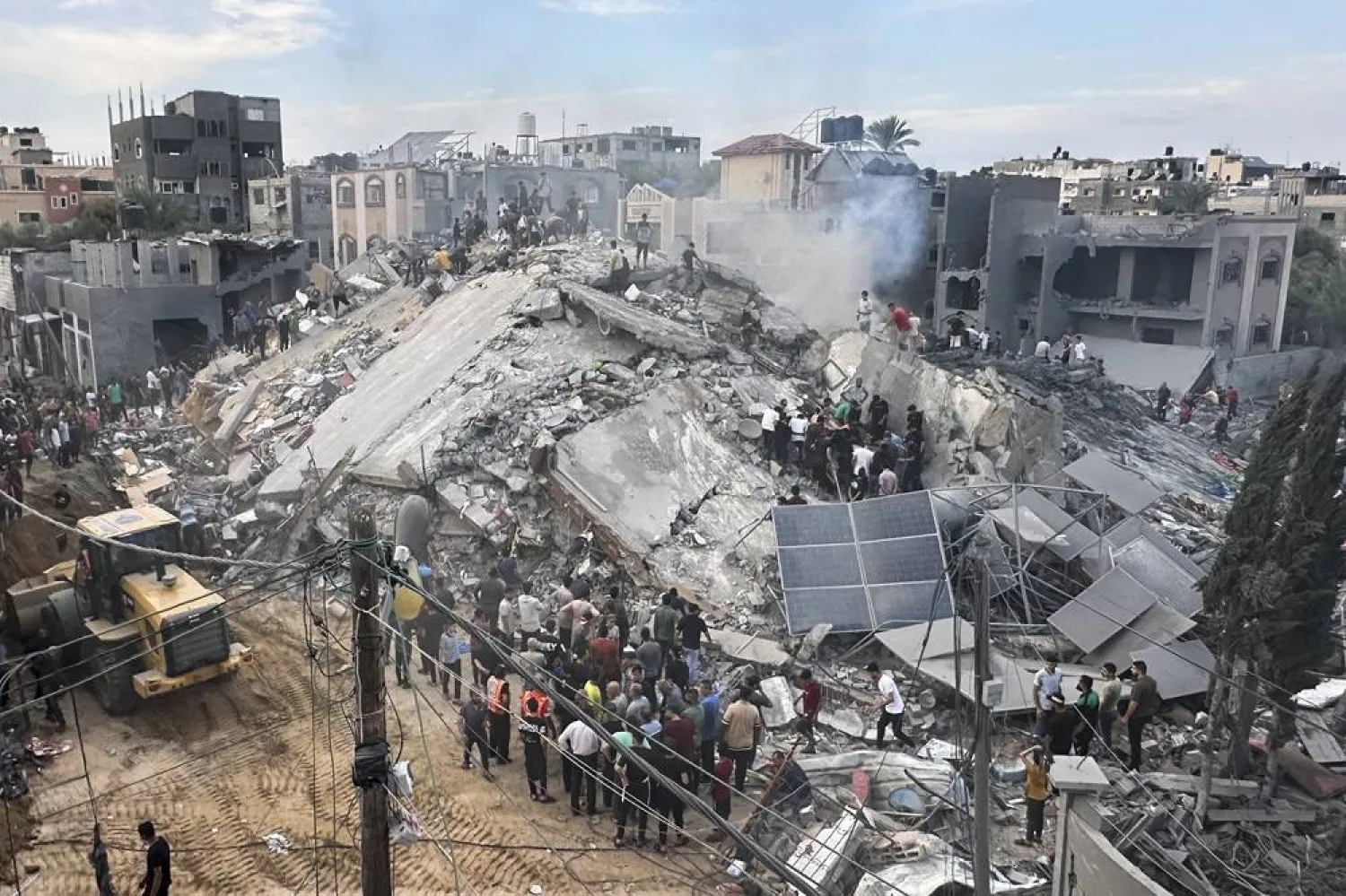
Palestinians look for survivors following Israeli airstrike in Nusseirat refugee camp, Gaza Strip, Tuesday, Oct. 31, 2023. (AP)
TT

Israel Plans to Adjust Gaza War Tactics after Killing Aid Workers

Palestinians look for survivors following Israeli airstrike in Nusseirat refugee camp, Gaza Strip, Tuesday, Oct. 31, 2023. (AP)

Israel said on Thursday it would adjust its Gaza war tactics after killing seven aid workers in an air strike that the military called an operational accident, though the process may take weeks while an investigation proceeds.

Monday's incident has stoked Western anger at the mounting civilian toll in the Palestinian enclave, especially as the slain World Central Kitchen staff included Australian, British and Polish citizens along with a US-Canadian dual national.

Israeli leaders have voiced sorrow over what they said was a misidentification of a WCK convoy at night in a combat zone.

Some local media reported, based on unnamed sources, that the convoy was hit repeatedly from the air despite having coordinated its route in advance with the military - possibly due to a false belief that gunmen were aboard it or close by.

WCK's founder, chef Jose Andres, told Reuters he believed his food delivery team had been "systematically" targeted.

Asked to respond, Israeli government spokesperson Raquela Karamson said during a media briefing: "This was unintended."

A military investigation was under way. She said: "In the coming weeks, as the findings become clear, we will be transparent and share the results with the public."

"Clearly something went wrong here, and as we learn more and the investigation reveals exactly what happened, and the cause of what happened, we will certainly adjust our practices in the future to make sure this does not happen again."

Israel Ziv, a retired army general who formerly commanded the Gaza division, said the incident may have resulted from the military enabling more junior officers to authorize air strikes.

War fog

Whereas during quieter periods such an operation would require a green light from a division commander or a general in charge of regional forces, he said, "in wartime the situation is utterly transformed, because the number of threats is never-ending".

"If you don't allow greater latitude, further down the ranks, on opening fire, you endanger the troops and the war."

Ziv noted that Israel, which went to war after Hamas gunmen rampaged in its southern towns and army bases on Oct 7, has been fighting both to destroy the Palestinian group’s military capacity and deny it access to humanitarian aid sent to Gaza.

"That complicates the situation," he told Reuters.

As a preliminary move to make amends for the WCK deaths, Israel said it would set up a joint operational coordination room with humanitarian agencies, located within the military's Southern Command - where Gaza missions are directly managed.

An Israeli security official who spoke on condition of anonymity said ground forces in Gaza were down to around a quarter of their numbers at the height of the invasion, and focused on more pinpoint missions and securing conquered areas.

"This may have contributed to a feeling of 'sitting duck' vulnerability. Troops prefer to be on the offensive, rather than static and potentially open to attack or to seeing the enemy operate with relative freedom," the official said.

"The investigation will have to determine, among other things, whether this kind of thinking affected the judgement of whoever decided that the convoy should be struck."

More than 33,000 Palestinians have been killed in the war, Gazan medical officials say. Hamas has said 6,000 of its fighters are among the fatalities. Israeli officials say the Palestinian combatant death toll is more than twice as high.

"There is no war without mistakes - quite the opposite," Ziv said. "But usually in this kind of combat the number of non-combatants killed, in relation to enemy dead, is higher than what the IDF (Israel Defense Forces) has caused (in Gaza)."


Meeting between al-Zaidi, Trump Raises Questions in Baghdad

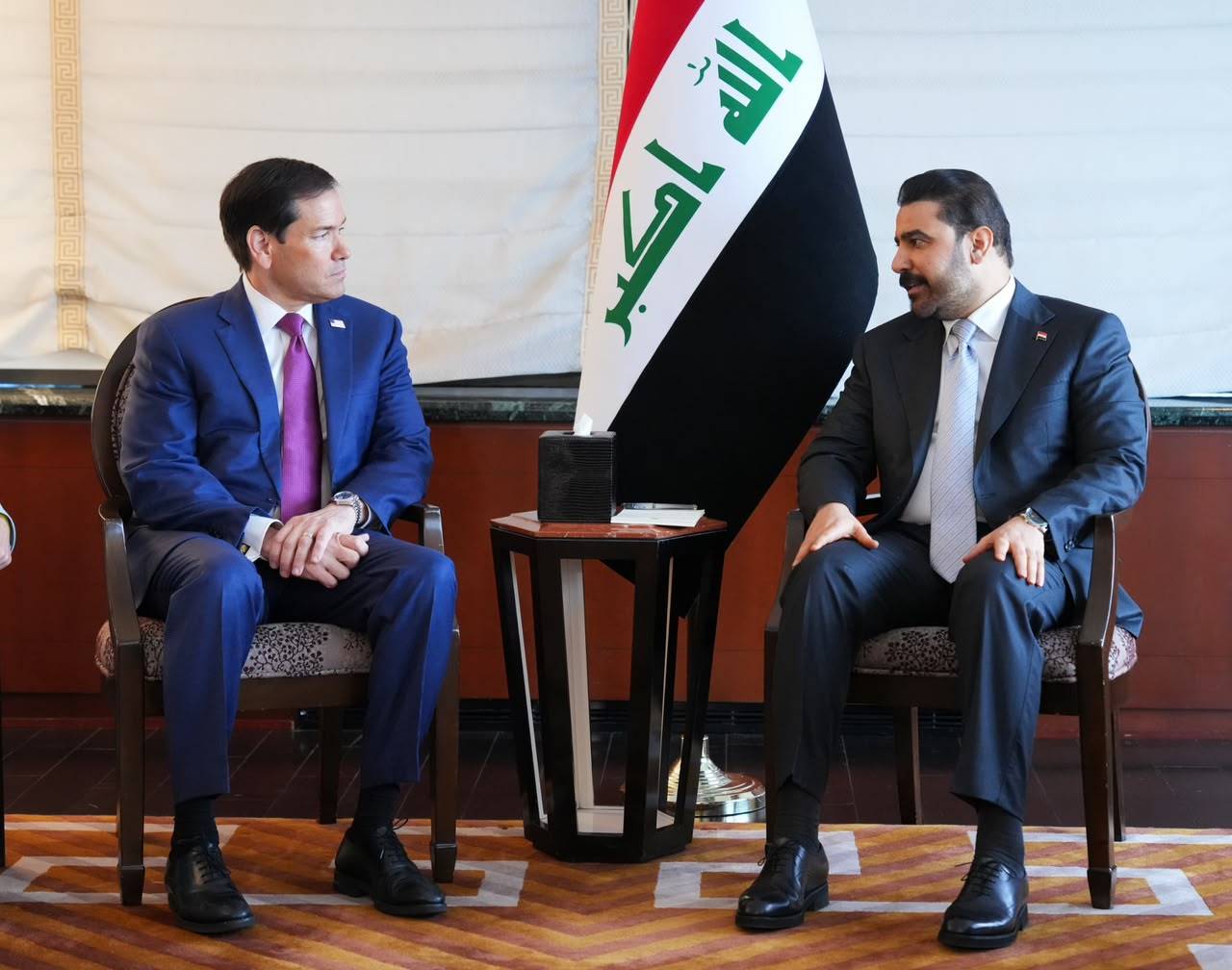
Iraqi Prime Minister Ali al-Zaidi meets with US President Donald Trump in New York on September 23, 2026. (Iraqi government)
TT

Meeting between al-Zaidi, Trump Raises Questions in Baghdad

Iraqi Prime Minister Ali al-Zaidi meets with US President Donald Trump in New York on September 23, 2026. (Iraqi government)

A meeting between US President Donald Trump and Iraqi Prime Minister Ali al-Zaidi in New York has raised questions due to the complete absence of the Iraqi delegation, coming just one day after Baghdad’s announcement that it would complete the plan to impose state monopoly over arms in June 2027.

The plan was supposed to be complete by the end of September, but it was postponed to next year.

A photograph released by the Iraqi government's media office on Wednesday showed al-Zaidi alone during the meeting, which was attended by Trump alongside senior US administration officials, including US Secretary of State Marco Rubio and Treasury Secretary Scott Bessent.

Al-Zaidi's office said that he discussed with Trump efforts by Iraq and the US to boost regional and international security and stability.

The government offered no explanation about the absence of the Iraqi delegation, which included the ministers of foreign affairs, finance, and electricity, and other officials.

Iraqi observers said al-Zaidi attended the meeting alone due to American suspicions that the discussions may be leaked to other delegation members, who are members of the Iran-aligned Coordination Framework coalition.

An Iraqi politician close to the State Administration coalition said the way the meeting was held “reflects American unease, especially by Trump, over the stalled process to impose state monopoly over weapons.”

According to official statements, September 30 will not mark the completion of the arms control process, but it will instead serve as the launching point for a new phase extending until June 2027.

Iraqi Prime Minister Ali al-Zaidi meets with US Secretary of State Marco Rubio in New York. (Iraqi government)

Al-Zaidi has evidently managed to convince the Americans to grant an additional grace period for the arms control plan, particularly after the new deadline was backed by US envoy to Iraq Tom Barrack.

Independent Iraqi politician Salah al-Arbawi said it remains to be seen whether the timetable that will be announced at the end of the month will tip the balance in favor of any political parties in the dispute over the factions’ weapons.

In remarks to Asharq Al-Awsat, he said the political parties must handle the factions’ weapons “rationally and calmly.”

He noted that al-Zaidi has managed to restore his control over the plan after it encountered obstacles in recent weeks.

Experts believe that recent discussions on the amendment of the arms control plan could turn into an opportunity to improve Iraqi-American relations.

Researcher Abbas Abboud said that the Iraqi-American relationship is being “restructured” by Barrack.

Baghdad’s relations with Washington’s allies in the region hinge on “decoupling Iraq from Iran”, he told Asharq Al-Awsat.

US Secretary of State Marco Rubio had issued a direct warning to Baghdad to "disarm the militias to avoid the balkanization of Iraq."

Rubio underlined US support for al-Zaidi's government in its efforts to consolidate state authority, urging the need to dismantle armed factions.


Lebanon PM Tells Iran President Country Cannot Be Arena for Regional Wars

Lebanese Prime Minister Nawaf Salam and Iranian President Masoud Pezeshkian meet on the sidelines of the UN General Assembly in New York. (NNA)
TT

Lebanon PM Tells Iran President Country Cannot Be Arena for Regional Wars

Lebanese Prime Minister Nawaf Salam and Iranian President Masoud Pezeshkian meet on the sidelines of the UN General Assembly in New York. (NNA)

Lebanese Prime Minister Nawaf Salam told Iranian President Masoud Pezeshkian on Thursday that his country did not want to be an arena for regional wars, after Tehran-backed Hezbollah drew it into the Middle East conflict.

Lebanon has repeatedly accused Iran of interfering in its affairs, especially since the start of the latest war, saying that Tehran was using it as a "bargaining chip" in talks with the United States.

Salam's office said in a statement that he met with Pezeshkian on the sidelines of the United Nations General Assembly in New York.

Salam "stressed that Lebanon has paid a heavy price in terms of its security, stability and economy, and that it does not want to become an arena for regional conflicts or a venue for the exchange of messages between others", it said.

Hezbollah dragged Lebanon into the broader Middle East war, which began with Israeli-US strikes on Iran, by attacking Israel in support of Tehran on March 2.

Israel responded with major airstrikes and a ground invasion that killed more than 4,300 people.

The war followed a 2023-2024 conflict between Hezbollah and Israel, which started when the group attacked Israel in support of its ally Hamas in the Gaza Strip.

Violence declined following a June framework agreement between Lebanon and Israel and a wider US-Iran deal, but Israel has continued to carry out attacks on its northern neighbor.

Salam said his country looked forward "to turning a new page" in its ties with Iran.

He called for "building a sound state-to-state relationship based on mutual respect for each country's sovereignty and independence, non-interference in each other's affairs and shared interests".

Salam said the priority was for "Israel to fully withdraw from Lebanese territory and cease its attacks, and for Lebanon to move forward with extending the authority of the Lebanese state over all of its territory".

He said Lebanon needed to ensure "that weapons are held exclusively by the state", in a jab at Hezbollah, which has so far refused to lay down its arms.

In an interview with AFP last week, Lebanese President Joseph Aoun said bilateral relations "must be based on mutual respect and non-interference".


US to Hand Over Center at Baghdad Airport, Says Iraqi FM

A man walks past a billboard displaying the Iraqi flag in Baghdad's central Tahrir Square on September 22, 2026. (AFP)
TT

US to Hand Over Center at Baghdad Airport, Says Iraqi FM

A man walks past a billboard displaying the Iraqi flag in Baghdad's central Tahrir Square on September 22, 2026. (AFP)

The United States will transfer to Iraq a diplomatic and logistics hub at Baghdad airport that was repeatedly targeted by Iran-backed groups during the Middle East war, the foreign ministry said Thursday.

It said an agreement was signed with the US charge d'affaires Steven Fagin "to hand over the diplomatic support center affiliated with the US embassy at Baghdad International Airport to the Iraqi government".

The move, it added, was part of efforts to end the US-led coalition's military presence in Iraq, with the remaining troops set to complete their exit by September 30.

For years, Iran-backed armed groups that have long called for the withdrawal of foreign troops have targeted US facilities and coalition forces in Iraq.

During the Middle East war, those groups targeted US sites more than 600 times, including the Baghdad airport facility.

An Iraqi security official and a diplomatic source told AFP earlier this month that US troops have already evacuated the site.

Baghdad and Washington agreed in 2024 to end the coalition's mission against the ISIS group in Iraq.

Coalition forces are now only present at Erbil airport after having withdrawn from other bases.

The coalition's presence, especially after the defeat of ISIS, has been a persistent point of friction between Iraqi authorities and Tehran-backed factions in the country.

Since taking office this year, Prime Minister Ali al-Zaidi has pledged to reinforce the state's monopoly on arms and ensure that armed factions hand over their arms to the state.

Authorities say that ending the coalition's mission removes a key justification used by those groups to keep their weapons.
