Israel Finds Body of a Hostage Killed in Gaza, While Talks Will Resume on Ceasefire

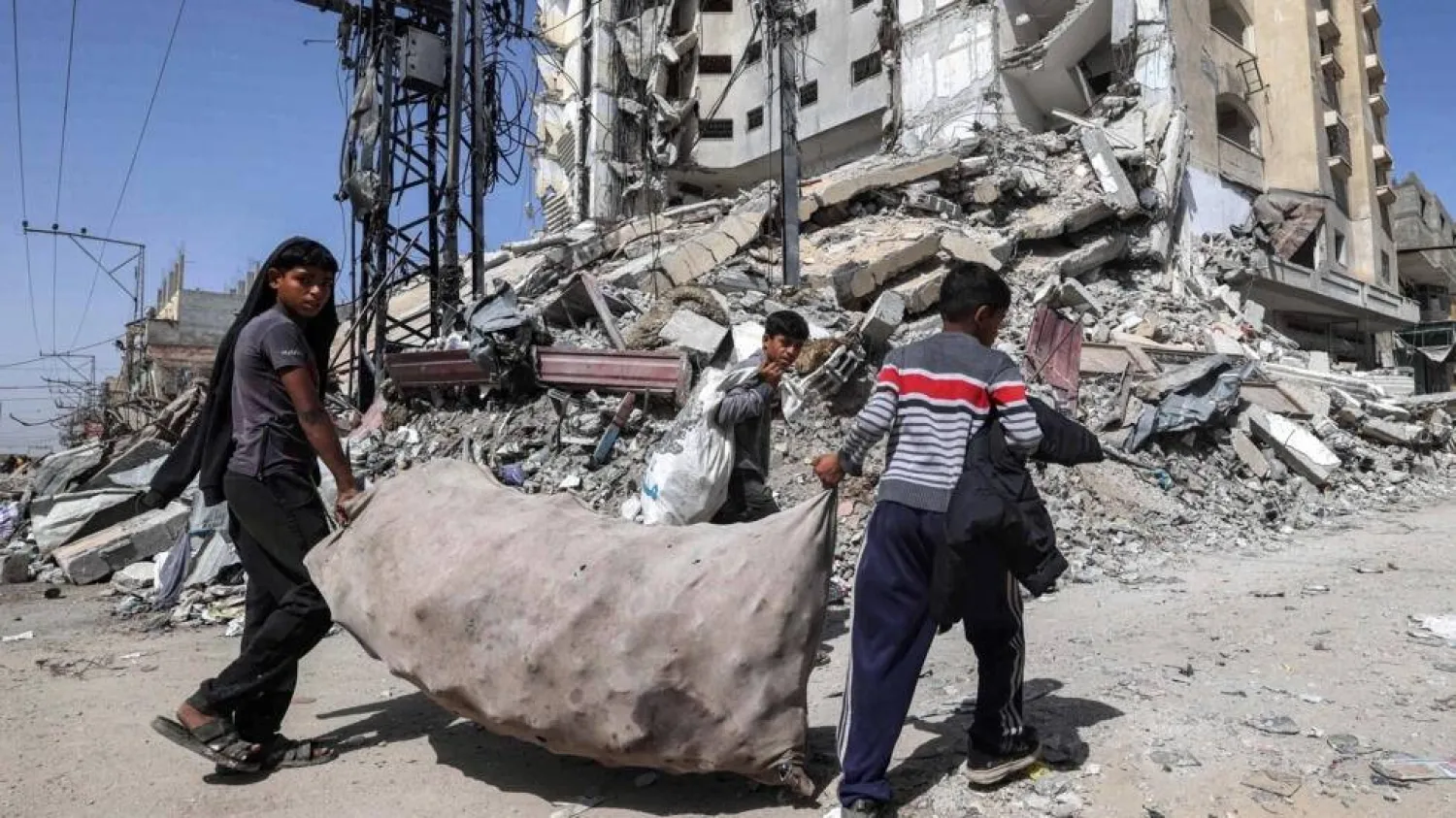
Israel's war on Hamas has spanned nearly half a year. MOHAMMED ABED / AFP
TT

Israel Finds Body of a Hostage Killed in Gaza, While Talks Will Resume on Ceasefire

Israel's war on Hamas has spanned nearly half a year. MOHAMMED ABED / AFP

Israel's military said Saturday it had recovered the body of a 47-year-old farmer who was held hostage in Gaza, while negotiators prepared to begin another round of talks on brokering a ceasefire and securing the release of the remaining hostages, six months into the war.

Israel's army said it had found the body of Elad Katzir and believed he was killed in January by fighters with Islamic Jihad, one of the groups that entered southern Israel in the Oct. 7 attack, killed more than 1,200 people and took about 250 hostages.

Katzir had been abducted along with his mother, Hanna, who was released in November. His father, Avraham, was killed during the attack in Nir Oz, a border community that suffered some of Israel’s heaviest losses.

The discovery renewed pressure on Israel's government for a deal to get the remaining hostages freed, as families have long feared time is running out. At least 36 hostages in captivity have been confirmed dead, while about half of the original number have been released.

Meanwhile, the toll of Israel’s ongoing offensive in Gaza is measured in tens of thousands of deaths and more than a million Palestinians displaced.

“We have arrived at a terrible milestone,” the UN humanitarian chief Martin Griffiths said in a statement marking six months and noting “the immediate prospect of a shameful man-made famine.”

Griffiths added: “We face the unconscionable prospect of further escalation in Gaza, where no one is safe and there is nowhere safe to go. An already fragile aid operation continues to be undermined by bombardments, insecurity and denials of access.”

Israelis are divided on the approach by Prime Minister Benjamin Netanyahu and his government after multiple rounds of stalled ceasefire negotiations. A week ago, tens of thousands of Israelis thronged central Jerusalem in the largest anti-government protest since the country went to war.

The negotiations will resume on Sunday, according to an Egyptian official and Egypt’s state-owned Al Qahera TV. The official spoke on condition of anonymity because they were not authorized to speak publicly about the negotiations.

US President Joe Biden has sent CIA Director Bill Burns to Egypt for additional talks about the hostages, a ceasefire and securing the country's border with Gaza.

A Hamas delegation will arrive on Sunday to join the talks, the militant group said.

Hamas has insisted on linking a phased end to the war — not a temporary ceasefire — to any agreement releasing hostages. It has said it will agree to release 40 hostages as part of an initial six-week ceasefire deal that would include the release of Palestinian prisoners from Israeli jails.  

Hamas also has demanded the return of displaced people to devastated northern Gaza and an increase in the delivery of humanitarian aid throughout the territory.

Israel has offered to allow only 2,000 displaced Palestinians — mainly women, children and older people — to the north daily during the proposed six-week ceasefire.

The efforts to revive negotiations come days after international condemnation of Israeli airstrikes that killed seven humanitarian workers with the World Central Kitchen charity. The Israeli military has described the strike as a tragic error. Aid groups say the mistake is hardly an anomaly.

The killings halted aid deliveries on what had been seen as a crucial new sea route for humanitarian aid directly to Gaza as the UN and partners warn of famine.

In Jabaliya, a refugee camp near Gaza City, families scrounged for mallow leaves to make a thin broth to break the daily Ramadan fast. “Life has become miserable. They (daughters) tell me, ‘Father, you are feeding us mallow, mallow, mallow every day. We want to eat fish, chicken, canned food. We are craving eggs, or anything,’” said Wael Attar, who shelters in a school as part of the 1.7 million people displaced in Gaza.

The war's death toll in Gaza is now 33,137, the territory's Health Ministry said. Its toll doesn't differentiate between civilians and combatants, but it has said women and children make up the majority of the dead.

The ministry said the bodies of 46 Palestinians killed in Israeli airstrikes had been brought to hospitals in the past 24 hours — the lowest such daily tally in months.

Israel has blamed Hamas for civilian deaths in Gaza, accusing it of operating in residential communities and public areas like hospitals.

Gaza's southernmost city of Rafah now holds more than half of the territory's 2.3 million people, and Israel's vow to carry out a ground offensive there has caused weeks of dread and warnings even from Israel's top ally, the United States.

An Egyptian official on Friday called Israel's most recent proposal to evacuate civilians from Rafah an “unrealistic and unworkable plan.” Egypt rejected it and again threatened to suspend parts of the 46-year-old Camp David Accords that facilitate security cooperation between the states.


Families of Syrians Transferred to Iraq as ISIS Detainees Demand Answers

A convoy carrying ISIS detainees during their transfer to Iraq (File photo – Circulated online)
TT

Families of Syrians Transferred to Iraq as ISIS Detainees Demand Answers

A convoy carrying ISIS detainees during their transfer to Iraq (File photo – Circulated online)

Families of Syrians transferred to Iraq earlier this year among ISIS detainees staged a protest in Deir Ezzor on Thursday, demanding answers about the fate of their loved ones.

The protesters called for a review of detainees' cases and scrutiny of the grounds for their arrests, citing what they described as malicious accusations and extortion by groups affiliated with the Syrian Democratic Forces (SDF), local media reported.

They said some detainees had been arrested simply for raising the flag of Syria's new government or the Free Syrian Army, while others were detained over personal disputes or financial extortion.

The families insisted that anyone suspected of wrongdoing should face justice in Syrian courts, on Syrian soil, under due legal process and with guarantees of a fair trial, rather than being transferred to another country.

They also demanded official explanations of the legal grounds and procedures behind the transfers.

In what they called a "humanitarian appeal," the families urged Syrian President Ahmed al-Sharaa and Foreign Minister Asaad al-Shibani to intervene urgently, investigate the fate and conditions of those transferred to Iraq, seek justice for their families and safeguard their legal and human rights.

In January, US Central Command (CENTCOM) launched an operation to transfer ISIS detainees from northeastern Syria to Iraq, saying the move was aimed at ensuring they remained in secure detention facilities.

An Iraqi security spokesman said 5,064 ISIS members had been transferred from Syrian prisons and detention centers to Iraq by air and land.

The total included more than 3,000 Syrians and over 270 Iraqis, with the remainder holding nationalities from 42 other Arab and foreign countries.


Berri: Southern Lebanon Will Not Become a Buffer Zone

The entrance to the village of Zawtar al-Gharbiya in southern Lebanon as the Lebanese army deployed following the withdrawal of Israeli forces on July 21 (File photo: Reuters)
TT

Berri: Southern Lebanon Will Not Become a Buffer Zone

The entrance to the village of Zawtar al-Gharbiya in southern Lebanon as the Lebanese army deployed following the withdrawal of Israeli forces on July 21 (File photo: Reuters)

Calls for sovereignty, the liberation of occupied territory and the protection of national institutions dominated statements by Lebanon's political, military and security officials on the eve of the country's 83rd Independence Day.

Parliament Speaker Nabih Berri stood out for his assertion that southern Lebanon "will never be a buffer zone for any entity. It will belong only to its people and will remain Lebanese."

Equally notable were remarks by Lebanese Army Commander General Rodolphe Haykal, who affirmed that the military was "committed to ensuring the successful implementation of the political leadership's decisions and existing agreements."

His comments followed criticism over earlier remarks in which he referred to the army's "national policy," interpreted by some as suggesting a position distinct from that of the political leadership.

Statements marking Independence Day reflected a broad consensus on the need to restore sovereignty, extend state authority across all Lebanese territory, uphold the decisions of the political leadership and strengthen the role of military and security institutions in safeguarding domestic stability.

Berri: South Lebanon will never become a buffer zone for any entity

Parliament Speaker Nabih Berri said Lebanon's independence would remain incomplete as long as Israel continued to occupy Lebanese territory, stressing that liberating the land, securing the return of displaced residents to their villages, rebuilding devastated areas and freeing prisoners were "national duties."

He reiterated that the south "will never be a buffer zone for any entity. It will belong only to its people and will remain Lebanese."

In a message ahead of the 83rd anniversary of independence, Berri called for the occasion to serve as an opportunity to renew commitment to national priorities, free from sectarian, religious, partisan and regional considerations.

"Occupation, regardless of who carries it out, is the antithesis of independence," he said, adding that liberation from Israeli occupation should not be a matter of disagreement among Lebanese.

Berri stressed the need to liberate occupied territory "by all available means guaranteed under international law," ensure the dignified return of residents to their villages and towns, rebuild damaged areas and secure the release of prisoners.

He said abandoning these responsibilities or relinquishing any of Lebanon's sources of strength, foremost among them national unity, would amount to compromising the country's sovereignty and independence.

In a notable endorsement of the military's role, Berri placed the Lebanese army at the heart of efforts to safeguard independence and sovereignty.

"The Lebanese army, from its commander and officers to its noncommissioned officers and soldiers, is the cornerstone through which independence is preserved and protected," he said.

He called for providing the military with all the resources necessary to fulfill its national duties and warned against campaigns aimed at undermining its credibility or discrediting its role and sacrifices.

Haykal: Army committed to implementing political leadership's decisions and existing agreements

Lebanese Army Commander General Rodolphe Haykal said the military was committed to ensuring the successful implementation of the political leadership's decisions and existing agreements.

He stressed that the army would continue deploying across southern Lebanon and extending state authority throughout the country, a process that requires "placing all weapons exclusively under state control."

Haykal said the military continued to carry out its duties despite difficulties and dangers, while "the Israeli occupation continues to violate these agreements and evade its obligations, obstructing the army's efforts and threatening Lebanon's security and stability."

He said the continued Israeli occupation, attacks and violations made "restoring sovereignty over our entire territory an unwavering national priority."

Haykal also emphasized the need to raise the army's operational readiness, particularly as the United Nations Interim Force in Lebanon (UNIFIL) approaches the end of its mission and preparations get underway for the next phase.

On security matters, he reaffirmed the army's commitment to monitoring and securing Lebanon's northern and eastern borders with Syria, patrolling territorial waters and combating terrorism, organized crime, drug trafficking and smuggling.

He said safeguarding independence also required "strengthening the home front, preserving national unity, stability and civil peace."

Warning against attempts to incite divisions that could threaten Lebanese unity, Haykal stressed that "the military institution stands at an equal distance from all parties."

For his part, Director General of State Security Major General Edgar Lawandos said the current phase required "greater firmness in enforcing the law," readiness to carry out assigned duties and unwavering adherence to the political leadership's decisions "in service of the supreme national interest, without hesitation."

He praised security personnel for their efforts to combat organized crime and drug trafficking and protect state institutions and facilities from corruption.

"Protecting independence begins with protecting the unity of our national institutions," Lawandos said.


Israeli Army Ends Overt Incursion in Central Gaza: What Did It Achieve?

Palestinians inspect widespread destruction to homes and shelters for displaced people on Thursday following an Israeli military incursion east of the Al-Maghazi refugee camp in central Gaza (dpa)
TT

Israeli Army Ends Overt Incursion in Central Gaza: What Did It Achieve?

Palestinians inspect widespread destruction to homes and shelters for displaced people on Thursday following an Israeli military incursion east of the Al-Maghazi refugee camp in central Gaza (dpa)

The Israeli military announced on Wednesday that it had ended an incursion into three areas along the “Yellow Line,” north of the Bureij and Nuseirat refugee camps in central Gaza, after nearly 24 hours of military activity.

Since the ceasefire agreement was announced in October 2025 under US President Donald Trump's plan, an imaginary boundary known as the “Yellow Line” has separated Israeli-occupied areas east of the line, which account for more than 60% of the Gaza Strip, from areas to the west that remain under the partial control of Hamas and other Palestinian factions.

For more than two years, Israel has carried out targeted killings, bombardments and forced displacement, while expanding the territory under its occupation without formally announcing those expansions.

An Israeli military official said troops had completed their operations and reopened Salah al-Din Road, Gaza's main thoroughfare, to traffic after closing it when the incursion began around midday Wednesday.

The official also warned Gaza residents against crossing the “Yellow Line” or approaching Israeli forces operating in the area, saying doing so could endanger their lives.

But eyewitnesses disputed the army's account, saying the road remained closed despite the troop withdrawal. Israeli forces had left earthen barriers in place, preventing vehicles from passing, they said.

A source from a Palestinian faction in Gaza told Asharq Al-Awsat that the barriers could not be removed without bulldozers, whose entry would require security coordination with Israel.

Israeli troops remain stationed just dozens of meters from the site of the incursion, the source said.

Returning residents confront widespread destruction

Hundreds of displaced Palestinians returned to their tents in the Al-Daawa neighborhood north of Nuseirat refugee camp as soon as the Israeli withdrawal was confirmed.

More than 1,500 families, comprising 6,000 people, were forced to flee during the incursion, according to the Hamas-run government media office.

The Israeli operation left extensive damage to homes, industrial facilities and farmland after troops carried out large-scale bulldozing.

Israeli forces also detonated a large explosive charge after withdrawing.

The scale and nature of the blast resembled explosions used by Israeli forces to destroy tunnels, lending weight to an assessment by a source on the ground who told Asharq Al-Awsat on Wednesday that destroying a tunnel was the likely objective.

The source pointed to earlier excavation work in the Ard al-Rayyis area, inside the Yellow Line and near Salah al-Din Road.

Israeli Army Radio reported late Wednesday that the operation was aimed at destroying a tunnel discovered in the area that extended to a newly established Israeli military position inside the Yellow Line and could threaten Israeli troops.

The operation was coordinated with the United States, which had been informed in advance, the radio station said.

Israeli forces had operated extensively in the area throughout the war, carrying out repeated bulldozing operations, but had never announced the discovery of a tunnel there.

Mediators press to halt Israeli operations

Hamas fiercely criticized the incursion, calling it a flagrant breach of the ceasefire and urging Washington and countries guaranteeing the agreement to halt Israeli violations.

The group accused Israel of seeking to confine Gaza's population to a narrow strip in the west of the enclave.

Israeli Army Radio had reported Wednesday that the operation was expected to last several days.

But a senior Hamas official outside Gaza told Asharq Al-Awsat that the group's leadership had contacted mediators, who said they were in talks with the United States and the Board of Peace to stop the violations.

The mediators expressed anger over Israel's military operations and territorial expansion in Gaza, according to the official.

They pledged to press for an end to the violations and greater security stability to improve humanitarian conditions and advance implementation of the agreements already reached.

Before Israeli troops withdrew, Hamas spokesperson Hazem Qassem said the escalation was intended to destroy what remained of Gaza and pave the way for a plan to displace its population.

He called for the implementation of resolutions adopted at Arab summits to confront the plan.

The Board of Peace, which oversees Trump's plan to end the Gaza war, had accused both Israel and Hamas of failing to meet their commitments to end hostilities, warning that the failures were worsening conditions for Palestinians and threatening the ceasefire.

The assessment appeared in a 12-page report seen by Reuters, the second submitted by the board to the United Nations Security Council since the US-backed ceasefire took effect 13 months ago.

The board is expected to present its findings at a Security Council meeting in New York in late November.

"The gap between what was agreed and what is happening on the ground remains the main threat to the process," the report said.

It warned that a ceasefire that fails to deliver tangible results cannot last indefinitely.

Hamas condemned the board's statement, accusing it of drawing an unacceptable equivalence between Israeli aggression and Palestinian victims.

The group said the statement reflected a biased approach that provided political cover for Israeli violations.