


Israeli Airstrike in Gaza's Rafah Kills at Least 9 Palestinians, Including 6 Children

Palestinians perform Friday noon prayer on April 19, 2024, next to the ruins of Al-Farouq Mosque, destroyed during Israeli bombardment in Rafah in the southern Gaza Strip, amid ongoing battles between Israel and the Hamas group. (Photo by MOHAMMED ABED / AFP)
TT

Israeli Airstrike in Gaza's Rafah Kills at Least 9 Palestinians, Including 6 Children

Palestinians perform Friday noon prayer on April 19, 2024, next to the ruins of Al-Farouq Mosque, destroyed during Israeli bombardment in Rafah in the southern Gaza Strip, amid ongoing battles between Israel and the Hamas group. (Photo by MOHAMMED ABED / AFP)

An Israeli airstrike on a house in Gaza’s southernmost city killed at least nine people, six of them children, hospital authorities said Saturday, as Israel pursued its nearly seven-month offensive in the besieged Palestinian territory.

Israel's war against the armed group Hamas has led to a dramatic escalation of tensions in an already volatile Middle East.

The strike late Friday hit a residential building in the western Tel Sultan neighborhood of the city of Rafah, according to Gaza’s civil defense. The bodies of the six children, two women and a man were taken to Rafah's Abu Yousef al-Najjar hospital, the hospital’s records showed.

At the hospital, relatives cried and hugged the bodies of the children, wrapped in white shrouds, as others comforted them.

The fatalities included Abdel-Fattah Sobhi Radwan, his wife Najlaa Ahmed Aweidah and their three children, his brother-in-law Ahmed Barhoum said. Barhoum also lost his wife, Rawan Radwan, and their 5-year-old daughter Alaa.

"This is a world devoid of all human values and morals,” Barhoum told The Associated Press Saturday morning, crying as he cradled and gently rocked the body of Alaa in his arms. “They bombed a house full of displaced people, women and children. There were no martyrs but women and children.”

No victims were registered from a second overnight strike in the city.

Rafah, which lies on the border with Egypt, currently hosts more than half of Gaza’s total population of about 2.3 million people, the vast majority of whom have been displaced by fighting further north in the territory.

Despite calls for restraint from the international community, including Israel’s staunchest ally, the United States, the Israeli government has insisted for months that it intends to push a ground offensive into the city, where it says many of the remaining Hamas fighters are holed up.

Such a ground operation has not materialized so far, but the Israeli military has repeatedly carried out airstrikes on and around the city.

The war was sparked by an unprecedented raid into southern Israel by Hamas and other armed groups on Oct. 7 that left about 1,200 people dead, the vast majority of them civilians, and saw about 250 people kidnapped and taken into Gaza. Israel says about 130 hostages remain in Gaza, although more than 30 have been confirmed to now be dead, either killed on Oct. 7 or having died in captivity.

The Gaza Health Ministry said Saturday the bodies of 37 people killed by Israeli strikes were brought to hospitals in Gaza over the past 24 hours. Hospitals also received 68 wounded, it said. The latest figures bring the overall Palestinian death toll from the Israel-Hamas war to at least 34,049, and the number of wounded to 76,901, the ministry said. Although the Hamas-run health authorities do not differentiate between combatants and civilians in their count, they say at least two thirds have been children and women.

The war has sent regional tensions spiraling, leading to a dramatic eruption of violence between Israel and its archenemy Iran that threatened to escalate into a full-blown war.

On Friday, both Iran and Israel played down an apparent Israeli airstrike near a major air base and nuclear site in central Iran, indicating the two sides were pulling back from what could have become an all-out conflict. Over the past several weeks, an alleged Israeli strike killed two Iranian generals at an Iranian consulate in Syria and was followed by an unprecedented Iranian missile barrage on Israel.

Israel has also faced off with the Hezbollah party, an Iranian proxy operating from Lebanon, with the two sides there frequently trading rocket and drone attacks across the Lebanese-Israeli border. Yemen’s Iran-backed Houthi militias have also joined the fray, launching strikes against merchant ships in the Red Sea and the Gulf of Aden in what they say is a campaign of solidarity with the Palestinians in Gaza.

Tension has also been high in the occupied West Bank, where an Israeli military raid Friday in the Nur Shams refugee camp killed at least four Palestinians, including three militants, according to the Israeli military, Palestinian health officials and a militant group.

Palestinian health authorities said one of those killed was a 15-year-old boy shot dead by Israeli fire. The Islamic Jihad group confirmed the deaths of three members, including one who it said was a local military commander. The Israeli military said four Israeli soldiers were slightly wounded in the operation.

Saraya al-Quds, the military arm of Islamic Jihad, said its fighters had engaged in heavy gun battles Saturday morning with Israeli forces in the town of Tulkarem, adjacent to Nur Shams. No further details were immediately available. Residents in Tulkarem went on a general strike Saturday to protest the attack on Nur Shams, with shops, restaurants and government offices all closed.

Since the Oct. 7 Hamas attack on southern Israel, more than 460 Palestinians have been killed by Israeli fire in the West Bank, Palestinian health officials say. Israel stages frequent raids into towns and cities in the volatile territory. The dead have included militants, but also stone-throwers and bystanders. Some have also been killed in attacks by Israeli settlers.


Iraq’s Kataib Hezbollah Tells Fighters to Prepare for Long Iran-US War 

A veiled Iranian woman walks past an anti-US mural next to former US embassy in Tehran on February 26, 2026. (AFP)
TT

Iraq’s Kataib Hezbollah Tells Fighters to Prepare for Long Iran-US War 

A veiled Iranian woman walks past an anti-US mural next to former US embassy in Tehran on February 26, 2026. (AFP)

The Iran-backed Iraqi Kataib Hezbollah told its fighters to prepare for the scenario of a long war in neighboring Iran should the United States launch strikes.

It warned the US on Thursday of "immense losses" were it to start a war in the region, while a commander in an armed faction told AFP his group was "highly likely" to intervene in case of strikes.

"Amid American threats and military build-up indicating a dangerous escalation in the region, it is necessary" for all fighters "to prepare for a potentially long war of attrition," Kataib Hezbollah said in a statement.

The commander told AFP that his group sees Iran as strategic to its own interests, and therefore any attack on the country "directly threatens us".

US-sanctioned Iraqi armed groups did not intervene during the 12-day war between Israel and Iran last year.

This time, the commander said they would be "less restrained", especially in the event of strikes seeking to overthrow the regime.

For months during the Israel-Hamas war in Gaza, Iran-backed groups carried out attacks against US troops in the region and mostly failed attempts against Israel.

Under mounting US and domestic pressure, these attacks came to a halt, while pressure on the groups to disarm has grown.

Iran-backed groups are part of the so-called "axis of resistance", which also includes Lebanon's Hezbollah, Hamas in Gaza and the Houthis in Yemen.

A Hezbollah official told AFP this week that the Lebanese movement would not intervene militarily in the event of "limited" US strikes on Iran, but would consider any attack against supreme leader Ali Khamenei a "red line".

US President Donald Trump has deployed warships and fighter jets near Iran to back up his threats of strikes should ongoing negotiations over Iran's nuclear program fail to secure a deal.

US and Iranian negotiators met for a third round of talks on Thursday, with Iranian Foreign Minister Abbas Araghchi telling state TV that the talks "made very good progress."


ISIS Intensifies Lone Wolf Attacks in Syria 

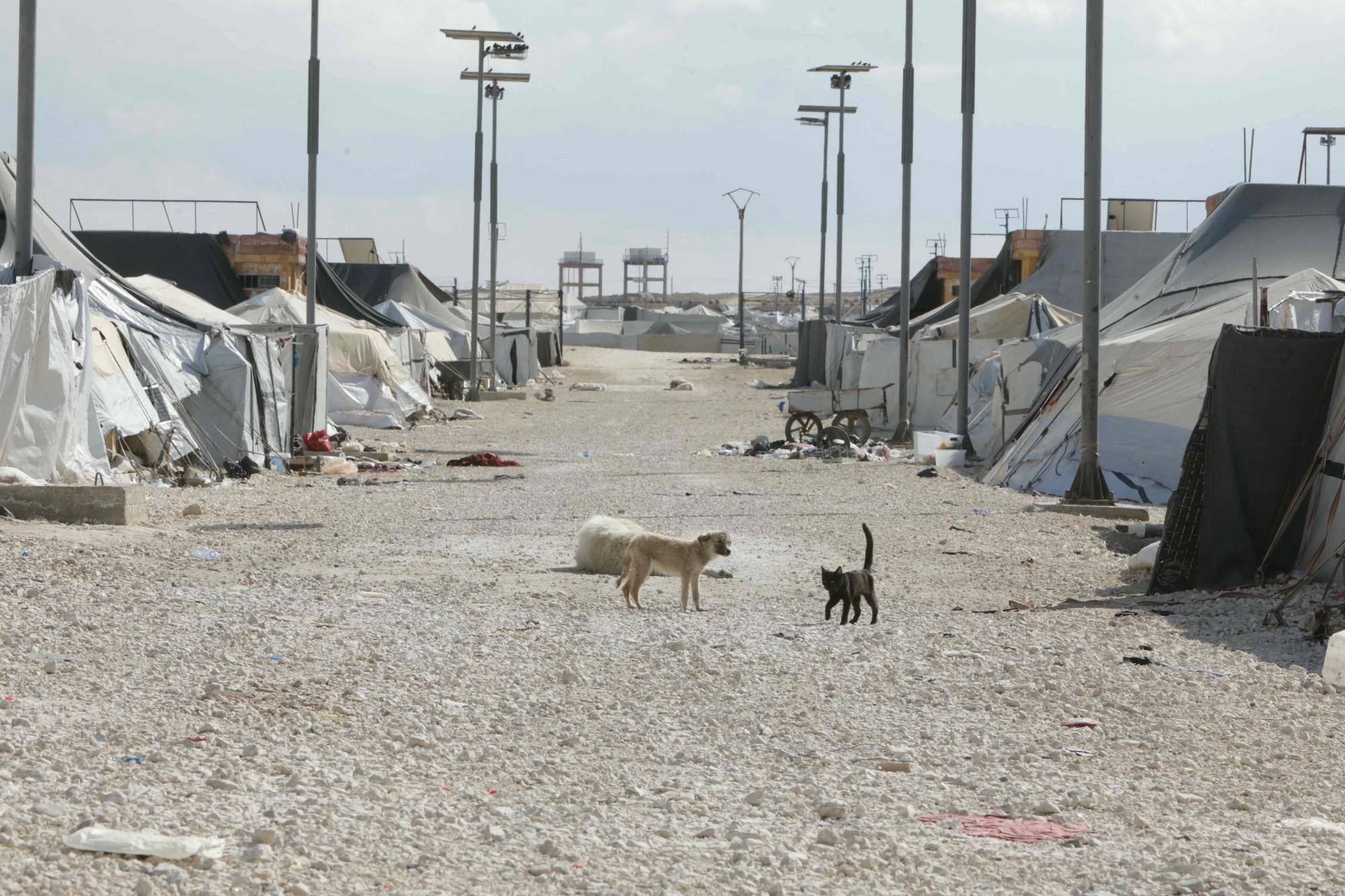
This picture shows a view of the empty tent at al-Hol camp, closed by the Syrian authorities in the northeastern Hasakeh governorate on February 25, 2026. (AFP)
TT

ISIS Intensifies Lone Wolf Attacks in Syria 

This picture shows a view of the empty tent at al-Hol camp, closed by the Syrian authorities in the northeastern Hasakeh governorate on February 25, 2026. (AFP)

The ISIS extremist group has intensified its lone wolf attacks against security forces and the army in Syria, especially in its eastern provinces, such as Raqqa and Deir Ezzor.

Al-Ikhbariah Syria reported that the attacks intensified after the state’s security and political achievements across the country.

Despite ISIS’ territorial defeat in Syria, it is still capable of carrying out attacks through various cells in the country.

ISIS staged an attack against security forces in Raqqa this week, killing four members and wounding others. A soldier was also killed in Mayadeen city in Deir Ezzor.

The security forces have since intensified their efforts in cracking down on ISIS cells, reported dpa.

They managed to bust the cell that staged the Raqqa attack, killing two of its members and detaining four others, as well as seizing weapons and ammunition in their possession, according to the Interior Ministry.

In Mayadeen, internal security forces detained an ISIS member during a raid. He was wanted for involvement in an attack against Defense Ministry personnel.

ISIS attacks have notably spiked in wake of the Kurdish Syrian Democratic Forces’ (SDF) sudden withdrawal last month from the sprawling al-Hol camp that was detaining members of the group.

There were scenes of "utter chaos" when thousands of women and children related to suspected ISIS fighters escaped the camp in Syria, witnesses have told AFP.

An AFP journalist who entered the huge al-Hol camp on Wednesday found it virtually deserted after the Syrian government decided to evacuate the site.

Until recently, it housed 23,500 people and was the largest camp for relatives of suspected ISIS members in northeastern Syria.

Since the territorial defeat of ISIS it had been under the control of the SDF. However, the SDF swiftly left the camp on January 20, under pressure from Syrian troops which were seizing swathes of the country's north months after their ouster of longtime ruler Bashar al-Assad.

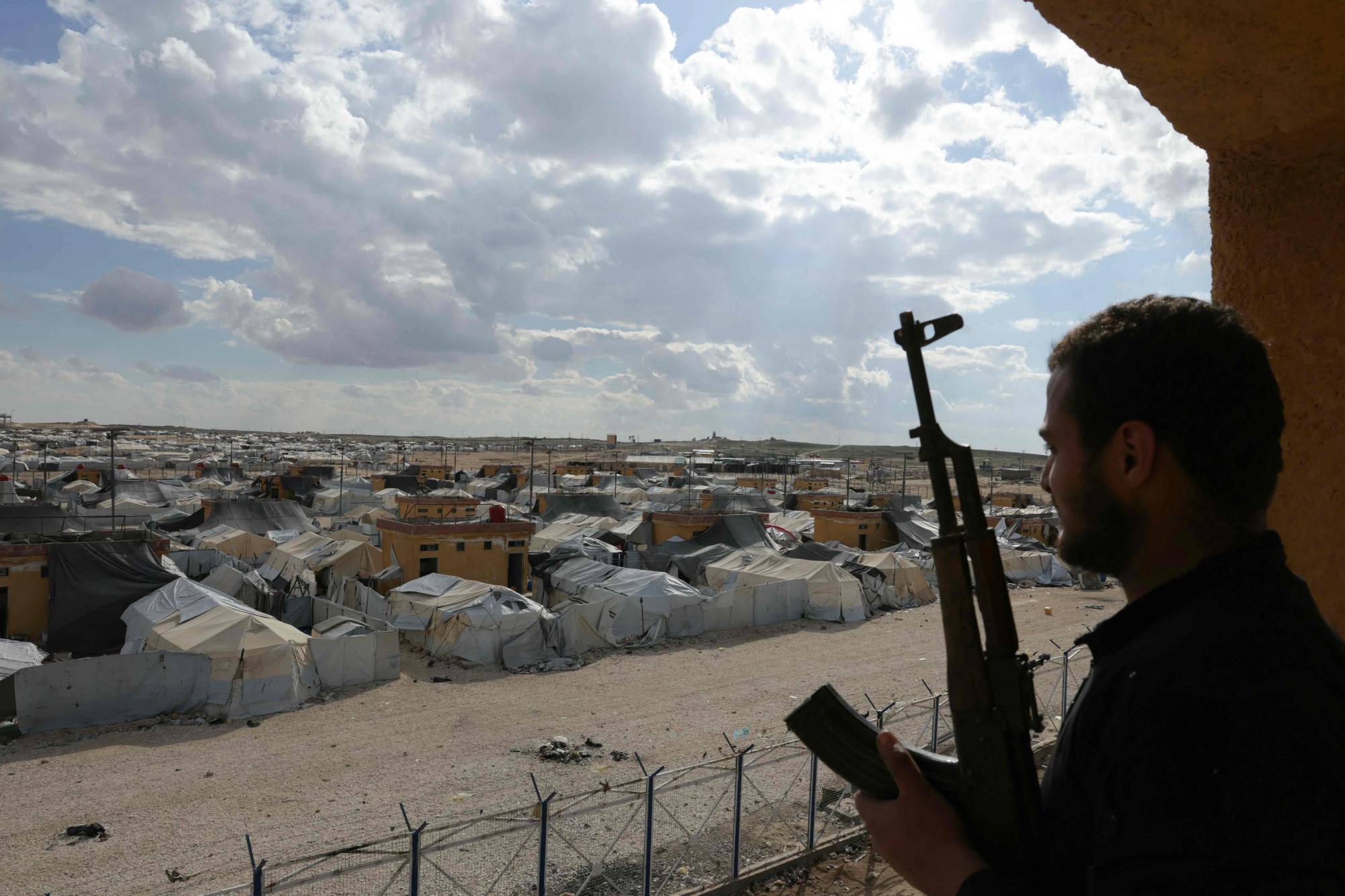
This picture shows a view of the empty tent at al-Hol camp, closed by the Syrian authorities in the northeastern Hasakeh governorate on February 25, 2026. (AFP)

Syrian security forces say they took over control six hours later.

Thousands of family members of suspected extremists left for parts unknown.

As soon as the Kurdish forces left, "it was utter chaos," Salah Mahmud al-Hafez, who lives in the nearby al-Hol village, told AFP.

"The SDF withdrew, and the locals and tribesmen came," he said. "Cars loaded people and drove off."

- Toys, food left behind -

The camp held mostly women and children, the majority of them Syrian or Iraqi.

However, a high-security annex housed more than 6,000 foreigners of around 40 nationalities.

Access to the camp remains prohibited and checkpoints have been set up on the road leading to it, according to the AFP journalist at the scene.

The paths of the empty camp are now strewn with rubbish bags, and white tents stretch as far as the eye can see.

Children's toys and tricycles have been abandoned in the foreigners' annex.

Clothes, notebooks and even food were left behind, signs of a hasty departure.

Last week, Syrian authorities evacuated the remaining families at the camp after determining that the conditions at al-Hol -- particularly security -- were inadequate.

A member of the Syrian government forces looks towards the empty al-Hol camp, closed by the Syrian authorities in the northeastern Hasakeh governorate on February 25, 2026. (AFP)

Syria's interior ministry confirmed on Wednesday there were mass escapes from the camp, accusing the Kurdish SDF of withdrawing "suddenly, without coordination and without informing" them.

Morhaf Al-Olayan, a 43-year-old farmer who lives next to the camp, said that after the Kurdish forces departed, "cars came, loaded the families, and left".

The father of five said he saw men "wearing camouflage military uniforms" among those transporting the families.

Farhan Abbas, an 86-year-old who lives near the camp, said that "people fled... in all directions".

They rejoiced at being rid of oppression and injustice, he added.

The detained family members had not been charged with any crime.

- Women and children at risk -

The foreigners' annex held a large number of people from around the world.

While the whereabouts of those who left the camp remain unknown, teachers in Idlib in northwestern Syria told AFP that several children from Uzbekistan have enrolled in their schools since late January.

In a report earlier this week, Human Rights Watch said that most of al-Hol's residents "left in a largely unplanned and chaotic manner".

"The way these departures have unfolded has exposed women and children to serious risks, including trafficking, exploitation, and recruitment by armed groups," the report warned.

Kurdish forces still control the smaller Roj camp in Syria's northeast, where more relatives of suspected foreign extremists, including Westerners, are detained.

The Kurds had repeatedly urged countries to take back their citizens, but few did, fearing security threats and a domestic political backlash.

"For years, many governments claimed that difficulties negotiating with a non-state actor in charge of the camps was why they couldn't repatriate their citizens, but now that excuse won't hold," Adam Coogle, deputy Middle East director at Human Rights Watch, said in the report.

For the extremists themselves, the United States military has transferred more than 5,700 ISIS suspects from Syrian prisons to Iraq.


Gaza Civil Defense Says Israeli Strikes Kill at Least 5

SENSITIVE MATERIAL. THIS IMAGE MAY OFFEND OR DISTURB Mourners gather next to the bodies of two Palestinians killed by an Israeli strike on Thursday, according to medics, during their funeral at Shifa hospital in Gaza City, February 26, 2026. REUTERS/Dawoud Abu Alkas
TT

Gaza Civil Defense Says Israeli Strikes Kill at Least 5

SENSITIVE MATERIAL. THIS IMAGE MAY OFFEND OR DISTURB Mourners gather next to the bodies of two Palestinians killed by an Israeli strike on Thursday, according to medics, during their funeral at Shifa hospital in Gaza City, February 26, 2026. REUTERS/Dawoud Abu Alkas

Gaza's civil defense ministry said Israeli strikes killed at least five people on Friday.

Violence has continued in the Palestinian territory despite a US-brokered truce that entered its second phase last month, with Israel and Hamas trading accusations of violating the agreement.

The civil defense agency, which operates as a rescue force under Hamas authorities, told AFP that an air strike in the early hours of Friday morning killed at least two people and seriously injured one in central Gaza.

A drone strike in the south of the strip shortly after midnight killed three and injured several more people, the agency added.

Under the terms of the ceasefire, which took effect on October 10, Israeli troops withdrew to positions behind a so-called "Yellow Line", though they remain in control of more than half of the territory.

Gaza's health ministry, which operates under Hamas authorities, has previously said at least 601 people had been killed since the truce began.

The Israeli military says at least four of its soldiers have been killed in the same period.

Media restrictions and limited access in Gaza have prevented AFP from independently verifying casualty figures or freely covering the fighting.
