


Sudan’s RSF Clashes with Army, at Least 100 People Dead

A photo released by the Madani Resistance Committee on X shows the bodies of people killed in the RSF attack
TT

Sudan’s RSF Clashes with Army, at Least 100 People Dead

A photo released by the Madani Resistance Committee on X shows the bodies of people killed in the RSF attack

At least 100 people were killed, and dozens were injured after the Rapid Support Forces attacked a village in Gezira province in Sudan on Wednesday, officials said.

Women, children, and elderly were among the victims in the attacks by the RSF on Wad al-Noura village in Gezira, Mini Arko Minawi, the governor of Darfur province, said on X.

A grassroots group set up to protect residents in Wad Madani, the capital city of Gezira, said late Wednesday on social media that the RSF, which has been fighting the Sudanese army for over a year, used heavy artillery to besiege and attack the village.

The Madani Resistance Committee accused the RSF of looting Wad al-Noura in the midst of the attacks which it said started Wednesday morning.

The RSF claimed in December that it had seized control of Wad Madani, about 100 kilometers southeast of the Sudanese capital, Khartoum, and a haven for hundreds of thousands of people displaced by fighting.

The resistance committee said the RSF invaded the village, displacing residents, including women and children, to other parts of the district of al-Manaqil.

The Sudanese transitional government in a statement on its Telegram channel condemned the attacks and called for the international community to hold the RSF accountable.
“These are criminal acts that reflect the systematic behavior of these (RSF) militias in targeting civilians, plundering their property, and forcibly displacing them from their areas,” said the media office for the Transitional Sovereignty Council.

The RSF alleged on X late Wednesday that the Sudanese military planned to attack its troops in Jabal al-Awliya, in the west of al-Manaqil district, by mobilizing Sudanese armed forces in three bases.

The group said it attacked three camps west, north and south of Wad-al Noura, clashing with the Sudanese army.

“Our forces will not stand idly by in the face of any movements or gatherings by the enemy and will work to pursue and defeat the enemy,” said the RSF in its statement.

Clementine Nkweta-Salami, the United Nations Resident and Humanitarian Coordinator in Sudan, said Thursday on X that she was “shocked” by reports of the violent attacks.
“Human tragedy has become a hallmark of life in Sudan. We cannot allow impunity to become another one,” she said.
In a statement, NKweta-Salami said that heavy gunfire and explosive weapons were used in populated areas, citing reports she deems credible.
She called for accountability and an investigation into the attacks.


Israel Pushes Beyond ‘Yellow Line’ in Lebanon to Target Hezbollah and Bolster Negotiating Leverage

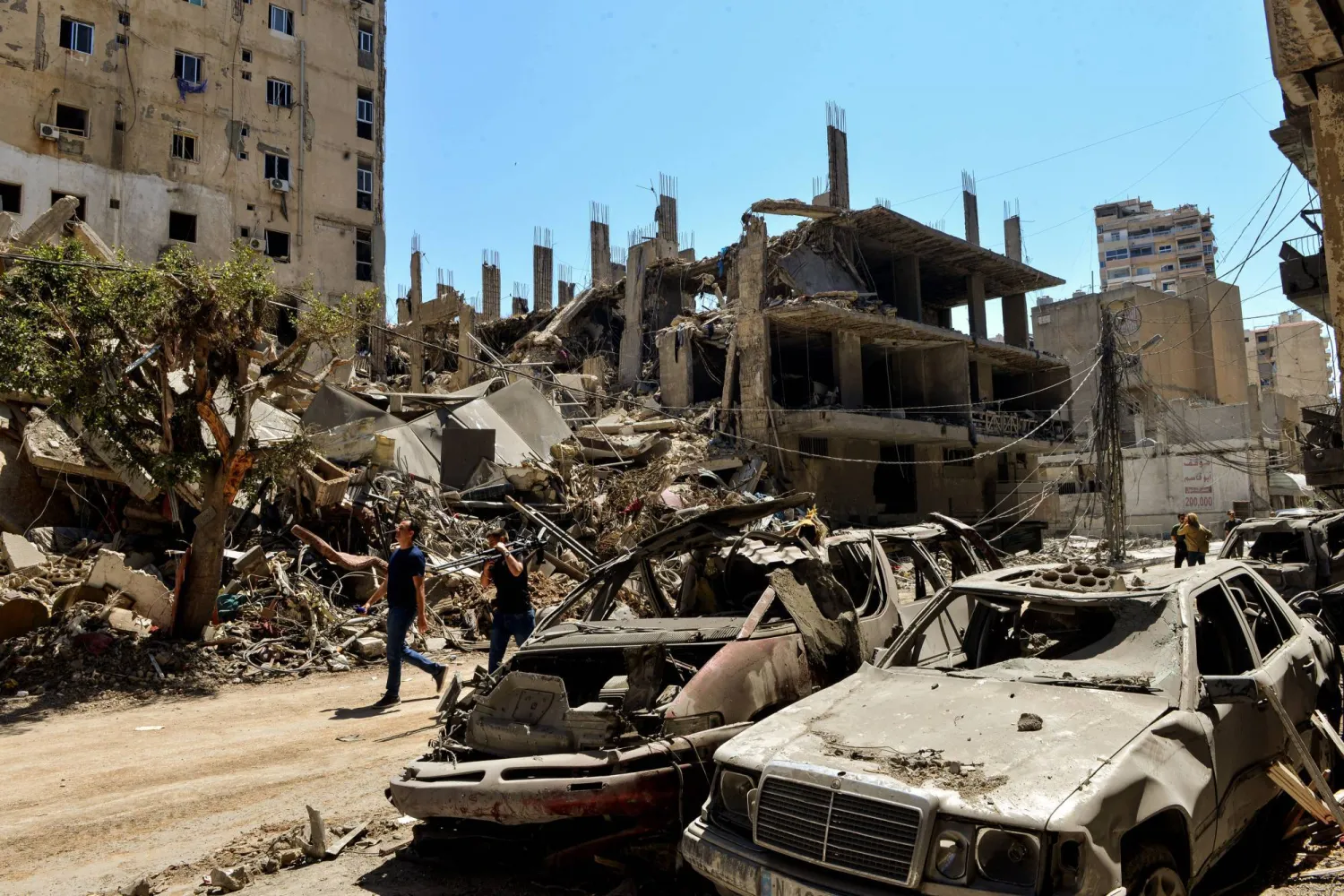
Residents walk amid buildings destroyed by Israeli bombardment in the city of Tyre, Lebanon (dpa). 
TT

Israel Pushes Beyond ‘Yellow Line’ in Lebanon to Target Hezbollah and Bolster Negotiating Leverage

Residents walk amid buildings destroyed by Israeli bombardment in the city of Tyre, Lebanon (dpa). 

Israel’s latest advance beyond the self-declared “Yellow Line” in southern Lebanon has raised questions about whether the expansion is driven solely by military objectives or also reflects broader political calculations, particularly as it coincides with reports of a US-Iran agreement that would include a comprehensive ceasefire in Lebanon.

On Saturday, Israeli forces made fresh gains along both the western and eastern fronts beyond the Yellow Line. Troops advanced toward the outskirts of Majdal Zoun following four days of artillery and air strikes, while forces also pushed into Kfartebnit, reaching the approaches to the strategically important Ali al-Taher Heights, which overlook the city of Nabatieh and much of the surrounding region.

The “Yellow Line” is the term adopted by the Israeli military in spring 2026 for a belt of territory inside southern Lebanon that it considers a military buffer zone, similar to the model previously employed in Gaza. The zone extends roughly 4 to 10 kilometers into Lebanese territory and encompasses about 55 border towns and villages.

Retired Brig. Gen. Mounir Shehadeh said military operations beyond the Yellow Line are concentrated in Kfartebnit, Zawtar al-Sharqiya, Yahmar al-Shaqif, Arnoun, and the Beaufort Castle area.

Speaking to Asharq Al-Awsat, Shehadeh argued that Israel is “racing against time” because it believes any US-Iran agreement could force an end to hostilities. As a result, he said, Israel is seeking to advance as far as possible before negotiations begin, allowing it to bargain from a position of strength.

He noted a distinction between villages entered by Israeli troops and those brought under operational control. Some communities have been incorporated into what Israel describes as a security zone, where residents are barred from returning and where Israeli forces maintain control through surveillance and firepower, even without a permanent troop presence.

According to Shehadeh, Israeli-controlled areas now extend between 5 and 10 kilometers inside Lebanese territory and include villages whose residents have been prohibited from returning.

Israel’s stated goal, Shehadeh underlined, is to push Hezbollah forces farther from its northern border, prevent future cross-border attacks on Galilee communities, destroy military infrastructure and weapons stockpiles, and establish a buffer zone to protect border settlements.

Its unstated objectives, however, may be broader. These include creating a new security belt resembling the zone Israel occupied between 1982 and 2000, turning border villages into sparsely populated areas that would make it difficult for Hezbollah to reestablish itself, and securing strategic high ground and transportation corridors. Such gains could provide Israel with significant leverage in future negotiations involving Lebanon and the postwar regional order.

For his part, Dr. Riad Kahwaji, defense and security analyst, said Israel is advancing along three separate axes, primarily to eliminate Hezbollah infrastructure, some of it located beyond the Yellow Line.

The eastern axis runs from Beaufort Castle through Kfartebnit and the Ali al-Taher Heights, placing Israeli forces in a position overlooking Nabatieh and potentially opening the way toward the Iqlim al-Tuffah region, where Hezbollah is believed to maintain tunnel networks.

The central axis stretches north of Bint Jbeil and Tebnine toward Ghandouriyeh in an effort to encircle Wadi al-Hujayr, long regarded as a key defensive zone and another suspected tunnel hub.

The western axis centers on Majdal Zoun and extends toward Qlayleh, potentially bringing Israeli forces closer to the approaches of the coastal city of Tyre.


Palestinian Prisoner Dies After 25 Years in Israeli Jail

A Palestinian prisoner is released from an Israeli prison as part of a prisoner exchange deal last year. (AP)
TT

Palestinian Prisoner Dies After 25 Years in Israeli Jail

A Palestinian prisoner is released from an Israeli prison as part of a prisoner exchange deal last year. (AP)

Israeli authorities have informed the family of Imad Sarhan, a 47-year-old Palestinian prisoner from Haifa, that he died in Gilboa Prison after suffering what officials described as a heart attack. No further details were provided.

The death is the latest in a growing number of prisoner fatalities reported since the outbreak of the Gaza war on Oct. 7, 2023.

In a joint statement, the Palestinian Commission of Detainees and Ex-Detainees Affairs and the Palestinian Prisoners Club said Sarhan had been imprisoned since 2001 and was serving a life sentence.

The organizations said he was subjected to lengthy and harsh interrogations during the early years of his detention, including systematic torture that left lasting health complications and contributed to a gradual deterioration in his condition. They also cited repeated periods of solitary confinement.

According to the statement, Sarhan developed chronic cardiovascular illnesses during his imprisonment, including heart, arterial and vascular diseases, as well as high blood pressure.

His health deteriorated to the point that he needed a wheelchair in recent years.

The groups said Sarhan was a victim of medical negligence and abusive prison policies, stressing that his death reflected broader conditions facing Palestinian prisoners, particularly since the start of the Gaza war.

Human rights groups and Palestinian prisoner advocates have repeatedly pointed to worsening conditions in Israeli prisons over the past two years, including restrictions on medical care, overcrowding, harsh disciplinary measures, and limited contact with families.

The Palestinian Prisoners Club has also raised concerns about outbreaks of scabies among detainees, accusing Israeli prison authorities of maintaining conditions that facilitate the spread of disease by limiting access to cleaning supplies, showers, and fresh clothing.

Prison conditions worsened after Itamar Ben-Gvir became Israel’s national security minister in late 2022. Ben-Gvir claimed that prisoners had been receiving excessive privileges and ordered stricter regulations, including reductions in food allocations, shower time, outdoor recreation, and family visits.

Palestinian organizations said those restrictions intensified significantly after October 2023.

The Commission of Detainees and Ex-Detainees Affairs and the Prisoners Club said the prison system has since adopted harsher policies involving abuse, starvation, medical neglect, and prolonged isolation.

They criticized the continued restrictions on monitoring visits by the International Committee of the Red Cross and limits on communication between prisoners and their families.

According to the groups, Sarhan’s death raises the number of Palestinian prisoners whose deaths have been announced since the start of the Gaza war to 90. They said the total number of prisoner deaths documented since 1967 now stands at 327.

The organizations held Israeli authorities fully responsible for Sarhan’s death and renewed calls for international legal action and accountability.

As of June 2026, they said, more than 9,400 Palestinians were being held in Israeli prisons, including 3,324 administrative detainees and 1,316 prisoners classified by Israel as “unlawful combatants.”


The Economy in the Occupied West Bank Is Being Dismantled by Israel, Report Says

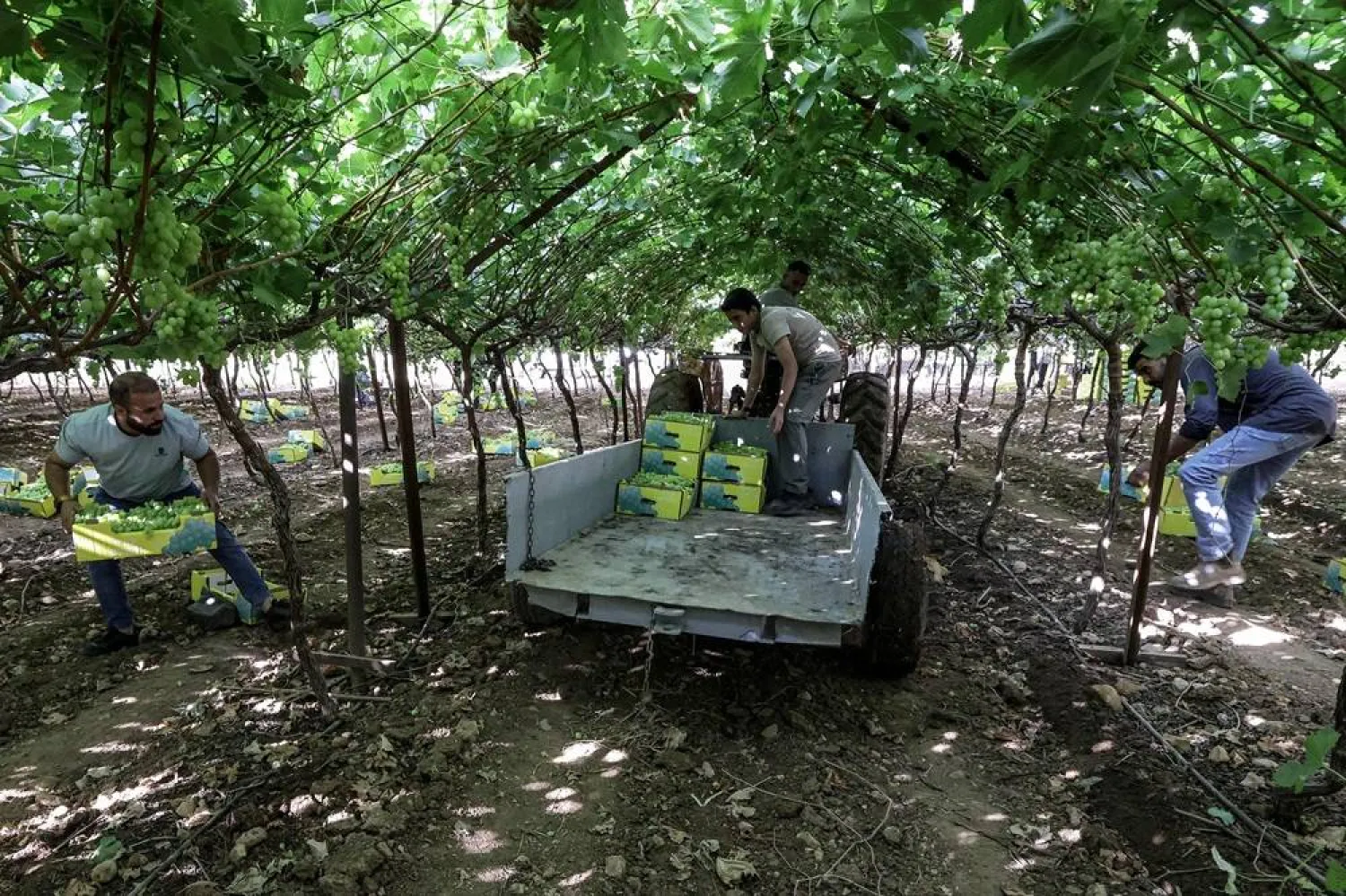
 Palestinian farm workers harvest grape vines at the Samer Hamdan vineyards in the village of Beit Hasan on the outskirts of the Jordan Valley, east of Nablus in the Israeli-occupied West Bank, on June 13, 2026. (AFP)
Palestinian farm workers harvest grape vines at the Samer Hamdan vineyards in the village of Beit Hasan on the outskirts of the Jordan Valley, east of Nablus in the Israeli-occupied West Bank, on June 13, 2026. (AFP)
TT

The Economy in the Occupied West Bank Is Being Dismantled by Israel, Report Says

 Palestinian farm workers harvest grape vines at the Samer Hamdan vineyards in the village of Beit Hasan on the outskirts of the Jordan Valley, east of Nablus in the Israeli-occupied West Bank, on June 13, 2026. (AFP)
Palestinian farm workers harvest grape vines at the Samer Hamdan vineyards in the village of Beit Hasan on the outskirts of the Jordan Valley, east of Nablus in the Israeli-occupied West Bank, on June 13, 2026. (AFP)

The economy in the West Bank is teetering toward collapse as Israel maintains a web of restrictions that limit opportunities for Palestinians living under long-term military occupation, according to a new report from a leading conflict tracker.

The International Crisis Group says that Israeli measures restricting movement, withholding revenue and taking land are not only crippling the Palestinian economy but also fueling deep instability.

“The economic conditions necessary for any Palestinian future other than permanent subjugation are being dismantled,” it says.

The report, based on interviews with Palestinian business leaders, mayors and government officials, details the financial crisis afflicting companies, households and the internationally backed Palestinian Authority, which administers cities and towns in the West Bank.

It says Israeli policies suggest a concerted effort to “advance Israel’s own declared goal of extending its control and preventing a Palestinian state from emerging.”

Throughout decades of military occupation, the Palestinian economy has been hobbled by checkpoints and military gates that curtail movement of people and goods.

Households and businesses have relied heavily on jobs and imports tied to Israel, and faced restrictions on land and trade.

The roughly 3.4 million Palestinians living in the West Bank today face roughly 30% unemployment and have seen their economy contract substantially since the start of the Israel-Hamas war.

After Hamas’ Oct. 7, 2023, attack, Israel revoked work permits for most of the nearly 200,000 Palestinians who had worked there previously. Officials cited security but in effect, it deprived the Palestinian economy of nearly $400 million a month, or almost one-fourth of its overall economic output.

Many businesses today are struggling to pay workers, contractors and suppliers, with private companies seeing an estimated 50% decline in business since before the war, “reflecting tightened movement controls, disrupted supply chains and heightened uncertainty,” the report says.

“Palestinian society survives, but in a state of grinding immiseration. Absent remedies, the result will likely be a loss of hope and a growing risk of instability and greater violence,” it says.

As the occupied West Bank's largest employer and service provider, the Palestinian Authority is at the heart of the crisis. Government agencies have borrowed heavily to stay afloat as public sector workers go unpaid and infrastructure like roads and water lines crumble. The inability to fund public services is keeping patients out of hospitals and kids out of school.

Most of the PA's money comes from taxes collected on goods entering the West Bank through Israeli ports, because Palestinians do not control their own borders. But under hard-line ministers in Israeli Prime Minister Benjamin Netanyahu’s government, Israel has withheld billions of dollars in owed tax revenue and unilaterally imposed deductions on the funds. No transfers have been made since May 2025.

Joost Hiltermann, International Crisis Group’s special adviser for the Middle East and North Africa, said the world’s focus on more than two years of war in Gaza had drawn attention away from the West Bank, but that changes taking place now could have arguably wider consequences for Palestinians’ future aspirations.

Hiltermann, who wrote the report, said Israeli officials, who exert considerable control over many of the policies in question, did not agree to be interviewed. But he noted disagreements within Netanyahu’s government, with settler leaders and security officials often clashing on how to manage the Palestinian economy.

“The security establishment doesn’t want the Palestinian Authority or economy to collapse because they would have to assume the burden of governing the territory in full after essentially destroying it,” he said.