
US, European and Arab mediators are pressing to keep stepped-up cross-border attacks between Israel and Lebanon's Iran-backed Hezbollah fighters from spiraling into a wider Middle East war that the world has feared for months. Iran and Israel traded threats Saturday of what Iran said would be an "obliterating" war over Hezbollah.
Hopes are lagging for a ceasefire in Israel's conflict with Hamas in Gaza that would calm attacks by Hezbollah and other Iranian-allied militias. With the stalled talks in mind, American and European diplomats and other officials are delivering warnings to Hezbollah — which is far stronger than Hamas but seen as overconfident — about taking on the military might of Israel, current and former diplomats say.
The Americans and Europeans are warning the group it should not count on the United States or anyone else being able to hold off Israeli leaders if they decide to execute battle-ready plans for an offensive into Lebanon. And Hezbollah should not count on its fighters' ability to handle whatever would come next.
On both sides of the Lebanese border, escalating strikes between Israel and Hezbollah, one of the region's best-armed fighting forces, appeared at least to level off this week. While daily strikes still pound the border area, the slight shift offered hope of easing immediate fears, which had prompted the US to send an amphibious assault ship with a Marine expeditionary force to join other warships in the area in hopes of deterring a wider conflict.
Despite this past week's plateauing of hostilities, said Gerald Feierstein, a former senior US diplomat in the Middle East, "it certainly seems the Israelis are still ... arranging themselves in the expectation that there will be some kind of conflict ... an entirely different magnitude of conflict."
The message being delivered to Hezbollah is "don't think that you're as capable as you think you are," he said.
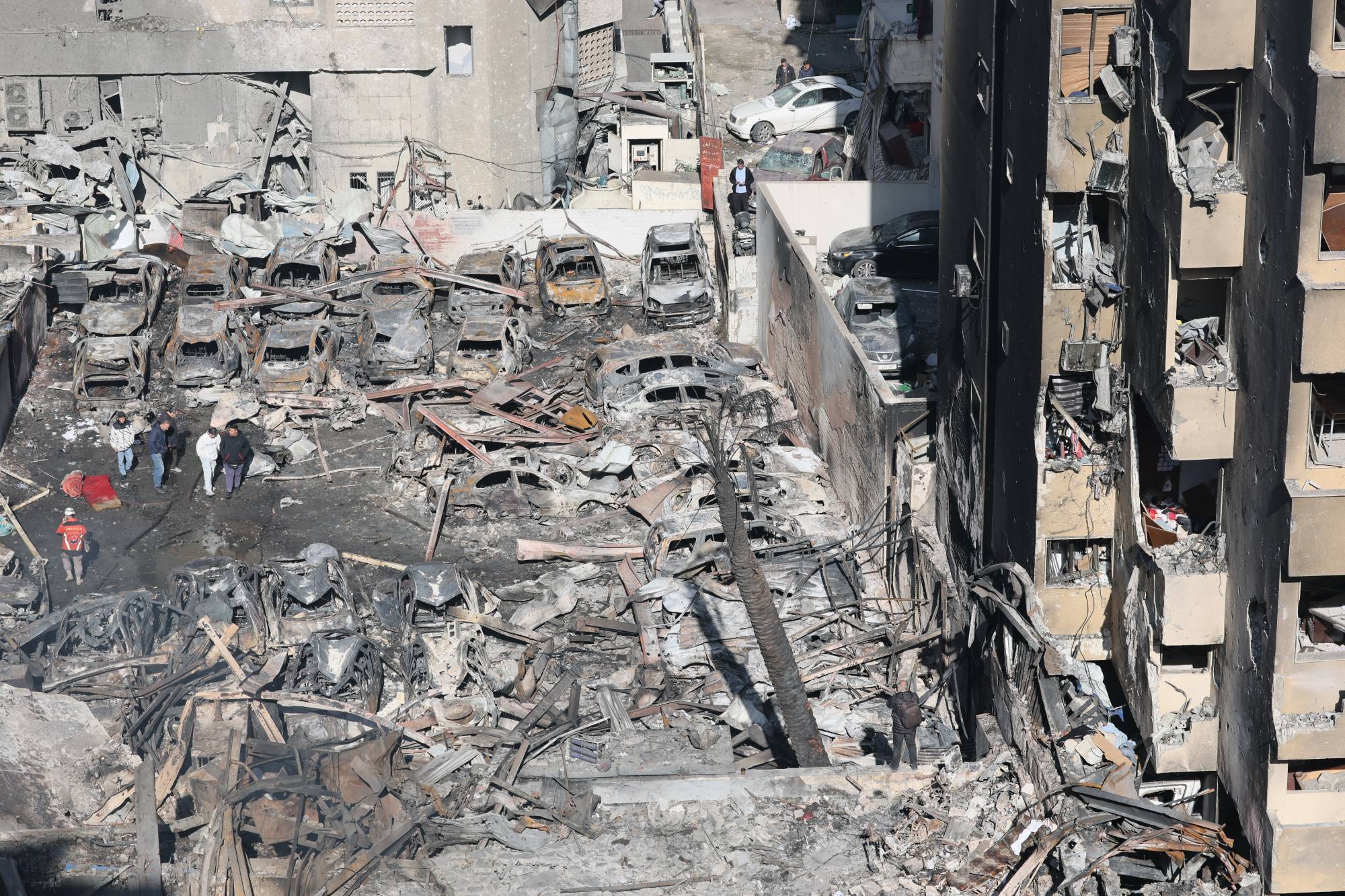
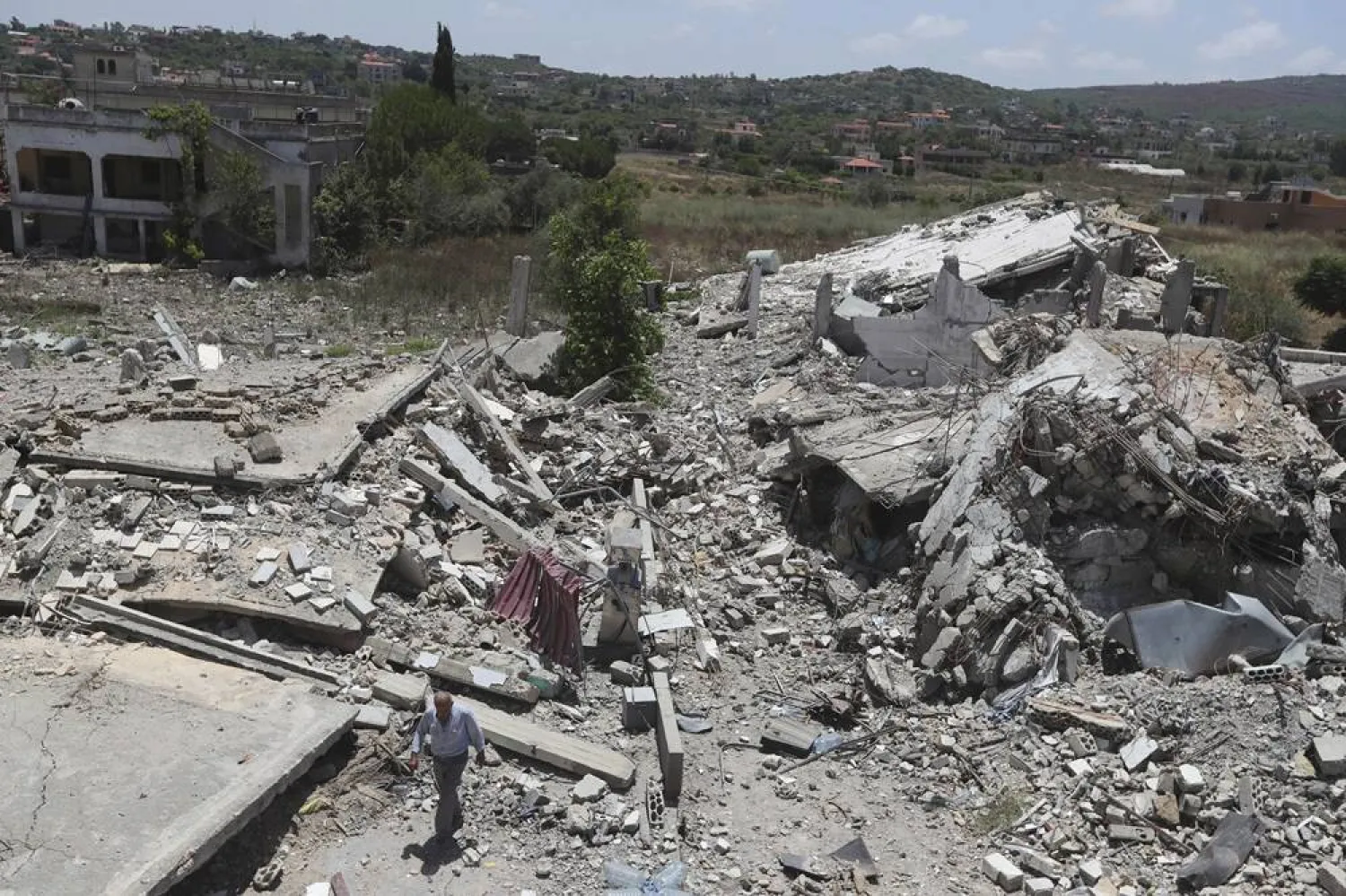
Beginning the day after Hamas' Oct. 7 attacks on Israel triggered the war in Gaza, Hezbollah has launched rockets into northern Israel and vowed to continue until a ceasefire takes hold. Israel has hit back, with the violence forcing tens of thousands of civilians from the border in both countries. Attacks intensified this month after Israel killed a top Hezbollah commander and Hezbollah responded with some of its biggest missile barrages.
UN humanitarian chief Martin Griffiths used the word "apocalyptic" to describe a war that could result. Both Israel and Hezbollah, the dominant force in politically fractured Lebanon, have the power to cause heavy casualties.
"Such a war would be a catastrophe for Lebanon," Defense Secretary Lloyd Austin said as he met recently with Israeli Defense Minister Yoav Gallant at the Pentagon. "Another war between Israel and Hezbollah could easily become a regional war, with terrible consequences for the Middle East."
Gallant, in response, said, "We are working closely together to achieve an agreement, but we must also discuss readiness on every possible scenario."
Analysts expect other Iran-allied militias in the region would respond far more forcefully than they have for Hamas, and some experts warn of ideologically motivated militants streaming into the region to join in. Europeans fear destabilizing refugee flows.
And if it looks like any Israeli offensive in Lebanon is "going seriously south for the Israelis, the US will intervene," Feierstein said. "I don’t think that they would see any alternative to that."
While Iran, which is preoccupied with a political transition at home, shows no sign of wanting a war now, it sees Hezbollah as its strategically vital partner in the region — much more so than Hamas — and could be drawn in.
Upping tensions, Iran's UN mission said in a posting Saturday on X that an "obliterating" war would ensue if Israel launches a full-scale attack in Lebanon. Israeli Foreign Minister Israel Katz responded by pledging his country would move against Hezbollah with "full force" unless it stopped attacks.
While the US helped Israel knock down a barrage of Iranian missiles and drones in April, the US likely would not do as well assisting Israel's defense against any broader Hezbollah attacks, said Gen. CQ Brown, chairman of the Joint Chiefs of Staff. It is harder to fend off the shorter-range rockets that Hezbollah fires routinely across the border, he said.
The Israeli army is stretched after a nearly nine-month war in Gaza, and Hezbollah holds an estimated arsenal of some 150,000 rockets and missiles capable of striking anywhere in Israel. Israeli leaders, meanwhile, have pledged to unleash Gaza-like scenes of devastation on Lebanon if a full-blown war erupts.
White House senior adviser Amos Hochstein, President Joe Biden's point person on Israel-Hezbollah tensions, has not been successful so far in getting the two sides to dial back the attacks.
The French, who have ties as Lebanon's former colonial power, and other Europeans also are mediating, along with the Qataris and Egyptians.
White House officials have blamed Hezbollah for escalating tensions and said it backs Israel’s right to defend itself. The Biden administration also has told the Israelis that opening a second front is not in their interest. That was a point hammered home to Gallant during his latest talks in Washington with Secretary of State Antony Blinken, Austin, CIA Director William Burns, national security adviser Jake Sullivan, Hochstein and others.
"We’re going to continue to help Israel defend itself; that’s not going to change," White House national security spokesman John Kirby said. "But as for a hypothetical — specifically with respect to the northern border line ... — again, we want to see no second front opened, and we want to see if we can’t resolve the tensions out there through diplomatic processes."
White House officials, however, are not discounting the real possibility that a second front in the Mideast conflict could open.
In conversations with Israeli and Lebanese officials and other regional stakeholders, there is agreement that "a major escalation is not in anybody’s interest," a senior Biden administration official said.
The official, who was not authorized to comment publicly about White House deliberations and spoke on condition of anonymity, bristled at the "purported logic" of Hezbollah leader Hassan Nasrallah arguing that Israel would see an end to Hezbollah attacks by reaching a ceasefire agreement with Hamas in Gaza.
But the official also acknowledged that an elusive ceasefire deal in Gaza would go a long way in quieting tensions on the Israel-Lebanon border.
Biden introduced a three-phase deal four weeks ago that would lead to an extended truce and the release of Israeli hostages and Palestinian prisoners, but negotiations between Israel and Hamas appear to have stalled.
A senior Biden administration official said Saturday that the US has presented new language to Egypt and Qatar intermediaries aimed at trying to jumpstart the negotiations. The official spoke on condition of anonymity to discuss an effort that the White House has yet to publicly unveil.
Even without a ceasefire, there's hope that if Israel wraps up its offensive in the southern Gaza city of Rafah and doesn't launch any new major offensive in Gaza, Hezbollah might ease up on firing rockets into Israel, said Randa Slim, a senior fellow at the Middle East Institute.
But without a ceasefire in Gaza, any temporary calm on the Lebanon-Israeli border "is not enough," Slim said.