


HRW Accuses Sudan’s Warring Parties of Committing Violent Acts Against Women, Girls

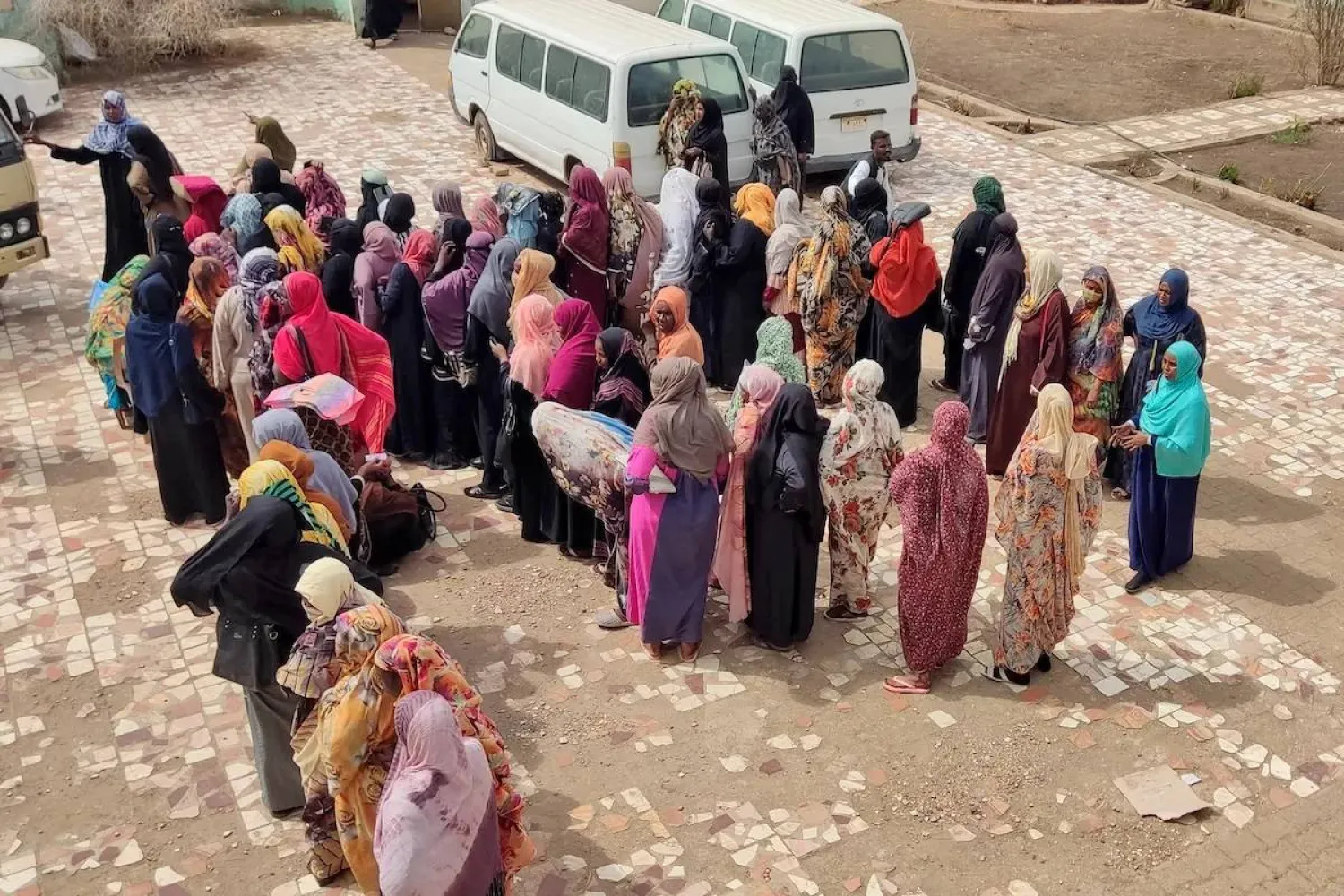
Internally displaced Sudanese women wait in a queue to collect aid from a group at a camp in the eastern state of Gedaref on May 19, 2024. (AFP)
TT

HRW Accuses Sudan’s Warring Parties of Committing Violent Acts Against Women, Girls

Internally displaced Sudanese women wait in a queue to collect aid from a group at a camp in the eastern state of Gedaref on May 19, 2024. (AFP)

Sudan’s warring parties, the Rapid Support Forces (RSF) and the Sudanese Army, have committed widespread acts of rape, including gang rape against women and girls in Khartoum since the current conflict’s onset, Human Rights Watch said in a report released Monday.

The New York-based organization said it interviewed 42 healthcare providers, social workers, counsellors, lawyers, and local responders in the emergency response rooms that they have established in Khartoum between September 2023 and February 2024.

Eighteen of the healthcare providers had provided direct medical care or psychosocial support to survivors of sexual violence, or managed individual incidents.

They said they had cared for a total of 262 survivors of sexual violence from ages 9 through 60 between the conflict’s onset in April 2023 and February 2024.

The report, “Khartoum Is Not Safe for Women: Sexual Violence Against Women and Girls in Sudan’s Capital,” said the RSF have committed widespread acts of sexual violence in areas of Khartoum over which they exercise control, acts that constitute war crimes and crimes against humanity.

Also, it said healthcare workers encountered survivors seeking assistance for debilitating physical injuries they experienced during rapes and gang rapes. At least four of the women died as a result of the violence.

The conflict in Sudan broke out 15 months ago between the army, led by Abdel Fattah al-Burhan, and the RSF, led by his former deputy General Mohamed Hamdan “Hemedti” Dagalo.

The violence has killed tens of thousands and displaced more than 10 million others, according to UN estimates. It also destroyed homes, schools, hospitals and other essential civilian infrastructure.

“The RSF have raped, gang raped, and forced into marriage countless women and girls in residential areas in Sudan’s capital,” said Laetitia Bader, deputy Africa director at Human Rights Watch.

The report said survivors told the medical providers that they were raped by as many as five RSF fighters.

RSF members have sometimes sexually assaulted women and girls in front of their family members. The RSF also forced women and girls into marriages.



Sudan Government Condemns Ugandan President’s Talks with Hemedti

Hemedti at the presidential palace in Entebbe on Feb. 20, 2026 (President Museveni’s page on X).
TT

Sudan Government Condemns Ugandan President’s Talks with Hemedti

Hemedti at the presidential palace in Entebbe on Feb. 20, 2026 (President Museveni’s page on X).

The Sudanese government has condemned “in the strongest terms” Ugandan President Yoweri Museveni’s meeting with Rapid Support Forces (RSF) commander Mohamed Hamdan Dagalo calling the move “unprecedented” and an affront to humanity and the Sudanese people.

In a statement issued Sunday, Sudan’s Ministry of Foreign Affairs said the ceremonial welcome accorded to Dagalo, known as Hemedti, in the Ugandan capital, Kampala, mocked “the souls of innocent citizens killed in the war, whose dignity was violated and whose property was looted” by the RSF.

The Ministry added that Uganda’s action “contravenes the principles governing member states of regional and international organizations,” particularly the obligation not to offer support to armed groups rebelling against a legitimate government recognized internationally.

Museveni met Hemedti on Friday at the presidential palace in Entebbe, where the two discussed efforts to end the ongoing war in Sudan. The talks also addressed regional and international initiatives aimed at reaching a political settlement to the conflict.

The meeting marked Hemedti’s first prominent regional appearance in several months. According to Dagalo, the discussions included what he described as a “Ugandan vision” for ending the war.

In its statement, Sudan’s Foreign Ministry acknowledged Uganda’s sovereign right to host whomever it chooses in accordance with its national interests. However, it expressed “deep concern” that the meeting could signal a shift in Kampala’s policy toward Sudan.

The Ministry urged the Ugandan government, in the interest of bilateral relations, good neighborliness, and non-interference in internal affairs, to distance itself from the RSF commander and not allow him to use Ugandan territory for political purposes.

Speaking to members of the Sudanese community in Entebbe, Hemedti said his visit came at the invitation of Museveni, who, he claimed, had been asked by Sudan’s government to intervene in efforts to help end the war.

In a post on the social media platform X, Museveni confirmed that he had received the RSF commander at the presidential residence in Entebbe and had listened to a detailed briefing on developments in Sudan.

He stressed that dialogue and a peaceful political settlement remain the only viable path to stability in Sudan and to ensuring security across the region.

Hemedti’s visit to Uganda came just one week after Museveni hosted Malik Agar, Vice Chairman of Sudan’s Sovereignty Council, allegedly as part of regional and international efforts to secure a ceasefire and lay the groundwork for a comprehensive political solution to Sudan’s ongoing conflict.


ISIS Lashes Out at Syria's Sharaa, Announces ‘New Phase of Operations’

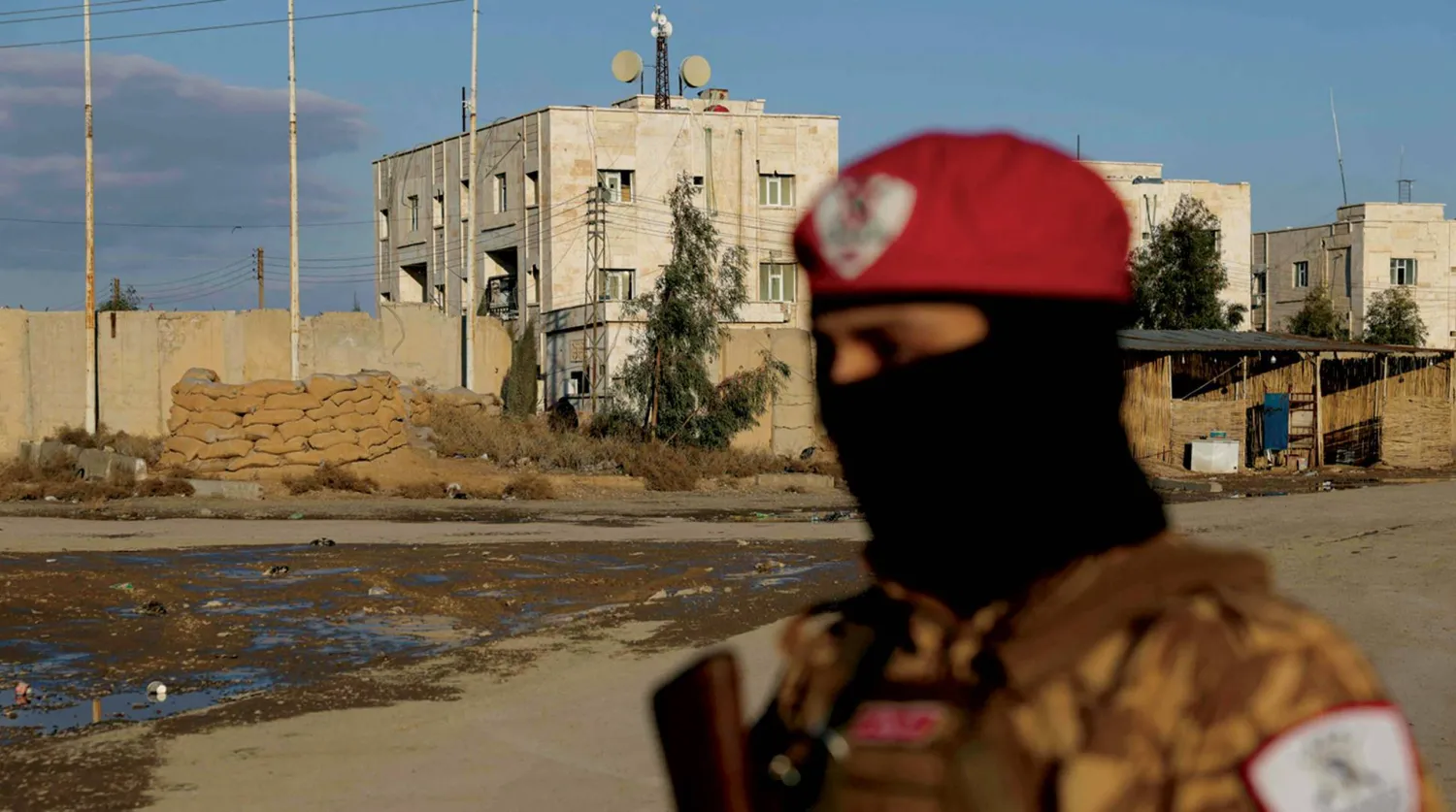
A Syrian government soldier outside Al-Aqtan prison in Raqqa, which holds ISIS detainees (AFP)
TT

ISIS Lashes Out at Syria's Sharaa, Announces ‘New Phase of Operations’

A Syrian government soldier outside Al-Aqtan prison in Raqqa, which holds ISIS detainees (AFP)

Syria’s Defense Ministry said on Sunday that a Syrian army soldier and a ‌civilian were killed a day earlier by “unknown assailants” in the northern city of Raqqa.

ISIS claimed ‌responsibility for two attacks targeting Syrian army personnel in northern and eastern Syria.

The militant group said on its Dabiq news agency that it had targeted “an individual of the apostate Syrian regime” in the city of Mayadin in Deir Ezzor province using a pistol, and attacked two other personnel with machine guns in Raqqa.

The attacks came after ISIS blasted Syria’s interim president, Ahmad al-Sharaa, calling him a “puppet without a soul” controlled by Western countries, adding that his fate eventually will be similar to that of ousted leader Bashar Assad.

In an audio message released late Saturday by the group’s spokesman, who identifies himself as Abu Huzaifa al-Ansari, he called on ISIS followers around the world to attack Jewish and Western targets as they have in past years.

The ‌group also said it had begun a “new phase of operations” in Syria.

Al-Ansari sent greetings to ISIS militants from the group’s leader Abu Hafs al-Hashemi al-Qurayshi who was named as the head of the group three years ago.

The audio is the first to be released by the group in months and comes after ISIS was blamed for attacks that left dozens dead or wounded in recent months in Syria, Iraq, Pakistan and other parts of the world.

The latest incidents come two days after ISIS claimed responsibility for another attack in Deir Ezzor that killed a member of the Interior Ministry’s internal security forces and wounded another.

In December, the group was blamed for an attack in central Syria that left three Americans dead and triggered intense US airstrikes on the extremists’ suspected hideouts in the country.


Hamas Official Says Group in Final Stage of Choosing New Chief

Tents are erected to house displaced Palestinian families in the al-Zahara neighborhood, north of the Nuseirat refugee camp in the central of Gaza Strip on February 21, 2026. (Photo by Eyad Baba / AFP)
TT

Hamas Official Says Group in Final Stage of Choosing New Chief

Tents are erected to house displaced Palestinian families in the al-Zahara neighborhood, north of the Nuseirat refugee camp in the central of Gaza Strip on February 21, 2026. (Photo by Eyad Baba / AFP)

A senior Hamas official told AFP on Sunday that the Palestinian movement was in the final phase of selecting a new leader, with two prominent figures competing for the position.

Hamas recently completed the formation of a new Shura Council of more than 80 members, a consultative body largely composed of religious scholars, as well as a new 18-member political bureau, the official said.

Since the war in Gaza began after Hamas's October 7, 2023 attack on Israel, Israeli forces have killed several Hamas leaders, including two former chiefs.

"The movement has completed its internal elections in the three regions and has reached the final stage of selecting the head of the political bureau," the official said, speaking on condition of anonymity as he was not authorized to speak publicly.

According to AFP, he said the race for the group's leadership was now between Khaled Meshaal and Khalil al-Hayya.

A second Hamas source confirmed the development, while a third source said the new leader would lead the movement only "for one year.”

Despite a US-brokered ceasefire that entered its second phase last month, violence has continued in Gaza, with Israel and Hamas blaming each other for violating the agreement.

Members of the council are elected every four years by representatives from Hamas's three branches: the Gaza Strip, the occupied West Bank and the movement's external leadership.

Hamas prisoners in Israeli jails are also eligible to vote.

The council subsequently elects the political bureau, which in turn selects the head of the movement.