


Lice, Scabies, Rashes Plague Palestinian Children as Skin Disease Runs Rampant in Gaza’s Tent Camps 

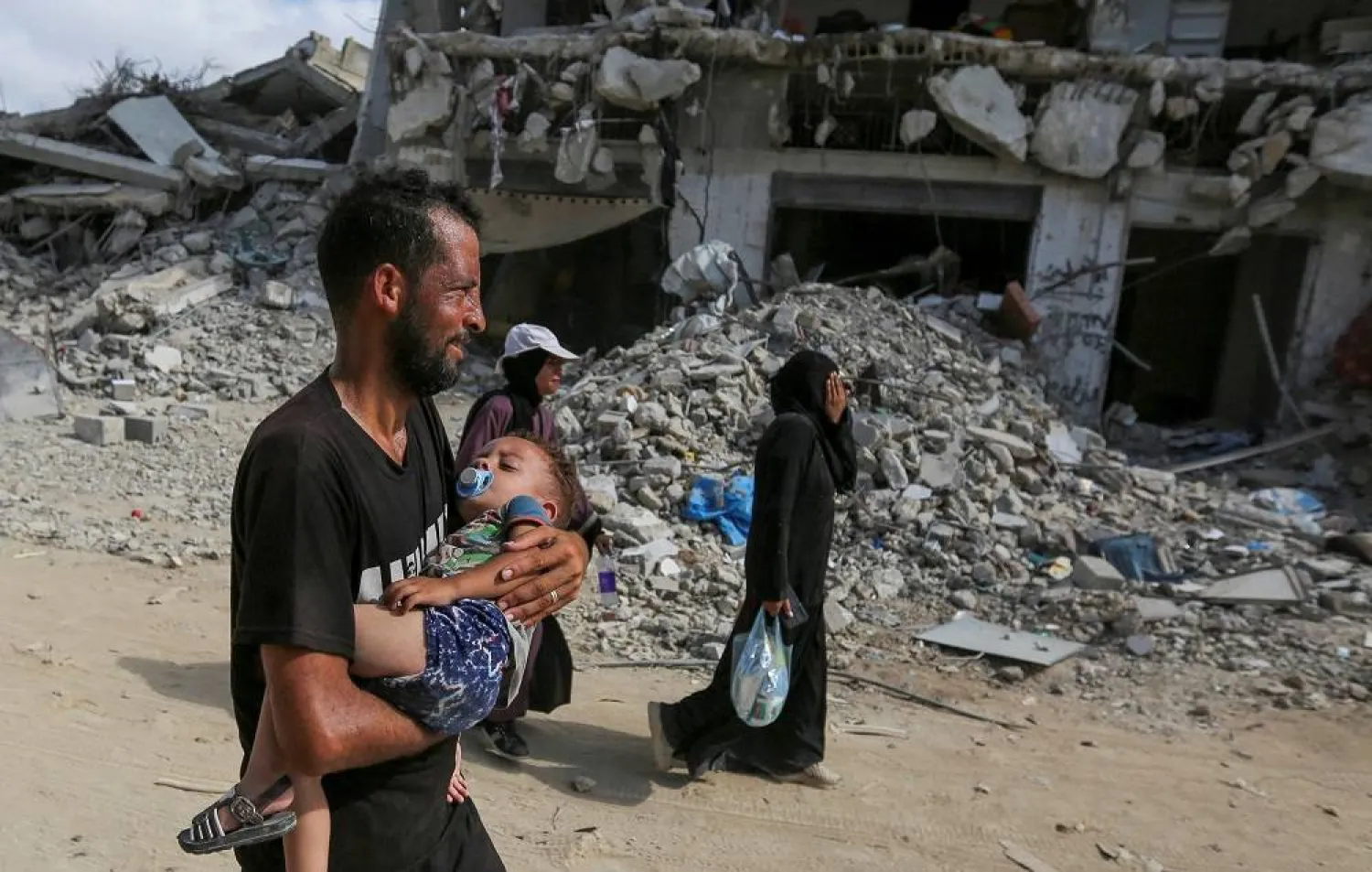
A Palestinian man carries a child, as Palestinians make their way to return to the eastern side of Khan Younis after Israeli forces pulled out from the area following a raid, amid the Israel-Hamas conflict, in Khan Younis, in the southern Gaza Strip July 30, 2024. (Reuters)
TT

Lice, Scabies, Rashes Plague Palestinian Children as Skin Disease Runs Rampant in Gaza’s Tent Camps 

A Palestinian man carries a child, as Palestinians make their way to return to the eastern side of Khan Younis after Israeli forces pulled out from the area following a raid, amid the Israel-Hamas conflict, in Khan Younis, in the southern Gaza Strip July 30, 2024. (Reuters)

A steady stream of miserable children and worried parents flowed into the dermatology office at Nasser Hospital in central Gaza.

A toddler with a blue hair bow sobbed as her mother showed how the red and white spots covering her face have spread to her neck and chest. Another woman lifted her little boy's clothes to reveal the rashes on his back, butt, thighs and stomach. On his wrists, he had open sores from scratching. A father stood his daughter on the desk so the doctor could examine the lesions on her calves.

Skin diseases are running rampant in Gaza, health officials say. The cause, they say, is the appalling conditions in overcrowded tent camps housing hundreds of thousands of Palestinians driven from their homes, along with the summer heat and the collapse of sanitation that has left pools of open sewage amid 10 months of Israel's bombardment and offensives in the territory.

Doctors are wrestling with more than 103,000 cases of lice and scabies and 65,000 cases of skin rashes, according to the World Health Organization. In Gaza's population of some 2.3 million, more than 1 million cases of acute respiratory infections have been recorded since the war began, along with more than half a million of acute diarrhea and more than 100,000 cases of jaundice, according to the United Nations Development Program.

Cleanliness is impossible in the ramshackle tents, basically wood frames hung with blankets or plastic sheets, crammed side by side over wide stretches, Palestinians say.

"There's no shampoo, no soap," said Munira al-Nahhal, living in a tent in the dunes outside the southern city of Khan Younis. "The water is dirty. Everything is sand and insects and garbage."

Her family's tent was crammed with her grandchildren, many of whom had rashes. One little boy stood scratching the red patches on his belly. "One child gets it, and it spreads to all of them," al-Nahhal said.

Palestinians in the camp said clean water was almost impossible to get. Some wash their children in salt water from the nearby Mediterranean. People have to wear the same clothes day after day until they're able to wash them, then they wear them again immediately. Flies are everywhere. Children play in garbage-strewn sand.

"First it was spots on her face. Then it spread to her stomach and arms, all over her forehead. And it hurts. It itches. And there's no treatment. Or if there is we can't afford it," said Shaima Marshoud, sitting next to her little daughter in a cinder block structure they'd settled in among the tents.

More than 1.8 million of Gaza's 2.3 million people have been driven from their homes, often moving multiple times over the past months to get away from Israeli ground assaults or bombardment. The vast majority are now crowded into a 50-square-kilometer (20-square-mile) area of dunes and fields on the coast with almost no sewage system and little water.

The distribution of humanitarian supplies, including soap, shampoo and medicines, has slowed to a trickle, UN officials say, because Israeli military operations and general lawlessness in Gaza make it too dangerous for relief trucks to move.

Israel launched its campaign vowing to destroy Hamas after its Oct. 7 attack on southern Israel, in which some 1,200 people were killed and 350 abducted. Israel's assault has killed more than 39,000 people, according to Gaza health authorities.

"The solid waste management system has collapsed," said Chitose Noguchi, the deputy special representative of the UN Development Program's Program of Assistance to the Palestinian People.

In a report released Tuesday, the UNDP said Gaza's two pre-war landfills were unreachable amid the fighting and it had set up 10 temporary sites. But Noguchi said there were more than 140 informal dumping sites that have cropped up. Some of them are giant pools of human waste and garbage.

"People are having tents and living next to dumping sites, which is really, really critical situation in terms of the health crisis," Noguchi said.

Nassim Basala, a dermatologist at Nasser Hospital, said they get 300 to 500 people a day coming in with skin diseases. After the most recent Israeli evacuation orders, more people have crowded into agricultural fields outside the city of Khan Younis, where insects are rife in the summer.

Scabies and lice are at epidemic proportions, he said, but other fungal, bacterial and viral infections and parasites are also running wild.

With the flood of patients, even simple cases can because dangerous.

For example, Basala said, impetigo is a simple bacterial infection treatable with creams. But sometimes by the time the patient gets to a doctor, "the bacteria have spread and affected the kidneys," he said. "We've had cases of kidney failure" as a result. Scratched rashes get infected in the pervasive dirt.

He said creams and ointments were in short supply at the hospital.

Children are the most affected. But adults suffer as well. At the hospital's dermatology office, one man untied his dirt-covered shoes to show the painful looking sores on the tops of his feet and ankles where his rash had rubbed open. A woman held up her hands, chapped raw and red.

Mohammed al-Rayan, several of whose children in a tent outside Khan Younis, have rashes or spots, said he has taken them to doctors.

"They give us creams, but it's no use when you don't have anything to wash with," he said. "You put a cream and it gets better but then the next day it's back the same."

Parents are left struggling to comfort children with painful conditions that won't go away.

Manar al-Hessi's toddler cried as she spread cream on her forehead and chest, covered in scabs, sores and spots.

"It's horrible," al-Hessi said. "There are always flies on her face. She goes in the toilet or the garbage, and it gets in her hands. The filth is huge."

ISIS Intensifies Lone Wolf Attacks in Syria 

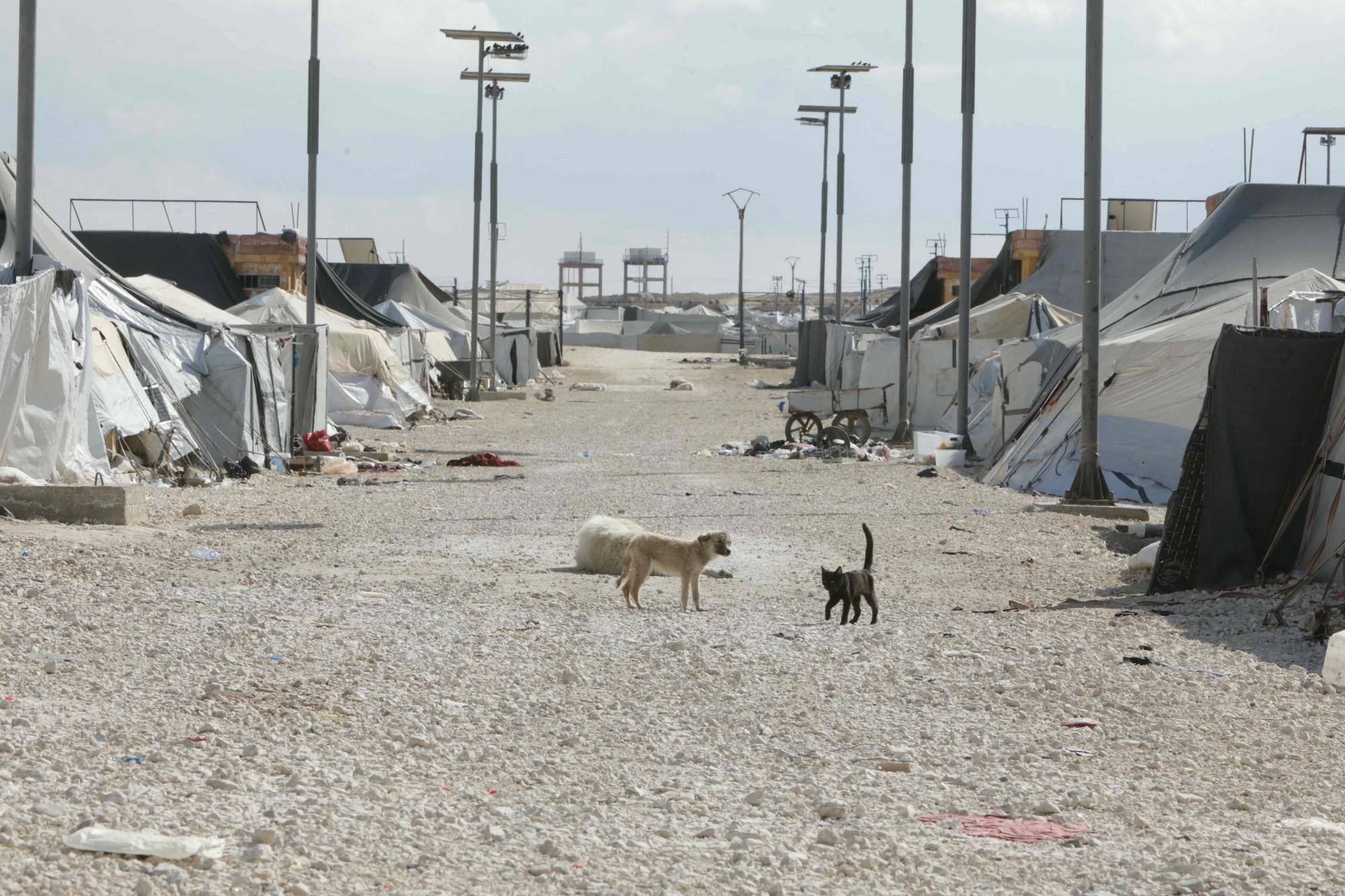
This picture shows a view of the empty tent at al-Hol camp, closed by the Syrian authorities in the northeastern Hasakeh governorate on February 25, 2026. (AFP)
TT

ISIS Intensifies Lone Wolf Attacks in Syria 

This picture shows a view of the empty tent at al-Hol camp, closed by the Syrian authorities in the northeastern Hasakeh governorate on February 25, 2026. (AFP)

The ISIS extremist group has intensified its lone wolf attacks against security forces and the army in Syria, especially in its eastern provinces, such as Raqqa and Deir Ezzor.

Al-Ikhbariah Syria reported that the attacks intensified after the state’s security and political achievements across the country.

Despite ISIS’ territorial defeat in Syria, it is still capable of carrying out attacks through various cells in the country.

ISIS staged an attack against security forces in Raqqa this week, killing four members and wounding others. A soldier was also killed in Mayadeen city in Deir Ezzor.

The security forces have since intensified their efforts in cracking down on ISIS cells, reported dpa.

They managed to bust the cell that staged the Raqqa attack, killing two of its members and detaining four others, as well as seizing weapons and ammunition in their possession, according to the Interior Ministry.

In Mayadeen, internal security forces detained an ISIS member during a raid. He was wanted for involvement in an attack against Defense Ministry personnel.

ISIS attacks have notably spiked in wake of the Kurdish Syrian Democratic Forces’ (SDF) sudden withdrawal last month from the sprawling al-Hol camp that was detaining members of the group.

There were scenes of "utter chaos" when thousands of women and children related to suspected ISIS fighters escaped the camp in Syria, witnesses have told AFP.

An AFP journalist who entered the huge al-Hol camp on Wednesday found it virtually deserted after the Syrian government decided to evacuate the site.

Until recently, it housed 23,500 people and was the largest camp for relatives of suspected ISIS members in northeastern Syria.

Since the territorial defeat of ISIS it had been under the control of the SDF. However, the SDF swiftly left the camp on January 20, under pressure from Syrian troops which were seizing swathes of the country's north months after their ouster of longtime ruler Bashar al-Assad.

This picture shows a view of the empty tent at al-Hol camp, closed by the Syrian authorities in the northeastern Hasakeh governorate on February 25, 2026. (AFP)

Syrian security forces say they took over control six hours later.

Thousands of family members of suspected extremists left for parts unknown.

As soon as the Kurdish forces left, "it was utter chaos," Salah Mahmud al-Hafez, who lives in the nearby al-Hol village, told AFP.

"The SDF withdrew, and the locals and tribesmen came," he said. "Cars loaded people and drove off."

- Toys, food left behind -

The camp held mostly women and children, the majority of them Syrian or Iraqi.

However, a high-security annex housed more than 6,000 foreigners of around 40 nationalities.

Access to the camp remains prohibited and checkpoints have been set up on the road leading to it, according to the AFP journalist at the scene.

The paths of the empty camp are now strewn with rubbish bags, and white tents stretch as far as the eye can see.

Children's toys and tricycles have been abandoned in the foreigners' annex.

Clothes, notebooks and even food were left behind, signs of a hasty departure.

Last week, Syrian authorities evacuated the remaining families at the camp after determining that the conditions at al-Hol -- particularly security -- were inadequate.

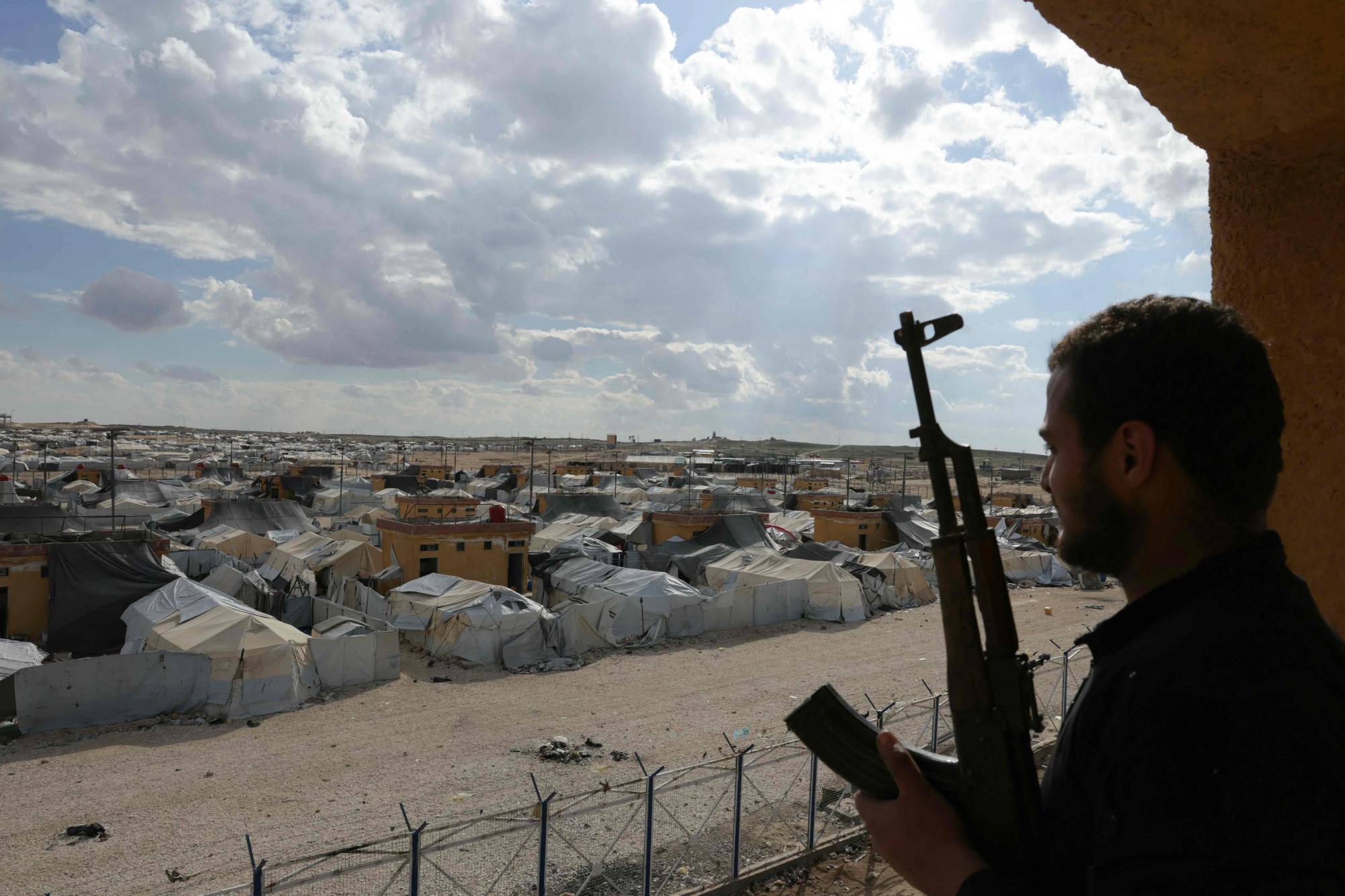
A member of the Syrian government forces looks towards the empty al-Hol camp, closed by the Syrian authorities in the northeastern Hasakeh governorate on February 25, 2026. (AFP)

Syria's interior ministry confirmed on Wednesday there were mass escapes from the camp, accusing the Kurdish SDF of withdrawing "suddenly, without coordination and without informing" them.

Morhaf Al-Olayan, a 43-year-old farmer who lives next to the camp, said that after the Kurdish forces departed, "cars came, loaded the families, and left".

The father of five said he saw men "wearing camouflage military uniforms" among those transporting the families.

Farhan Abbas, an 86-year-old who lives near the camp, said that "people fled... in all directions".

They rejoiced at being rid of oppression and injustice, he added.

The detained family members had not been charged with any crime.

- Women and children at risk -

The foreigners' annex held a large number of people from around the world.

While the whereabouts of those who left the camp remain unknown, teachers in Idlib in northwestern Syria told AFP that several children from Uzbekistan have enrolled in their schools since late January.

In a report earlier this week, Human Rights Watch said that most of al-Hol's residents "left in a largely unplanned and chaotic manner".

"The way these departures have unfolded has exposed women and children to serious risks, including trafficking, exploitation, and recruitment by armed groups," the report warned.

Kurdish forces still control the smaller Roj camp in Syria's northeast, where more relatives of suspected foreign extremists, including Westerners, are detained.

The Kurds had repeatedly urged countries to take back their citizens, but few did, fearing security threats and a domestic political backlash.

"For years, many governments claimed that difficulties negotiating with a non-state actor in charge of the camps was why they couldn't repatriate their citizens, but now that excuse won't hold," Adam Coogle, deputy Middle East director at Human Rights Watch, said in the report.

For the extremists themselves, the United States military has transferred more than 5,700 ISIS suspects from Syrian prisons to Iraq.


Gaza Civil Defense Says Israeli Strikes Kill at Least 5

SENSITIVE MATERIAL. THIS IMAGE MAY OFFEND OR DISTURB Mourners gather next to the bodies of two Palestinians killed by an Israeli strike on Thursday, according to medics, during their funeral at Shifa hospital in Gaza City, February 26, 2026. REUTERS/Dawoud Abu Alkas
TT

Gaza Civil Defense Says Israeli Strikes Kill at Least 5

SENSITIVE MATERIAL. THIS IMAGE MAY OFFEND OR DISTURB Mourners gather next to the bodies of two Palestinians killed by an Israeli strike on Thursday, according to medics, during their funeral at Shifa hospital in Gaza City, February 26, 2026. REUTERS/Dawoud Abu Alkas

Gaza's civil defense ministry said Israeli strikes killed at least five people on Friday.

Violence has continued in the Palestinian territory despite a US-brokered truce that entered its second phase last month, with Israel and Hamas trading accusations of violating the agreement.

The civil defense agency, which operates as a rescue force under Hamas authorities, told AFP that an air strike in the early hours of Friday morning killed at least two people and seriously injured one in central Gaza.

A drone strike in the south of the strip shortly after midnight killed three and injured several more people, the agency added.

Under the terms of the ceasefire, which took effect on October 10, Israeli troops withdrew to positions behind a so-called "Yellow Line", though they remain in control of more than half of the territory.

Gaza's health ministry, which operates under Hamas authorities, has previously said at least 601 people had been killed since the truce began.

The Israeli military says at least four of its soldiers have been killed in the same period.

Media restrictions and limited access in Gaza have prevented AFP from independently verifying casualty figures or freely covering the fighting.


Sudan's War Puts Charity Kitchen Workers Feeding Displaced Families at Risk

A woman carries food as she leaves a charity kitchen in Khartoum, Sudan, Wednesday, Jan. 21, 2026. (AP Photo/Marwan Ali)
TT

Sudan's War Puts Charity Kitchen Workers Feeding Displaced Families at Risk

A woman carries food as she leaves a charity kitchen in Khartoum, Sudan, Wednesday, Jan. 21, 2026. (AP Photo/Marwan Ali)

Enas Arbab fled Sudan's western region of Darfur after her hometown fell to Sudanese paramilitary forces, taking only her year-old son with her and the memory of her father, who was killed, she said, simply for working at a charity kitchen serving people displaced by the fighting.

The Rapid Support Forces — or RSF, a paramilitary group that has been at war with the Sudanese army since April 2023 — had laid siege on el-Fasher in the western Darfur region, starving people out before it overran the city.

UN officials say several thousand civilians were killed in the RSF takeover of el-Fasher last October. Only 40% of the city’s 260,000 residents managed to flee the onslaught, thousands of whom were wounded, the officials said. The fate of the rest remains unknown.

During the fighting, Arbab says RSF fighters took her father, Mohamed ِArbab, from their home after beating him in front of the family, and demanded a ransom. When the family couldn't pay, they told them they had killed him, she says. To this day, the family doesn't know where his body is.

When her husband disappeared a month later, Enas Arbab decided to flee north, to Egypt. “We couldn’t stay in el-Fasher," she said. "It was no longer safe and there was no food or water.”

Her father was one of more than 100 charity kitchen workers who have been killed since the war began, according to workers who spoke with The Associated Press and the Aid Workers Security database, a group that tracks major incidents around the world impacting aid workers.

In areas of intense fighting — especially in Darfur — famine is spreading and food and basic supplies are scarce. The community-led public kitchens have become a lifeline but many working there have been abducted, robbed, arrested, beaten or killed.

Grim numbers in a brutal war

Volunteer Salah Semsaya with the Emergency Response Rooms — a group that emerged as a local initiative and now operates in 13 provinces across Sudan, with 26,000 volunteers — acknowledges the dangers faced by workers in charity kitchens.

The real number of workers killed is likely far higher than the estimated 100, he says, but the war has prevented reliable data collection and record-keeping.

Semsaya shared records showing that 57% of the documented killings of charity kitchen workers occurred in Khartoum, mainly while the Sudanese capital was under RSF control, before the army retook it last March. At least 21% of the killings were in Darfur.

More than 50 of those killed in Khartoum worked with his group, Semsaya said.

Sudan’s war erupted after tensions between the army and the RSF escalated into fighting that began in Khartoum and spread nationwide, killing thousands and triggering mass displacement, disease outbreaks and severe food insecurity. Aid workers were frequently targeted.

Dan Teng’o, communications chief at the UN office for humanitarian affairs, says it's unclear whether charity kitchen workers are targeted because of their work or because of their perceived affiliation with one side or other in the war.

The kitchen workers are prominent in their communities because of the work they do, making them obvious targets, activists say. Ransom demands typically range from $2,000 to $5,000, often rising once families make initial payments.

“A clear deterioration in the security context ... has significantly affected local communities, including volunteers supporting community kitchens,” Teng’o said.

Kitchen workers face risks

Farouk Abkar, a 60-year-old from el-Fasher, spent a year handing out sacks of grain at a charity kitchen in Zamzam camp, just 15 kilometers (9 miles) south of the city. He survived drone strikes and remembers the day RSF fighters attacked his kitchen. One of them punched him in the face, knocking some of his teeth out.

Abkar said he fled el-Fasher at night with his daughter, walking for 10 days. Along the way, some RSF fighters fired birdshot, which hit him in the head, leaving a chronic headache.

Now in Egypt, he shares an apartment with at least 10 other Sudanese refugees and can't afford medical care. The harrowing images from his hometown still haunt him.

“Many things happened in el-Fasher," he said. "There was death. There was starvation."

Mustafa Khater, a 28-year-old charity kitchen worker, fled with his pregnant wife to Egypt a few days before el-Fasher fell to the RSF.

During the 18-month siege, some el-Fasher residents collaborated with the RSF, telling the paramilitary fighters who the kitchen workers were, Khater said. Many disappeared.

"They would take you to an area where there is a dry riverbed and kill you there,” Khater said.

A volunteer working with Semsaya's aid group in Darfur said some of his colleagues were beaten, arrested and interrogated, with their attackers accusing them of receiving “illicit funds” for the kitchen. The volunteer spoke on condition of anonymity for fear of reprisals.

Despite the challenges, many charity kitchens remain the only reliable food source in areas gripped by conflict and a place people can come to and give each other support, Semsaya said.

Struggling to feed thousands

The town of Khazan Jedid in East Darfur province has three charity kitchens feeding about 5,000 people daily, said Haroun Abdelrahman, a spokesperson for the Emergency Response Rooms' branch in the area.

Abdelrahman says he was once interrogated by RSF fighters, while several of his colleagues have been robbed at knifepoint. Despite the fear and harassment, many kitchen workers are still volunteering and working, he said.

In Kassala in eastern Sudan, military agents questioned a volunteer with the branch there and his colleagues in January 2024, he said, after their kitchen started serving food and providing shelter to people who escaped nearby Wad Madani when RSF seized that town. He also spoke anonymously for fear of reprisals.

Khater, the 28-year-old who fled el-Fasher, said he heard from friends back home that after the RSF takeover, all charity kitchens in the city closed and his colleagues were either "killed or fled.”

Teng’o says the closures in areas of fighting have left “vulnerable households with no viable alternatives” and forced people to shop at local "markets where food prices are unaffordable.”

Arbab, the pregnant 19-year-old who fled with her baby boy, had hoped to rebuild her life in Egypt, her friends and a humanitarian worker said, speaking on condition of anonymity to talk about the young mother.

But while on the road to the northern city of Alexandria last month, she and her son were stopped by Egyptian authorities and deported back to Sudan.
