Flights Suspended, Countries Urge Citizens to Leave Lebanon amid Israel-Hezbollah Tensions

Civil defense members and people gather near a site hit by what security sources said was a strike on Beirut's southern suburbs, Lebanon July 30, 2024. REUTERS/Mohamed Azakir Purchase Licensing Rights
TT

Flights Suspended, Countries Urge Citizens to Leave Lebanon amid Israel-Hezbollah Tensions

Civil defense members and people gather near a site hit by what security sources said was a strike on Beirut's southern suburbs, Lebanon July 30, 2024. REUTERS/Mohamed Azakir Purchase Licensing Rights

The United States on Wednesday raised its travel advisory on Lebanon to its highest "do not travel" classification, citing rising tensions between Israel and Hezbollah after a strike on southern Beirut killed a top commander of the armed group.

"Do Not Travel to Lebanon due to rising tensions between Hezbollah and Israel. If you are in Lebanon, be prepared to shelter in place should the situation deteriorate," the advisory said, adding that citizens in southern Lebanon or in refugee settlements should leave.

Switzerland also urged its nationals to leave Lebanon, noting the highly volatile situation in the country.

Lebanon's Iran-backed Hezbollah group said Wednesday that senior military commander Fuad Shukr was inside a south Beirut building hit by Israel the previous day but said his fate remained unknown.

For its part, Australia has asked its citizens in Lebanon to leave immediately, saying there was a real risk that the tensions between Israel and militant group Hezbollah could escalate seriously. The request follows similar advisory by Britain this week.

"Now is the time to leave, the security situation could deteriorate quickly with little or no notice," Foreign Minister Penny Wong said in a video posted on social media platform X late on Wednesday.

Wong said Beirut airport could shut down completely if the situation worsens, potentially stranding people wishing to leave for "an extended period" and urged Australians to use commercial flights while they operate.

Meanwhile, Air France and low-cost carrier Transavia France said Wednesday their flights between Paris and Beirut would remain suspended till the weekend due to the "security situation" in Lebanon.

The two airlines had planned to resume flights on Wednesday, but said they will now remain grounded until Saturday.

"The resumption of operations will be subject to a new assessment of the local situation," an Air France statement said.

Both carriers stopped servicing the route on Monday, a day after Israel vowed to retaliate following rocket fire it blamed on Lebanese armed group Hezbollah that killed 12 people in the Israeli-annexed Golan Heights.

The rocket attack on the Golan sparked fears that fighting between Hezbollah and Israel would escalate.

When those fears subsided somewhat they announced on Tuesday that flights would resume on Wednesday.

But as Israel then struck the Hezbollah stronghold in south Beirut on Tuesday evening, targeting a senior commander it blamed for the rocket strike on the Golan Heights.

Hezbollah said Wednesday the commander was inside the building hit by Israel but that his fate remained unknown.

German carrier Lufthansa has suspended flights until August 5.


Iran War Spreads Across Region

Smoke rises after Israeli strikes in Beirut's southern suburbs, Lebanon, March 2, 2026. REUTERS/Mohamed Azakir
TT

Iran War Spreads Across Region

Smoke rises after Israeli strikes in Beirut's southern suburbs, Lebanon, March 2, 2026. REUTERS/Mohamed Azakir

Israel bombarded Lebanon on Monday, expanding conflict across the region after the massive Israel-US attack on Iran.

Israeli forces pounded targets across Lebanon, including Beirut’s southern suburbs, after Hezbollah fired rockets towards Israel in retaliation for the killing of Iran's supreme leader Ali Khamenei.

US President Donald Trump and Israeli Prime Minister Benjamin Netanyahu have urged Iranians to overthrow the government in Iran.

In a video address, Trump urged Iranian security forces "to lay down your arms and receive full immunity or face certain death."

"It will be certain death," he repeated. "It won't be pretty."

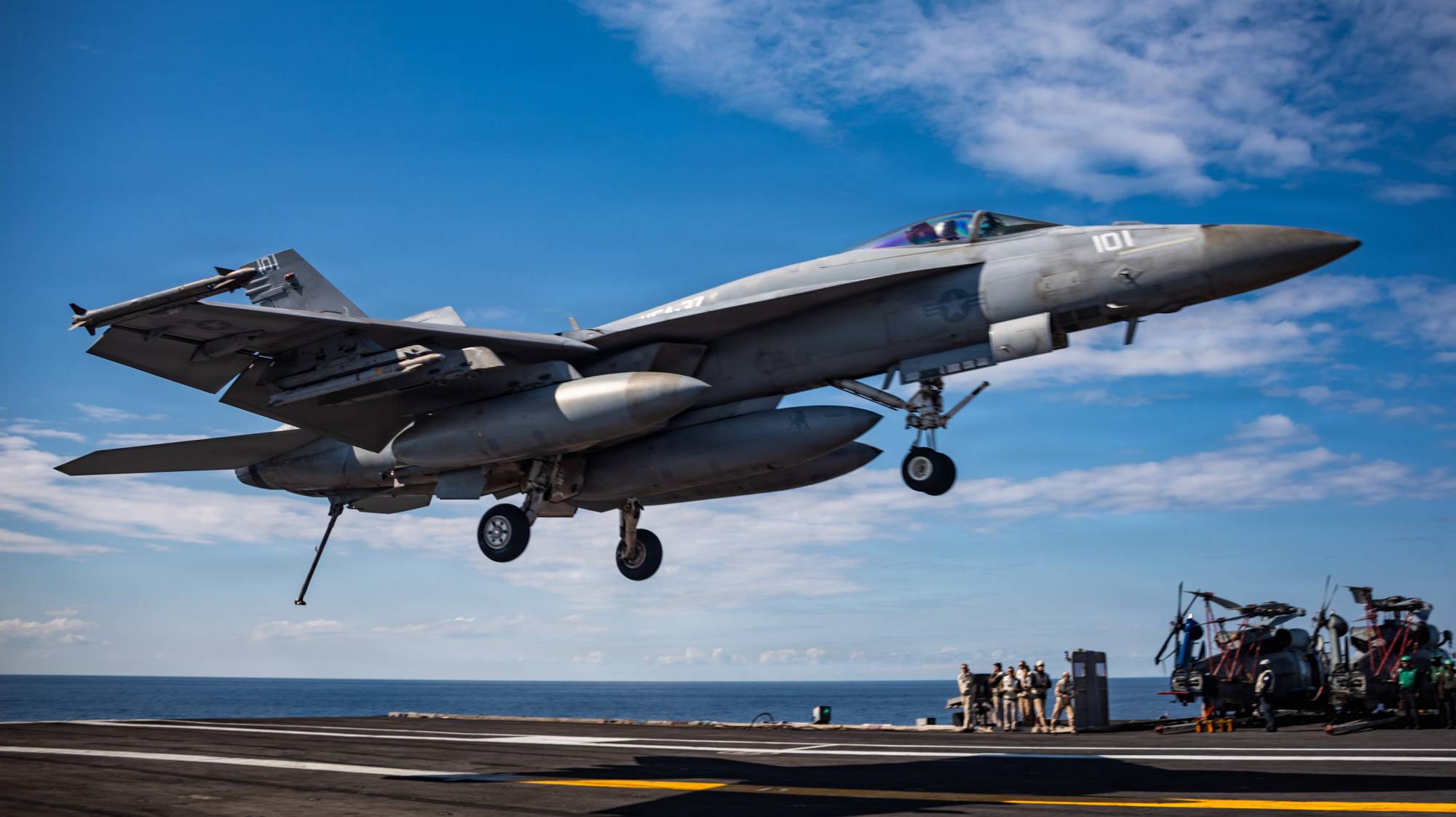
In this image provided by US Central Command, an F/A-18E Super Hornet aircraft, attached to Strike Fighter Squadron 37, lands on the flight deck of the world's largest aircraft carrier, USS Gerald R. Ford (CVN 78), while operating in support of Operation Epic Fury, on March 1, 2026. (US Navy via AP)

As the American and Israeli airstrikes kept hitting the country, top Iranian security official Ali Larijani said on X: “We will not negotiate with the United States.”

Iran's first retaliatory strikes on Saturday hit all the Gulf states apart from mediator Oman.

On Sunday, Oman's commercial port of Duqm was hit by two drones, injuring a foreign worker, the Oman News Agency said.

Three ships were also attacked in the Strait of Hormuz on Sunday after Iran had previously declared the strategic waterway was closed, sending global oil prices spiking.

The Revolutionary Guards claimed to strike the aircraft carrier USS Abraham Lincoln, but the Pentagon said the "missiles launched didn't even come close."

Trump said that US military strikes had sunk nine Iranian naval vessels and partially destroyed its navy headquarters.

Iran's retaliatory strikes in the Gulf have killed at least four people and wounded dozens of others.

More than 200 people have been killed since the start of the strikes that killed Khamenei and other senior leaders, Iranian leaders have said.


Israel Hits Lebanon after Hezbollah Fire

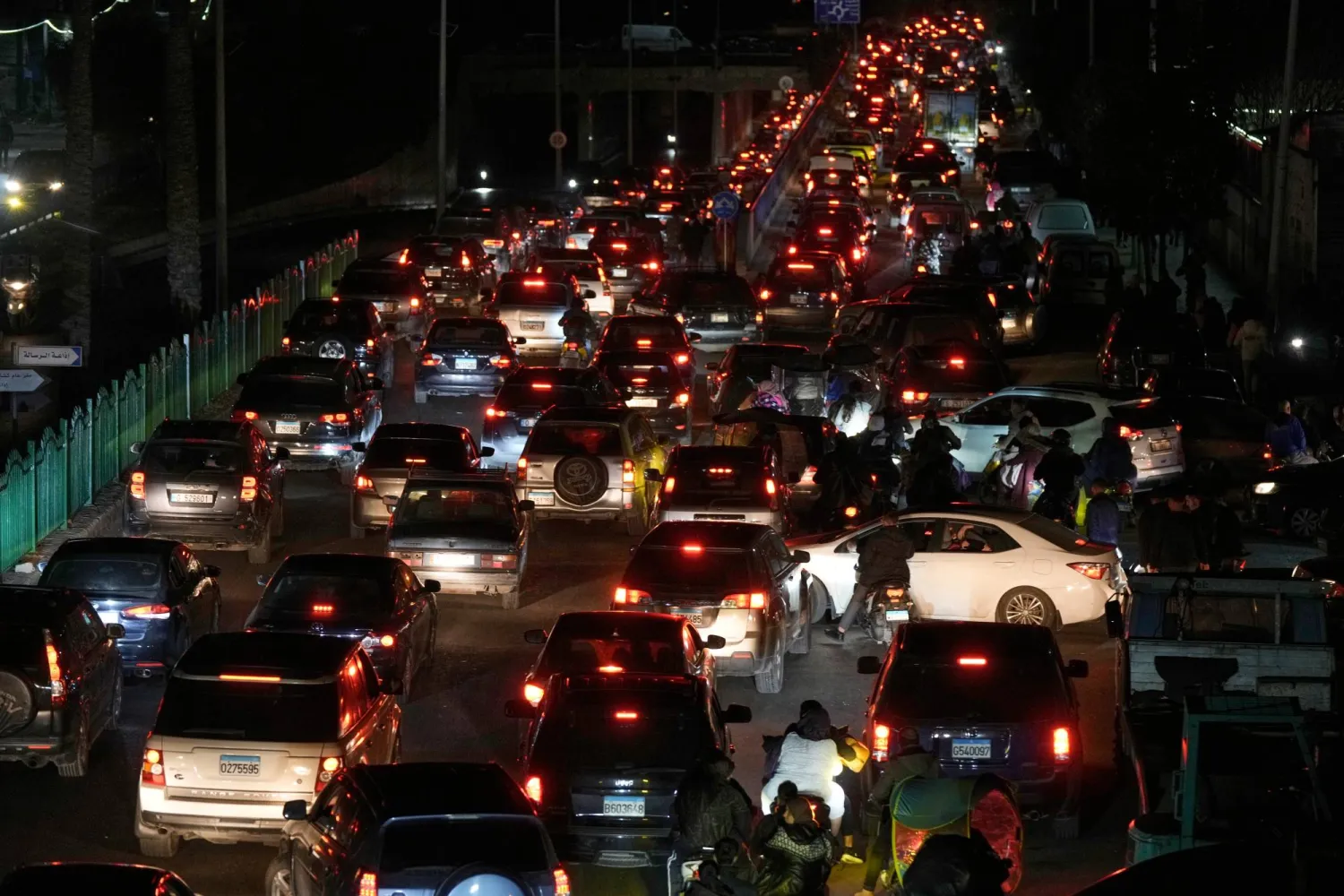
Cars sit in traffic as residents flee Israeli airstrikes in Dahiyeh, a southern suburb of Beirut, Lebanon, early Monday, March 2, 2026. (AP Photo/Bilal Hussein)
TT

Israel Hits Lebanon after Hezbollah Fire

Cars sit in traffic as residents flee Israeli airstrikes in Dahiyeh, a southern suburb of Beirut, Lebanon, early Monday, March 2, 2026. (AP Photo/Bilal Hussein)

Israel carried out airstrikes in Lebanon on Monday after Hezbollah launched missiles and drones towards Israel to avenge the killing of Iran's Supreme Leader Ali Khamenei.

More than a dozen explosions rocked Beirut, in the most intensive strikes on the southern suburbs since a war between Israel and Hezbollah in 2024.

People fled on foot and by car, clogging the roads, after the series of strikes began around 2:40 a.m. (0040 GMT).

The Israeli military said it had begun striking Hezbollah targets across Lebanon, including ⁠senior Hezbollah members ⁠in Beirut’s southern suburbs.

"Hezbollah opened a campaign against Israel overnight, and is fully responsible for any escalation," Israeli Chief of the General Staff, Eyal Zamir, said in a statement.

The Israeli military issued a warning ordering residents of dozens of villages in southern and eastern Lebanon to evacuate.

"Hezbollah's actions force the IDF (army) to act against it... For your safety, evacuate your homes immediately and move at least 1,000 meters (0.6 miles) away from your village to open areas," army spokeswoman Ella Waweya said in a statement on X.

The Israeli military said several projectiles that crossed from Lebanon fell in open areas and one was intercepted by the Israeli airforce.

"No ⁠injuries or damages were reported," it said.

Hezbollah said it had targeted an Israeli military missile defense facility south of the city of Haifa in revenge for "the pure blood" of Khamenei and in response to what it described as repeated Israeli attacks.

It was the first time the group has carried out such an attack since the 2024 war.

"The resistance leadership has always emphasized that the continuation of Israeli attacks and the assassination of our leaders, youth, and people gives us the right to defend ourselves and respond at the appropriate time and place," Hezbollah said in a statement.

Since a US-backed ceasefire between Israel and Lebanon in 2024, Israel has carried out regular strikes against what it has identified as Hezbollah targets in Lebanon, accusing the group of seeking to rearm.

It was Israel's first attack on the southern suburbs since it killed the group's top military official, ⁠Ali Tabtabai, in November.

Israel also ⁠carried out airstrikes in southern Lebanon and the Bekaa Valley in eastern Lebanon, Lebanese security sources said.

Lebanese Prime Minister Nawaf Salam said the firing of projectiles from south Lebanon was irresponsible, calling it a suspicious act that jeopardized Lebanon's security.

Without naming Hezbollah, Salam vowed to "stop the perpetrators and protect the Lebanese people.”

Salam will convene an emergency meeting on Monday "to discuss the developments... and to take the necessary measures,” his office said in a statement.

Lebanon's presidency said on Saturday it had been told by the US ambassador that Israel would not escalate against Lebanon as long as there are no hostile acts from the Lebanese side.


Lebanon, France Postpone Conference to Support Lebanese Army

01 March 2026, Lebanon, Qliyaa: Smoke trails left by interceptor missiles launched from Israeli air defense systems to counter Iranian missiles is seen over the Israeli settlement of Metula as seen from the Lebanese southern border village Qliyaa.(dpa)
TT

Lebanon, France Postpone Conference to Support Lebanese Army

01 March 2026, Lebanon, Qliyaa: Smoke trails left by interceptor missiles launched from Israeli air defense systems to counter Iranian missiles is seen over the Israeli settlement of Metula as seen from the Lebanese southern border village Qliyaa.(dpa)

Lebanon and France postponed on Sunday an upcoming conference to support the Lebanese army and security forces, a joint statement by both countries' presidencies said, citing unfavorable conditions in the region.

The statement said Lebanese President Joseph Aoun and his French counterpart Emmanuel Macron "decided to postpone until April the conference... which was to be held on March 5 in Paris" after discussing "the latest developments affecting the security of the entire region".

"The conditions were not met to hold the meeting on the scheduled date."

The decision comes after the United States and Israel began strikes against Iran on Saturday, sparking swift retaliation from Tehran.

Lebanon, which is still reeling from a 2024 war between Israel and the Iran-backed Hezbollah, fears the group may intervene in the conflict.

The conference is meant to support the military, whose mission is to disarm Hezbollah after Beirut committed to doing so last year.

Aoun and Macron stressed that "the gravity of the regional situation reinforces the need to preserve the stability of Lebanon, to support its legitimate institutions and to guarantee the full restoration of its sovereignty".