


A Year After Earthquake, Just 1,000 Moroccan Homes Rebuilt

A devastated village in Morocco's Atlas Mountains (AFP)
TT

A Year After Earthquake, Just 1,000 Moroccan Homes Rebuilt

A devastated village in Morocco's Atlas Mountains (AFP)

One year after a devastating earthquake struck Morocco’s Atlas mountains, just 1,000 homes have so far been rebuilt although more than 55,000 permits have been issued.

The 6.8-magnitude quake on September 8, 2023 shook the remote mountainous area south of the capital Rabat, killing nearly 3,000 people and destroying or damaging around 60,000 homes.

Following the catastrophe, an $11-billion aid program over five years was released for reconstruction and development in the six provinces affected.

Nearly a thousand families were praised for their success in completing the reconstruction and rehabilitation of their homes, according to a statement released last week by the cabinet presidency.

It said this came despite the issuance of 55,142 reconstruction permits and progress on reconstruction and rehabilitation projects for 49,632 damaged homes.

Nearly 58,000 people affected by the quake have received the first of four instalments of state aid of up to 140,000 dirhams ($14,500) but just 939 families have received the final payment.

Such grants are conditional on obtaining the necessary permits, technical studies and validation by a project manager of the various phases of construction.

The head of the government urged those affected to “speed up their work to be able to benefit” from the financial aid available.

In return, several activists, such as Mohamed Belhassen, criticized the government for its “dismal failure” of reconstruction efforts.

Belhassen, who lives in Amizmiz, some 60 kilometers from Marrakesh, told AFP, “A large number of victims are still living in tents or have been forced to leave their villages and rent elsewhere.”

In the Taroudant region some 60 kilometers from Agadir, “the situation hasn’t changed much,” said Siham Azeroual, who founded an NGO to help villagers in the North African country hit by the quake.

“Reconstruction is proceeding very slowly,” she said. Quake victims “are exhausted, and find themselves caught up in an administrative spiral.”

Meanwhile, the authorities say monthly grants to more than 63,800 affected families of 2,500 dirhams ($260) have been made.



Canada Eases Sanctions on Syria

13 February 2026, Bavaria, Munich: Anita Anand, Minister of Foreign Affairs of Canada, arrives at the Bavarian Hof for the 62nd Munich Security Conference. Photo: Felix Hörhager/dpa
TT

Canada Eases Sanctions on Syria

13 February 2026, Bavaria, Munich: Anita Anand, Minister of Foreign Affairs of Canada, arrives at the Bavarian Hof for the 62nd Munich Security Conference. Photo: Felix Hörhager/dpa

Canadian Minister of Foreign Affairs Anita Anand said on Wednesday that Canada had amended its economic sanctions on Syria ‌to ease ‌restrictions related ‌to the ⁠import and export ⁠of goods, investment activities and the provision of financial and other ⁠services, according to Reuters.

"The amendments also ‌remove ‌24 entities and ‌one individual from ‌the Syria Regulations to reduce barriers to economic activity and ‌to enable transactions with state-affiliated entities ⁠in ⁠key sectors critical to Syria’s recovery," Anand said in a statement.


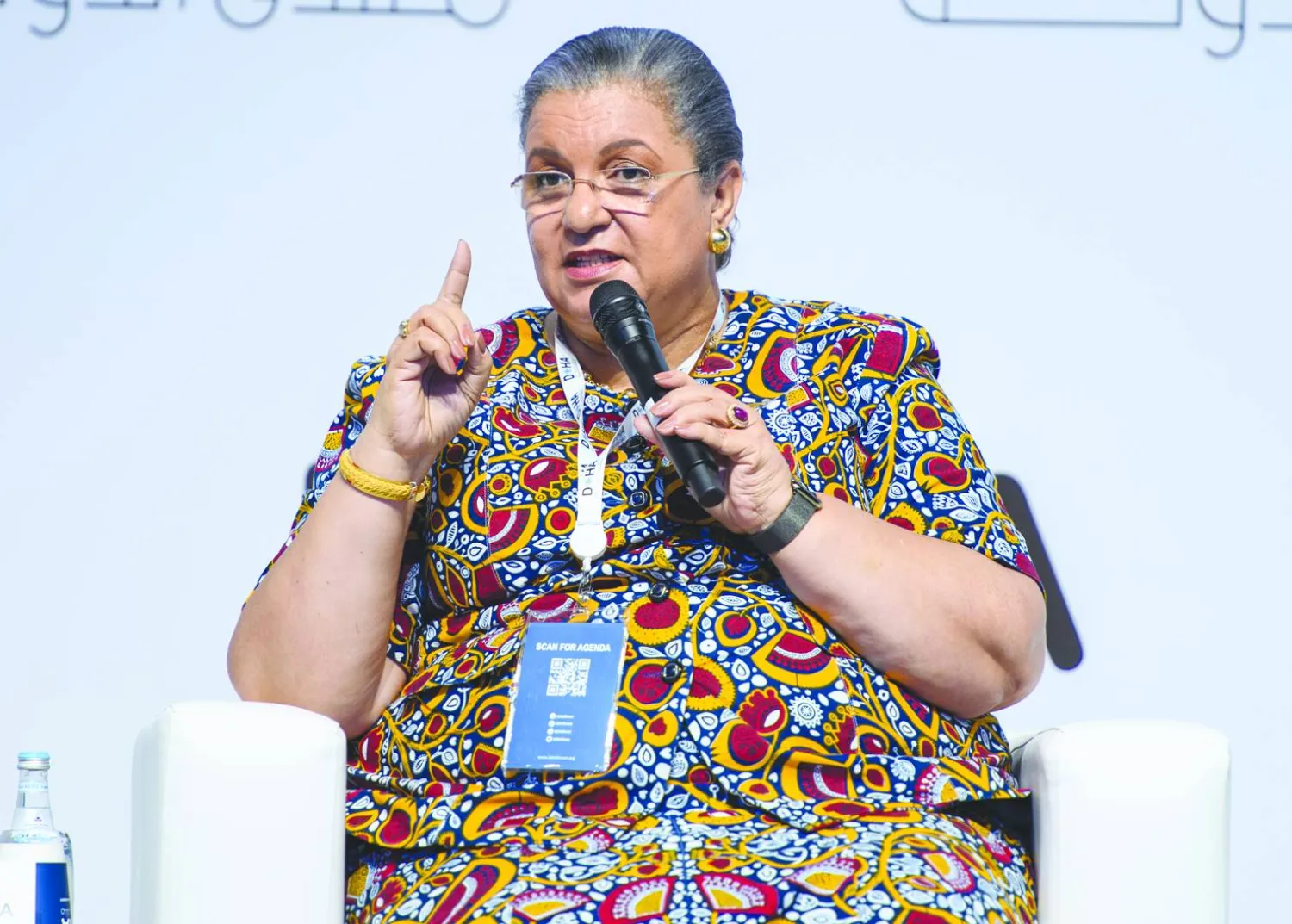
Tetteh: Despite UN Engagement, No Progress in Libya Roadmap

Head of the United Nations Support Mission in Libya Hanna Tetteh Getty)
TT

Tetteh: Despite UN Engagement, No Progress in Libya Roadmap

Head of the United Nations Support Mission in Libya Hanna Tetteh Getty)

The UN’s top envoy for Libya, Hanna Tetteh, has informed the Security Council that despite active United Nations engagement, the Libyan House of Representatives and the High Council of State have failed to make progress on the first steps of the agreed political roadmap, including establishing a mechanism to select the board of the High National Elections Commission (HNEC) and advancing electoral legislation.

Briefing the Council in New York on Wednesday, the Special Representative of the Secretary-General said: “Their inability to use their agreed mechanism and follow-on unilateral actions has further eroded their credibility."

Tetteh added that Libyan public perceptions reflect a growing belief that the bodies are “unable or unwilling” to deliver.

She told Council members that she has begun consultations with key actors on an alternative two-step approach aimed at restoring momentum. Should a smaller group of Libyan representatives fail to agree on the roadmap’s milestones, she warned, a broader convening would be required. “We cannot wait indefinitely,” she emphasized.

The UN envoy also issued a stark warning about escalating tensions within Libya’s judicial system.

She said “contradictory, parallel judicial decisions put into jeopardy the unity of the legal and judicial systems,” cautioning that the situation “is a red line that if crossed can undermine the unity of the state.”

She urged Libyan leaders to refrain from further escalatory steps and called on the Council to hold accountable those taking actions that threaten to fracture the judiciary.

Tetteh also warned that transnational criminal networks continue to expand, turning Libya into a major transit hub for drug trafficking and sustaining illicit economies linked to corruption and armed groups.


Damascus, in Cooperation with Baghdad, Foils Plot to Smuggle Drugs Abroad

Quantities of Captagon prepared for smuggling abroad- SANA
TT

Damascus, in Cooperation with Baghdad, Foils Plot to Smuggle Drugs Abroad

Quantities of Captagon prepared for smuggling abroad- SANA

Syrian authorities said they have thwarted an attempt to smuggle a large shipment of drugs out of the country.

The Syrian Narcotics Directorate said on Wednesday it seized approximately 400,000 captagon pills, weighing about 65 kilograms, during an operation in Homs province in central Syria.

The drugs would have been smuggled to other countries, the Syrian Arab News Agency (SANA) reported. Two suspects were arrested on suspicion of managing a drug-trafficking network operating across borders.

The operation was carried out in coordination with Iraq’s General Directorate for Narcotics and Psychotropic Substances Control, SANA quoted a Syrian Interior Ministry statement as saying.

Earlier this month, the Syrian Narcotics Directorate conducted a joint security operation with the Iraqi authorities targeting an international drug-trafficking network, and seizing about 300,000 Captagon pills. Two people were also arrested.