
Lebanese PM's Office Denies US Asked Lebanon to Declare Unilateral Ceasefire with Israel

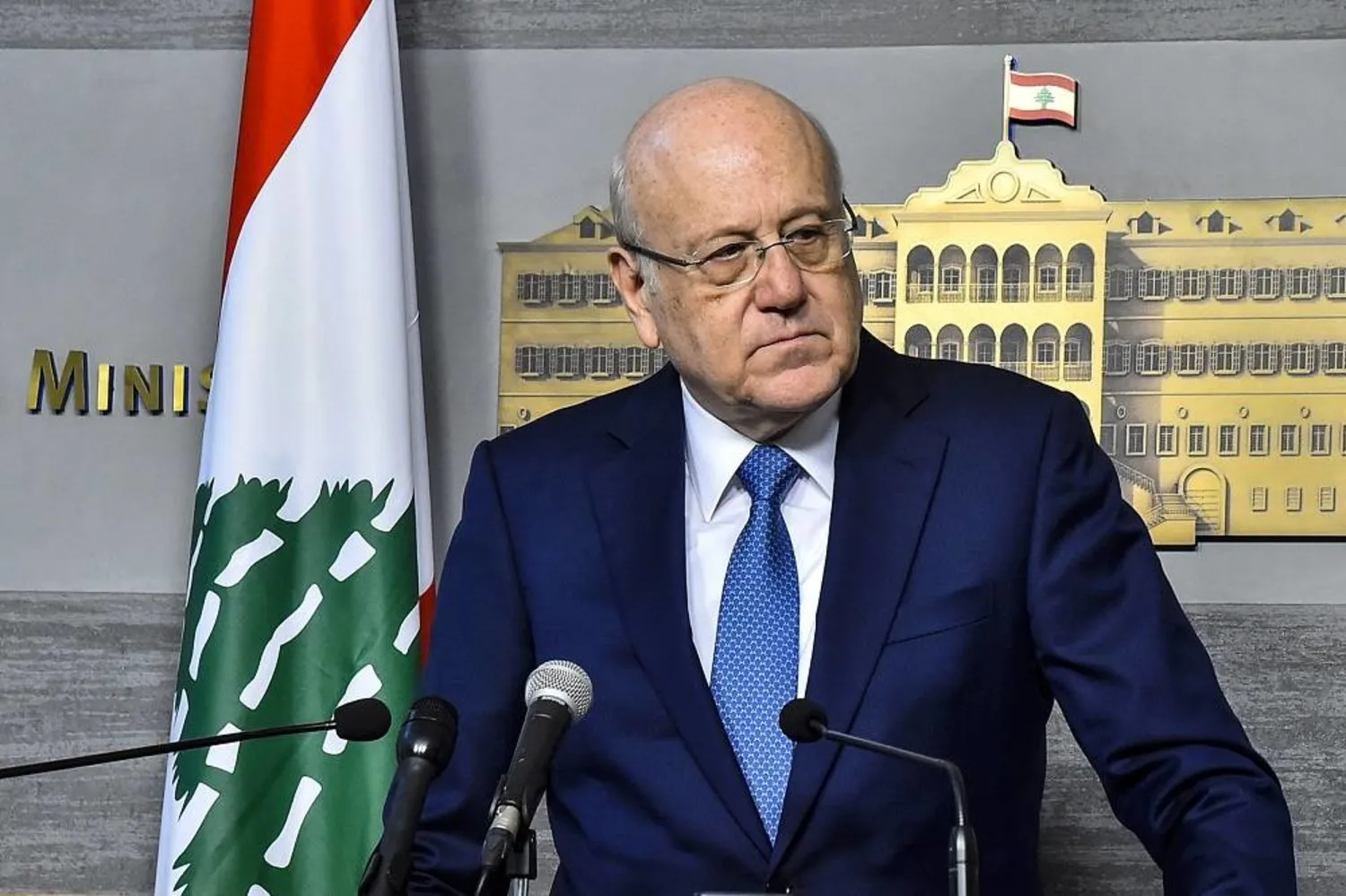
27 March 2023, Lebanon, Beirut: Lebanese caretaker Prime Minister Najib Mikati speaks during a press conference following a meeting of cabinet. (Dalati & Nohra)
TT

Lebanese PM's Office Denies US Asked Lebanon to Declare Unilateral Ceasefire with Israel

27 March 2023, Lebanon, Beirut: Lebanese caretaker Prime Minister Najib Mikati speaks during a press conference following a meeting of cabinet. (Dalati & Nohra)

The office of Lebanese caretaker prime minister Najib Mikati on Friday denied that the US had asked Lebanon to declare a unilateral ceasefire, after two sources told Reuters that a US envoy had made the request to inject momentum into stalled talks on a deal to end hostilities between Hezbollah and Israel.
In a statement to Reuters, Mikati's office said the government's stance was clear on seeking a ceasefire from both sides and the implementation of UN Security Council Resolution 1701, which ended the last round of conflict between the two foes in 2006.

Earlier, a senior Lebanese political source and a senior diplomat said the US had asked Lebanon to declare a unilateral ceasefire with Israel to revive stalled talks to end hostilities between Israel and Hezbollah.
They said the effort was communicated by US envoy Amos Hochstein to Lebanese caretaker Prime Minister Najib Mikati this week, as the US stepped up diplomatic efforts for a ceasefire between Israel and Iran-backed militant group Hezbollah.
The US embassy in Beirut did not immediately respond to requests for comment.
The sources said the US sought to persuade Beirut to take back some initiative in the talks, particularly given the perception that Israel will likely continue military operations that have already killed most of Hezbollah's leadership and destroyed much of the country's south.
Lebanon's armed forces are not involved in the hostilities between Israel and Hezbollah, which began firing rockets at Israeli military sites a year ago in solidarity with its Palestinian ally Hamas in Gaza.
Any effort to reach a ceasefire would need a green light from Hezbollah, which has ministers in Lebanon's cabinet and whose members and allies hold a significant number of seats in Lebanon's parliament.
Diplomats mediate with Hezbollah through the group's ally, Lebanese speaker of parliament Nabih Berri. Hezbollah has said it backs efforts by Berri to reach a ceasefire but says it must meet certain parameters, without providing details.
But a unilateral declaration was seen as a non-starter in Lebanon, the sources said, where it would likely be equated with a surrender.
DIPLOMATIC INITIATIVE
Another diplomat told Reuters that Hochstein had made a similar proposal months ago to Mikati and Berri.
Hochstein told them that if Hezbollah unilaterally declared a ceasefire, he "could have something to present" to Israeli Prime Minister Benjamin Netanyahu as a diplomatic initiative.
"His exact words were, 'help me, help you," the diplomat said, adding that then-Hezbollah chief Hassan Nasrallah rejected the idea. Nasrallah was killed in an Israeli air attack on Sept. 27 on Beirut's southern suburbs.
Despite its losses, Hezbollah has maintained that the Iran-backed group's chain of command is intact and its fighters have kept Israeli forces making ground incursions into Lebanon at bay.
The US has been pushing for a 60-day ceasefire between Hezbollah and Israel as a prelude to a fuller implementation of 1701, sources told Reuters this week.
Hochstein was in Israel on Thursday with White House envoy Brett McGurk, but they did not continue on to Lebanon.
Speaking about Lebanon on Thursday, Netanyahu said that "agreements, documents, proposals....are not the main point."
"The main point is our ability and determination to enforce security, thwart attacks against us, and act against the arming of our enemies, as necessary and despite any pressure and constraints. This is the main point," he said.


Gen-Gvir Threatens to Burn Sinwar’s Body, Blames Netanyahu for Oct. 7 Attack

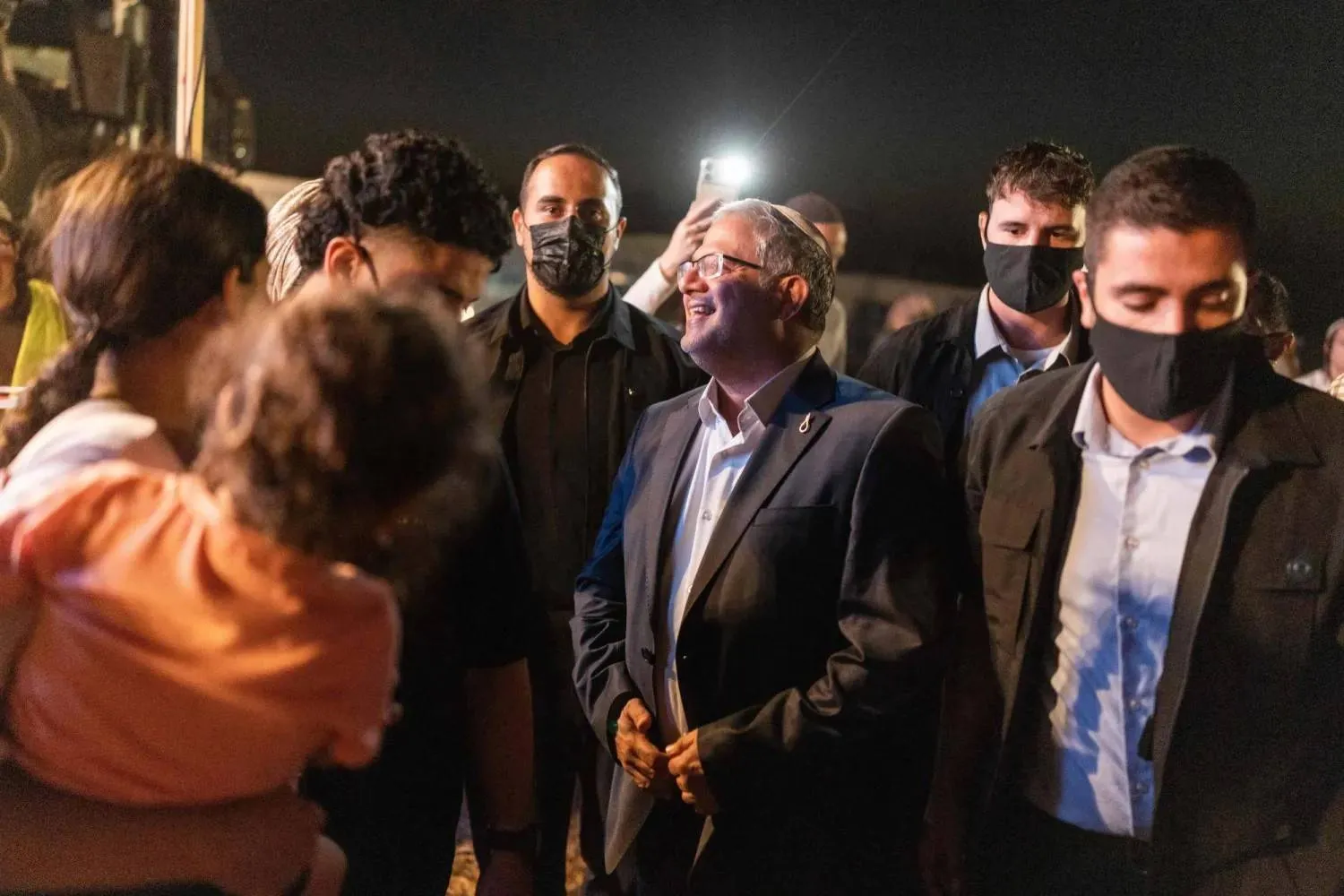
Israeli National Security Minister Itamar Ben-Gvir attend a Sukkot gathering and political rally held outside Kibbutz Nir Am, near the separation fence with the Gaza Strip (AFP) 
TT

Gen-Gvir Threatens to Burn Sinwar’s Body, Blames Netanyahu for Oct. 7 Attack

Israeli National Security Minister Itamar Ben-Gvir attend a Sukkot gathering and political rally held outside Kibbutz Nir Am, near the separation fence with the Gaza Strip (AFP) 

Israeli National Security Minister Itamar Ben-Gvir on Tuesday blamed Israeli Prime Minister Benjamin Netanyahu for the failure of the October 7, 2023 attack, also accusing former Israeli Chief of Staff Herzi Halevi and former Shin Bet chief Ronen Bar of misleading the PM and failing to provide him with sufficient intelligence regarding Hamas’ intentions.

In an interview with Israel’s public radio, Ben-Gvir reiterated his demand to receive the defense portfolio following Israel’s upcoming election.

“After I get the defense portfolio, I will make sure to burn Sinwar’s body and the bodies of the October 7th terrorists. As Defense Minister, I will lead a significant change in approach,” he said.

Ben-Gvir said of Netanyahu: “I also have criticisms of him, which is why I am in the Jewish Power party and not Likud.”

He said, “Before October, I presented a different vision for Gaza, but it was met with contempt by senior officials. They belittled me as national security minister, while Netanyahu also dismissed me, saying that security professionals believed nothing would happen from Gaza. That was just one week before October 7.”

Ben-Gvir also responded to accusations that Netanyahu had facilitated the transfer of millions of dollars to the Gaza Strip, saying the decision had not been made within the government or the security cabinet.

Had he been in office at the time, he said, he would have “turned the table” and rejected such a decision.

The minister noted that he previously resigned from the government after objecting to some of its decisions. “In the end, it turned out I was right about everything I said. No one believed me, and no one listened to me.”

On September 22, Ben-Gvir said he will seek the post of defense minister in the next government, as the country prepares for next month's elections.

“The reason I am putting myself forward is that the time has come to change the mindset within the army,” Ben Gvir said, at a press conference in Jerusalem.

The minister put forward a “security plan” that includes the “encouragement of voluntary emigration” of Palestinians from both Gaza and the occupied West Bank.

On Tuesday, Ben-Gvir threatened to make sure the body of former Hamas leader Yahya Sinwar, who was killed by Israeli forces in October 2024, would be burned.

Sinwar, who headed Hamas in Gaza during the Hamas-led October 7, 2023 attack and later became chairman of the group’s political bureau, was killed by Israeli forces in Rafah in October 2024.


Yemen: Houthi Losses Near 3,000 in Four Days

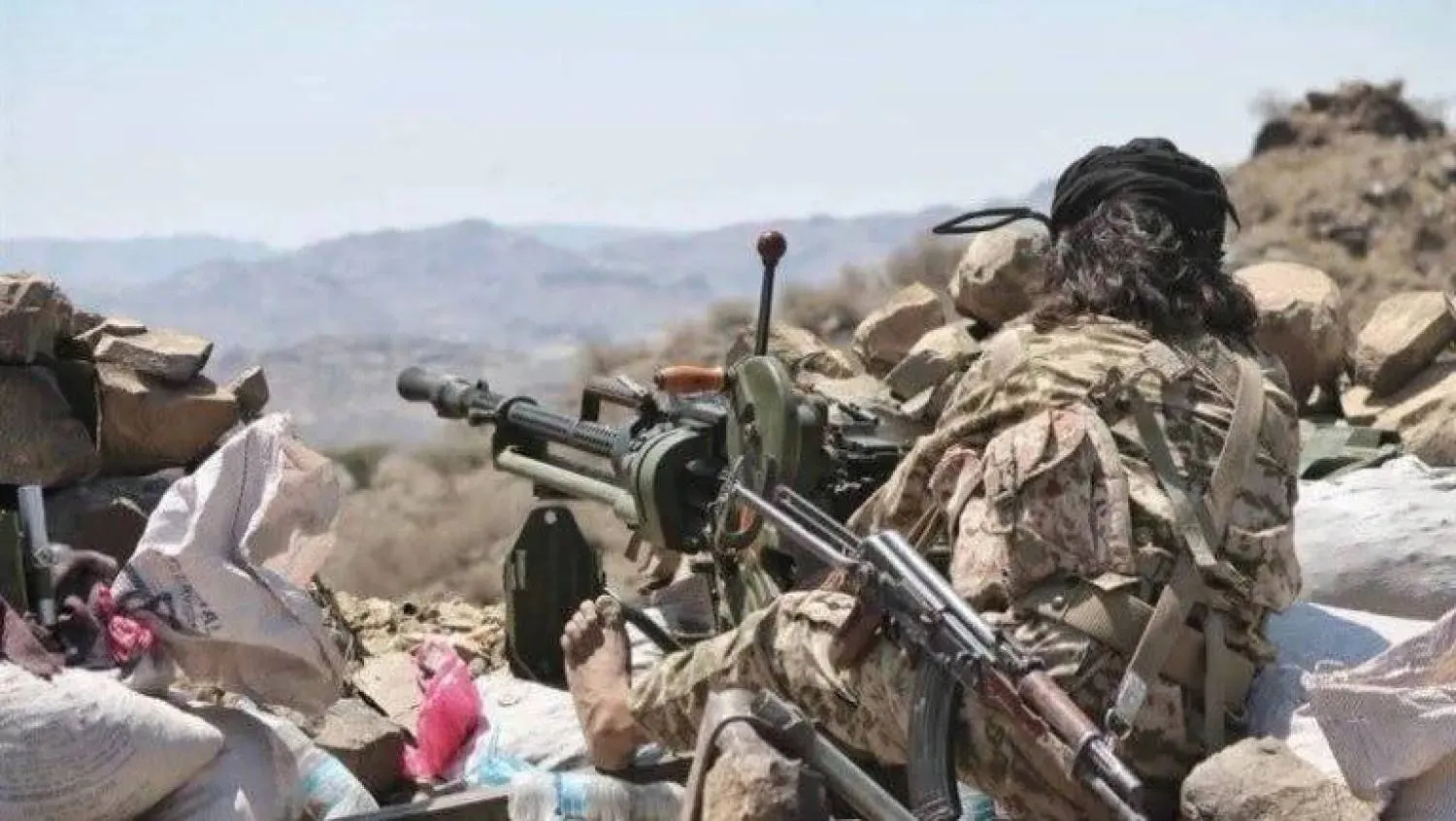
Fierce Houthi attacks on the Taiz and Lahj fronts are countered by Yemeni government forces (Military Media) 
TT

Yemen: Houthi Losses Near 3,000 in Four Days

Fierce Houthi attacks on the Taiz and Lahj fronts are countered by Yemeni government forces (Military Media) 

Losses inflicted on the Iran-aligned Houthis have risen to nearly 3,000 killed and wounded over four days, according to figures announced by Yemen’s armed forces, as fighting continues on several fronts and attacks, infiltration attempts and flanking maneuvers intensify, particularly in Taiz, Lahj and Bab al-Mandab.

The latest toll came after the Yemeni armed forces announced 356 strikes over 24 hours, which they estimated had killed or wounded 476 Houthi fighters and destroyed command-and-control centers, weapons and artillery depots and dozens of military vehicles.

Armed forces spokesman Col. Majed Al-Nuzaili said Sunday evening that 2,316 Houthis had been killed or wounded over 72 hours in 756 strikes on fronts in Kitaf, Al-Buqa, the Alab axis, Al-Jawf, Marib, Al-Bayda, Lahj and Taiz.

The figures brought the announced four-day toll to more than 2,792 killed and wounded, before accounting for additional losses reported by other field sources during the same period.

Much of the latest fighting was concentrated in western Taiz and areas linking the province with Lahj and Bab al-Mandab. Government forces battled Houthis in Al-Wazi’iyah, thwarted an infiltration attempt north of Taiz with artillery fire and repelled a flanking maneuver on the Kahbub front.

In Jabal Habashi, government forces said they repelled a Houthi attack on the Bani Bakari front, while clashes and exchanges of fire were reported on the Rasin and Al-Alaqma fronts south of Taiz.

Military sources said government forces carried out air and artillery strikes on Houthi positions and reinforcements in Al-Rubaie, Al-Ja’sha, Al-Zaybiyah and Al-Bahabah, while a Houthi drone was downed over Al-Kadahah.

The Taiz Military Axis Media Center reported 12 Houthis killed and 13 wounded across the axis’s fronts, as well as an armored vehicle and a military vehicle set ablaze in Al-Kadahah and a tank destroyed in Al-Rubaie.

Warplanes also targeted a ballistic missile launch platform on Jabal Oman east of Taiz, while government forces said they eliminated a Houthi group attempting to infiltrate the Air Defense front northwest of the city. Airstrikes also hit the Jalilah camp near Taiz airport in Al-Hawban.

Fighting extended to the Al-Subaiha fronts in Lahj, where Houthis launched simultaneous attacks on the Al-Muhawala and Al-Aghbarah fronts. Field sources said government forces, backed by tribesmen, repelled the advances and captured two Houthi fighters.

The Houthis continued sending reinforcements toward the front lines, particularly around Mawiyah Junction, Rasin and Al-Alaqma, from Sanaa, Amran, Dhamar and Ibb.

Government forces, meanwhile, intensified air and artillery strikes on supply lines and assembly points in an effort to contain Houthi attacks and prevent limited breaches from being consolidated into fixed positions.


US-led Coalition Ends Mission in Iraq

The Iraqi government believes the coalition's withdrawal removes the excuse powerful Tehran-backed militant factions have used to retain their weapons. AHMAD AL-RUBAYE / AFP
TT

US-led Coalition Ends Mission in Iraq

The Iraqi government believes the coalition's withdrawal removes the excuse powerful Tehran-backed militant factions have used to retain their weapons. AHMAD AL-RUBAYE / AFP

After more than a decade, the US-led coalition is ending its mission in Iraq, having helped save the country from extremists while causing persistent friction.

Coalition troops deployed to Iraq and Syria in 2014 to fight the ISIS group, which had seized large swathes of both countries and committed massacres and atrocities, AFP said.

The group was defeated in Iraq in 2017 and in Syria in 2019, but coalition forces stayed on to battle the group's remnants.

Baghdad and Washington agreed in 2024 to wind down the coalition's mission, and its troops withdrew gradually from bases across the country, restricting their presence to the autonomous northern Kurdistan region.

Their final withdrawal from there is scheduled on Wednesday.

The Iraqi government believes the coalition's withdrawal removes the excuse powerful Tehran-backed militant factions have used to retain their weapons.

Iraqi Prime Minister Ali al-Zaidi declared that October 1, the day following the coalition's departure, should be celebrated as Sovereignty Day.

It is "a national occasion that affirms the completion of Iraq's path toward sovereignty and consolidates the presence of the state and its institutions", the heads of the executive, legislative and judicial branches said on Monday.

They added that "the presence of weapons outside state authority must be addressed... in line with timelines set by the government, in a manner that strengthens state sovereignty".

- For the good of its people -

Zaidi, who came to power this year with the US's blessing, has vowed to reinforce the state's monopoly on arms and ensure that armed factions hand over their weapons to the state.

His government initially set September 30 as the deadline for factions to disarm, but later withdrew the time limit as talks continued to "regulate" weapons -- an issue that has fueled tensions and is expected to take much longer to resolve.

With several powerful groups refusing to disarm, senior politicians have intervened and are now hoping to work out a compromise deal.

Factions have put forward conditions that include not only the withdrawal of foreign troops, but also an end to American political and economic interference.

The powerful Kataeb Hezbollah group said in a statement Monday that the withdrawal of "the occupation forces... is a start towards achieving full sovereignty".

But the group also threatened Zaidi's government.

"A government that doesn't work for the good of its people will be brought down by all possible means," it said.

During the battle against ISIS, both the US-led coalition and Tehran-backed factions fought the extremists, their common enemy.

But after ISIS's defeat, the presence of the coalition turned into a persistent point of contention between Iraqi authorities and the factions.

Those groups demanded the withdrawal of US troops and began targeting them with drones and missiles, triggering US retaliatory strikes that killed several faction commanders over the years.

During the Middle East regional war, Iran and its allied factions intensified their attacks, targeting US-led troops in the Kurdistan region.

Kurds in Erbil, capital of the Kurdistan region, told AFP they are increasingly anxious about who will protect them from drones that have repeatedly targeted their autonomous canton, once the coalition interceptors leave.

The coalition left Syria earlier this year.