



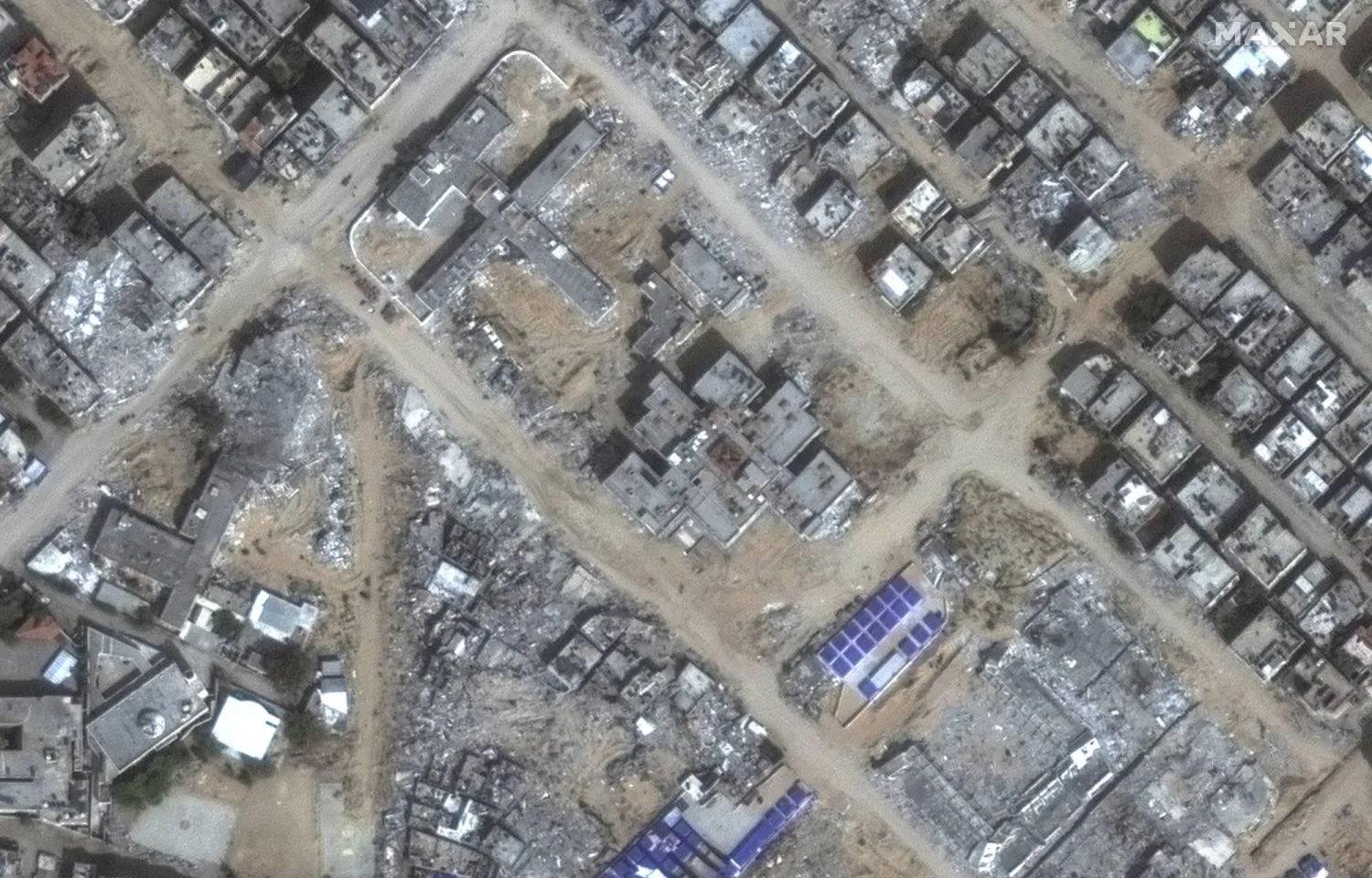

They were built to be places of healing. But once again, three hospitals in northern Gaza are encircled by Israeli troops and under fire.
Bombardment is pounding around them as Israel wages a new offensive against Hamas fighters that it says have regrouped nearby. As staff scramble to treat waves of wounded, they remain haunted by a war that has seen hospitals targeted with an intensity and overtness rarely seen in modern warfare.
All three were besieged and raided by Israeli troops some 10 months ago. The Kamal Adwan, al-Awda and Indonesian hospitals still have not recovered from the damage, yet are the only hospitals even partially operational in the area.
Medical facilities often come under fire in wars, but combatants usually depict such incidents as accidental or exceptional, since hospitals enjoy special protection under international law. In its yearlong campaign in Gaza, Israel has stood out by carrying out an open campaign on hospitals, besieging and raiding at least 10 of them across the Gaza Strip, some several times, as well as hitting multiple others in strikes.
It has said this is a military necessity in its aim to destroy Hamas after the militants’ Oct. 7, 2023 attacks. It claims Hamas uses hospitals as “command and control bases” to plan attacks, to shelter fighters and to hide hostages. It argues that nullifies the protections for hospitals.
“If we intend to take down the military infrastructure in the north, we have to take down the philosophy of (using) the hospitals,” Israeli military spokesman Rear Adm. Daniel Hagari said of Hamas during an interview with The Associated Press in January after the first round of hospital raids.
Most prominently, Israel twice raided Gaza City’s Shifa Hospital, the biggest medical facility in the strip, producing a video animation depicting it as a major Hamas base, though the evidence it presented remains disputed.
But the focus on Shifa has overshadowed raids on other facilities. The AP spent months gathering accounts of the raids on al-Awda, Indonesian and Kamal Adwan Hospitals, interviewing more than three dozen patients, witnesses and medical and humanitarian workers as well as Israeli officials.
It found that Israel has presented little or even no evidence of a significant Hamas presence in those cases. The AP presented a dossier listing the incidents reported by those it interviewed to the Israeli military spokesman’s office. The office said it could not comment on specific events.
The Israeli military has never made any claims of a Hamas presence at al-Awda. When asked what intelligence led troops to besiege and raid the hospital last year, the military spokesman’s office did not reply.
In recent weeks, the hospital has been paralyzed once again, with Israeli troops fighting in nearby Jabalia refugee camp and no food, water or medical supplies entering areas of northern Gaza. Its director Mohammed Salha said last month that the facility was surrounded by troops and was unable to evacuate six critical patients. Staff were down to eating one meal a day, usually just a flat bread or a bit of rice, he said.
As war-wounded poured in, exhausted surgeons were struggling to treat them. No vascular surgeons or neurosurgeons remain north of Gaza City, so the doctors often resort to amputating shrapnel-shattered limbs to save lives.
“We are reliving the nightmares of November and December of last year, but worse,” Salha said. “We have fewer supplies, fewer doctors and less hope that anything will be done to stop this.”
The military, which did not respond to a specific request for comment on al-Awda hospital, says it takes all possible precautions to prevent civilian casualties.
Last year, fighting was raging around al-Awda when, on Nov. 21, a shell exploded in the facility's operating room. Dr. Mahmoud Abu Nujaila, two other doctors and a patient’s uncle died almost instantly, according to international charity Doctors Without Borders, which said it had informed the Israeli military of its coordinates.
Dr. Mohammed Obeid, Abu Nujaila’s colleague, recalled dodging shellfire inside the hospital complex. Israeli sniper fire killed a nurse and two janitors and wounded a surgeon, hospital officials said.
By Dec. 5, al-Awda was surrounded. For 18 days, coming or going became “a death sentence,” Obeid said.
Survivors and hospital administrators recounted at least four occasions when Israeli drones or snipers killed or badly wounded Palestinians trying to enter. Two women about to give birth were shot and bled to death in the street, staff said. Salha, the administrator, watched gunfire kill his cousin, Souma, and her 6-year-old son as she brought the boy for treatment of wounds.
Shaza al-Shuraim said labor pains left her no choice but to walk an hour to al-Awda to give birth. She, her mother-in-law and 16-year-old brother-in-law raised flags made of white blouses. “Civilians!” her mother-in-law, Khatam Sharir, kept shouting. Just outside the gate, a burst of gunfire answered, killing Sharir.
On Dec. 23, troops stormed the hospital, ordering men ages 15 to 65 to strip and undergo interrogation in the yard. Mazen Khalidi, whose infected right leg had been amputated, said nurses pleaded with soldiers to let him rest rather than join the blindfolded and handcuffed men outside. They refused, and he hobbled downstairs, his stump bleeding.
“The humiliation scared me more than death,” Khalidi said.
The hospital’s director, Ahmed Muhanna, was seized by Israeli troops; his whereabouts remain unknown. One of Gaza’s leading doctors, orthopedist Adnan al-Bursh, was also detained during the raid and died in Israeli custody in May.
In the wreckage from the November shelling, staff found a message that Abu Nujaila had written on a whiteboard in the previous weeks.
“Whoever stays until the end will tell the story,” it read in English. “We did what we could. Remember us.”
Several blocks away, on Oct. 18, artillery hit the upper floors of Indonesian Hospital, staff said. People fled for their lives. They'd already been surrounded by Israeli troops, leaving doctors and patients inside without enough food, water and supplies.
“The bombing around us has increased. They’ve paralyzed us," said Edi Wahyudi, an Indonesian volunteer.
Two patients died because of a power outage and lack of supplies, said Muhannad Hadi, the UN humanitarian coordinator for Palestinian territories.
Tamer al-Kurd, a nurse at the hospital, said around 44 patients and only two doctors remain. He said he was so dehydrated he was starting to hallucinate. “People come to me to save them. ... I can’t do that by myself, with two doctors,” he said in a voice message, his voice weak. “I’m tired.”
On Saturday, the Israeli military said it had facilitated the evacuation of 29 patients from Indonesian and al-Awda hospitals.
The Indonesian is Northern Gaza’s largest hospital. Today its top floors are charred, its walls pockmarked by shrapnel, its gates strewn with piled-up rubble — all the legacy of Israel's siege in the autumn of 2023.
Before the assault, the Israeli army claimed an underground command-and-control center lay beneath the hospital. It released blurry satellite images of what it said was a tunnel entrance in the yard and a rocket launchpad nearby, outside the hospital compound.
The Indonesia-based group that funds the hospital denied any Hamas presence. “If there’s a tunnel, we would know. We know this building because we built it brick by brick, layer by layer. It’s ridiculous,” Arief Rachman, a hospital manager from the Indonesia-based Medical Emergency Rescue Committee, told the AP last month.
After besieging and raiding the hospital, the military did not mention or show evidence of the underground facility or tunnels it had earlier claimed. When asked if any tunnels were found, the military spokesman's office did not reply.
It released images of two vehicles found in the compound — a pickup truck with military vests and a bloodstained car belonging to an abducted Israeli, suggesting he had been brought to the hospital on Oct. 7. Hamas has said it brought wounded hostages to hospitals for treatment.
During the siege, Israeli shelling crept closer and closer until, on Nov. 20, it hit the Indonesian’s second floor, killing 12 people and wounding dozens, according to staff. Israel said troops responded to “enemy fire” from the hospital but denied using shells.
Gunfire over the next days hit walls and whizzed through intensive care. Explosions sparked fires outside the hospital courtyard where some 1,000 displaced Palestinians sheltered, according to staff. The Israeli military denied targeting the hospital, although it acknowledged nearby bombardment may have damaged it.
For three weeks, wounded poured in — up to 500 a day to a facility with capacity for 200. Supplies hadn’t entered in weeks. Bloodstained linens piled up. Doctors, some working 24-hour shifts, ate a few dates a day. The discovery of moldy flour on Nov. 23 was almost thrilling.
Without medicines or ventilators, there was little doctors could do. Wounds became infected. Doctors said they performed dozens of amputations on infected limbs. Medics estimated a fifth of incoming patients died. At least 60 corpses lay in the courtyard. Others were buried beneath a nearby playground.
“To see patients dying before your eyes because you don’t have the ability to help them, you have to ask yourself: ‘Where is humanity?’” asked Dergham Abu Ibrahim, a volunteer.
Kamal Adwan: ‘This makes no sense’ Kamal Adwan Hospital, once a linchpin of northern Gaza’s health system, was burning on Thursday of last week.
Israeli shells crashed into the third floor, igniting a fire that destroyed medical supplies, according to the World Health Organization, which had delivered the equipment just days before. The artillery hit water tanks and damaged the dialysis unit, badly burning four medics who tried to extinguish the blaze, said the hospital’s director, Hossam Abu Safiya.
In videos pleading for help over the past weeks, Abu Safiya had fought to maintain his composure as Israeli forces surrounded the hospital. But last weekend, there were tears in his eyes.
“Everything we have built, they have burned,” he said, his voice cracking. “They burned our hearts. They killed my son.”
On Oct. 25, Israeli troops stormed the hospital after what an Israeli military official described as an intense fight with militants nearby. During the battle, Israeli fire targeted the hospital’s oxygen tanks because they “can be booby traps,” the official said.
Israeli forces withdrew after three days, during which Palestinian health officials said nearly all of Kamal Adwan's medical workers were detained, an Israeli drone killed at least one doctor and two children in intensive care died when generators stopped working.
Days later, a drone struck Abu Safiya’s son in nearby Jabalia. The 21-year-old had been wounded by Israeli snipers during the first military raid on Kamal Adwan last December. Now he is buried in the yard of the hospital, where just Abu Safiya and one other doctor remain to treat the dozens of wounded pouring in each day from new strikes in Jabalia.
The Israeli military said troops detained 100 people, some who were “posing as medical staff.” Soldiers stripped the men to check for weapons, the military said, before those deemed militants were sent to detention camps. The military claimed that the hospital was "fully operational, with all departments continuing to treat patients.” It released footage of several guns and an RPG launcher with several rounds it said it found inside the hospital.
Kamal Adwan staff say more than 30 medical personnel remain detained, including the head of nursing, who is employed by MedGlobal, an American organization that sends medical teams to disaster regions, and Dr. Mohammed Obeid, the surgeon employed by Doctors without Borders who previously worked at al-Awda Hospital and had moved to Kamal Adwan.
The turmoil echoed Israel’s nine-day siege of Kamal Adwan last December. On Dec. 12, soldiers entered and allowed police dogs to attack staff, patients and others, multiple witnesses said. Ahmed Atbail, a 36-year-old who had sought refuge at the hospital, said he saw a dog bite off one man’s finger.
Witnesses said the troops ordered boys and men, ranging from their mid-teens to 60, to line up outside crouched in the cold, blindfolded and nearly naked for hours of interrogation. “Every time someone lifted their heads, they were beaten,” said Mohammed al-Masri, a lawyer who was detained.
The military later published footage of men exiting the hospital. Al-Masri identified himself in the footage. He said soldiers staged the images, ordering men to lay down rifles belonging to the hospital guards as if they were militants surrendering. Israel said all photos released are authentic and that it apprehended dozens of suspected militants.
As they released some of the men after interrogation, soldiers fired on them as they tried to reenter the hospital, wounding five, three detainees said. Ahmed Abu Hajjaj recalled hearing bursts of gunfire as he made his way back in the dark. “I thought, this makes no sense — who would they be shooting at?”
Witnesses also said a bulldozer lumbered into the hospital compound, plowing into buildings. Abu Safiya, Abu Hajjaj and al-Masri described being held by soldiers inside the hospital as they heard people screaming outside.
After the soldiers withdrew, the men saw the bulldozer had crushed tents that previously sheltered some 2,500 people. Most of the displaced had evacuated, but Abu Safiya said he found bodies of four people crushed, with splints from recent treatment in the hospital still on their limbs.
Asked about the incident, the Israeli military spokesman’s office said: “Lies were spread on social media” about troops’ activities at the hospital. It said bodies were discovered that had been buried previously, unrelated to the military’s activities.
Later, the military said Hamas used the hospital as a command center but produced no evidence. It said soldiers uncovered weapons, but it showed footage only of a single pistol.
The hospital’s director, Dr. Ahmed al-Kahlout, remains in Israeli custody. The military released footage of him under interrogation saying he was a Hamas agent and that militants were based in the hospital. His colleagues said he spoke under duress.
The fallout Hagari, the military spokesperson, said hospitals “provide a life of their own ... to the (Hamas) war system.” He said hospitals were linked to tunnels allowing fighters movement. “And when you take it, they have no way to move. Not from the south to the north.”
Despite often suggesting hospitals are linked to Hamas' underground networks, the military has shown only one tunnel shaft from all the hospitals it raided — one leading to Shifa's grounds.
In a report last month, a UN investigation commission determined that “Israel has implemented a concerted policy to destroy the health-care system of Gaza.” It described Israeli actions at hospitals as “collective punishment against the Palestinians in Gaza.”
Some patients now fear hospitals, refusing to go to them or leaving before treatment is complete. “They are places of death,” Ahmed al-Qamar, a 35-year-old economist in Jabalia refugee camp, said of his fear of taking his children to the hospital. “You can feel it.”
Zaher Sahloul, the president of MedGlobal who has also worked in Gaza during the war, said the sense of safety that should surround hospitals has been destroyed.


