


Former Israeli Spies Describe Attack Using Exploding Electronic Devices against Lebanon’s Hezbollah

An ambulance rushes wounded people to the American University of Beirut Medical Center, on September 17, 2024, after explosions hit locations in several Hezbollah strongholds around Lebanon amid ongoing cross-border tensions between Israel and Hezbollah fighters.  (Photo by Anwar AMRO / AFP)
An ambulance rushes wounded people to the American University of Beirut Medical Center, on September 17, 2024, after explosions hit locations in several Hezbollah strongholds around Lebanon amid ongoing cross-border tensions between Israel and Hezbollah fighters. (Photo by Anwar AMRO / AFP)
TT

Former Israeli Spies Describe Attack Using Exploding Electronic Devices against Lebanon’s Hezbollah

An ambulance rushes wounded people to the American University of Beirut Medical Center, on September 17, 2024, after explosions hit locations in several Hezbollah strongholds around Lebanon amid ongoing cross-border tensions between Israel and Hezbollah fighters.  (Photo by Anwar AMRO / AFP)
An ambulance rushes wounded people to the American University of Beirut Medical Center, on September 17, 2024, after explosions hit locations in several Hezbollah strongholds around Lebanon amid ongoing cross-border tensions between Israel and Hezbollah fighters. (Photo by Anwar AMRO / AFP)

Two recently retired senior Israeli intelligence agents shared new details about a deadly clandestine operation years in the making that targeted Hezbollah militants in Lebanon and Syria using exploding pagers and walkie talkies three months ago.

Hezbollah began striking Israel almost immediately after Hamas’ Oct. 7, 2023, attack that sparked the Israel-Hamas war.

The agents spoke with CBS “60 Minutes” in a segment aired Sunday night. They wore masks and spoke with altered voices to hide their identities.

One agent said the operation started 10 years ago using walkie-talkies laden with hidden explosives, which Hezbollah didn't realize it was buying from Israel, its enemy. The walkie-talkies were not detonated until September, a day after booby-trapped pagers were set off.

“We created a pretend world,” said the officer, who went by the name “Michael.”

Phase two of the plan, using the booby-trapped pagers, kicked in in 2022 after Israel's Mossad intelligence agency learned Hezbollah had been buying pagers from a Taiwan-based company, the second officer said.

The pagers had to be made slightly larger to accommodate the explosives hidden inside. They were tested on dummies multiple times to find the right amount of explosive that would hurt only the Hezbollah fighter and not anyone else in close proximity.

Mossad also tested numerous ring tones to find one that sounded urgent enough to make someone pull the pager out of their pocket.

The second agent, who went by the name “Gabriel,” said it took two weeks to convince his director at Mossad to sell the heftier pager, which was advertised in part by using false ads on YouTube promoting the devices as dustproof, waterproof, providing a long battery life and more.

He described the use of shell companies, including one based in Hungary, to dupe the Taiwanese firm, Gold Apollo, into unknowingly partnering with the Mossad.

Hezbollah also was unaware it was working with Israel.

Gabriel compared the ruse to a 1998 psychological film about a man who has no clue that he is living in a false world and his family and friends are actors paid to keep up the illusion.

“When they are buying from us, they have zero clue that they are buying from the Mossad,” Gabriel said. “We make like ‘Truman Show,’ everything is controlled by us behind the scene. In their experience, everything is normal. Everything was 100% kosher including businessman, marketing, engineers, showroom, everything.”

By September, Hezbollah members had 5,000 pagers in their pockets.

Israel triggered the attack on Sept. 17, when pagers all over Lebanon started beeping. The devices would explode even if the person failed to push the buttons to read an incoming encrypted message.

The next day, Mossad activated the walkie-talkies, some of which exploded at funerals for some of the approximately 30 people who were killed in the pager attacks.

Gabriel said the goal was more about sending a message than actually killing Hezbollah fighters.

“If he just dead, so he’s dead. But if he’s wounded, you have to take him to the hospital, take care of him. You need to invest money and effort,” he said. “And those people without hands and eyes are living proof, walking in Lebanon, of ‘don’t mess with us.’ They are walking proof of our superiority all around the Middle East.”

In the days after the attack, Israel's air force hit targets across Lebanon, killing thousands. Hezbollah's leader, Hassan Nasrallah, was assassinated when Israel dropped bombs on his bunker.

By November, the war between Israel and Hezbollah, a byproduct of the deadly attack by Hamas in southern Israel on Oct. 7, 2023, ended with a ceasefire. More than 45,000 Palestinians have been killed in the war in Gaza between Israel and Hamas, health officials have said.

The agent using the name “Michael” said that the day after the pager explosions, people in Lebanon were afraid to turn on their air conditioners out of fear that they would explode, too.

“There is real fear,” he said.

Asked if that was intentional, he said, “We want them to feel vulnerable, which they are. We can’t use the pagers again because we already did that. We’ve already moved on to the next thing. And they’ll have to keep on trying to guess what the next thing is.”


Hamas Armed Wing Says Disarmament Calls Are Unacceptable

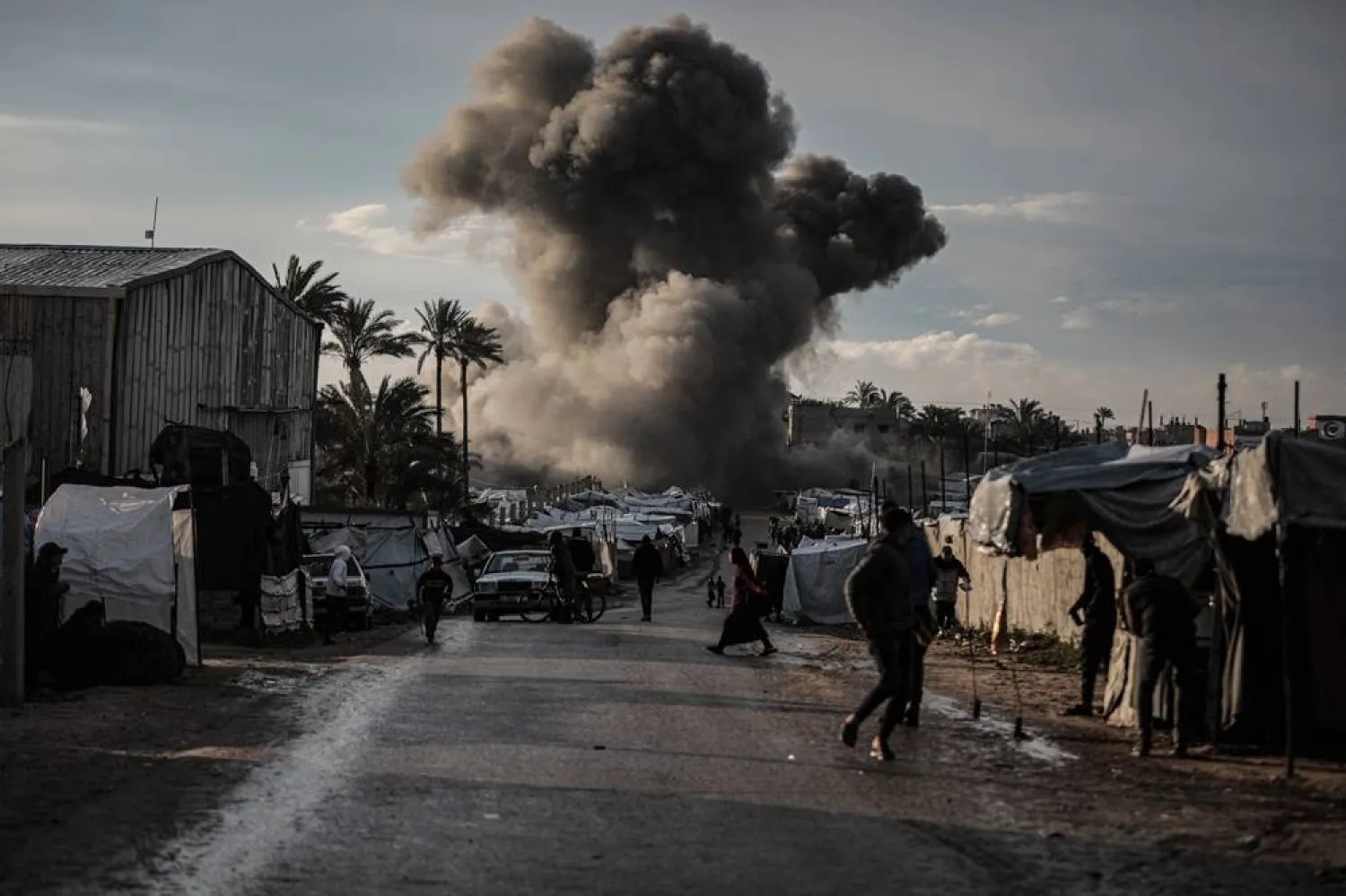
25 March 2026, Palestinian Territories, Deir al-Balah: Smoke and flames rise after an Israeli military strike on a target in Deir al-Balah in the central Gaza Strip. (dpa)
TT

Hamas Armed Wing Says Disarmament Calls Are Unacceptable

25 March 2026, Palestinian Territories, Deir al-Balah: Smoke and flames rise after an Israeli military strike on a target in Deir al-Balah in the central Gaza Strip. (dpa)

Hamas' armed wing said on Sunday discussing the group's disarmament before Israel fully implements the first phase of the US-brokered Gaza ceasefire was an attempt to continue what it called a genocide against the Palestinian people. 

In a televised statement, Hamas' armed wing spokesperson Abu Ubaida said raising the issue of weapons “in a crude manner” would not be accepted. 

The issue of Hamas relinquishing its weapons is a major obstacle in talks to implement US ‌President Donald Trump’s proposed "Board ‌of Peace" plan for Gaza, ‌aimed ⁠at cementing a ceasefire ⁠that halted two years of full-scale fighting last October. 

Hamas has told mediators it will not discuss disarmament without guarantees that Israel will completely quit Gaza, three sources told Reuters last week. 

"What the enemy is trying to push through today against the Palestinian resistance, via our ⁠brotherly mediators, is extremely dangerous," he said. 

He said ‌the disarmament demands were "nothing ‌but an overt attempt to continue the genocide against our ‌people, something we will not accept under any circumstances." 

It ‌was not immediately clear whether the comments amounted to a formal rejection of the US-backed disarmament plan, and Hamas political officials did not immediately respond to requests for comment. 

The Hamas-Israel ‌war in Gaza erupted after Hamas-led fighters carried out cross-border attacks on southern Israel, prompting ⁠a devastating ⁠Israeli offensive that displaced much of Gaza's population and left the enclave largely in ruins. 

Since the ceasefire took effect, Hamas and Israel have repeatedly accused each other of violating its terms. 

Abu Ubaida urged mediators to pressure Israel to fulfil its commitments under the first phase of the Trump plan before any discussion of the second phase can take place. 

"The enemy is the one who undermines the agreement," he said. 

There was no immediate comment from Israel on his remarks. 


Zelenskyy in Syria to Discuss Security Cooperation with Sharaa

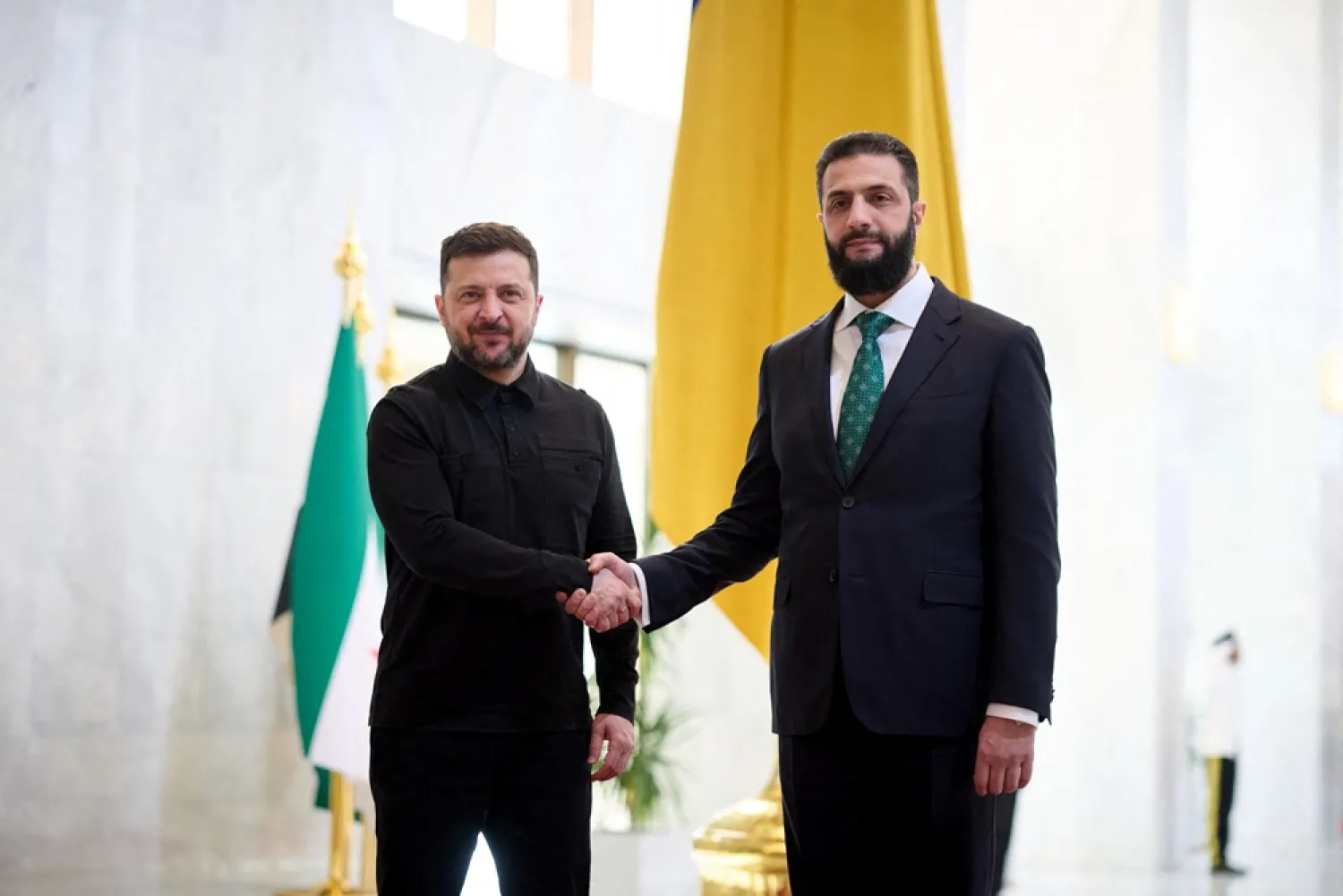
This handout photograph taken and released by the Ukrainian Presidential Press Service on April 5, 2026 shows Ukraine's President Volodymyr Zelenskyy (L) and Syrian President Ahmed al-Sharaa shaking hands during their meeting in Damascus. (Handout / Ukrainian Presidential Press Service / AFP)
TT

Zelenskyy in Syria to Discuss Security Cooperation with Sharaa

This handout photograph taken and released by the Ukrainian Presidential Press Service on April 5, 2026 shows Ukraine's President Volodymyr Zelenskyy (L) and Syrian President Ahmed al-Sharaa shaking hands during their meeting in Damascus. (Handout / Ukrainian Presidential Press Service / AFP)

Ukrainian President Volodymyr Zelenskyy pledged to work for enhanced security in talks on Sunday with his Syrian counterpart Ahmed al-Sharaa, as Kyiv seeks to promote its military expertise across the region following the outbreak of the Iran war. 

Zelenskyy, continuing his tour of Middle East countries, also said Ukraine wants to contribute to food security in the region. 

In recent weeks, Zelenskyy has visited several countries across the Middle East, offering Ukrainian expertise in countering drone and missile attacks, developed during its four-year war with ‌Russia. 

"We agreed ‌to work together to provide more security ‌and opportunities ⁠for development for ⁠our societies," Zelenskyy wrote on Telegram. "There is a great interest in exchanging military and security experience." 

Zelenskyy told the Syrian leader that Ukraine, as a major grain producer, was a reliable supplier of food and said the two leaders "discussed joint opportunities to strengthen food security across the region." 

In Türkiye on Saturday, Zelenskyy said he had ⁠agreed on "new steps" in security cooperation with Turkish ‌President Recep Tayyip Erdogan, and discussed opportunities ‌in joint gas infrastructure projects and gas field development. 

"Today in Damascus we ‌continue our active Ukrainian diplomacy aimed at real security and ‌economic cooperation," Zelenskyy said on X after his arrival. 

It was the Ukrainian leader's first trip to Syria since diplomatic relations were re-established at the end of last year following the fall of Syria's long-time strongman ‌Bashar al-Assad. 

Zelenskyy’s talks with Sharaa were linked to defense in light of the US-Israeli war in ⁠Iran, said ⁠one Syrian source, a government adviser. Syria is not known to have any air defenses capable of dealing with Iranian drones or missiles. 

Syria is home to two major Russian military bases, used by its navy and air force. Sharaa said on Tuesday at an event in Chatham House in London that work was under way to transform these into "centers to train the Syrian army." 


Israel Renews Lebanon Strikes, Forces Syria Border Crossing Closed

Smoke rises from the site of an Israeli strike in Beirut's southern suburbs, on April 5, 2026. (AFP)
TT

Israel Renews Lebanon Strikes, Forces Syria Border Crossing Closed

Smoke rises from the site of an Israeli strike in Beirut's southern suburbs, on April 5, 2026. (AFP)

Israeli strikes on south Beirut and its suburbs killed at least four people on Sunday, a day after Israel threatened to hit Lebanon's main border crossing with Syria, forcing it to close. 

The Israeli military also carried out deadly attacks on Lebanon's south, one of which killed seven people including a family of six. 

Israel has launched airstrikes across Lebanon as well as a ground invasion in the south since March 2, when armed group Hezbollah entered the war in the Middle East on the side of its backer Iran. 

Hezbollah on Sunday claimed to have fired a cruise missile at an Israeli warship off the coast, but the Israeli military told AFP it was "not aware" of such an incident. 

One of Israel's strikes in Beirut on Sunday killed at least four people and wounded 39 in the Jnah neighborhood, the Lebanese health ministry said. 

It landed about 100 meters away from the Rafik Hariri University Hospital, the largest public medical facility in Lebanon, a medical source told AFP. 

Another attack struck a building elsewhere in the area that the Israeli military had warned it would target. 

After the first attack, 53-year-old Jnah resident Nancy Hassan thought she was safe at home. 

"Shortly after, the planes were flying overhead, and we heard a huge bang, then stones rained down on us," she told AFP. 

Hassan lost her daughter in an Israeli strike on the same area during the 2024 war between Hezbollah and Israel. 

"My daughter was killed, she was 23 years old. Today, her friends were killed. Every time, they bomb us in the neighborhood without warning," she added. 

Zakaria Tawbeh, deputy head of the Rafik Hariri hospital, said they received "four killed, three Sudanese and a 15-year-old girl, and 31 wounded". 

"Lots of glass was broken, and some of our patients had panic attacks." 

Israel also launched several strikes on the nearby southern suburbs, an area now largely evacuated but where Hezbollah holds sway. 

In a statement, the military warned it had "begun striking Hezbollah infrastructure sites". 

- Vital crossing - 

On Saturday, Israel had said it would target the Masnaa border crossing between Lebanon and Syria, the main gateway between the two countries. 

"Due to Hezbollah's use of the Masnaa crossing for military purposes and smuggling of combat equipment, the (Israeli army) intends to carry out strikes on the crossing in the near future," said the military's Arabic-language spokesman Avichay Adraee, urging people to leave the area. 

The border post was quickly evacuated on the Lebanese side. 

In Syria, borders and customs public relations director Mazen Aloush insisted the crossing was exclusively used by civilians, and said it would temporarily due to the threats. 

Masnaa is a vital trade route for both countries and a key gateway to the rest of the region for Lebanese people. 

Military expert Hassan Jouni told AFP that Israel's threat to strike the crossing "is not based on sound security considerations, but rather aims to pressure the Lebanese government... to disarm Hezbollah". 

At another border crossing further north known as Qaa, an AFP correspondent on Sunday saw a long line of cars and vans waiting to enter Syria as people sought an alternative route. 

- Family killed - 

Israeli attacks on Lebanon since the start of the war have killed more than 1,400 people, including 126 children, and displaced over a million, according to Lebanese authorities. 

In the southern Lebanese town of Kfar Hatta, far from the border with Israel, an Israeli strike killed seven people including a four-year-old girl, the health ministry said Sunday. 

The Lebanese army mourned an off-duty soldier killed in the attack. 

The Israeli army had issued an evacuation warning for the town on Saturday evening. 

A source from Lebanon's civil defense told AFP that a family of six who had been displaced from a town further south were waiting for a relative to pick them up in a vehicle when they were killed. The relative also perished in the strike. 

An AFP photographer saw at least eight homes destroyed by attacks in Kfar Hatta. 

As Israeli troops push into border areas in southern Lebanon, destroying villages, Lebanese President Joseph Aoun reiterated his call for talks with Israel, saying he wanted to spare his country's south from destruction on the scale seen in the Palestinian territory of Gaza. 

"Why don't we negotiate... until we can at least save the homes that have not yet been destroyed?" he said in a televised address.