International Criminal Court’s Chief Prosecutor Meets with Syrian Leader in Damascushttps://english.aawsat.com/arab-world/5102409-international-criminal-court%E2%80%99s-chief-prosecutor-meets-syrian-leader-damascus
International Criminal Court’s Chief Prosecutor Meets with Syrian Leader in Damascus
This handout picture released by the Syrian Arab News Agency SANA, shows Syria's new leader Ahmed al-Sharaa (R) meeting with International Criminal Court (ICC) Prosecutor Karim Ahmad Khan in Damascus on January 17, 2025. (SANA / AFP)
TT
TT
International Criminal Court’s Chief Prosecutor Meets with Syrian Leader in Damascus
This handout picture released by the Syrian Arab News Agency SANA, shows Syria's new leader Ahmed al-Sharaa (R) meeting with International Criminal Court (ICC) Prosecutor Karim Ahmad Khan in Damascus on January 17, 2025. (SANA / AFP)
The International Criminal Court’s chief prosecutor Karim Khan made an unannounced visit Friday to Damascus to confer with the leader of Syria’s de facto government on how to ensure accountability for alleged crimes committed in the country.
Khan's office said he visited at the invitation of Syria’s transitional government. He met with Ahmad al-Sharaa, the leader of Syria’s new administration and the foreign minister to discuss options for justice in The Hague for victims of the country's civil war, which has left more than half a million dead and more than six million people displaced.
Assad, who fled to Russia in December, waged an oppressive campaign against anyone who opposed him during his more than two decades in power.
Rights groups estimate at least 150,000 people went missing after anti-government protests began in 2011, most vanishing into Assad’s prison network. Many of them were killed, either in mass executions or from torture and prison conditions. The exact number remains unknown.
The global chemical weapons watchdog found Syrian forces were responsible for multiple attacks using chlorine gas and other banned substances against civilians.
Other groups have also been accused of human rights violations and war crimes during the country’s civil war.
The new authorities have called for members of the Assad regime to be brought to justice. It is unclear how exactly that would work at this stage.
Syria is not a member of the ICC, which has left the court without the ability to investigate the war. In 2014, Russia and China blocked a referral by the United Nations Security Council which would have given the court jurisdiction. Similar referrals were made for Sudan and Libya.
Khan's visit comes after a trip to Damascus last month by the UN organization assisting in investigating the most serious crimes in Syria. The International, Impartial and Independent Mechanism for Syria was created to assist in evidence-gathering and prosecution of individuals responsible for possible war crimes, crimes against humanity and genocide since Syria’s civil war began in 2011.
The group's head, Robert Petit, highlighted the urgency of preserving documents and other evidence before they are lost.
Field Escalation in Lebanon as Israel Seeks to Entrench Security Belt Ahead of Washington Talkshttps://english.aawsat.com/arab-world/5285814-field-escalation-lebanon-israel-seeks-entrench-security-belt-ahead-washington
Field Escalation in Lebanon as Israel Seeks to Entrench Security Belt Ahead of Washington Talks
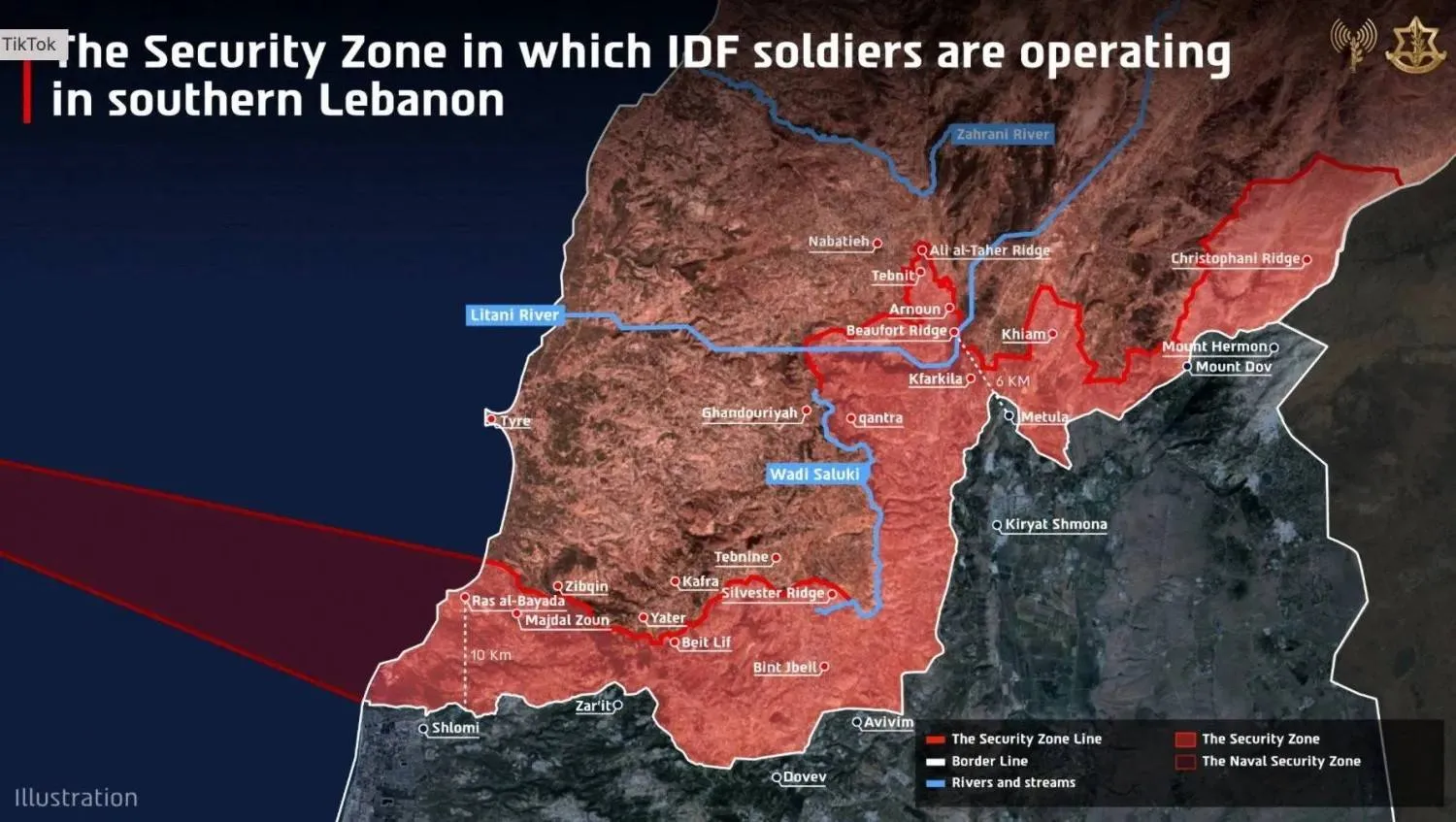
A map released by the Israeli army showing what it calls a “security zone” in south Lebanon. (Reuters)
The map published by the Israeli army showing the areas where its forces are deployed in south Lebanon has raised questions about the implications of the US-Iranian agreement, as military operations continue and the issues of withdrawal and redeployment remain tied to anticipated Lebanese-Israeli negotiations in Washington.
While Israel speaks of a “security zone” inside Lebanese territory, Israeli army spokesman Avichay Adraee said Israeli forces are deployed “based on operational necessity” within an area extending roughly 10 kilometers into Lebanon, with the aim of removing what he described as threats and improving the defense of residents in northern Israel.
On the ground, two people were killed and another wounded in an Israeli drone strike that targeted a vehicle at the Kfar Tebnit roundabout. Drones also struck Hadatha without causing casualties, while another drone dropped a bomb on Beit Yahoun, wounding two people. An Israeli drone also dropped a stun grenade on a family inside a house in Nabatieh al-Fawqa near the teachers’ college.
Artillery shelling struck the outskirts of Nabatieh al-Fawqa, while the Israeli army carried out bulldozing operations in Khiam.
As Lebanese army troops and members of the Al-Risala Health Emergency Association entered Hadatha, Israeli forces opened fire toward civilians and Lebanese soldiers in the town. Villages in the eastern sector and the Marjayoun district remained relatively calm compared with other parts of southern Lebanon.
A field source in south Lebanon told Asharq Al-Awsat that the map “effectively reflects an attempt to impose a new reality on the ground following the US-Iranian understanding by treating vast areas of south Lebanon as zones under Israeli security and military control.”
The source said the boundaries shown on the map extend beyond what is known in some places as the “Yellow Line” and include areas where the Israeli army was unable to establish a permanent presence during the war, such as Ali al-Taher Hill and the southeastern outskirts of Hadatha.
The source noted that the Lebanese army is deployed inside Hadatha itself, while Israeli forces continue attempting to advance toward the surrounding high ground.
According to the source, “including these areas on the Israeli map has heightened residents’ fears and slowed the return of displaced people to Nabatieh and its surroundings.”
The concern, the source added, extends beyond Nabatieh city to include Dweir, Jibshit, Harouf, Zebdine, Mifadoun, Shoukine, Kfar Tebnit and Nabatieh al-Fawqa. These areas still lack basic living conditions, while near-daily artillery shelling continues, prompting many residents to delay their return.
The source said, “The boundaries Israel is drawing today closely resemble those that existed before its withdrawal from south Lebanon in 2000, stretching from the western sector through the central sector and into large parts of the eastern sector toward Khiam.”
Israel did not include in its current map some areas it previously occupied as far as the outskirts of Jezzine, the source said. In practice, however, it has treated the entire western and central sectors, together with the highlands extending east of Nabatieh toward the Marjayoun-Khiam axis, as falling within its security sphere of control.
The source said the most significant outcome of the period following the US-Iranian understanding has been Israel’s effort to draw what it described as “occupation boundaries” and establish them as a fait accompli on the ground by effectively turning these areas into an undeclared security belt.
According to the source, the line Israel is seeking to consolidate runs through the central sector along the Bint Jbeil and Wadi al-Salouqi axes, reaching Hadatha, Baraachit and Beit Yahoun.
Although Israeli forces are not physically deployed inside these towns, the source said they are treated as part of an advanced security zone and a new line of contact in south Lebanon.
No Signs of Israeli Withdrawal
Retired Brig. Gen. Bassam Yassin told Asharq Al-Awsat that the US-Iranian agreement has not yet translated into any tangible changes on the ground in south Lebanon.
The situation on the ground, he said, still reflects continued Israeli deployment in the areas under its control, while issues related to withdrawal and post-war arrangements remain under discussion in negotiations currently taking place in Washington.
Yassin said the map recently published by the Israeli army suggests that Israel views the areas it marked as territory under its military control, “as though it is saying these areas are under Israeli occupation, should not be approached, and that any movement within them will be treated as a security threat.”
He said one of the most important of these areas is Ali al-Taher. Many people, he noted, reduce it to a hill or small elevation, “when in fact Ali al-Taher is a mountain ridge extending between three and four kilometers from the area around Kfar Tebnit toward Kfar Rumman. Including large parts of it in what Israel considers an area under its control therefore carries important operational implications.”
“The Israeli occupation is currently consolidating the positions where it is deployed, while attempts to advance toward Ali al-Taher are still continuing,” he said.
Artillery and rocket fire in the Nabatieh area has also continued in recent weeks, he added, stressing that “there are still no real indications of Israeli withdrawals, contrary to what some believe.”
Yassin said the issues related to an Israeli withdrawal, redeployment or the deployment of the Lebanese army “are not decided on the ground but are being discussed within the framework of ongoing Lebanese meetings and negotiations in Washington.”
Any talk of withdrawal or new arrangements, he added, “remains premature at this stage.”
No Withdrawal
Meanwhile, Israel’s Channel 14 reported that “the future of the Israeli deployment in south Lebanon will be discussed during negotiations with the Lebanese side in Washington.”
Israel’s public broadcaster also reported that the issue of withdrawing from positions where Israeli forces remain deployed inside Lebanon will be raised during the next round of negotiations.
Yedioth Ahronoth reported that “the Israeli army has demanded that it retain a buffer zone inside south Lebanon while insisting on the dismantling of weapons in the south.”
Defections Shake Sudan’s RSF, Threaten Cohesion of Tasis Alliancehttps://english.aawsat.com/arab-world/5285800-defections-shake-sudan%E2%80%99s-rsf-threaten-cohesion-tasis-alliance
Defections Shake Sudan’s RSF, Threaten Cohesion of Tasis Alliance
Sudan’s army chief Abdel Fattah al-Burhan meets Major General Al-Nour al-Qubba, who defected from the Rapid Support Forces. (Sovereign Council)
The resignation of Fares al-Nur, a senior figure in the Sudan Founding Alliance (Tasis), from all his posts in the Rapid Support Forces and the political bloc backing it has revived questions about a wave of defections from the force in recent months and what they may mean for its military and political cohesion.
The move comes as Sudan’s war enters its fourth year with no clear sign that either side is close to a decisive military victory.
Al-Nur told Asharq Al-Awsat on Wednesday that he had left all positions of responsibility within the RSF and Tasis. He said he acted because of what he described as a deepening political deadlock, the continuation of the war and the vast humanitarian suffering it has caused.
He said his resignation was intended to open space for a broad Sudanese dialogue that brings together different parties, away from political and military polarization, and helps reach a settlement to end the crisis.
The importance of the step lies not only in al-Nur’s position inside the alliance, but also in its nature. He is not a battlefield commander with troops on the ground.
He is instead viewed as one of the most prominent political figures associated with the project that the RSF sought to build alongside its military campaign. That gives his resignation political weight beyond any immediate military effect.
Al-Nur was a member of the Tasis presidential council and had been appointed “governor of Khartoum Region” in the parallel government announced by the alliance. He had previously served for years as an adviser to RSF commander Mohamed Hamdan Dagalo, known as Hemedti, and was one of the most prominent members of the RSF negotiating delegation at the 2023 Jeddah talks.
What makes this different?
This type of departure differs from earlier splits within the RSF over the past two years. Most of those involved were field commanders with military influence or fighters on the ground.
In May, Bashara al-Huweira, who was responsible for military operations on the Bara axis in North Kordofan State, announced his defection from the RSF. Before him, field commander Al-Nour Adam, known as Al-Nour al-Qubba, said he had withdrawn from the RSF and joined the Sudanese army after his forces left their positions in North Darfur.
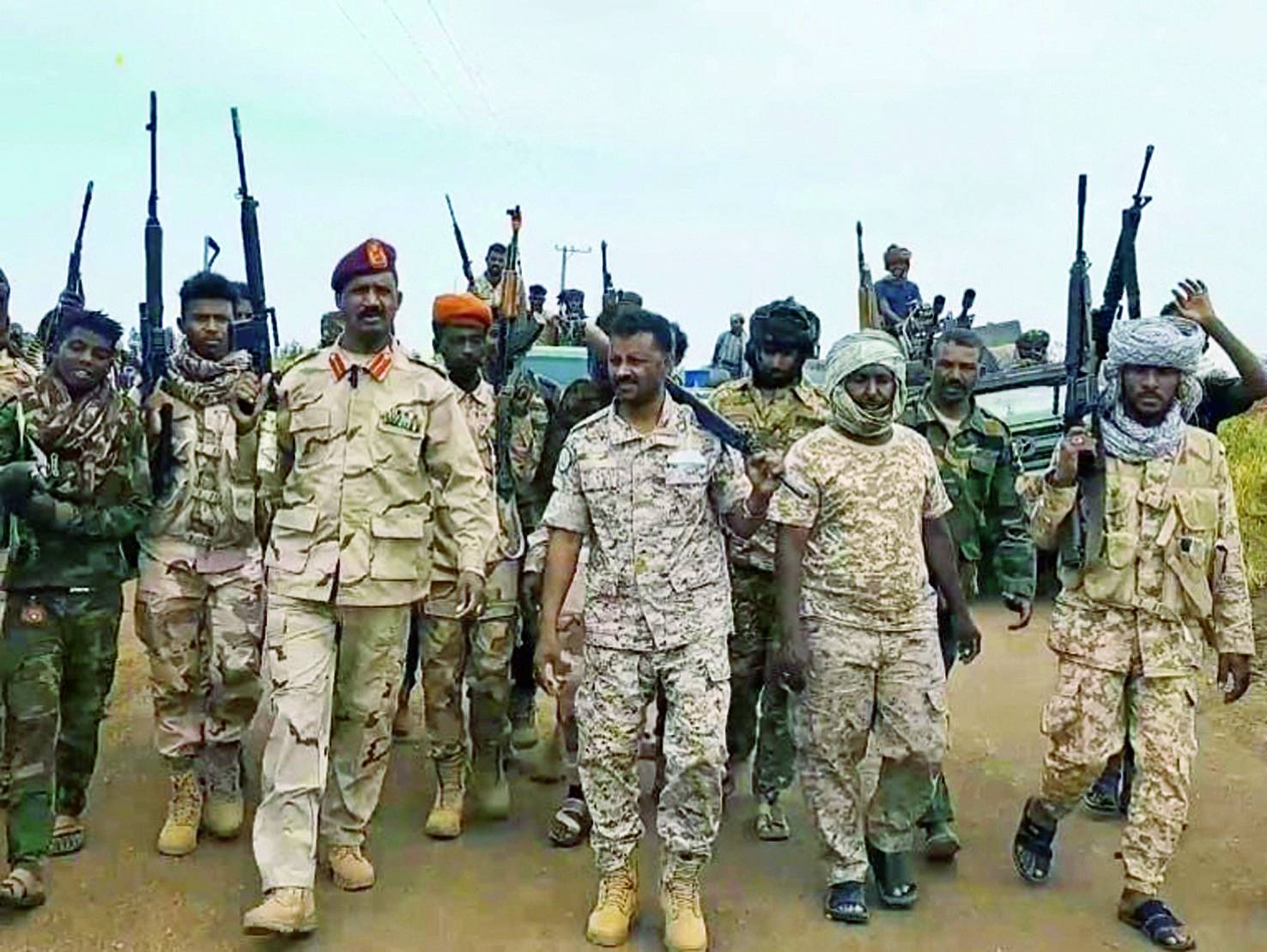
Before them all, Abu Aqla Keikal, one of the RSF’s most prominent commanders and the governor of Gezira State while it was under RSF control, announced his cooperation with the Sudanese army.
File photo showing the defecting commander Abu Aqla Keikal (third from left) with Rapid Support Forces elements before joining the army.
That was seen as one of the most consequential defections because of his influence in central Sudan. Most recently, field commander Ali Rizq Allah, known as Al-Savannah, announced his defection and joined the Sudanese Armed Forces.
The political and military weight of these figures varies. But the pace of defections over a short period has raised a sharper question: do they point to growing pressure inside the RSF camp, or are they still individual moves that do not affect the force’s core structure?
The RSF has tried to project a different picture. In recent days, it broadcast video clips that it said, according to its Telegram platform, showed groups from the Joint Force of armed movements allied with the army joining its ranks.
The message was clear: movement between the camps is not going in one direction only.
Such messages are part of a propaganda and media war running alongside the fighting, with each side trying to prove its cohesion and its ability to attract leaders and fighters.
Shartai Samir, a prominent RSF supporter on social media, played down the importance of Fares al-Nur’s departure. He said the political and military project represented by Tasis had moved beyond individuals, and that the departure of leaders or groups would not affect its continuity.
He also said the developments were part of attempts to attract political and military figures from the RSF camp after its opponents, as he put it, failed to achieve their goals militarily.
But the key question is not how many people leave. It is what effect they have.
Political researcher Mohamed Latif says it is important to distinguish between political and military defections.
He told Asharq Al-Awsat that Sudanese politics has seen repeated splits inside parties and alliances over many decades, but that they have rarely produced a radical shift in the balance of power.
Latif said most political splits are driven by personal disputes or ambitions rather than ideological or programmatic differences. For that reason, their impact often remains limited.
He said the impact of “military defections” is measured by how far they affect a party’s fighting strength or geographical deployment. In his view, most of the defections from the RSF in the recent period have not had a tangible effect on its basic military structure or its main areas of influence.
That is why he said he did not expect the departure of Fares al-Nur, as a political and civilian figure, to have a major impact on the cohesion of the Tasis alliance.
But not everyone agrees with that assessment.
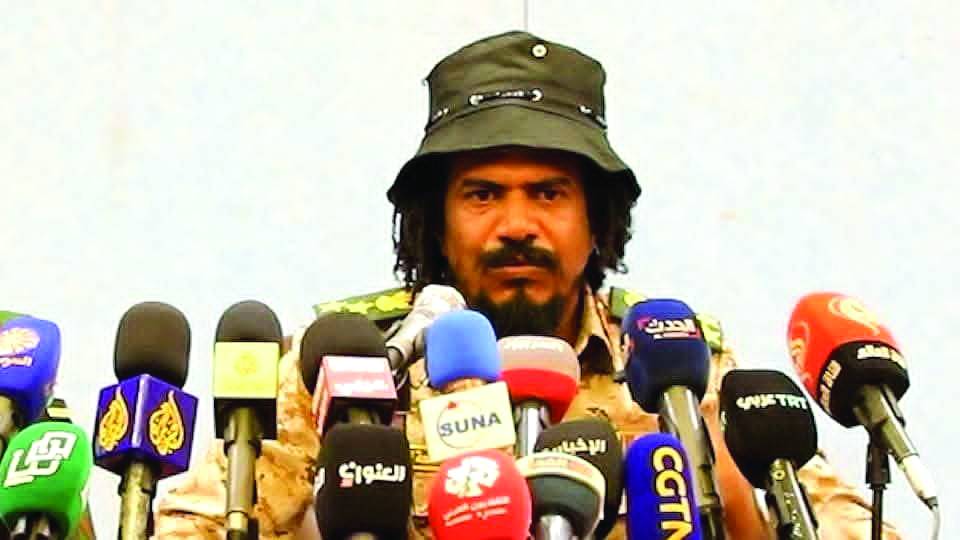
Commander Al-Savannah, who defected from the Rapid Support Forces, speaking at a press conference in Khartoum (Sudan News Agency/SUNA)
Retired Brigadier General Dr. Jamal al-Shaheed, a strategic expert specializing in security and military affairs, says defections should not be judged by the announcement alone, but by their practical effects on the ground.
Al-Shaheed told Asharq Al-Awsat that defections become significant when they reach middle-ranking and field commanders, or political figures with organizational and social influence. Such figures, he said, are the link between the top leadership and the base.
“The indicators that should be monitored are not limited to the number of defectors, but include whether the phenomenon continues and expands, and its impact on internal discipline, the ability to recruit and mobilize, and the maintenance of field deployments,” he said.
According to al-Shaheed, the decisive test is ultimately military performance.
If defections are accompanied by battlefield retreats, the loss of areas of influence, or a weaker ability to carry out coordinated operations, then they move from being a political or media event to a factor affecting the balance of the conflict.
The retired military expert points to earlier experiences of Sudanese armed movements during the civil war in southern Sudan and the Darfur conflict. Some defections yielded no meaningful strategic results, while others weakened entire factions by stripping them of influential leaders and undermining their organizational cohesion.
All of this raises a broader question about the future of the war itself.
RSF supporters say the latest defections are no more than individual moves that will not affect their political and military project. Others argue that their repetition warrants close attention as a sign of internal pressures and challenges that may extend beyond individuals to the organizational structure itself.
So far, there is no evidence that defections between the parties to the war can, on their own, change the course of the conflict or force a political settlement.
But their persistence and spread among military and political figures make them a phenomenon worth watching in a long, open-ended war. Its final outcome still depends on what the battlefield reveals in the coming months, and on whether the warring parties can preserve both military and political cohesion.
US Issues Sanctions on Hezbollah-linked Targetshttps://english.aawsat.com/arab-world/5285775-us-issues-sanctions-hezbollah-linked-targets
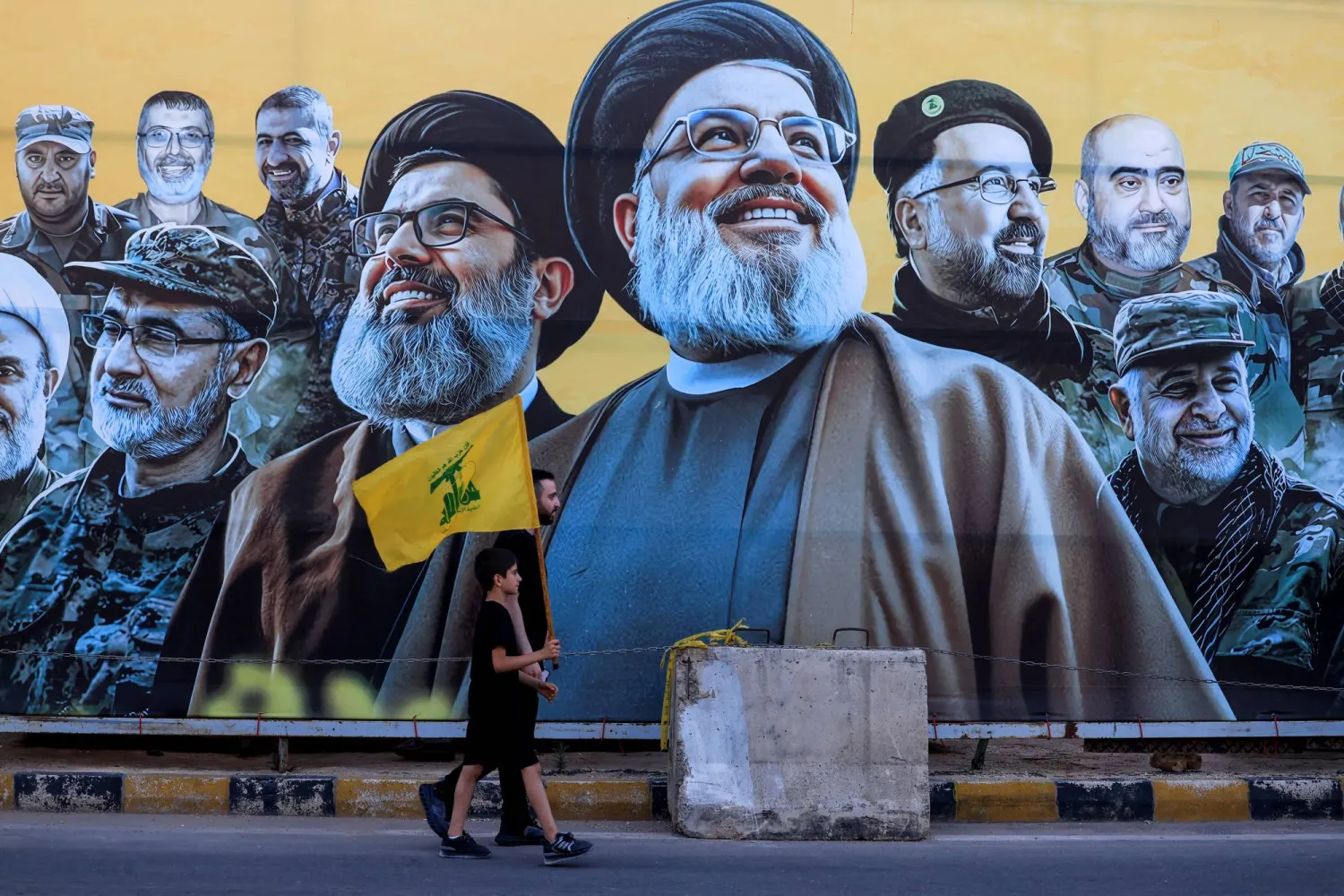
A man walks with a boy, carrying a Hezbollah flag, past a mural depicting former Hezbollah leader Hassan Nasrallah and other senior figures near the burial site of Hassan Nasrallah on the outskirts of Beirut, Lebanon, June 17, 2026. REUTERS/Mohamed Azakir
A man walks with a boy, carrying a Hezbollah flag, past a mural depicting former Hezbollah leader Hassan Nasrallah and other senior figures near the burial site of Hassan Nasrallah on the outskirts of Beirut, Lebanon, June 17, 2026. REUTERS/Mohamed Azakir
Washington has issued new "counter terrorism" sanctions targeting individuals and entities linked to Lebanon’s Hezbollah, details posted to the US Treasury Department's website on Thursday showed.
It announced sanctions against several Lebanese officials it said were aligned with Hezbollah and members of the sanctioned Alaa Hassan Hamieh business network for obstructing Lebanon’s peace process and delaying the disarmament of Hezbollah.
The Treasury said its Office of Foreign Assets Control was also designating individuals in Lebanon, Syria and Iraq, who it said were raising funds and operating front companies to generate revenue for Hezbollah, an Iran-backed militant group.
لم تشترك بعد
انشئ حساباً خاصاً بك لتحصل على أخبار مخصصة لك ولتتمتع بخاصية حفظ المقالات وتتلقى نشراتنا البريدية المتنوعة