Erdogan Discusses Tackling Kurdish Militants with Syria’s Sharaa in Ankarahttps://english.aawsat.com/arab-world/5108401-erdogan-discusses-tackling-kurdish-militants-syria%E2%80%99s-sharaa-ankara
Erdogan Discusses Tackling Kurdish Militants with Syria’s Sharaa in Ankara
Syria's newly appointed president for a transitional phase Ahmed al-Sharaa meets with Türkiye's President Recep Tayyip Erdogan at the Presidential Palace in Ankara, Türkiye, February 4, 2025. (Murat Cetinmuhurdar/PPO/Handout via Reuters)
TT
TT
Erdogan Discusses Tackling Kurdish Militants with Syria’s Sharaa in Ankara
Syria's newly appointed president for a transitional phase Ahmed al-Sharaa meets with Türkiye's President Recep Tayyip Erdogan at the Presidential Palace in Ankara, Türkiye, February 4, 2025. (Murat Cetinmuhurdar/PPO/Handout via Reuters)
Turkish President Recep Tayyip Erdogan said he and Syria's newly appointed president, Ahmed al-Sharaa, had discussed in Ankara on Tuesday steps to be taken against Kurdish militants in northeast Syria.
Speaking alongside Sharaa at a news conference in Ankara, Erdogan said Türkiye was ready to help Syria's new leadership in the battle against both ISIS and Kurdish militants.
Erdogan also said he believed the voluntary return of Syrian migrants would accelerate as Syria became more stable.
He said Türkiye would continue to press for the lifting of international sanctions imposed on Syria during former President Bashar al-Assad's rule, adding that it was important for Arab and Muslim countries to support the new Damascus government - financially and otherwise - in the period of transition.
Sharaa said his government sought a "strategic partnership" with Türkiye, and he invited Erdogan to visit Syria soon as relations between the two neighbors continue to thaw.
"We are working on building a strategic partnership with Türkiye to confront the security threats in the region to guarantee permanent security and stability to Syria and Türkiye," Sharaa said.
Ankara severed ties with Damascus in 2011 after the outbreak of Syria's civil war, during which it supported opposition groups seeking to oust Assad.
During his visit to Türkiye, Sharaa has also discussed economic ties as Turkish transport and manufacturing firms eye big expansion plans for Syria in what some expect to be a tripling of trade.
Türkiye hosted the greatest number of Syrian refugees following the outbreak of the war — more than 3.8 million at its peak in 2022.
Sharaa and Erdogan are expected to discuss a joint defense pact, including establishing Turkish airbases in central Syria and training for Syria's new army, four sources familiar with the matter told Reuters.
The sources - a Syrian security official, two Damascus-based foreign security sources and a senior regional intelligence official - spoke on condition of anonymity as they were not authorized to speak to the media about the meeting.
This is the first time that elements of any strategic defense arrangement by Syria's new leaders, including details of additional Turkish bases, have come to light.
The pact could see Türkiye establish new air bases in Syria, use Syrian airspace for military purposes, and take a lead role in training troops in Syria's new army, the sources said.
Syria's new leadership has dissolved the army and its various opposition factions, and is working on integrating them into a new military command.
The sources said the deal was not expected to be finalized on Tuesday.
Tunnels or Voiceprints: Why Israel Is Killing Qassam Leaders Fasterhttps://english.aawsat.com/arab-world/5280200-tunnels-or-voiceprints-why-israel-killing-qassam-leaders-faster
From right, Qassam Brigades leaders assassinated by Israel in separate attacks: Mohammad Odeh, Rafe Salama, Abu Obeida, and Mohammad Deif, in a photo released by the Israeli military. (Israeli military)
Tunnels or Voiceprints: Why Israel Is Killing Qassam Leaders Faster
From right, Qassam Brigades leaders assassinated by Israel in separate attacks: Mohammad Odeh, Rafe Salama, Abu Obeida, and Mohammad Deif, in a photo released by the Israeli military. (Israeli military)
Throughout Israel’s war on Gaza, from October 2023 until a fragile ceasefire was announced two years later in October 2025, Israel’s pursuit of the leaders of Hamas and its military wing, the Qassam Brigades, was neither quick nor easy.
That changed in recent weeks.
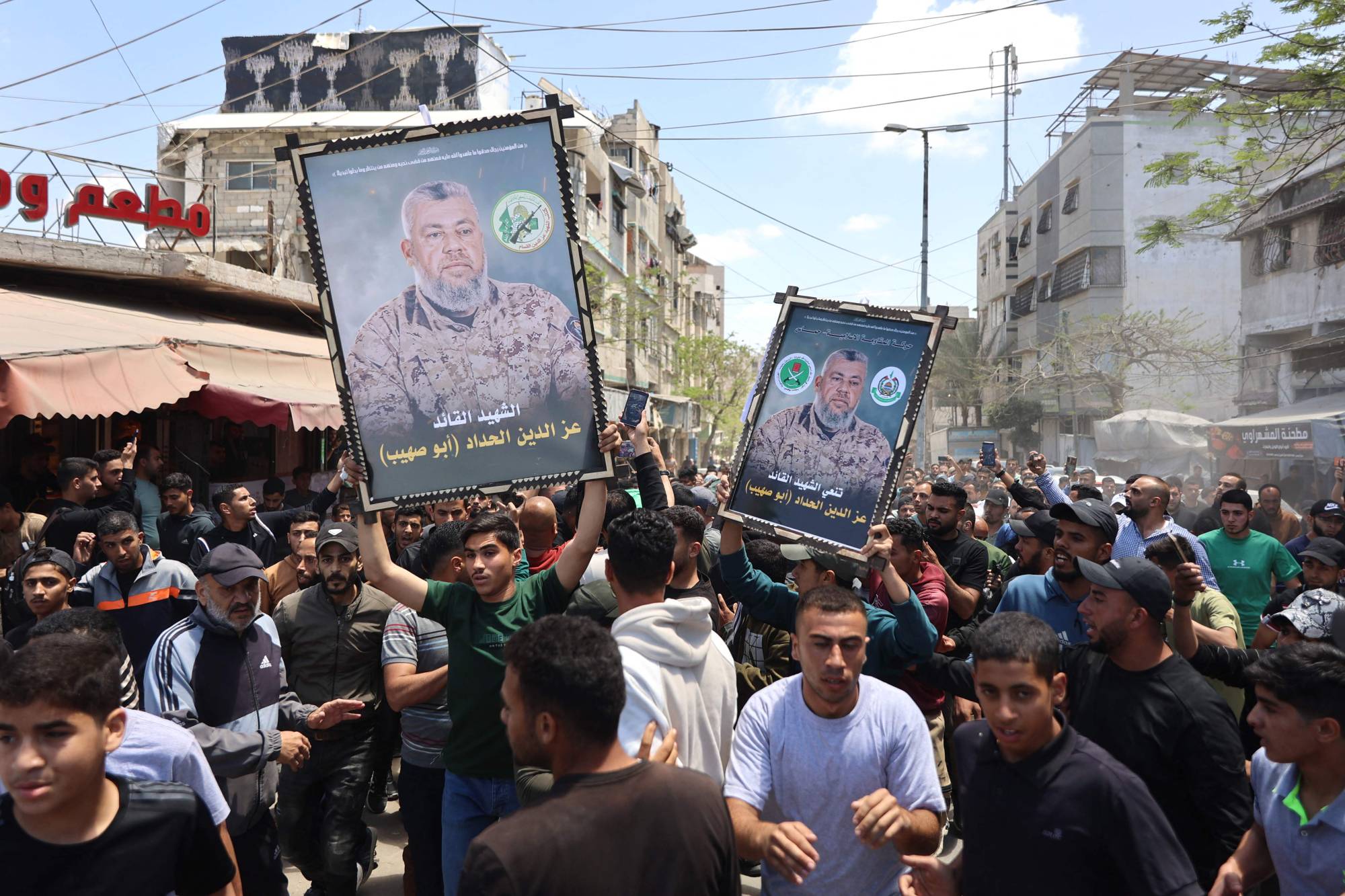
A wave of faster, more concentrated assassinations peaked on May 15 with the killing of Qassam commander Izz al-Din al-Haddad after decades on the run. Less than two weeks later, Israel assassinated his successor, Mohammad Odeh.
The killings also reached one of the Qassam’s most prominent commanders, Imad Islim, who was targeted alongside the commander of the northern brigade, though the latter survived.
The campaign did not stop with commanders. It also hit prominent field operatives, most of them involved in the October 7, 2023, attack, as well as officials responsible for military manufacturing.
The pace of the killings has raised questions inside and outside Hamas over why Israel has been able to move so quickly. Some sources pointed to the growth of Israeli intelligence work in Gaza. Others cited Israel’s assault on Hamas tunnels and the security gap left by their destruction.
Hamas field sources told Asharq Al-Awsat that every assassination is investigated by specialists seeking to trace security leads or identify specific breaches.
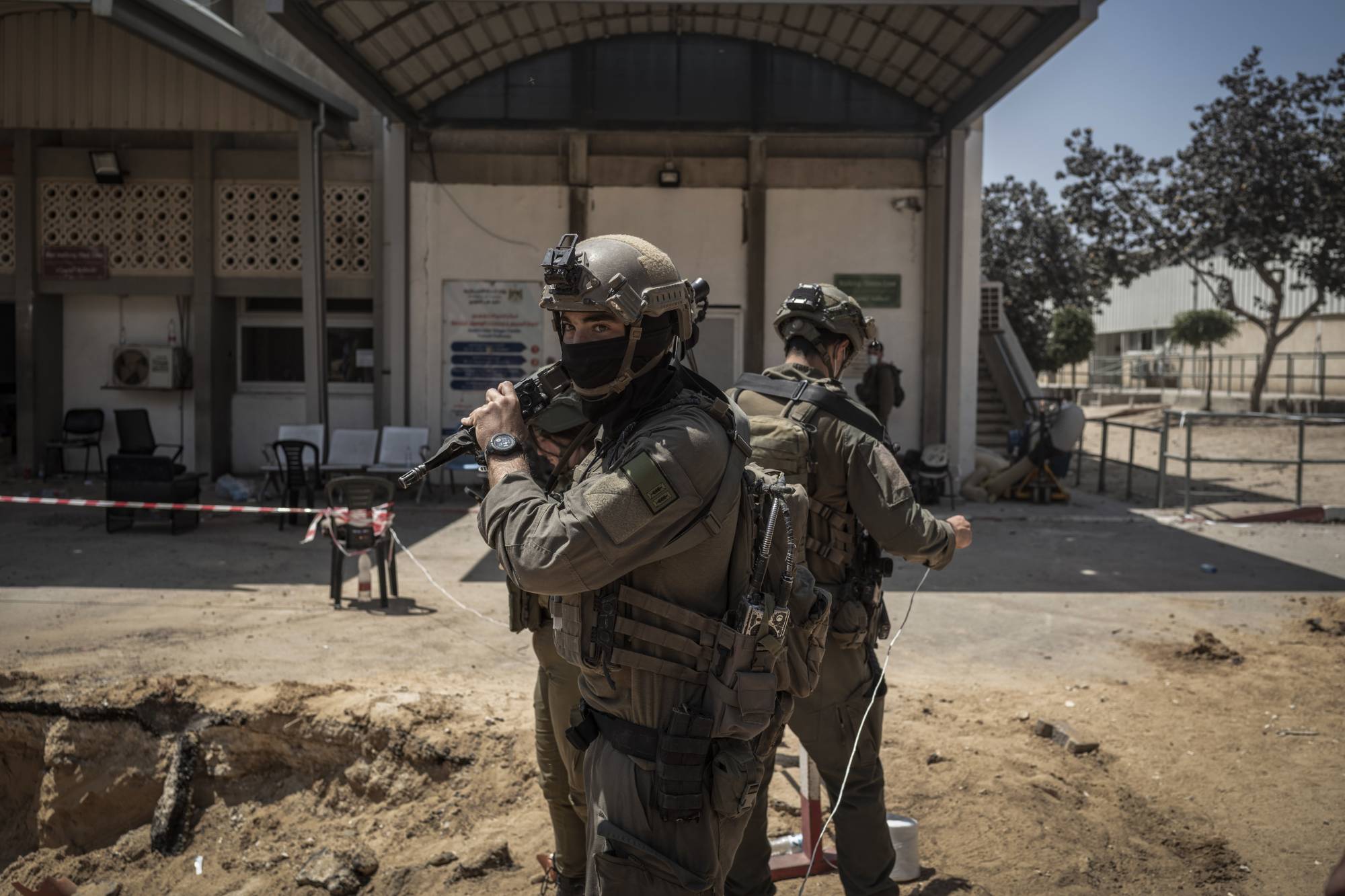
08 June 2025, Palestinian Territories, Khan Younis: Israeli soldiers stand guard at the European Hospital in Khan Younis, where the Israeli military discovered a tunnel believed to be the site of Hamas military chief Mohammad Sinwar's death last month. (dpa)
Tunnels and the decision to leave them
Four field sources said Israel’s intensified campaign against the tunnels was among the reasons behind the faster pace of assassinations. The campaign, they said, destroyed “very large numbers” of tunnels during and after the war.
Over two decades, Hamas dug hundreds, by conservative estimates, if not thousands, of tunnels for defense, attack, command and control. Some served as command sites for leaders directing battles.
The sources said Israel destroyed large numbers of tunnels through ground operations and airstrikes, at times killing operatives, commanders and even Israeli abductees held inside.
One source said that “because of the attacks, the leadership of the resistance decided to stop relying on tunnels and to act in a way that would help preserve the lives of commanders and operatives, as well as the abductees, with the aim of exchanging them for Palestinian prisoners.”
The sources said Israel launched a series of strikes on tunnels at the start of the war in October 2023. But because the network was so vast, Hamas decided only to leave tunnels in dangerous areas.
By late March 2024, as airstrikes intensified, especially against tunnels containing operatives and Israeli hostages, an immediate decision was made to move them above ground. Strikes on the tunnels later grew more severe.
A turning point
The sources said the move out of the tunnels “marked a turning point.” Tunnels were then used mainly for movement between locations or for specific attacks. They were no longer used except cautiously and temporarily by leaders or by prominent field operatives as hiding places.
Despite the growing danger, some Hamas and Qassam leaders continued to use them. Hamas political bureau members Rawhi Mushtaha and Sameh al-Sarraj were killed alongside Qassam field commanders in a tunnel in the industrial area south of Gaza City in July 2024.
The late Qassam commander Mohammad Sinwar and Qassam commander Mohammad Shabana were also killed, along with others, in a network of tunnels near the European Hospital in Khan Younis in May 2025.
One field source said: “Many field circumstances pushed political and military leaders at the time to resort to the tunnels and use them as hiding places, amid intensified Israeli pursuit of the movement’s and the brigades’ leaders.”
“The options were narrowing more and more,” they added.
Mourners carry portraits of Izz al-Din al-Haddad, the slain chief of the Qassam Brigades, who was killed in an overnight Israeli strike along with his daughter and wife, during their funeral in Gaza City on May 16, 2026. (AFP)
The same source said Haddad was among those who frequently used tunnels to move from place to place at the height of Israeli operations in northern Gaza.
Haddad, he said, survived more than once by remaining underground while Israel operated above him, using tunnels to move from one area to another.
But Haddad and others did not see tunnels as reliable hiding places, the source said.
For long periods during the war and after the ceasefire, they stayed above ground, moving in hiding by different means, without security escorts, and in ways meant to prevent Israel from tracking them. They also communicated through different channels.
Three Hamas field sources said several leaders repeatedly used tunnels, including Mohammad Sinwar and late Hamas leader Yahya Sinwar, who was killed in a sudden clash with an Israeli force in October 2024.
Shrinking room to hide
Tunnel destruction was not the only factor. The four Hamas sources said Israel’s expanded control east of the “yellow line”, which covers about 60% to 70% of Gaza, has pushed most of the population west of the line. That has narrowed the space for faction leaders and operatives to find safe or unmonitored locations.
The sources said most leaders and operatives of Palestinian factions are now confined to specific areas, like hundreds of thousands of Gaza residents living in the western parts of the strip after losing their homes and other places assigned to them.
Many stayed with their families or nearby, living in tents and other shelters like many others, making them more exposed to Israeli tracking and surveillance.
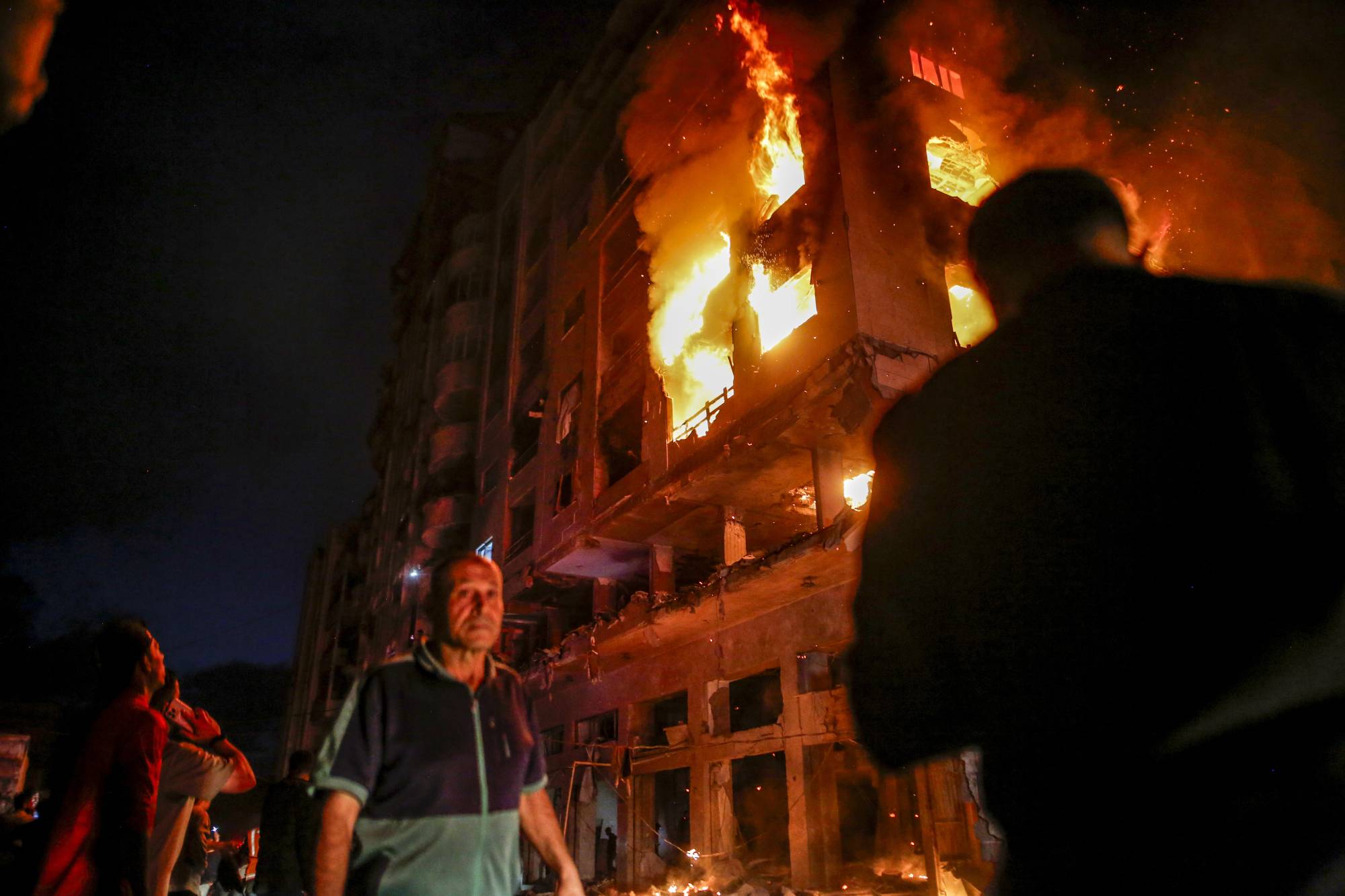
Palestinians inspect the site of a destroyed building as smoke billows following an Israeli airstrike in the Al-Rimal neighborhood of Gaza City, Gaza Strip, 15 May 2026. (EPA)
Spy technology and voiceprints
Field sources in Gaza give significant weight to Israeli spy technology in explaining how Israel has reached Hamas and Qassam leaders so quickly.
They agree on the role of spy drones that heavily patrol Gaza’s skies, along with other tools and human intelligence, including informants working with Israel.
One source said Israel has relied heavily on “the technological factor generated by artificial intelligence,” especially through modern Israeli-made drones using advanced cyber programs to track voiceprints, and possibly vital signs, to locate certain leaders in specific places.
The field source, who had reviewed investigations with suspected collaborators, said the drones eavesdrop on calls within specific, defined ranges after jamming them to isolate the voices coming from them or their surroundings. That, they said, may indicate the presence of a person whose voiceprint Israel has obtained through earlier phone recordings or a previous arrest.
The source said some informants working with Israel had managed to “plant various spying devices, some containing cameras and recording equipment, and others the size of an insect,” dropped by drones or planted by ground forces in areas they raided during the war.
One field source said, “Many informants were arrested and executed. A small number were from inside Hamas and the Qassam themselves, while most were from outside it.”
They said: “A person from outside Hamas was arrested after it became clear that he was linked to Haddad’s assassination, after he was spotted at the assassination site and at another location where Haddad had also been present.”
Two sources confirmed the suspect was being interrogated.
“The detainee confessed that he had been tracking Haddad on instructions from an Israeli intelligence officer, who was giving him specific locations where Haddad’s family was present,” said one of the sources.
At the height of the war in Gaza, Palestinians were executed by members of Palestinian factions after being arrested at Israeli attack sites. The Qassam described the proceedings against them as “revolutionary courts.”
They included one person from inside Hamas and another from outside it. Both were accused of “providing information that led to reaching Qassam commander Mohammad Deif, who was assassinated in July 2024.”
Syrians Mourn a Former Chess Champion as Her Death Is Confirmed 13 Years Laterhttps://english.aawsat.com/arab-world/5280185-syrians-mourn-former-chess-champion-her-death-confirmed-13-years-later
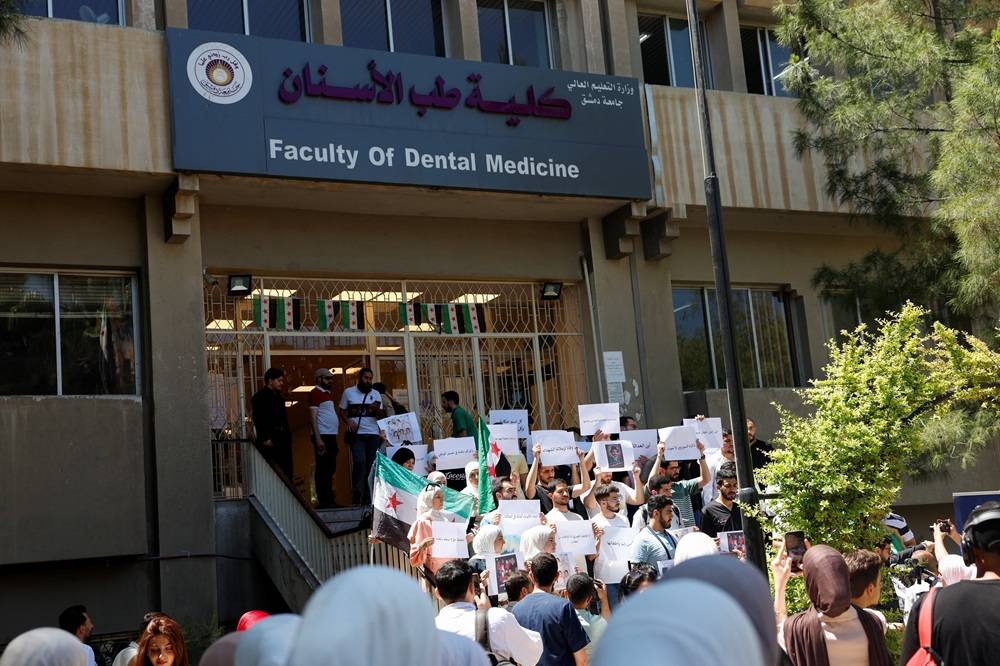
People attend a protest in memory of dentist and former chess champion Rania al-Abbasi, her husband, and their children, after National Commission for Missing Persons (NCMP) reports confirmed that her children were killed in Syrian government detention facilities during the rule of ousted Syrian President Bashar al-Assad, at the Faculty of Dental Medicine, in Damascus, Syria, June 1, 2026. (Reuters)
TT
TT
Syrians Mourn a Former Chess Champion as Her Death Is Confirmed 13 Years Later
People attend a protest in memory of dentist and former chess champion Rania al-Abbasi, her husband, and their children, after National Commission for Missing Persons (NCMP) reports confirmed that her children were killed in Syrian government detention facilities during the rule of ousted Syrian President Bashar al-Assad, at the Faculty of Dental Medicine, in Damascus, Syria, June 1, 2026. (Reuters)
Hundreds of people flocked to a tent in Damascus on Wednesday to mourn a former national chess champion who went missing 13 years ago along with her husband and six children, after their deaths in Syria's civil war were finally confirmed.
Surviving relatives of Rania al-Abbasi announced Sunday that they had seen evidence that the family had been killed by pro-government gunmen shortly after they were detained in 2013, and that they would set up a giant tent in the city on Tuesday and Wednesday to receive condolences.
“We had hope. We’ve been looking for them for 13 years in every way possible,” Rana's brother Wael al-Abbasi said in an interview with The Associated Press. “Then we got the horrible news that they were killed the same day they were arrested.”
The case of Rania al-Abbasi, who also was a dentist and who had been accused of funding the opposition, was well-known in Syria, and this week's revelations have received wide coverage in the country's news media. Photos of the family have been all over social media. Many people have said the killers should be sentenced to death.
Mohammad Shukri, Syrian minister of religious affairs, visited the tent in the Rukneddine neighborhood and said the country's new government is making sure that the culprits are held accountable. “They must get their punishment,” he said.
More than 100,000 people went missing in areas once controlled by forces loyal to now-ousted President Bashar Assad and many are believed to have died under torture run by the country’s powerful security agencies. The number could be higher, because many Syrians were too scared to complain under Assad, now in self-exile in Russia. Some people are now coming forward requesting information about missing loved ones.
During the early years of Syria’s conflict, which started with peaceful pro-democracy protests and later became a civil war after a brutal regime crackdown, many people were killed, and the fate of many remains unknown. The conflict left nearly half a million people dead.
People attend a protest in memory of dentist and former chess champion Rania al-Abbasi, her husband, and their children, after National Commission for Missing Persons (NCMP) reports confirmed that her children were killed in Syrian government detention facilities during the rule of ousted Syrian President Bashar al-Assad, at the Faculty of Dental Medicine, in Damascus, Syria, June 1, 2026. (Reuters)
The fate of the al-Abassi family was revealed following the arrest of an ex-intelligence officer, who allegedly was involved in the killings, surviving family members said. Amjad Yousef had appeared in a video leaked four years ago that purportedly showed him and his comrades fatally shooting dozens of people during the war.
Al-Abbasi’s family was shown another video that was not made public showing the children dead after apparently being strangled or beaten to death.
Wael al-Abbasi said that his brother-in-law, Abdul-Rahman al-Yassin, was detained on March 9, 2013 while his wife and children were detained four days later.
“We were holding on to hope to find one or two of the kids (alive),” he said.
Yousef, the ex-intelligence officer, was arrested by Syria's new authorities in April in the central province in Hama where he had been hiding. He has been undergoing questioning since then.
Wael al-Abbasi said he and other relatives saw a video in which Yousef was talking and pointing the camera at the children in a dark room that may have been part of a detention center.
“He was filming the kids and naming each one of them. Those were our kids, there was no room for doubt that it’s them, they were even wearing the same clothes,” he said.
The children’s ages were from 1 1/2 to 14. They were identified as Ahmad, Dema, Najah, Intisar, Alaa and Layan. He said a couple of them had their faces bloodied.
The brother said he hoped that Yousef and others involved in the killings would go on trial and be hanged. “They’re criminals and we have proof of that through videos. We want the whole chain, all the way up to Bashar Assad. We want them all to hanged.”
Since the fall of Assad, several top officials in his government and security agencies have been detained and some have been put on trial.
Al-Abbasi’s cousin, Doa’a al-Abbasi, said that the family had been worried that the children might have been trafficked, but now they know the truth.
“What is this brutality? What is this hatred? They waited for them to come home from school so he can kill them,” she said, referring to the children. “There are many people like Amjad Yousef and we hope they will all be held accountable."
Israeli Strikes Kill Three People in Gaza, Medics Sayhttps://english.aawsat.com/arab-world/5280172-israeli-strikes-kill-three-people-gaza-medics-say
Mourners react during the funeral of brothers Saqer and Moamen Khalil Abu Karim, who were killed in an Israeli strike, according to medics, at Al-Aqsa Martyrs Hospital in Deir al-Balah, in the central Gaza Strip, June 3, 2026. (Reuters)
TT
TT
Israeli Strikes Kill Three People in Gaza, Medics Say
Mourners react during the funeral of brothers Saqer and Moamen Khalil Abu Karim, who were killed in an Israeli strike, according to medics, at Al-Aqsa Martyrs Hospital in Deir al-Balah, in the central Gaza Strip, June 3, 2026. (Reuters)
Israeli strikes killed three Palestinians in Gaza on Wednesday, health officials said, and the Palestinian group Hamas said an end to such attacks was crucial to further talks on safeguarding a US-brokered ceasefire.
Medics said one Palestinian was killed in an airstrike near the Mughraqa area in the central Gaza Strip.
The Israeli military said it had struck a person acting suspiciously near forces operating in an Israeli-controlled area to remove the threat.
A separate Israeli airstrike killed two brothers - Saqer and Moamen Khalil Abu Karim - in the courtyard of a house in the nearby Maghazi refugee camp, medics said.
Israel's military did not immediately comment on the incident.
The ceasefire brokered by US President Donald Trump has failed to halt Israeli attacks in Gaza, and left Israel in control of over half the enclave following the conflict that began with Hamas attacks on southern Israel in October 2023.
Indirect talks on implementing the second phase of the deal, which includes the group's disarmament and Israeli army withdrawals, are deadlocked.
Sources close to the talks said further negotiations had been expected this week in Egypt, but Hamas denied it had sent delegates to Cairo.
A Hamas official told Reuters on Wednesday the group has been in daily contact with mediators and underlined the need for Israeli attacks in Gaza to stop.
"Israel has so far rejected ending its attacks, it continues to restrict aid and goods coming into Gaza and expand its occupation, in stark violation of the ceasefire agreement," the official said.
Israel says its strikes are aimed at thwarting imminent attacks. It also says it allows aid and goods to flow into Gaza.
Some 930 Palestinians have been killed in Israeli strikes since the truce began, according to figures from Gaza health officials that do not distinguish between combatants and civilians.
Four Israeli soldiers have been killed by fighters during the same period, Israel's military has said.
لم تشترك بعد
انشئ حساباً خاصاً بك لتحصل على أخبار مخصصة لك ولتتمتع بخاصية حفظ المقالات وتتلقى نشراتنا البريدية المتنوعة