


US Will Keep Hitting Houthis until Shipping Attacks Stop, Hegseth Says

This grab from footage shared by the US Central Command (CENTCOM) on March 15, 2025 shows a US Air Force F/A-18 fighter aircraft taking off from an aircraft carrier at sea reportedly amidst operations launched against Houthis in Yemen. (DVIDS / AFP)
TT

US Will Keep Hitting Houthis until Shipping Attacks Stop, Hegseth Says

This grab from footage shared by the US Central Command (CENTCOM) on March 15, 2025 shows a US Air Force F/A-18 fighter aircraft taking off from an aircraft carrier at sea reportedly amidst operations launched against Houthis in Yemen. (DVIDS / AFP)

The United States will keep attacking Yemen's Houthi until they end attacks on shipping, the US defense secretary said on Sunday, as the Iran-aligned militias signaled they could escalate in response to deadly US strikes the day before.

The airstrikes, which killed at least 31 people, are the biggest US military operation in the Middle East since President Donald Trump took office in January. One US official told Reuters the campaign might continue for weeks.

The Houthi political bureau described the attacks as a "war crime" and said Houthi forces were ready to "meet escalation with escalation", while Moscow urged Washington to cease the strikes.

US Defense Secretary Pete Hegseth told Fox News: "The minute the Houthis say we'll stop shooting at your ships, we'll stop shooting at your drones, this campaign will end, but until then it will be unrelenting."

"This is about stopping the shooting at assets ... in that critical waterway, to reopen freedom of navigation, which is a core national interest of the United States, and Iran has been enabling the Houthis for far too long," he said. "They better back off."

The Houthis, who have taken control of several regions of Yemen over the past decade, said last week they would resume attacks on Israeli ships passing through the Red Sea if Israel did not lift a block on aid entering Gaza.

They had launched scores of attacks on shipping after Israel's war with Hamas began in late 2023, saying they were acting in solidarity with Gaza's Palestinians.

Trump also told Iran, the Houthis' main backer, to stop supporting the militias immediately. He said if Iran threatened the United States, "America will hold you fully accountable and, we won't be nice about it!"

IRAN WARNS US NOT TO ESCALATE

In response, Hossein Salami, the top commander of Iran's Revolutionary Guards, said the Houthis took their own decisions.

"We warn our enemies that Iran will respond decisively and destructively if they carry out their threats," he told state media.

US Secretary of State Marco Rubio told CBS News' "Face the Nation" program: "There's no way the ... Houthis would have the ability to do this kind of thing unless they had support from Iran. And so this was a message to Iran: don't keep supporting them, because then you will also be responsible for what they are doing in attacking Navy ships and attacking global shipping."

Russian Foreign Minister Sergei Lavrov called Rubio to urge an "immediate cessation of the use of force and the importance for all sides to engage in political dialogue", Moscow said.

Trump has been pressing Russia to sign a US proposal for a 30-day ceasefire in its war with Ukraine, which Kyiv accepted last week, but Moscow has said needs to be reworked.

Trump is also increasing sanctions pressure, and hoping to enlist Russian help, to try to bring Tehran to the negotiating table over its nuclear program.

Most of the 31 people confirmed killed in the US strikes were women and children, said Anees al-Asbahi, spokesperson for the Houthi-run health ministry. More than 100 were injured.

Residents in Sanaa said the strikes hit a neighborhood known to host several members of the Houthi leadership.

"The explosions were violent and shook the neighborhood like an earthquake. They terrified our women and children," said one of the residents, who gave his name as Abdullah Yahia.

In Sanaa, a crane and bulldozer were used to remove debris at one site and people used their bare hands to pick through the rubble. At a hospital, medics treated the injured, including children, and the bodies of several casualties were placed in a yard, wrapped in plastic sheets, Reuters footage showed.

Strikes also targeted Houthi military sites in the city of Taiz, two witnesses said on Sunday.

HOUTHIS' RED SEA ATTACKS DISRUPT GLOBAL TRADE ROUTE

Another strike, on a power station in the town of Dahyan, led to a power cut, Al-Masirah TV reported early on Sunday. Dahyan is where Abdul Malik al-Houthi, the leader of the Houthis, often meets visitors.

The Houthi attacks on shipping have disrupted global commerce and set the US military off on a costly campaign to intercept missiles and drones.

The militants suspended their campaign when Israel and Hamas agreed to a ceasefire in Gaza in January.

But on March 12, the Houthis said their threat to attack Israeli ships would remain in effect until Israel reapproved the delivery of aid and food into Gaza.

Joe Biden's previous US administration had also sought to degrade the Houthis' strike power. But US officials, speaking on condition of anonymity, said Trump had authorized a more aggressive approach.

The US military's Central Command described Saturday's strikes as the start of a large-scale operation across Yemen.

The strikes were carried out in part by fighter aircraft from the aircraft carrier Harry S. Truman in the Red Sea, officials said.

Iran condemned the strikes as a "gross violation" of the UN Charter and international law.

Iranian Foreign Minister Abbas Araqchi said the US government had "no authority, or business, dictating Iranian foreign policy".


Hezbollah Chief Accuses Lebanese Authorities of Working ‘in the Interest of What Israel Wants’

Hezbollah leader Naim Qassem
TT

Hezbollah Chief Accuses Lebanese Authorities of Working ‘in the Interest of What Israel Wants’

Hezbollah leader Naim Qassem

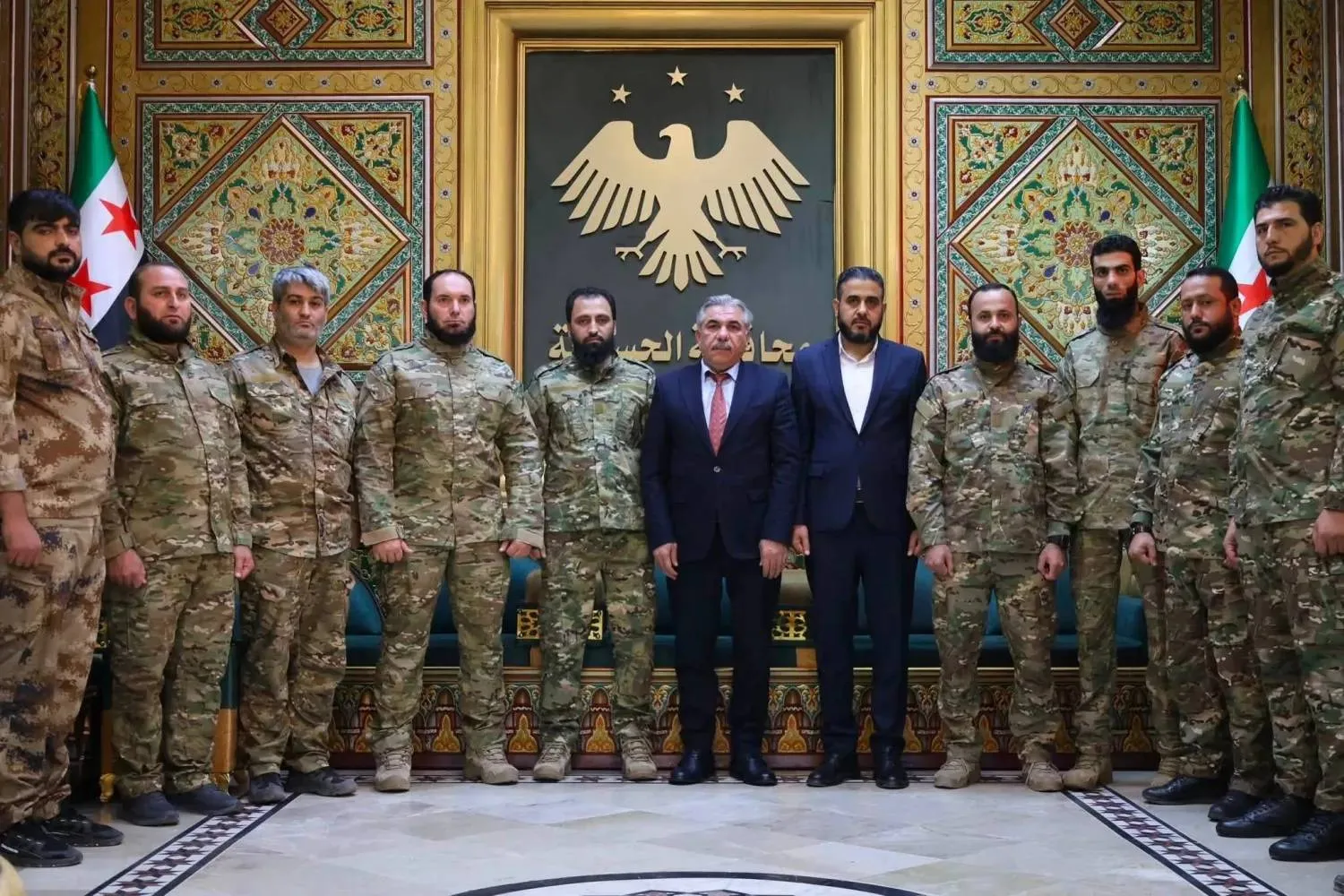
Hezbollah leader Naim Qassem on Sunday said moves to disarm the group in Lebanon are an "Israeli-American plan,” accusing Israel of failing to abide by a ceasefire agreement sealed last year.

Under heavy US pressure and fears of expanded Israeli strikes, the Lebanese military is expected to complete Hezbollah's disarmament south of the Litani River -- located about 30 kilometers from the border with Israel -- by the end of the year.

It will then tackle disarming the Iran-backed movement in the rest of the country.

"Disarmament is an Israeli-American plan," Qassem said.

"To demand exclusive arms control while Israel is committing aggression and America is imposing its will on Lebanon, stripping it of its power, means that you are not working in Lebanon's interest, but rather in the interest of what Israel wants."

Despite a November 2024 ceasefire that was supposed to end more than a year of hostilities between Israel and Hezbollah, Israel has kept up strikes on Lebanon and has maintained troops in five areas it deems strategic.

According to the agreement, Hezbollah was required to pull its forces north of the Litani River and have its military infrastructure in the vacated area dismantled.

Israel has questioned the Lebanese military's effectiveness and has accused Hezbollah of rearming, while the group itself has rejected calls to surrender its weapons.

"The deployment of the Lebanese army south of the Litani River was required only if Israel had adhered to its commitments... to halting the aggression, withdrawing, releasing prisoners, and having reconstruction commence," Qassem said in a televised address.

"With the Israeli enemy not implementing any of the steps of the agreement... Lebanon is no longer required to take any action on any level before the Israelis commit to what they are obligated to do."

Lebanese army chief Rodolphe Haykal told a military meeting on Tuesday "the army is in the process of finishing the first phase of its plan.”

He said the army is carefully planning "for the subsequent phases" of disarmament.


Israel Army Ends Crackdown on West Bank Town after Attack

Smoke rises following an explosion detonated by the Israeli army, which said it was destroying buildings used by Palestinian militants in the West Bank Jenin refugee camp, Sunday, February 2, 2025. © Majdi Mohammed, AP
TT

Israel Army Ends Crackdown on West Bank Town after Attack

Smoke rises following an explosion detonated by the Israeli army, which said it was destroying buildings used by Palestinian militants in the West Bank Jenin refugee camp, Sunday, February 2, 2025. © Majdi Mohammed, AP

The Israeli military said on Sunday it had ended its operation in a town in the occupied West Bank that it had sealed off after a Palestinian from the area killed two Israelis.

Around 50 residents of Qabatiya were briefly detained during the two-day operation, the official Palestinian news agency Wafa reported, quoting the town's mayor Ahmed Zakarneh.

The attacker's father and two brothers remained in custody, it added.

The military launched the operation on Friday, shortly after a 34-year-old Palestinian fatally stabbed an 18-year-old Israeli woman and ran over a man in his sixties with his vehicle.

When contacted by AFP on Sunday morning, the military confirmed the end of its operation in the area.

Defense Minister Israel Katz previously said the army had completely sealed off the town.

Wafa also reported that Israeli troops had withdrawn from Qabatiya, near the city of Jenin.

Zakarneh said the town had been in a state of "total paralysis" during the military activity.

Israeli army bulldozers tore up pavement on several streets and erected roadblocks to halt traffic, he said, adding that around 50 houses were searched.

Wafa reported that a school had been turned into a detention and interrogation center.

AFPTV footage filmed on Saturday showed Israeli soldiers carrying automatic rifles and patrolling the streets, where several armoured vehicles were deployed.

Shops were closed, though men and children were seen walking through the village.

On Sunday, the Israeli army said it had sealed off the assailant's home and was finalising "the procedures required for its demolition".

Israeli authorities argue that demolishing the homes of Palestinians who carry out attacks against Israelis has a deterrent effect.

Critics, however, condemn the practice as collective punishment that leaves families homeless.


Arab League Council Holds Extraordinary Session on Latest Developments in Somalia

A general view shows the opening session of the meeting of Arab foreign ministers at the Arab League Headquarters (Reuters)
TT

Arab League Council Holds Extraordinary Session on Latest Developments in Somalia

A general view shows the opening session of the meeting of Arab foreign ministers at the Arab League Headquarters (Reuters)

At the request of the Federal Republic of Somalia and with the support of Arab League member states, the Arab League Council on Sunday began its extraordinary session at the league’s General Secretariat, at the level of permanent representatives and under the chairmanship of the United Arab Emirates, to discuss developments regarding the Israeli occupation authorities’ declaration on mutual recognition with the Somaliland region.

The Kingdom’s delegation to the meeting was headed by its Permanent Representative to the Arab League Ambassador Abdulaziz bin Abdullah Al-Matar, SPA reported.

The meeting is discussing ways to strengthen the unified Arab position in addressing this step, to affirm full solidarity with Somalia, and to support its legitimate institutions in a manner that contributes to preserving security and stability in the region.

The meeting also aims to reaffirm the Arab League’s categorical rejection of any unilateral measures or decisions that could undermine Somalia’s sovereignty and territorial integrity, and to emphasize commitment to the principles of international law and the relevant resolutions of the Arab League and the African Union.