Iraqi Kurdistan: Assailant of Assyrian Celebration Attack Affiliated with ISIS

 Akitu holiday celebrators carrying a flag for the Assyrians in Iraq (AP). 
 Akitu holiday celebrators carrying a flag for the Assyrians in Iraq (AP). 
TT

Iraqi Kurdistan: Assailant of Assyrian Celebration Attack Affiliated with ISIS

 Akitu holiday celebrators carrying a flag for the Assyrians in Iraq (AP). 
 Akitu holiday celebrators carrying a flag for the Assyrians in Iraq (AP). 

Authorities in Duhok, in Iraq’s Kurdistan region, announced on Wednesday that the attack carried out by a Syrian national during a Christian celebration in the city was an “act of terrorism.”

On Tuesday, the attacker infiltrated a gathering of Syriac Christians celebrating the Akitu festival in central Duhok. He then pulled out an axe and attacked a young man, a 70-year-old woman, and a security officer.

Videos circulating on local media platforms showed a group of people apprehending the attacker, who was seen making hand gestures and shouting “Islamic State.” Shamon Shlimon, the deputy governor of Duhok, stated that initial investigations revealed the attacker was a Syrian national and that given the slogans he shouted, “it is clear that the attack was an act of terrorism.”

Later, security sources confirmed that the assailant admitted to police that he belonged to a terrorist organization.

The Kurdistan Regional Security Council later announced that the attacker was affiliated with an ISIS-linked group. In a press statement, the council said: “While the people of Duhok were celebrating Akitu, an individual holding extremist ISIS ideologies attacked citizens in the market with a sharp weapon.”

The Kurdistan Regional Presidency condemned the “criminal attack,” affirming that it would not tolerate any actions that undermine the culture of coexistence, acceptance, and tolerance.

In a statement on Wednesday, the presidency said it was “closely following” the investigation into the “criminal attack” in Duhok, assuring that the perpetrator will face legal consequences.

This is the first attack of its kind in Duhok. Chaldeans and Syriacs celebrate Babylonian-Assyrian New Year (Akitu) every April 1. During the recent attack, more than 8,000 people were present, half of whom were from outside the Kurdistan region, according to local reports.

The Akitu festival features celebrations, cultural and artistic events, and recreational activities, including traditional dances.


Abbas Calls Palestinian Presidential, Legislative Elections for September 2027

 A sign promoting Palestinian legislative elections on a road near the West Bank city of Jenin (File photo: EPA). 
 A sign promoting Palestinian legislative elections on a road near the West Bank city of Jenin (File photo: EPA). 
TT

Abbas Calls Palestinian Presidential, Legislative Elections for September 2027

 A sign promoting Palestinian legislative elections on a road near the West Bank city of Jenin (File photo: EPA). 
 A sign promoting Palestinian legislative elections on a road near the West Bank city of Jenin (File photo: EPA). 

Palestinian President Mahmoud Abbas has issued a decree calling for simultaneous presidential and legislative elections on Sept. 11, 2027, canceling a legislative vote scheduled for Nov. 28, 2026, after his Fatah movement and other Palestinian factions agreed to postpone it.

The widely anticipated decision sets a new date for Palestinians to elect both their president and lawmakers amid concerns over Israeli restrictions and the security situation in Gaza and the West Bank.

The decree calls on Palestinians in Jerusalem, the West Bank and Gaza Strip to participate in free, direct presidential and legislative elections to choose the president of the State of Palestine and members of the Palestinian Legislative Council, in accordance with the law.

Abbas had previously issued decrees calling for legislative elections on two occasions, most recently scheduling them for November 2026, before canceling the plans.

An informed source told Asharq Al-Awsat that setting a firm date for simultaneous presidential and legislative elections was intended to demonstrate the Palestinian leadership’s commitment to holding the vote and reassure France and the international community that it would proceed with renewing the legitimacy of Palestinian institutions.

The decision followed a recommendation by the Executive Committee of the Palestine Liberation Organization (PLO) to revoke Decree No. 4 of 2026, which had called for legislative elections in November.

At a meeting Saturday, the PLO Executive Committee approved moving the legislative vote to September 2027 to coincide with the presidential election.

It attributed the decision to national consultations with Palestinian factions and political forces, which had produced a consensus on the obstacles posed by Israeli measures to holding elections on the original date.

The committee also cited the need to establish suitable political, security and on-the-ground conditions to ensure free, fair and comprehensive elections.

In a statement, the committee argued that circumstances had changed substantially since the election date was announced several months earlier, following successful elections for trade unions, professional associations, and local authorities.

It pointed to the failure to implement UN Security Council Resolution 2803, the absence of international stabilization forces and Palestinian police in Gaza, and the continued presence of Israeli troops in the territory.

The committee also cited ongoing attacks, insecurity and restrictions preventing the Central Elections Commission and local and international observers from entering Gaza.

These conditions, it maintained, made it impossible to establish an environment conducive to elections or guarantee the safety of voters, candidates and election workers.

The committee further warned that what it described as catastrophic conditions in the West Bank, including East Jerusalem, posed serious obstacles to holding the vote.

It accused Israeli settlers of carrying out daily attacks, including burning homes, uprooting olive trees and stealing crops and livestock, under the protection of Israeli forces.

The statement also condemned what it called the Israeli government’s continued expansion of settlements, seizure of Palestinian land, demolition of homes and attacks on Muslim and Christian holy sites.

It cited checkpoints, movement restrictions, pressure on the Palestinian economy and the withholding of Palestinian funds totaling nearly $7 billion as additional obstacles.

Despite the postponement, the PLO Executive Committee reaffirmed its commitment to holding elections with the participation of all Palestinians in the State of Palestine, including those in Gaza and East Jerusalem.

It stressed that the vote must be conducted safely and fairly, with international observers present, free from Israeli obstruction, while preserving the unity of Palestinian territory, people and institutions.


Yemen Offensive Intensifies as Military Reports 2,750 Strikes in 24 Hours

Soldiers from Yemen’s pro-government Giants Brigades during their campaign against the Houthis near Bab al-Mandab (AP). 
TT

Yemen Offensive Intensifies as Military Reports 2,750 Strikes in 24 Hours

Soldiers from Yemen’s pro-government Giants Brigades during their campaign against the Houthis near Bab al-Mandab (AP). 

Yemeni government forces pressed their offensive against the Houthis on Saturday, advancing along the western coast and in Marib as the military reported more than 2,750 precision targeting operations in 24 hours.

The sixth day of Operation Dawn of Yemen saw intensified airstrikes on Houthi positions and weapons facilities, while troops sought to eliminate remaining pockets of resistance around the strategic Bab al-Mandab strait.

The Southern Giants Brigades repelled a Houthi attack north of Dhubab airport, inflicting casualties and equipment losses on the group’s fighters, according to military reports.

Warplanes from the Coalition to Support Legitimacy in Yemen also struck reinforcements dispatched by the Houthis to strengthen their positions and support fighters trapped in the area.

The clashes followed a major operation aimed at recapturing the remaining parts of Bab al-Mandab and its islands, where hundreds of Houthi fighters were believed to be holding out in scattered pockets behind minefields and trenches.

Military units continued clearing operations and dismantling fortifications, seeking to consolidate control over recaptured territory while preventing the group from breaking the encirclement of its fighters.

Strikes deep inside Houthi territory

Yemen’s military announced that it had conducted more than 2,750 precision targeting operations over the previous 24 hours, hitting fortifications, defensive positions, observation and reconnaissance posts, artillery positions, weapons and ammunition depots, supply warehouses and military reinforcements across multiple fronts.

Armed forces spokesperson Col. Majed al-Nuzaili reported that the campaign also struck what he described as legitimate, high-value military targets deep inside Houthi-controlled territory.

Preliminary battlefield assessments indicated that more than 1,400 Houthi fighters had been neutralized and over 250 combat vehicles and other pieces of military equipment destroyed or disabled, he added.

According to Nuzaili, the losses had weakened the group’s ability to maneuver, provide battlefield support and sustain combat operations.

He also reported that ground forces had breached Houthi defenses, recaptured strategically important elevated positions and consolidated their gains while continuing the offensive according to established military plans.

Separately, the Coalition to Support Legitimacy in Yemen announced the destruction of 136 military targets in a large-scale operation against Houthi fighters and military capabilities in areas under the group’s control.

Coalition spokesperson Maj. Gen. Turki al-Malki said the campaign aimed to dismantle and destroy the Houthis’ ballistic missile network, reaffirming that coalition aircraft would continue providing round-the-clock support to Yemeni military units.

Heavy fighting in Marib

In Marib province, east of Sanaa, government forces and Popular Resistance fighters maintained operations along the front lines, launching attacks on Houthi positions in the southern sectors.

The forces captured several positions after breaching fortifications and clearing minefields planted by the group.

The Yemeni Armed Forces Media Center reported Houthi casualties and equipment losses as government troops pressed their offensive on the northern and northwestern fronts. Surveillance and reconnaissance operations also continued to monitor Houthi movements and reinforcements.

According to the center, manned and unmanned aircraft, artillery and rocket launchers targeted Houthi positions, troop concentrations, command centers, weapons depots, firing positions and drone operating sites along the front lines and in areas under the group’s control.

The center reported that dozens of Houthi fighters had been killed or wounded in the clashes.

It also confirmed the deaths of 22 members of the armed forces and Popular Resistance, with others wounded.

Battle to restore state authority

Against the backdrop of the fighting, Yemeni Presidential Leadership Council member Abdulrahman al-Mahrami praised government forces for their resilience and battlefield performance.

He described the clashes as part of a broader struggle to restore the state and its institutions and confront what he called the Iran-backed Houthi project.

In a Facebook post addressing troops stationed along the western coast, in Bab al-Mandab and on other fronts, Mahrami urged them to maintain their resolve until the campaign achieved its objectives.

He also commended their role in confronting the Houthis and protecting regional security.

Mahrami also renewed his appreciation for the Saudi-led Coalition to Support Legitimacy, stressing that Yemeni forces and their coalition partners were fighting a common battle and sharing its burdens and sacrifices.



UN Yemen Envoy: Houthi Attacks on Saudi Arabia Threaten Regional Security

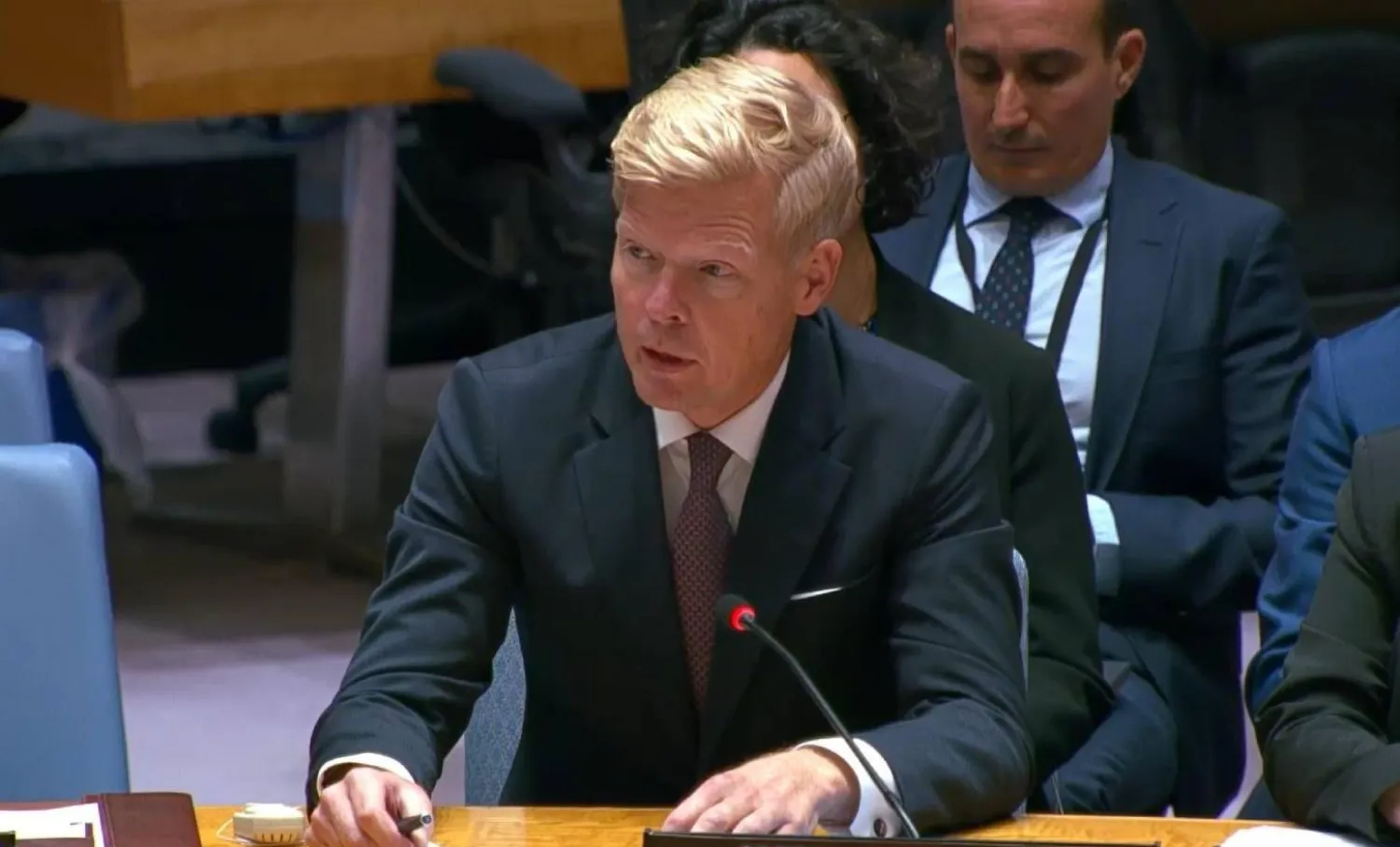
UN Envoy to Yemen Hans Grundberg (United Nations)
TT

UN Yemen Envoy: Houthi Attacks on Saudi Arabia Threaten Regional Security

UN Envoy to Yemen Hans Grundberg (United Nations)

UN Special Envoy for Yemen Hans Grundberg said Sunday that the Houthi attacks on Saudi Arabia are a dangerous escalation that pose a grave threat to regional security, prolong the cycle of violence and further complicate peace efforts in Yemen.

He denounced the group’s continued attacks on civilian infrastructure in Saudi Arabia, including Saturday’s attack on King Khalid International Airport in Riyadh, that killed 12 people and wounded 309 others.

The UN envoy said the attack followed strikes on Riyadh and Abha airports earlier this week that also caused civilian deaths and injuries.

In a statement, Grundberg called on the Houthis to halt the attacks and renewed his call for respect for international humanitarian law, including the ban on attacks against civilians and civilian infrastructure.