WHO: Dire State of Maternal and Neonatal Health in Yemen

 Hemorrhage and pre-eclampsia/eclampsia remain leading causes of maternal deaths in Yemen (UN) 
 Hemorrhage and pre-eclampsia/eclampsia remain leading causes of maternal deaths in Yemen (UN) 
TT

WHO: Dire State of Maternal and Neonatal Health in Yemen

 Hemorrhage and pre-eclampsia/eclampsia remain leading causes of maternal deaths in Yemen (UN) 
 Hemorrhage and pre-eclampsia/eclampsia remain leading causes of maternal deaths in Yemen (UN) 

The World Health Organization (WHO) raised on Thursday the alarm about the dire state of maternal and neonatal health in Yemen, which it described as “devastating.”

The agency also underscored the urgent need for scaled-up interventions to save lives and protect the well-being of Yemen's most vulnerable.

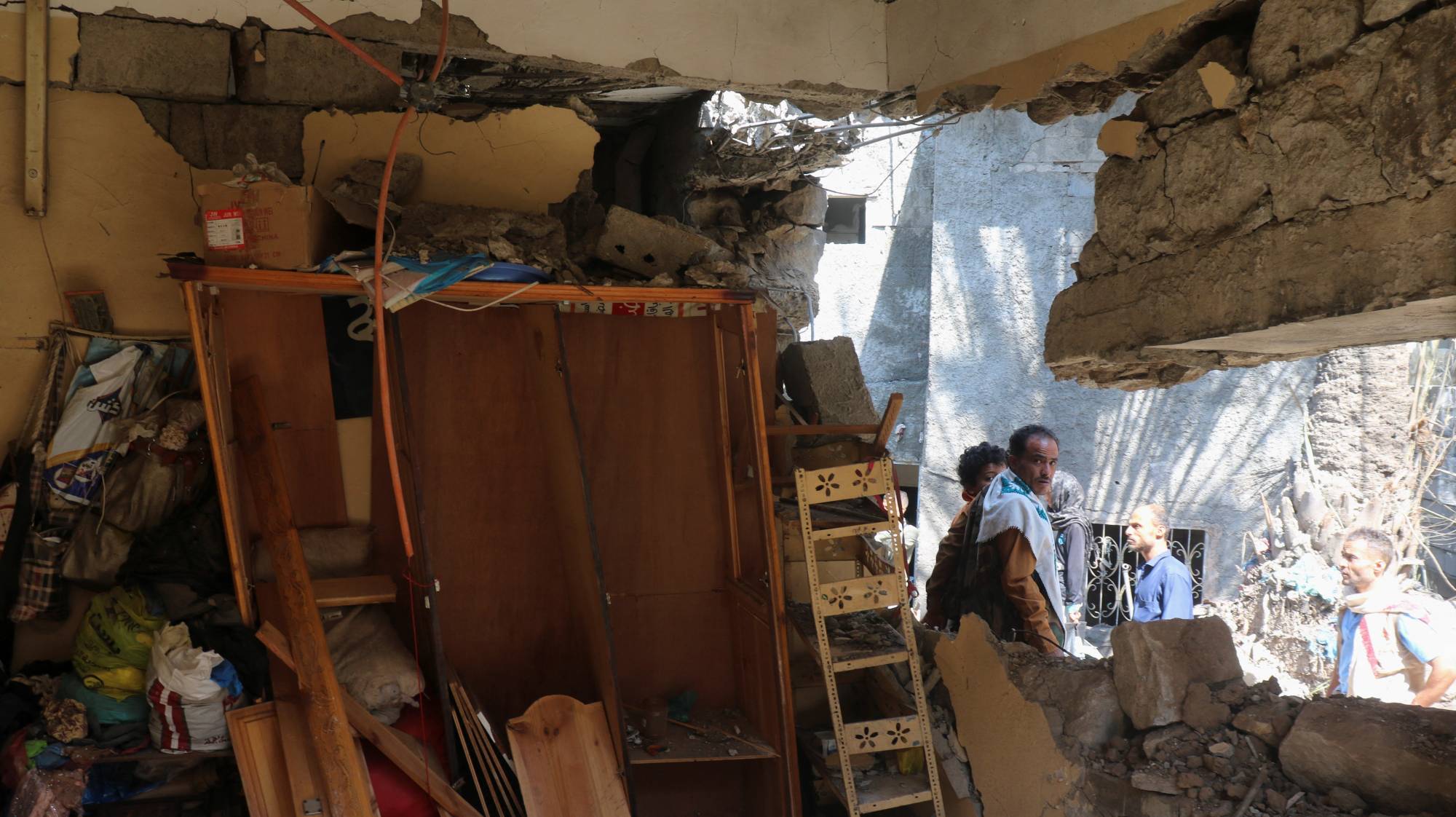
“Decades of conflict and a spiraling humanitarian crisis have decimated Yemen's health system,” WHO said in a report issued on World Health Day 2025.

Its statistics painted a stark picture of suffering and loss. Figures showed that maternal mortality reached 183 deaths per 100,000 live births in 2020, a devastating regression in maternal health outcomes.

WHO said preventable complications such as hemorrhage and pre-eclampsia/eclampsia remain leading causes of maternal deaths, claiming the lives of women who should be experiencing the joy of motherhood.

It also noted that prematurity, asphyxia, pneumonia and sepsis contribute to unacceptably high neonatal mortality rates while malnutrition and anemia are rampant among women of reproductive age, jeopardizing their health and the health of their babies.

“The reality for mothers and newborns in Yemen is heartbreaking,” said acting WHO Representative in Yemen Dr Ferima Coulibaly-Zerbo.

“Behind these statistics are stories of immense hardship and loss. On this World Health Day, we cannot accept this as the status quo. We must act decisively and with unwavering commitment to ensure healthy beginnings and pave the way for hopeful futures,” Coulibaly-Zerbo added.

In this regard, WHO said it works tirelessly with health partners to deliver critical support and implement lifesaving interventions in Yemen, including strengthening surveillance systems to better understand and respond to maternal deaths and improving the quality of care in health facilities, ensuring access to skilled birth attendance and emergency obstetric care.

It also works on providing essential medicines, equipment and supplies to health facilities and training, supporting midwives and other health care providers and addressing malnutrition through screening, counseling and supplementation programs.

WHO called on the international community to increase funding for maternal and neonatal health interventions, for the government and health authorities to prioritize and strengthen the health system and all stakeholders to work together to overcome barriers to access and ensure that every mother and newborn receives the care they need.

“The future of Yemen depends on the health and well-being of its mothers and children,” said Couliba-Zerbo. “Let World Health Day 2025 be a turning point, a moment when we collectively resolve to protect and invest in hopeful futures for all Yemenis,” she added.


Lebanon: Israeli Airstrikes, Demolitions Hit Southern Villages

Smoke rises after Israeli tanks shelled targets in  the municipality of Mais al-Jabal, as seen from Chaqra village, in southern Lebanon, 21 August 2026. EPA/STRINGER
Smoke rises after Israeli tanks shelled targets in the municipality of Mais al-Jabal, as seen from Chaqra village, in southern Lebanon, 21 August 2026. EPA/STRINGER
TT

Lebanon: Israeli Airstrikes, Demolitions Hit Southern Villages

Smoke rises after Israeli tanks shelled targets in  the municipality of Mais al-Jabal, as seen from Chaqra village, in southern Lebanon, 21 August 2026. EPA/STRINGER
Smoke rises after Israeli tanks shelled targets in the municipality of Mais al-Jabal, as seen from Chaqra village, in southern Lebanon, 21 August 2026. EPA/STRINGER

Israeli warplanes carried out a series of strikes on Saturday near the area of Kfar Rumman in southern Lebanon and also struck the vicinity of Ali al-Taher hills.

At dawn, Israeli shelling targeted the town of Mansouri, the outskirts of Buyut al-Siyad and the outskirts of Majdal Zoun in southern Lebanon.

Overnight, Israeli forces carried out extensive demolitions in the villages and towns of Mansouri, Majdal Zoun and Buyut al-Siyad. Reports said not a single house remained undamaged.

Similar Israeli demolitions were reported in Hadatha, Beit Yahoun and Aita al-Jabal, along with machine-gun fire directed toward nearby valleys. Israeli drones also continued to fly over villages and towns in the western and central sectors.


At Least 13 Tunisians Missing after Migrant Boat Sinks off Tunisia

Migrants on a boat waiting for assistance from a rescue vessel in the Mediterranean Sea, July 24, 2025 (Reuters)
TT

At Least 13 Tunisians Missing after Migrant Boat Sinks off Tunisia

Migrants on a boat waiting for assistance from a rescue vessel in the Mediterranean Sea, July 24, 2025 (Reuters)

At least 13 Tunisians are missing after a migrant boat sank off the Tunisian coast while sailing towards Italy, and two people were rescued, the head of a migrant rights group said on Saturday.

The boat set off early on Thursday, Mostafa Abdelkebir, the head of the Tunisian Observatory for Human Rights, told Reuters.

One of the two ‌survivors told ‌rescuers in a local boat ‌they had ⁠been stranded at ⁠sea for hours after their vessel capsized. The second survivor was in critical condition, said Abdelkebir, whose group monitors migration issues.

Tunisia was once a major departure point for migrants crossing the Mediterranean, but departures have fallen sharply over the ⁠past two years amid a crackdown ‌and tighter maritime controls, ‌backed by European funding and modern border-monitoring equipment, particularly ‌from Italy.

Human Rights Watch, Amnesty International and ‌dozens of other human rights and humanitarian groups said in a statement last month that the EU-Tunisia migration deal had fueled and normalized serious abuses against ‌migrants and asylum seekers in Tunisia.

The groups called on the EU to suspend ⁠funding ⁠for migration and border-control activities involving Tunisian security forces.

Tunisia has not commented on the statement but has repeatedly said it is bearing the brunt of a major migration influx. President Kais Saied said in 2023 that the influx was aimed at changing the country's demographic makeup.

The central Mediterranean route is one of the world's deadliest migration routes, used by migrants from Africa and the Middle East seeking to reach Europe, often in overcrowded or unseaworthy boats.


Salam Inspects Military Units South of Litani: No Capable Lebanese State without One Strong Army

Lebanese Prime Minister Nawaf Salam during his visit to South Lebanon on Friday. (NNA)
TT

Salam Inspects Military Units South of Litani: No Capable Lebanese State without One Strong Army

Lebanese Prime Minister Nawaf Salam during his visit to South Lebanon on Friday. (NNA)

Prime Minister Nawaf Salam tied the restoration of state authority in South Lebanon to a broader process extending beyond military deployment to strengthening institutions, restoring services and advancing reconstruction.

During a visit to the Benoit Barakat Barracks in Tyre, Salam stressed that “every position where the army deploys in the South is a place where the state regains its authority.”

“Restoring sovereignty requires building a capable state, and there can be no capable state without one strong army,” he added, arguing that sovereignty restored through security must also be consolidated economically and socially.

One authority

“We want the South, like all of Lebanon, to be under one authority, and Lebanese citizens there to feel safe because they have an army protecting them,” the PM declared, linking lasting stability to the state and its constitutional institutions regaining control over decisions of war and peace.

At the same time, he acknowledged the challenges confronting the military amid continuing Israeli attacks. “True sovereignty is neither taken nor given; it is built,” he emphasized.

Salam reaffirmed his government’s commitment to building a national state faithful to the constitution, describing efforts to strengthen the army as “a strategic choice at the heart of our project to restore the state,” rather than a secondary priority.

The government continues to mobilize Arab and international support to develop the army’s personnel capabilities, improve its equipment and enhance service members’ living conditions, he went on to say.

He described the military as one of the few institutions around which Lebanese citizens remain united.

Addressing troops, Salam urged them to shield the army from political and sectarian divisions.

“Preserve the unity of the army. Do not allow politics to divide you and accept only the constitution and the law as your guide,” he told them, warning against allowing “the evils of sectarianism” to infiltrate their ranks.

Lebanon could emerge from its current predicament only by having “one army, one flag and one state,” he maintained.

Salam also paid tribute to fallen service members, telling their families: “Your sons are not only martyrs of the military institution; they are martyrs of the entire nation.”

Beyond army deployment

“The return of the state to the South is not limited to the deployment of the army, but extends across all sectors, including education, reconstruction and everything else,” he added, reiterating the government’s commitment to providing the military with everything needed to carry out its mission successfully.

He pledged that the state would spare no effort to secure Israel’s complete withdrawal from Lebanese territory, recover prisoners and advance reconstruction.

Defense Minister Michel Menassa similarly framed Salam’s visit as an affirmation of state sovereignty.

“Our visit to the South is not merely an inspection tour. We are here today to reaffirm our unwavering position seeking to restore state sovereignty,” he vowed.

He identified the government’s primary negotiating objective as “the complete withdrawal of the Israeli enemy from Lebanon.”

Menassa praised the army as a symbol of “dignity, sacrifice and loyalty” that brings Lebanese citizens together and safeguards national unity and civil peace.

He also commended its professionalism in carrying out missions despite difficult conditions and pressure.