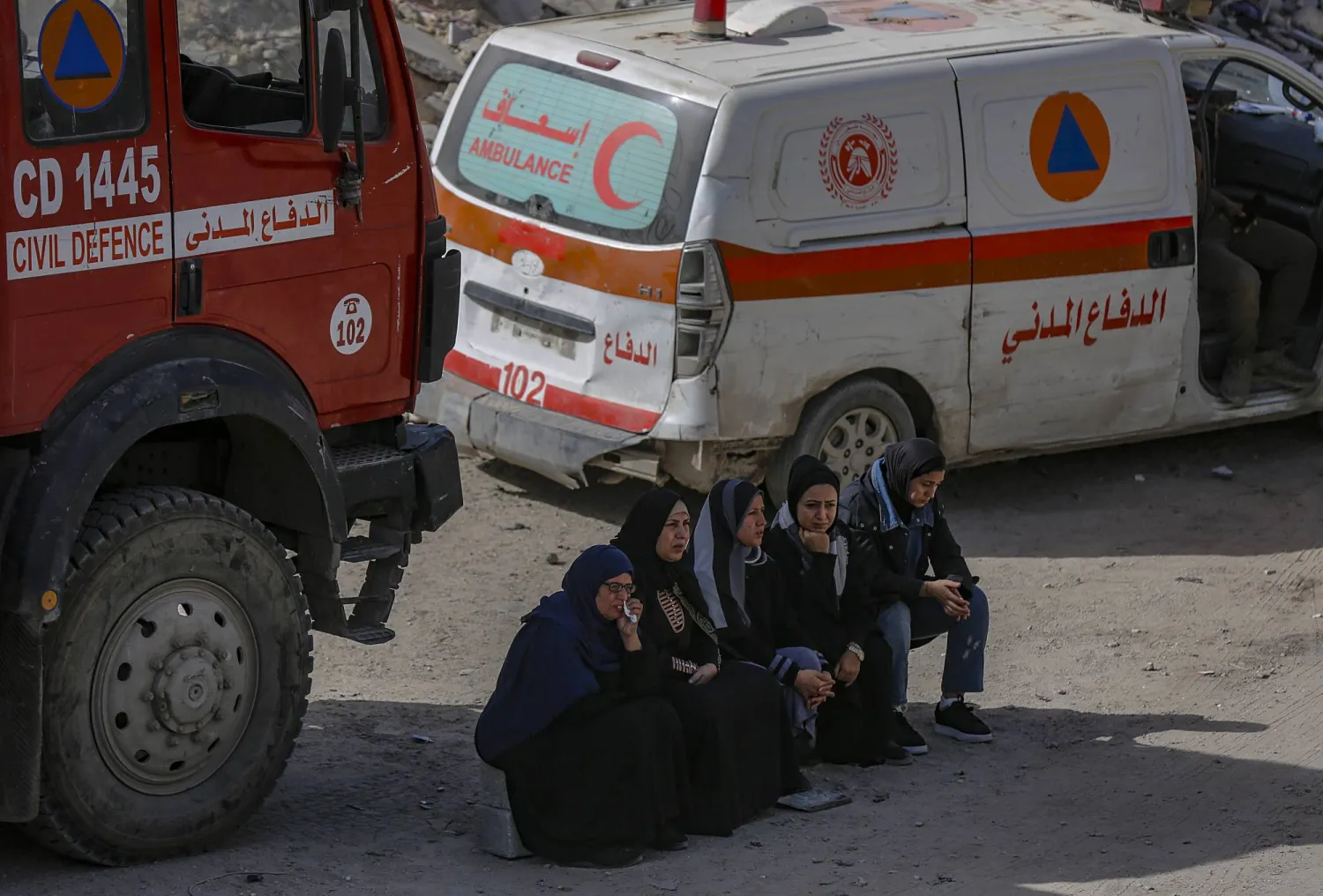
Syria’s presidency announced on Friday that it would extend a probe into the killings of Alawite civilians in coastal areas that left scores dead after clashes between government forces and armed groups loyal to former President Bashar al-Assad spiraled into sectarian revenge attacks.
The violence erupted on March 6 after Assad loyalists ambushed patrols of the new government, prompting armed groups to launch coordinated assaults on Latakia, Baniyas, and other coastal areas.
The violence brought fear of a renewed civil war and threatened to open an endless cycle of vengeance, driving thousands of Alawites to flee their homes, with an estimated 30,000 seeking refuge in northern Lebanon.
On March 9, interim President Ahmed al-Sharaa formed a fact-finding committee and gave it 30 days to report its findings and identify perpetrators. In a decree published late Thursday, Sharaa said the committee had requested more time and was granted a three-month non-renewable extension.
The committee’s spokesperson, Yasser Farhan, said in a statement on Friday that the committee has recorded 41 sites where killings took place, each forming the basis for a separate case and requiring more time to gather evidence. He said some areas remained inaccessible due to time constraints, but that residents had cooperated, despite threats from pro-Assad remnants.
In a report published on April 3, Amnesty International said its probe into the killings concluded that at least 32 of more than 100 people killed in the town of Baniyas were deliberately targeted on sectarian grounds — a potential war crime.
The rights organization welcomed the committee’s formation but stressed it must be independent, properly resourced, and granted full access to burial sites and witnesses to conduct a credible investigation. It also said the committee should be granted “adequate time to complete the investigation.”