


Al-Sharaa Welcomes Abbas on First Visit to Damascus in 16 Years

Syrian President Ahmed al-Sharaa welcomes Palestinian counterpart in Damascus (Syrian Presidency)
TT

Al-Sharaa Welcomes Abbas on First Visit to Damascus in 16 Years

Syrian President Ahmed al-Sharaa welcomes Palestinian counterpart in Damascus (Syrian Presidency)

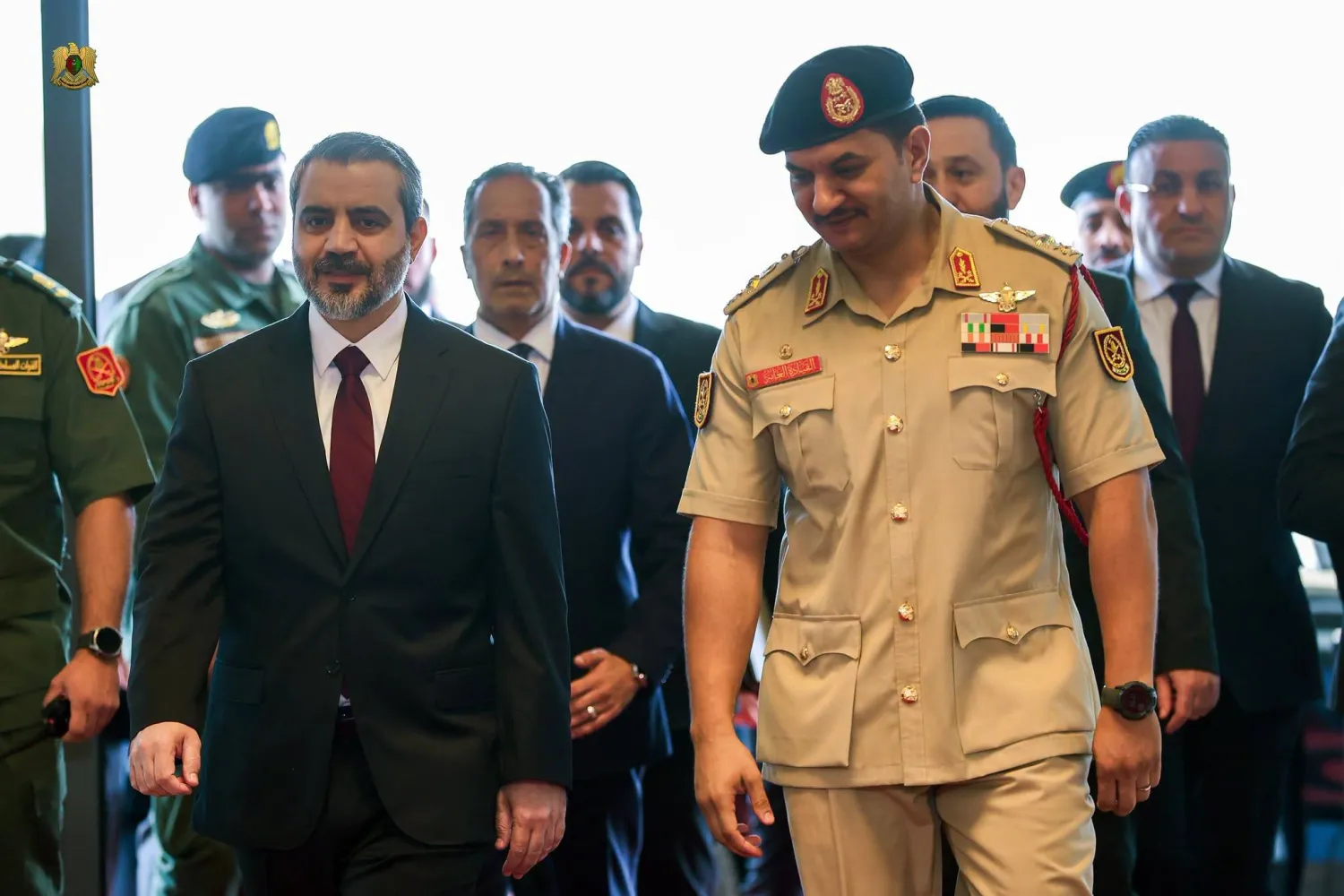
Syrian President Ahmed al-Sharaa welcomed Palestinian President Mahmoud Abbas in Damascus on Friday, marking Abbas’s first visit to the Syrian capital in nearly 16 years.

Al-Sharaa greeted Abbas at the entrance of the Presidential Palace, and the two leaders walked side by side along a red carpet, according to an AFP correspondent.

Al-Sharaa held talks with Abbas and his accompanying delegation on Friday in Damascus, in the presence of Syrian Foreign Minister Asaad al-Shibani, the presidency said.

The visit is Abbas’s first to Syria since June 2009 and aims to discuss ways to strengthen Palestinian-Syrian ties, ease administrative procedures for Palestinians living in Syria, and address shared security concerns, a Syrian government source told AFP.

According to the United Nations Relief and Works Agency (UNRWA), around 560,000 Palestinians lived in Syria before the outbreak of conflict in 2011. The agency now estimates that number at about 438,000, with more than 40% internally displaced.

Abbas’s visit to Damascus carries exceptional significance due to the complex Palestinian landscape in Syria, observers in the capital told Germany’s DPA news agency.

Analysts noted that the visit comes against the backdrop of a sensitive file involving Palestinian factions that were previously aligned with the former regime and have since had their offices and military posts shut down.

Abbas is expected to raise several key issues, including bilateral relations, the situation of Palestinians in Syria—whose number is currently estimated at more than half a million—and the reconstruction of Yarmouk camp, widely considered the capital of the Palestinian diaspora.

Abbas is accompanied by Hussein al-Sheikh, Secretary-General of the Palestine Liberation Organization’s Executive Committee, and committee member Ahmad Majdalani. It is his first trip to Syria since President Bashar al-Assad was ousted in December 2024.

His last visit to Damascus was in 2009, when he met Assad as part of a regional tour that also included Saudi Arabia.

In the years following Syria’s civil war, Abbas maintained indirect contact with Damascus, sending messages to Assad through Palestinian officials—the most recent in June 2024.



No ‘Positive Signs’ as Israel Refuses to Tie Ending War on Lebanon to Iran

 In this photo released by the Lebanese Presidency press office, Lebanese President Joseph Aoun, right, shakes hands with Egyptian Foreign Minister Badr Abdelatty in Baabda, east of Beirut, Lebanon, Thursday, March 26, 2026. (Lebanese Presidency press office via AP)
In this photo released by the Lebanese Presidency press office, Lebanese President Joseph Aoun, right, shakes hands with Egyptian Foreign Minister Badr Abdelatty in Baabda, east of Beirut, Lebanon, Thursday, March 26, 2026. (Lebanese Presidency press office via AP)
TT

No ‘Positive Signs’ as Israel Refuses to Tie Ending War on Lebanon to Iran

 In this photo released by the Lebanese Presidency press office, Lebanese President Joseph Aoun, right, shakes hands with Egyptian Foreign Minister Badr Abdelatty in Baabda, east of Beirut, Lebanon, Thursday, March 26, 2026. (Lebanese Presidency press office via AP)
In this photo released by the Lebanese Presidency press office, Lebanese President Joseph Aoun, right, shakes hands with Egyptian Foreign Minister Badr Abdelatty in Baabda, east of Beirut, Lebanon, Thursday, March 26, 2026. (Lebanese Presidency press office via AP)

Lebanese President Joseph Aoun reiterated on Thursday the need for the state to impose its authority throughout its territories and impose monopoly over weapons as part of an initiative to launch direct negotiations with Israel to end the war.

Egyptian Foreign Minister Badr Abdelatty said that his country was carrying out “intense” contacts, including relaying messages between Iran and the United States, and communicating with Israel, to ease the tensions and prevent the regional conflict from expanding.

Abdelatty was in Beirut where he met with Aoun and several officials as part of Egypt’s efforts to support Lebanon and contain the regional and international escalation.

He conveyed to Aoun President Abdel Fattah al-Sisi's support and “full solidarity with Lebanon, its leadership and people.”

He stressed that Egypt stands by Lebanon during its plight.

“Cairo will not spare an effort to offer political, diplomatic and humanitarian support and it is constantly working with various concerned parties to ease the tensions and avert a deterioration,” added the FM.

‘Unencouraging’ signs

Sources monitoring Abdelatty’s meetings in Beirut said the signs were “unencouraging” and that the political and military circumstances “are not positive” when it comes to Lebanon, especially with Israeli Prime Minister Benjamin Netanyahu’s refusal that the war on Lebanon be included in US-Iran negotiations on ending the regional conflict.

He is insisting on his position to eliminate Hezbollah regardless if a ceasefire is reached between Washington and Tehran, said the sources, meaning the war on Lebanon will stretch on.

They warned that the Lebanese front may witness further escalation in the coming phase.

Abdelatty echoed these concerns, telling reporters in Lebanon that “diplomacy continues, but it has not reached tangible results.”

“Some sides are seeking calm and exploring the possibility of negotiations, so progress may be achieved in the future,” he revealed.

Aoun

Aoun underscored his initiative aimed at ending the military escalation and the Israeli occupation of southern regions, as well as the Lebanese state imposing its authority throughout its territories.

The initiative is based on consolidating security and stability across Lebanon’s borders and preventing any armed presence outside the state, he added. Illegal weapons will be seized to ensure state monopoly over arms and that it alone has control over decisions of war and peace.

“Lebanon does not want to be an arena for the wars of others,” he declared. “Lebanon’s official position reflects a clear desire to keep the country out of regional conflicts.”

He warned that Israel’s failure to respond to his proposal means that the military escalation will continue, deepening the suffering of the people, especially those in the South.

“The Lebanese people are united in refusing to be dragged to civil war,” Aoun added. The army and security forces are carrying out their duties in preserving civil peace and protecting the people, especially the displaced in shelters.

Referring to the continued escalation, he lamented that “might is still prevailing over reason.”

Humanitarian aid

Abdelatty announced that Egypt has sent nearly a 1,000 tons of humanitarian aid to Lebanon that include medical and food products and shelters for the displaced.

“The aid reflects the Egyptian people’s solidarity with the Lebanese people and their keenness on easing their suffering,” the FM stressed.

“Egypt is ready to meet all the demands of our brothers in Lebanon, on the humanitarian, political or diplomatic levels. It will not relent in maintaining its efforts to end the hostilities and restore calm,” he added.


Iraq Condemns Any ‘Aggression, Targeting’ of Gulf States, Jordan

An Iraqi soldier stands guard at the site of a destroyed healthcare center in the Habbaniyah military base, which was targeted by in an airstrike killing seven security personnel and wounding 13 others, in Habbaniyah, west of Baghdad on March 26, 2026. (AFP)
TT

Iraq Condemns Any ‘Aggression, Targeting’ of Gulf States, Jordan

An Iraqi soldier stands guard at the site of a destroyed healthcare center in the Habbaniyah military base, which was targeted by in an airstrike killing seven security personnel and wounding 13 others, in Habbaniyah, west of Baghdad on March 26, 2026. (AFP)

Iraq on Thursday condemned the targeting of the Gulf states and Jordan, a day after these countries issued a joint statement demanding Baghdad act to prevent attacks from its territory.

The Iraqi foreign ministry "affirms the government's categorical condemnation of any aggression or targeting of the Gulf countries and the Kingdom of Jordan", it said in a statement, adding it was prepared to "work jointly to address them (attacks) responsibly and swiftly".

Iraq was committed to taking the "necessary measures to manage the security challenges", it added.

On Wednesday, Saudi Arabia, the United Arab Emirates, Qatar, Kuwait, Bahrain and Jordan issued a joint statement demanding that Baghdad act immediately to prevent attacks from its territory by Iran-backed armed groups.

Iraq has been drawn into the war sparked by US and Israeli strikes against Iran on February 28.

Pro-Tehran Iraqi groups have said they have targeted US interests in the country, as well as the wider region.

Kuwait and Jordan have both said they have been targeted by Iraqi armed factions.

A shadowy group called Saraya Awliyaa al-Dam (Guardians of the Blood Brigades), which claims to be part of the Tehran-backed Islamic Resistance in Iraq, has claimed attacks on the two countries.

On Wednesday, reacting to the joint statement, the group said attacks "by the Islamic Resistance strictly target the American presence" in the Gulf nations and Jordan.


Rubio Holds Call with Iraqi Kurdish Leader, State Department Says

 US Secretary of State Marco Rubio arrives at Paris-Le Bourget Airport, in Le Bourget, France, early Friday, March 27, 2026, to take part in the G7 foreign ministers' meeting. (AP)
US Secretary of State Marco Rubio arrives at Paris-Le Bourget Airport, in Le Bourget, France, early Friday, March 27, 2026, to take part in the G7 foreign ministers' meeting. (AP)
TT

Rubio Holds Call with Iraqi Kurdish Leader, State Department Says

 US Secretary of State Marco Rubio arrives at Paris-Le Bourget Airport, in Le Bourget, France, early Friday, March 27, 2026, to take part in the G7 foreign ministers' meeting. (AP)
US Secretary of State Marco Rubio arrives at Paris-Le Bourget Airport, in Le Bourget, France, early Friday, March 27, 2026, to take part in the G7 foreign ministers' meeting. (AP)

US Secretary of State Marco Rubio spoke with Kurdistan Regional Government Prime Minister Masrour Barzani on Thursday, the State Department said, adding he expressed "gratitude" to KRG for enabling oil from Iraq, including from Iraq's Kurdistan, to reach global markets.

"The secretary also expressed his gratitude to the Kurdistan Regional Government for enabling oil from Iraq, ‌including from the Iraq ‌Kurdistan Region, to reach global ‌markets," ⁠the State Department said ⁠in a statement.

The Iran war has raised oil prices and shaken global markets.

The State Department said Rubio "offered his condolences to the families of the Peshmerga killed in an Iranian missile attack on March 24 and wished a ⁠speedy recovery to those injured."

At least six ‌Kurdish Peshmerga fighters ‌were killed and 30 wounded in a rocket attack ‌on their base north of Erbil in Iraqi ‌Kurdistan, a Peshmerga statement said on Tuesday.

The Peshmerga statement said Iran carried out a "treacherous attack," adding that six Iranian ballistic missiles struck a Peshmerga ‌military headquarters north of Erbil early on Tuesday.

The Iran war began on ⁠February 28 ⁠when the US and Israel attacked Iran. Tehran subsequently responded by launching its own attacks on Israel and Gulf states with US bases. Joint US-Israeli strikes in Iran and Israeli attacks in Lebanon have killed thousands.

US President Donald Trump has offered shifting goals and timelines for the war, ranging from overthrowing Iran's government to destroying its military and missile capabilities.