


Baghdad Summit to Reject Palestinian Displacement at Home or Abroad

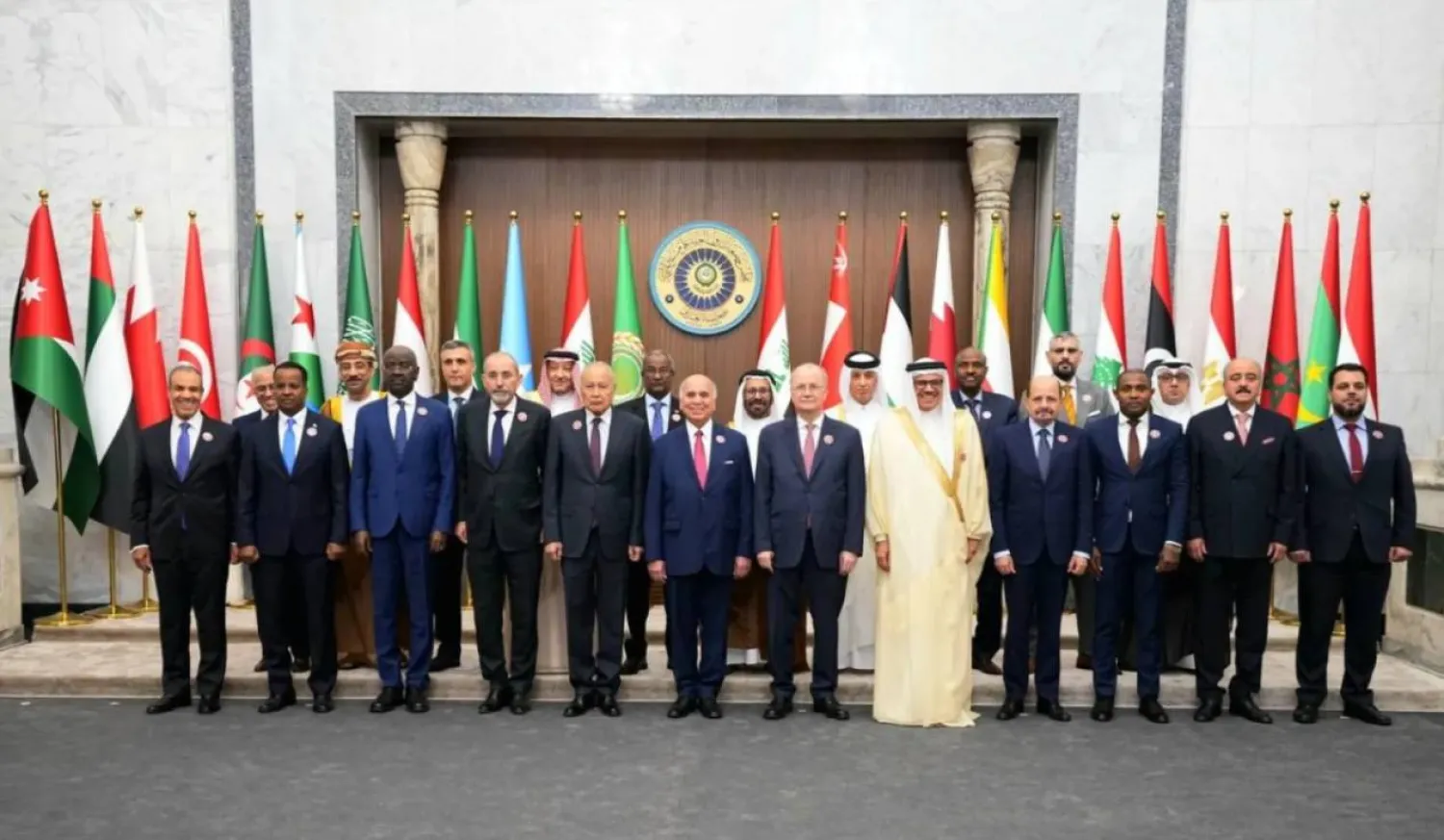
Meetings of Arab Foreign Ministers in Baghdad (Arab League)
TT

Baghdad Summit to Reject Palestinian Displacement at Home or Abroad

Meetings of Arab Foreign Ministers in Baghdad (Arab League)

Arab leaders meeting in Baghdad are expected to adopt decisions backing Syria’s new administration and firmly rejecting the displacement of Palestinians “whether within or outside their lands,” according to a draft document seen by Asharq Al-Awsat.

The unofficial document, which outlines resolutions set to be presented at the 34th Arab League Summit on Saturday, also includes a renewed condemnation of Iran’s construction of residential settlements aimed at resettling Iranians on the three disputed Emirati islands.

The draft includes seven key items, two of which are procedural, addressing the date of the next summit and other business matters. Spanning 93 pages, the document outlines a wide array of pan-Arab issues, placing the Palestinian cause at the forefront.

It reaffirms the “centrality” of the Palestinian issue and calls for intensified international efforts by both states and organisations to compel Israel to end its “illegal occupation” of Palestinian territory based on the June 4, 1967 borders.

It also condemns what it describes as “ongoing acts of aggression and genocide committed by Israel against the Palestinian people in Gaza and the West Bank.”

The draft urges the United Nations Security Council to adopt a resolution under Chapter VII of the UN Charter that would ensure Israel’s compliance with relevant council decisions, enforce an immediate ceasefire, halt acts of genocide, allow humanitarian aid into Gaza, and implement orders issued by the International Court of Justice.

It also calls for preventing any forced displacement of Palestinians from their homeland.

The proposed resolution underscores a “categorical rejection of any form of displacement of the Palestinian people – internally or externally – under any name, pretext, or circumstance.” It describes such actions as tantamount to genocide and a grave violation of international law.

It also urges the International Court of Justice to expedite its ruling on the case brought by South Africa and other supporting nations against Israel, accusing it of failing to meet its obligations under the 1948 Genocide Convention.

Further, the draft resolution calls on all states to cooperate with the International Criminal Court in executing arrest warrants issued for Israeli officials accused of committing crimes against Palestinians, actions the draft states fall under the court’s jurisdiction.

The document appeals to the United States to work “seriously and sincerely” with relevant parties to implement a two-state solution based on the 1967 borders, and to pressure Israel to end its occupation and halt unilateral measures that undermine such a solution.

It also urges Washington to reverse its “illegal” relocation of its embassy to occupied Jerusalem, reopen its consulate in East Jerusalem, revoke the designation of the Palestine Liberation Organization – the sole legitimate representative of the Palestinian people – as a terrorist organisation, and allow the reopening of the PLO’s diplomatic mission in Washington.

The resolution calls on the Arab Ministerial Committee in support of Palestine, chaired by Iraq as host of the summit, to continue its international efforts to help Palestine gain wider recognition and secure full membership at the United Nations, as well as push for the convening of an international peace conference.

Finally, it welcomes the proposal to host an international conference in Cairo as soon as possible to support Gaza’s recovery and reconstruction.



US Warning on Iraqi Militias Deepens Tensions with Baghdad

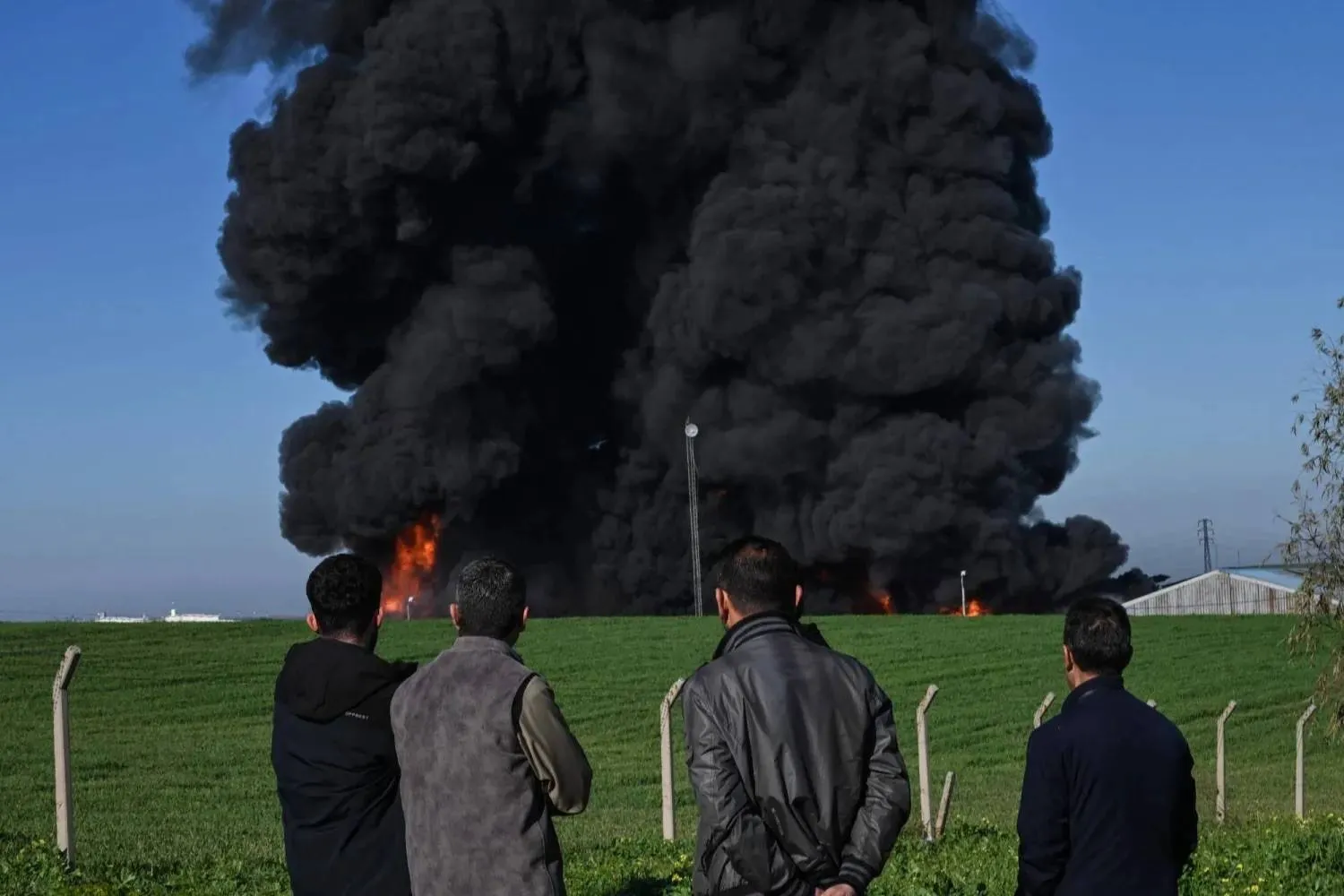
Iraqis inspect smoke rising from an oil storage facility on the outskirts of Erbil, the capital of Iraq’s Kurdistan region, following a suspected drone strike on April 1, 2026. (AFP) 
TT

US Warning on Iraqi Militias Deepens Tensions with Baghdad

Iraqis inspect smoke rising from an oil storage facility on the outskirts of Erbil, the capital of Iraq’s Kurdistan region, following a suspected drone strike on April 1, 2026. (AFP) 

Relations between Baghdad and Washington have entered a more tense phase after the US embassy issued sharp security warnings and questioned Iraq’s ability to prevent attacks on American interests.

The US embassy in Baghdad said Thursday that Iran-aligned Iraqi militias could carry out attacks in central Baghdad within 24 to 48 hours, urging US citizens to leave Iraq immediately.

It said potential attacks could target Americans and US-linked interests, including companies, universities, diplomatic facilities, energy infrastructure, hotels, and airports.

The warning came a day after the State Department announced a reward of up to $3 million for information leading to the identification of those responsible for attacks on US diplomatic facilities in Iraq.

In a separate statement issued hours earlier, the embassy said the Iraqi government “has not been able to prevent terrorist attacks” taking place inside Iraq or launched from its territory, referring to repeated incidents targeting the US embassy in Baghdad, the consulate general in Erbil, and a diplomatic support center in the capital.

It further noted that certain members of armed groups may possess identification documents indicating employment with the Iraqi government, suggesting potential institutional affiliations or official cover, though no additional details were provided.

The escalation comes less than a week after Iraq’s Joint Operations Command and US officials reaffirmed their commitment to keeping Iraq out of the ongoing regional conflict. They stressed that Iraqi territory, airspace, and territorial waters should not be used to threaten Iraq or neighboring countries.

At the same time, airstrikes targeted sites belonging to armed factions in Anbar and Nineveh provinces.

Local sources in Anbar said a US strike hit the headquarters of the Tribal Popular Mobilization Forces’ 57th Brigade in Haditha, west of the province. No immediate official toll on damage or casualties was released.

In Nineveh, the Popular Mobilization Forces (PMF) said a site belonging to the 38th Regiment of the 58th Brigade under Nineveh Operations Command was struck in Qayyarah, south of Mosul, with no casualties reported.

The PMF said the strike occurred at 11:30 a.m., adding it came less than 24 hours after another site in the same province was targeted. Earlier Thursday, it reported a double airstrike targeting the 4th Regiment of the 14th Brigade, also without casualties.

The repeated targeting of these sites in a short period point to a widening military escalation, coinciding with US warnings of possible attacks in Baghdad and underscoring growing security risks.

Politically, the State Administration Coalition — which includes Shiite, Sunni, and Kurdish parties in government — rejected “any violation of the country’s sovereignty under any pretext” and reiterated its refusal to allow Iraqi territory to be used to launch attacks on other states, particularly neighbors.

It also condemned attacks on state institutions, diplomatic missions, and vital facilities, voicing support for government and judicial efforts to enforce the law and restore stability.

Analysts say the combination of airstrikes and US warnings could increase pressure on Baghdad to take a clearer stance on armed factions and attacks originating from Iraqi territory.

A former Iraqi government adviser, speaking on condition of anonymity, said the embassy warning “signals declining confidence in Baghdad’s ability to take decisive action against armed groups.”

He said US policy had shifted “from giving the government room to maneuver to exerting direct pressure” to adopt a clearer position, warning that continued ambiguity could lead to further political and security pressure on Iraq.


Israeli Army Sets Gaza-style ‘Yellow Line’ in Lebanon amid Differences with Govt

The rubble of a destroyed building, seen from inside a heavily damaged building, after an Israeli strike, amid escalating hostilities between Israel and Hezbollah, as the U.S.-Israeli conflict with Iran continues, in Tyre, Lebanon, April 2, 2026. (Reuters)
TT

Israeli Army Sets Gaza-style ‘Yellow Line’ in Lebanon amid Differences with Govt

The rubble of a destroyed building, seen from inside a heavily damaged building, after an Israeli strike, amid escalating hostilities between Israel and Hezbollah, as the U.S.-Israeli conflict with Iran continues, in Tyre, Lebanon, April 2, 2026. (Reuters)

Israeli forces have advanced into Lebanon’s Ras al-Bayada area, a hilly region about 14 kilometers from the Galilee border overlooking the Litani River, with the army saying it plans to remain there for an extended, though temporary, period.

The move comes as tensions emerge between the military and the government over the scope of operations in southern Lebanon.

Families of several soldiers from the Nahal Infantry Brigade have written to Prime Minister Benjamin Netanyahu, Defense Minister Israel Katz and senior commanders, urging a reassessment of their sons’ deployment.

They warned that the “risks are unjustified due to a lack of air support” and cited rising casualties. “Remaining in Lebanon, under current conditions, exposes soldiers to danger in an extremely unreasonable way,” they said, calling for an urgent review and alternative strategies.

The government has advocated full control of South Lebanon and making the Litani River Israel’s new border. The army has rejected that approach, saying it will instead treat the Litani as a “line of fire,” monitored from what it calls a “yellow line” — a concept previously applied to the Gaza Strip border and viewed as temporary pending a withdrawal decision.

Tens of thousands of troops have been deployed to Lebanon under this framework.

The soldiers’ families said 13 people have been killed so far — 10 soldiers and three civilians — and 20 soldiers wounded. They added that “since most air force resources are currently devoted to Iran, soldiers in Lebanon are not receiving sufficient air support,” which they said was likely a key factor behind the casualties.

Debate over protecting northern civilians

Citing military sources, the families said one objective of the ground incursion is to draw Hezbollah fire toward Israeli troops rather than civilians in northern Israel.

While stressing the importance of protecting border communities, they argued this should not come at the direct expense of soldiers’ lives. “It is not legitimate to define drawing fire toward fighters as a war objective... without using all available tools to ensure their safety,” they wrote.

They suggested temporary alternatives, including evacuations or expanding shelters and fortified rooms in threatened areas.

“Exploiting our sons — young men who have been fighting for three years in a multi-front war — is a grave injustice,” they added, calling for accountability and an immediate review of operational decisions.

An Israeli report on Wednesday said Hezbollah is not currently capable of launching mass daily barrages toward central Israel, and that many recent projectiles have missed their targets.

However, it retains the ability to wage guerrilla warfare and target Israeli forces in southern Lebanon, where four divisions are operating.

According to Haaretz military analyst Amos Harel, Hezbollah is firing around 200 rockets and drones daily toward northern Israel and Israeli forces — more than many Israelis had expected at the start of the war.

He said the situation is “more complex” than official narratives suggest, adding that Hezbollah has used months of fighting and a ceasefire period since November 2024 to regroup and rebuild its capabilities.

A report in Maariv cited a senior officer who fought in the 2006 Lebanon war as saying current troop levels are insufficient for the political objectives being set.

“Promises of a decisive victory over Hezbollah do not match the reality on the ground,” he stated, warning of a repeat of past scenarios in which Israeli forces come under sustained anti-tank fire in exposed positions.

“A decisive outcome would require greater effort and larger forces,” he added, noting that the war with Iran and ongoing operations in the West Bank continue to stretch military resources.


Russia, Egypt Discuss Means to Secure Energy, Food Supplies

Russian President Vladimir Putin receives Egyptian Foreign Minister Badr Abdelatty in Moscow on Thursday. (Egyptian Foreign Ministry)
TT

Russia, Egypt Discuss Means to Secure Energy, Food Supplies

Russian President Vladimir Putin receives Egyptian Foreign Minister Badr Abdelatty in Moscow on Thursday. (Egyptian Foreign Ministry)

Egypt stressed on Thursday its keenness on developing its bilateral ties and strategic partnership with Russia, along with coordinating over regional and international affairs, most notably the impact of the war on Iran.

Russian President Vladimir Putin received in Moscow on Thursday Egyptian Foreign Minister Badr Abdelatty, who handed him a message from President Abdel Fattah al-Sisi that tackled bilateral ties and the strategic partnership between their countries.

The FM had arrived in Moscow on Wednesday on a visit aimed at exploring means to develop bilateral cooperation and exchange views on several regional issues.

Experts said the visit aimed at “bolster balances in alliances and secure energy and food supplies.”

During his talks with Abdelatty, Putin hailed the depth of Egyptian-Russian ties and the fruitful cooperation in all fields.

He praised the role Sisi is playing in leading mediation to ease the escalation, support security and stability in the Middle East and prevent the conflict from expanding, said the Egyptian Foreign Ministry.

Abdelatty and Putin discussed the “intense diplomatic efforts aimed at de-escalation in the Middle East.” They also tackled the outcomes of the ministerial meeting that was held in Pakistan earlier this week that brought together the foreign ministers of Saudi Arabia, Egypt, and Türkiye to discuss the conflict.

Calm and diplomacy are the best choices to avoid the expansion of the conflict, they stressed.

Sisi and Putin held telephone talks on Tuesday during which the former stressed the need for de-escalation in the Middle East.

Russia, with its international standing, can use its influence to end the war, he added.