


Palestinians to Raise Flag at WHO for 1st Time after Vote

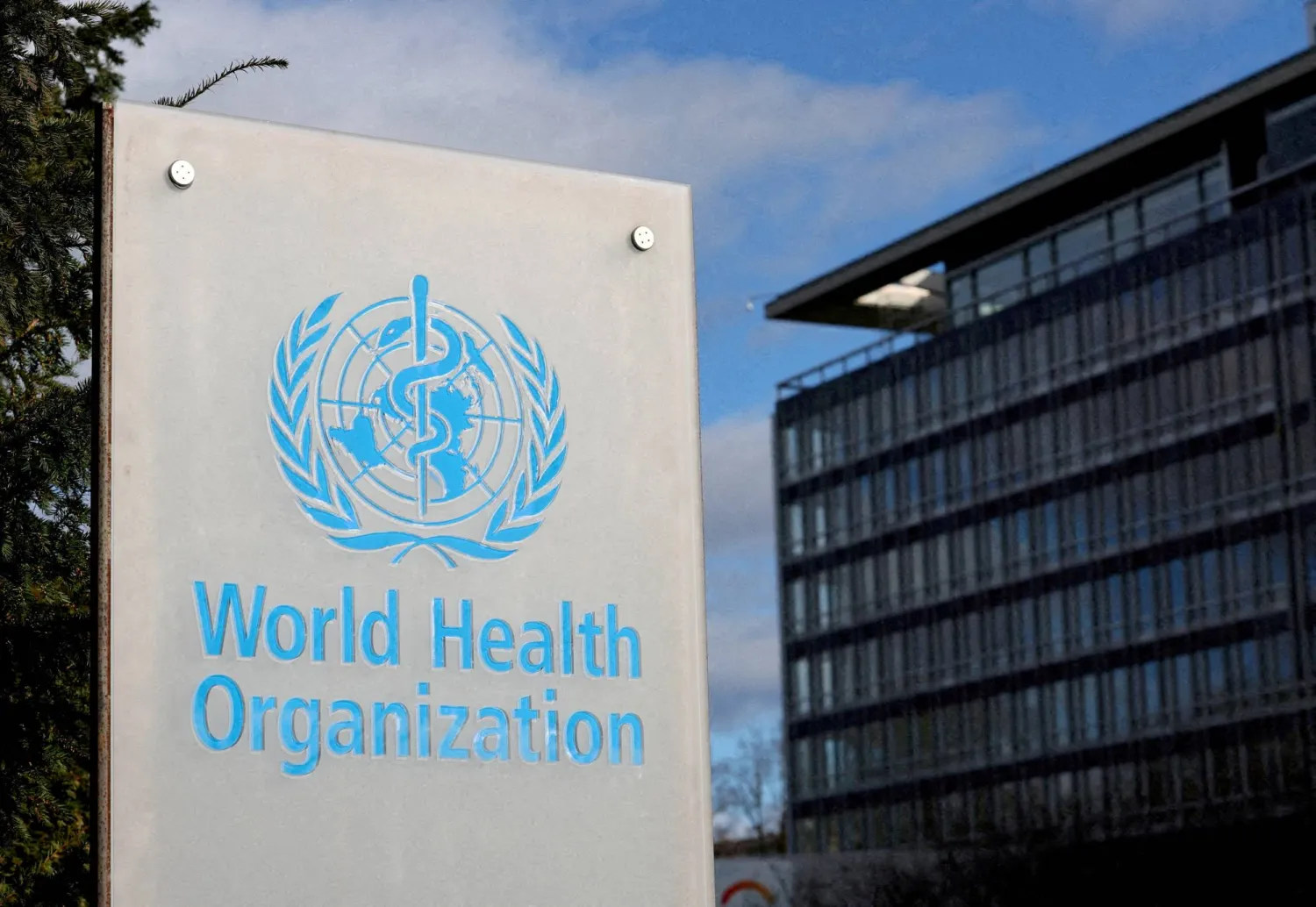
FILE PHOTO: The World Health Organization (WHO) headquarters in Geneva, Switzerland, January 28, 2025. REUTERS/Denis Balibouse/File Photo
TT

Palestinians to Raise Flag at WHO for 1st Time after Vote

FILE PHOTO: The World Health Organization (WHO) headquarters in Geneva, Switzerland, January 28, 2025. REUTERS/Denis Balibouse/File Photo

The Palestinian delegation won the right to fly their flag at the World Health Organization after a symbolic victory in a vote on Monday that its envoy hopes will lead to greater recognition within the United Nations and beyond.

The proposal, brought by China, Pakistan, Saudi Arabia and others, at the global agency's annual assembly in Geneva passed with 95 in favor and four against - Israel, Hungary, Czech Republic and Germany - and 27 abstentions.

It follows a successful Palestinian bid for membership of the UN General Assembly last year and comes amid signs that France could recognize a Palestinian state.

In apparent reference to the devastating Israel-Hamas war in Gaza, Lebanon's delegate Rana el Khoury said the vote's outcome provided "a small ray of hope for the brave Palestinian people whose suffering has reached unbearable levels".

Israel argued against the WHO resolution and called for a vote. Its main ally, the United States, which plans to exit the WHO, did not participate.

Even though almost 150 countries have recognized a Palestinian state, most major Western and other powers have not, including the United States, Britain, France, Germany and Japan.

France and Japan voted in favor of the proposal while Britain abstained.

"It is symbolic and one act but a sign that we are part of an international community to help on health needs," the Palestinian ambassador to the United Nations in Geneva, Ibrahim Khraishi, told Reuters. "I hope we will soon have full membership of the WHO and all UN forums."

Palestinians seek statehood in territories Israel captured in the 1967 Middle East war.

They have official observer state status at the WHO, which is currently undergoing a transformation as it looks ahead to life without its biggest donor the United States.

Last week, the Palestinians won the right to receive notifications under the WHO's International Health Regulations - a set of global rules for monitoring outbreaks.


UN Force in Lebanon Says Peacekeepers Fired Upon ‘Likely by Non-State Armed Groups’

United Nations peacekeepers with the UN Interim Force in Lebanon (UNIFIL) drive past a destroyed healthcare center building in the aftermath of an Israeli strike in the southern Lebanese town of Burj Qalawiya on March 14, 2026. (AFP)
TT

UN Force in Lebanon Says Peacekeepers Fired Upon ‘Likely by Non-State Armed Groups’

United Nations peacekeepers with the UN Interim Force in Lebanon (UNIFIL) drive past a destroyed healthcare center building in the aftermath of an Israeli strike in the southern Lebanese town of Burj Qalawiya on March 14, 2026. (AFP)

The United Nations Interim Force in Lebanon said its peacekeepers were fired upon three times on Sunday, "likely by non-state armed groups" in the country's south.

The incident came two days after a different UN position was hit by fire that official Lebanese media blamed on Israel, with UNIFIL saying it was investigating.

"Today, UNIFIL peacekeepers were fired upon, likely by non-state armed groups, on three separate occasions while conducting patrols around their bases" in south Lebanon, the force said in a statement.

In one of the locations, the fire struck "as close as five meters from the peacekeepers", it added.

"Two patrols returned fire in self-defense and after brief exchanges, the patrols resumed their planned activities. No peacekeeper was injured," the statement said.

"We strongly remind all actors of their obligations under international law to ensure the safety and security of UN personnel at all times."

Lebanon was drawn into the broader Middle East war on March 2, when the Tehran-backed group Hezbollah attacked Israel in retaliation for the killing of Iranian supreme leader Ali Khamenei in US-Israeli strikes.

Israel has since launched waves of air strikes on its northern neighbor and deployed troop into border areas, while Hezbollah has launched rockets and missiles towards Israeli territory and troops.

Lebanese state media said that Israeli fire hit a UNIFIL base in southern Lebanon on Friday.

UNIFIL spokesperson Kandice Ardiel said the position was hit "likely by heavy machine gun fire", without identifying the source, and said an investigation had been launched into the incident, which left one peacekeeper lightly wounded.

Earlier this month, three peacekeepers serving with a Ghanaian contingent were wounded in south Lebanon, with Lebanese President Joseph Aoun accusing Israel of being responsible and UNIFIL saying it would investigate.

On Saturday, during a visit to Beirut, UN chief Antonio Guterres said attacks against peacekeepers and their positions were "completely unacceptable and... may constitute war crimes".

UNIFIL has acted as a buffer between Israel and Lebanon since 1978. Its mission concludes at the end of this year.


WHO Releases $2 Million in Emergency Funds to Lebanon, Iraq and Syria

 A child poses for a photo, at a school hosting displaced people, following an escalation between Hezbollah and Israel, amid the US-Israeli conflict with Iran, in Lebaa, Lebanon, March 15, 2026. (Reuters)
A child poses for a photo, at a school hosting displaced people, following an escalation between Hezbollah and Israel, amid the US-Israeli conflict with Iran, in Lebaa, Lebanon, March 15, 2026. (Reuters)
TT

WHO Releases $2 Million in Emergency Funds to Lebanon, Iraq and Syria

 A child poses for a photo, at a school hosting displaced people, following an escalation between Hezbollah and Israel, amid the US-Israeli conflict with Iran, in Lebaa, Lebanon, March 15, 2026. (Reuters)
A child poses for a photo, at a school hosting displaced people, following an escalation between Hezbollah and Israel, amid the US-Israeli conflict with Iran, in Lebaa, Lebanon, March 15, 2026. (Reuters)

The World ‌Health Organization said on Sunday it had released $2 million from its Contingency Fund for Emergencies (CFE) to support the health response in Lebanon, Iraq and Syria amidst the ongoing crisis in the Middle East.

The conflict has triggered a large-scale population movement, the WHO ‌said last week, ‌estimating that more ‌than 100,000 ⁠people in Iran ⁠have relocated, and up to 700,000 people in Lebanon have been internally displaced.

$1 million has been allocated to Lebanon to strengthen the WHO's emergency coordination ⁠through the Public Health Emergency Operations ‌Center, scale ‌up trauma care, reinforce disease surveillance, ‌and procure and distribute essential ‌medicines and medical supplies, the agency said in a statement.

Iraq and Syria have each been allocated $500,000 to support emergency ‌coordination and mass-casualty management, procure and distribute essential medicines ⁠and ⁠supplies, provide health services for displaced populations, and strengthen disease surveillance and community outreach, it added.

"At a time when health services are already facing significant challenges, support is essential to sustain frontline health workers and maintain critical care services," Hanan Balkhy, WHO Regional Director for the Eastern Mediterranean said.


In Heavy Rain, Lebanese Fleeing War Huddle Under Makeshift Shelters

 A man secures a tent at sunset at a public space where people displaced by Israeli airstrikes have set up tents along the Beirut waterfront in Beirut, Lebanon, Sunday, March 15, 2026. (AP)
A man secures a tent at sunset at a public space where people displaced by Israeli airstrikes have set up tents along the Beirut waterfront in Beirut, Lebanon, Sunday, March 15, 2026. (AP)
TT

In Heavy Rain, Lebanese Fleeing War Huddle Under Makeshift Shelters

 A man secures a tent at sunset at a public space where people displaced by Israeli airstrikes have set up tents along the Beirut waterfront in Beirut, Lebanon, Sunday, March 15, 2026. (AP)
A man secures a tent at sunset at a public space where people displaced by Israeli airstrikes have set up tents along the Beirut waterfront in Beirut, Lebanon, Sunday, March 15, 2026. (AP)

Hussein Murtada and his ‌family are camping in the back of a small truck, a flimsy tarpaulin shielding them from a storm on Sunday, with no room left at shelters for displaced people in the southern Lebanese city of Sidon.

"We are putting tarp over it because we're soaked," said Murtada, using string to fasten the plastic sheet over the back of the truck parked on the seafront. Inside, an infant peered out, surrounded by pillows, blankets and other possessions.

"I asked here at the schools and they are full, they're all full," said Murtada, who fled the town of Hanawiya, some 12 km (8 miles) ‌from the ‌border with Israel, with his family of seven.

"What ‌should ⁠I ask for? ⁠I just want a shelter for me and the children," Murtada added.

More than 800,000 people, around 15% of Lebanon's population, have had to flee their homes since Israel began an offensive in the country after the Lebanese Hezbollah group opened fire at Israel in support of its ally Iran on March 2.

It has dragged Lebanon into the Middle East conflict just 15 months ⁠since the last Israel-Hezbollah war.

Only a fraction of ‌the displaced - some 132,000 according to Lebanese ‌authorities - are in collective shelters. The rest are scattered elsewhere, some with relatives, others ‌in half-finished buildings or host communities and many in the streets.

Mohammad Marie, ‌who fled the city of Nabatieh in southern Lebanon, has been sheltering under a tree on Beirut's seafront Corniche, protected by a plastic sheet before it was blown away.

"It might keep raining for a week, so where will I go? ‌I will stay here, what else can I do? I have no shelter except here, under this tree," ⁠Marie said, his ⁠clothes soaked through.

"I don't have a tent, I don't have anything, and my financial situation is very difficult. I have no money to rent a house," he said.

The United Nations launched a $308 million flash appeal on Friday to help Lebanon cope with the fallout of the war.

Israeli attacks have killed 850 people and wounded more than 2,100 others in Lebanon since March 2, including 107 children and 66 women, the Lebanese health ministry said on Sunday. Its toll does not say how many of the casualties were combatants.

Two Israeli soldiers have been killed in southern Lebanon, while no fatalities have been reported in Israel as a result of Hezbollah rocket and drone attacks since March 2.