


Lebanon: Hezbollah Displeased with Salam’s Stances

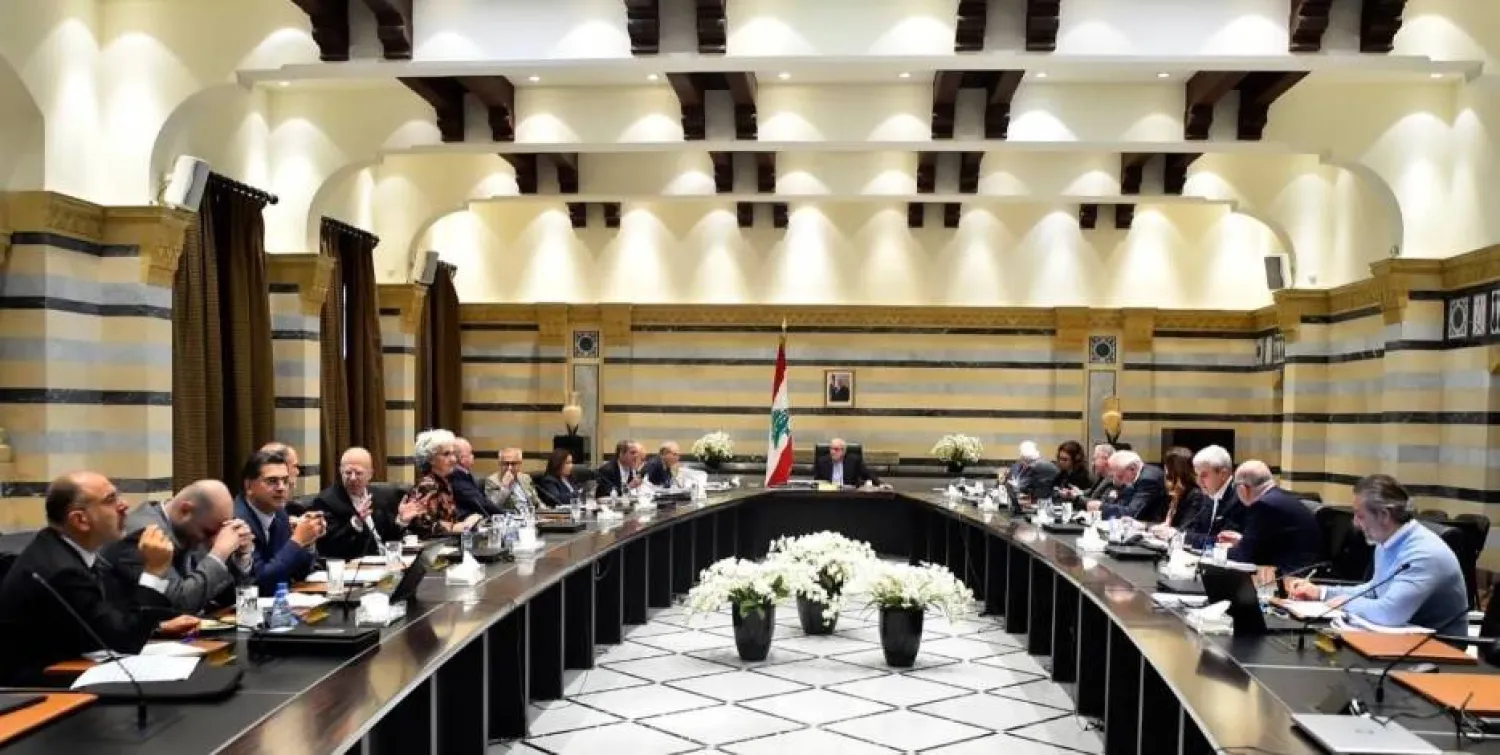
Prime Minister Nawaf Salam heads a cabinet session. Photo: The PM's office
TT

Lebanon: Hezbollah Displeased with Salam’s Stances

Prime Minister Nawaf Salam heads a cabinet session. Photo: The PM's office

Relations between Lebanese Prime Minister Nawaf Salam and Hezbollah were shaken after the PM said in a TV statement this week that he rejected to stay silent over illegitimate arms.

The head of Hezbollah’s parliamentary committee, Mohammed Raad, who headed a delegation to meet with President Joseph Aoun in Baabda Palace on Monday said: “I don’t want to comment on his (Salam’s) statement to preserve what remains of cordiality.”

Salam said in a TV interview on Monday night that he “rejected to stay silent on arms staying out of state control” adding that “the era of the Iranian revolution’s export has come to an end.”

Raad’s comment, which came in response to a reporter’s question, raised questions marks about relations between the Iran-backed party and Salam who, along with the President, has insisted on establishing a state monopoly on the control of arms.

But Hezbollah’s dissatisfaction goes beyond the issue of arms – the party has resented strict measures taken at Beirut’s Rafik Hariri International Airport that have prevented the transfer of cash to it, in addition to the delay in reconstruction following the latest war with Israel.

According to political analyst Kassem Kassir, Aoun’s stance on dialogue and the rejection of foreign pressure is better than that of the Prime Minister.

“It’s obvious that it (Hezbollah) is displeased with the PM, and that his latest comments made things worse,” Kassir told Asharq Al-Awsat. But Raad did not want to snap back at Salam “to keep channels of communication between the two sides open.”

Yet, ministerial sources told Asharq Al-Awsat that Salam “has come with a specific mission to carry out reforms and salvage the country, including limiting weapons to state control, in order to regain the confidence of the Lebanese people and the world, and attract investments and assistance that would not materialize” in the presence of such arms.

Asked about ties between Hezbollah and Salam, the sources denied that relations have taken a turn for the worse. “Yet, there is non-permanent communication between Salam and the party.”


US Delegation in Lebanon to Discuss Israel ‘Pilot Zone’ Withdrawal, Says Official

A vehicle that was reportedly damaged by an Israeli strike is pictured in the southern Lebanese village of Kfar Rumman on July 10, 2026. (AFP)
TT

US Delegation in Lebanon to Discuss Israel ‘Pilot Zone’ Withdrawal, Says Official

A vehicle that was reportedly damaged by an Israeli strike is pictured in the southern Lebanese village of Kfar Rumman on July 10, 2026. (AFP)

A US military delegation met with Lebanon's army in Beirut to discuss the implementation of Israel's withdrawal from a "pilot zone" in occupied territory, a Lebanese military official told AFP on Saturday.

Under a framework agreement reached on June 26, Israel will gradually withdraw from areas of southern Lebanon where it has deployed troops to fight the Iran-backed Hezbollah party.

As part of the agreement, the long-disempowered Lebanese military will take full control of two small areas dubbed pilot zones.

"The American military delegation arrived and began meetings with the Lebanese army command to discuss the mechanisms for implementing the first pilot zone from which the Israelis will withdraw, allowing the Lebanese army to deploy," the official said, requesting anonymity.

"This is the main objective the American military delegation is bringing to Lebanon... it is the translation and implementation of the framework agreement."

US Ambassador Michel Issa told President Joseph Aoun on Thursday that the American delegation was coming to "determine the mechanism" for the deal's implementation.

In Washington, a US official had said on condition of anonymity that "the first pilot zone will launch in a matter of days, and further pilot zones are being mapped out and planned".

US Central Command will coordinate on the zones with both countries, he said.

The agreement -- rejected by Hezbollah -- does not set a timetable for Israel's withdrawal, and Israeli officials have also vowed that their forces will remain in a "security zone" 10 kilometers (six miles) deep as long as Hezbollah remains armed.

The war, which began in early March when Hezbollah entered the wider Middle East conflict on the side of its backer Iran, displaced more than a million people in Lebanon, according to the UN's humanitarian agency OCHA.

On Saturday, the agency said more than 732,000 people had now returned home, up from 640,000 a week before.

That leaves more than 430,000 still displaced, it added.

Israel has pursued intermittent strikes despite a truce in its war with Hezbollah, with Lebanon's state-run National News Agency reporting several in the south on Saturday.

The latest talks between Lebanon and Israel, which have no formal relations but have met for five rounds of negotiations since the start of the war, will take place in Rome next Wednesday and Thursday.

Lebanon conditions its participation on Israel withdrawing from two pilot zones.

The talks precede Aoun's expected visit to Washington later this month at the invitation of his American counterpart Donald Trump.


Iraqis Protest Over Power Cuts in Sweltering Summer Heat

Demonstrators gather as they take part in a protest over unemployment, corruption and poor public services, in Baghdad, Iraq October 2, 2019. (Reuters)
TT

Iraqis Protest Over Power Cuts in Sweltering Summer Heat

Demonstrators gather as they take part in a protest over unemployment, corruption and poor public services, in Baghdad, Iraq October 2, 2019. (Reuters)

Hundreds of residents of an eastern Iraqi city protested on Saturday against power cuts during extreme summer heat, an AFP correspondent said.

Temperatures in the city of Kut have peaked at 44C, with residents organizing protests to urge authorities to boost electricity supply.

Decades of war have left Iraq's infrastructure in a pitiful state, with power failures worsening blistering summers.

On Friday night, hundreds of protesters took to the streets with dozens hurling stones at security forces, who responded by firing tear gas and detaining more than 30 people, according to an AFP correspondent.

The clashes lasted until early morning.

Two local health officials told AFP on condition of anonymity that more than 50 police officers were injured.

It is unclear how many protesters were wounded, with one source estimating the number at around 30.

Protesters have likely avoided reporting themselves to hospital for fear of arrest, a health official said.

Demonstrations against power cuts are frequent in Iraq, especially during the scorching summer months, when temperatures often reach 50C.

In the oil-rich country, many households have just a few hours of state electricity per day, and those who can afford it use private generators to keep fridges and air conditioners running.

Iraq is the second-largest oil producer in the OPEC cartel, but despite its immense oil and gas reserves, it remains dependent on imports to meet its electricity needs.


Egyptian Source to Asharq Al-Awsat: Cairo Hosts Egyptian-Israeli Talks to Avert Renewed Gaza War

Palestinians inspect the site of an Israeli strike on a vehicle in Gaza City, July 9, 2026. (Reuters)
TT

Egyptian Source to Asharq Al-Awsat: Cairo Hosts Egyptian-Israeli Talks to Avert Renewed Gaza War

Palestinians inspect the site of an Israeli strike on a vehicle in Gaza City, July 9, 2026. (Reuters)

An Egyptian source familiar with the Gaza ceasefire negotiations told Asharq Al-Awsat that Egyptian and Israeli delegations met in Cairo in recent hours as part of intensive efforts to prevent complications that could jeopardize the ceasefire in the Gaza Strip.

On Thursday evening, Israel’s public broadcaster reported that a delegation of senior Israeli military officers had arrived in Cairo and held talks over the previous two days with senior Egyptian military officials on advancing to the second phase of the Gaza ceasefire agreement.

The meeting coincided with the presence in Cairo of a Hamas delegation led by Khalil al-Hayya, which is holding talks with mediators on preserving the Gaza agreement signed in October.

The Egyptian source said a US delegation is expected to arrive in Cairo for consultations on Gaza and continued talks with Hamas in an effort to salvage mediation. The source added that there are growing indications Israeli Prime Minister Benjamin Netanyahu may resume the war for electoral gain.

According to the source, the Cairo talks focused on proposals presented last week that Hamas had rejected. The Israeli delegation conveyed a message it had delivered to Nickolay Mladenov, the High Representative for the Board of Peace, warning that if current efforts based on revised draft proposals fail, Israel will move ahead with military operations inside Gaza.

Over the past three months, Mladenov has put forward proposals centered on disarming Gaza as a prerequisite for reconstruction. Hamas has objected, insisting that the remaining commitments of the agreement’s first phase, particularly an Israeli withdrawal, be implemented first.

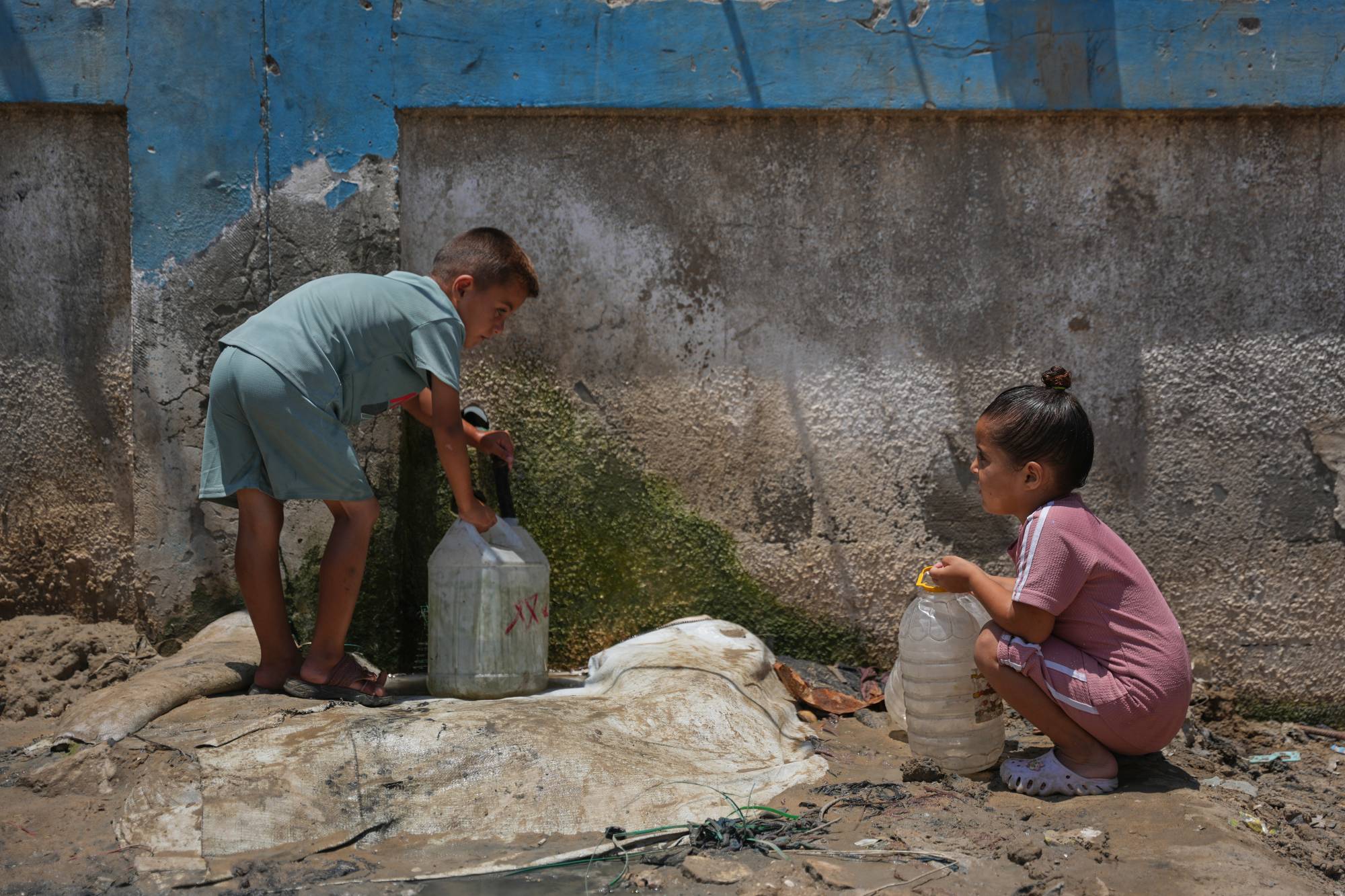
Displaced Palestinian children refill water containers in Deir al-Balah, central Gaza Strip, Saturday July 4, 2026. (AP)

The source said the Israeli delegation reiterated that Hamas must comply with the agreement, foremost by accepting the proposed disarmament formula.

Mediators are consulting Hamas on accepting a clear and direct text to be conveyed to Mladenov to move the process forward and avert renewed Israeli military action.

The source also warned of mounting indications that Netanyahu could opt for military escalation ahead of elections expected in the coming months, citing opinion polls showing stronger support for rivals including Gadi Eisenkot and Naftali Bennett.

The source added that Mladenov has refused to amend the current proposals and continues to insist that Hamas engage with them seriously.

According to the source, the Israeli delegation expressed its willingness to cooperate with Egypt’s “responsible efforts,” while warning that Hamas’s intransigence would inevitably lead to renewed confrontation.

The source said Egypt’s decision to host the Israeli delegation despite regional tensions reflects Cairo’s openness to all parties and its determination to bridge differences.

Egypt is engaging all sides, the source added, because of the worsening humanitarian situation and fears that renewed fighting would lead to further targeted killings of field commanders and a broader deterioration on the ground.

A US delegation may soon arrive in Cairo for further consultations.

Egypt is coordinating closely with Türkiye and Qatar to maximize pressure on the Israeli government, according to the source. Cairo also plans contacts with Washington aimed at ensuring US adherence to the existing peace framework and preventing alternative tracks or new proposals from Mladenov that could further complicate negotiations.

The source did not rule out Hamas continuing to play for time while monitoring US-Iran developments and awaiting the outcome of its internal elections, potentially delaying major decisions and leaving negotiations in limbo.

Even so, the source said Egypt is racing against time to prevent renewed Israeli military action as Israeli elections and the US midterm elections approach, warning that both could derail diplomatic efforts.
