
US Sanctions on Sudan Over Alleged Chemical Weapons Use Take Effect

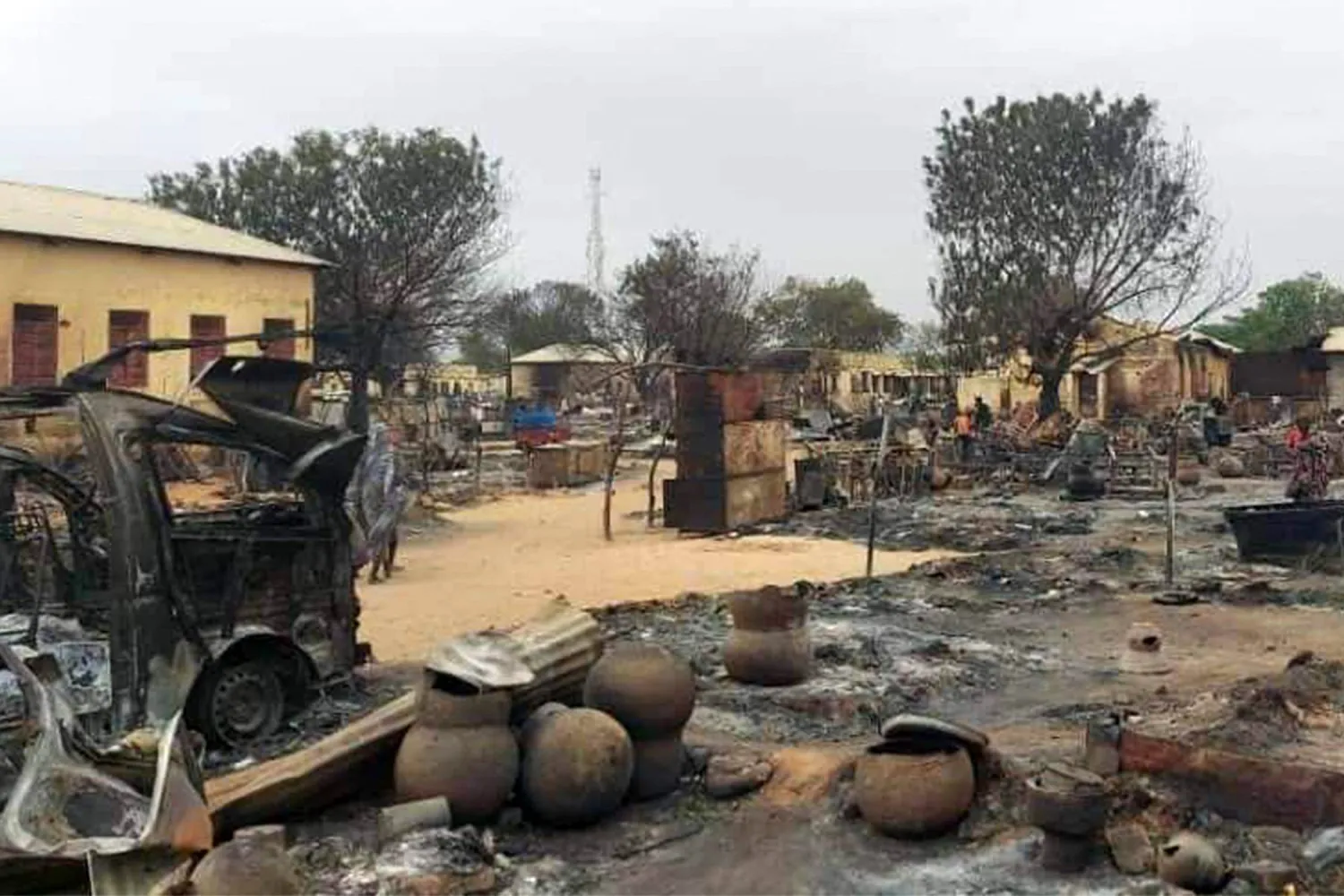
AFP file photo showing the destruction caused by the fighting in El Fasher, the capital of North Darfur State
TT

US Sanctions on Sudan Over Alleged Chemical Weapons Use Take Effect

AFP file photo showing the destruction caused by the fighting in El Fasher, the capital of North Darfur State

Friday marked the start of sweeping US sanctions imposed on Sudan, following accusations that the Sudanese army deployed chemical weapons during its conflict against the Rapid Support Forces (RSF).

The US State Department announced it had obtained credible evidence confirming the Sudanese government’s use of lethal chemical and biological weapons against civilians, an act it described as a flagrant violation of international law.

Under the Chemical and Biological Weapons Control and Warfare Elimination Act, the sanctions immediately suspend nearly all US assistance to Sudan, excluding only emergency humanitarian aid.

The measures include an outright ban on defense-related sales and financing, the denial of access to any US government funding - including loans or credits from the Export-Import Bank - and restrictions on the export of sensitive goods and technologies tied to national security.

While humanitarian aid remains exempt, each case will undergo individual review. The sanctions also carve out exceptions for exports to civilian airlines and US businesses operating in Sudan. Officials indicated the measures would remain in place for at least a year, subject to renewal.

Last month, State Department spokesperson Tammy Bruce revealed that Washington had concluded Sudanese forces used chemical weapons earlier in 2024 and had formally notified Congress before enacting the penalties.

Sudanese authorities have so far issued no official response, though the Ministry of Information previously rejected the allegations as “baseless political blackmail,” claiming that US interventions “lack moral and legal foundation” and have eroded Washington’s credibility in Sudan.

Since April 2023, Sudan has been engulfed in a brutal war between the army, led by General Abdel Fattah al-Burhan, and the RSF, commanded by Mohamed Hamdan Dagalo, widely known as “Hemedti.” The fighting has killed tens of thousands and displaced over 13 million people, according to UN estimates.

In recent weeks, RSF units have subjected the city of El Fasher, the capital of North Darfur, to relentless artillery and drone attacks targeting army positions, resulting in heavy civilian casualties. UN Secretary-General Antonio Guterres has appealed to Sudan’s leadership to agree to a humanitarian ceasefire to allow aid deliveries to besieged areas.

Meanwhile, the UN Security Council has warned that the conflict is driving Sudan toward a humanitarian catastrophe. Fighting in Darfur and Kordofan has intensified, with all sides vying to secure territorial gains.

Martha Pobee, Assistant Secretary-General for African Affairs, briefed the Council, citing a surge in extrajudicial killings, sexual violence against women, child recruitment, and attacks on humanitarian workers.

She urged the Council to press for an immediate humanitarian truce in El Fasher to protect civilians and facilitate aid, while calling on the UN envoy to Sudan to use diplomatic leverage to de-escalate the crisis.

Diplomats from the UK, Russia, South Korea, and Greece also sounded alarms over the deteriorating humanitarian situation, noting that Sudan now faces the largest displacement crisis in Africa’s recent history.

Sudan’s UN representative defended government efforts to secure humanitarian corridors and support voluntary returns, stating that 350,000 families have already gone back to their homes in ten states.


UN Condemns Israel's Moves against Agency for Palestinian Refugees

UNRWA center targeted by Israeli shelling in northern Gaza (DPA)
TT

UN Condemns Israel's Moves against Agency for Palestinian Refugees

UNRWA center targeted by Israeli shelling in northern Gaza (DPA)

The United Nations warned Tuesday that recent actions by Israel against the UN agency for Palestinian refugees risked depriving millions of people of basic services such as education and healthcare.

Israel's parliament passed new legislation on Monday formally stripping the United Nations Relief and Works Agency (UNRWA) of diplomatic immunity, and barring Israeli companies from providing water or electricity to the agency's institutions, AFP reported.

According to UNRWA, the legislation also grants the Israeli government the authority to expropriate the agency's properties in East Jerusalem, including its headquarters and main vocational training center.

UNRWA chief Philippe Lazzarini condemned the legislation as "outrageous", decrying it on social media as "part of an ongoing, systematic campaign to discredit UNRWA and thereby obstruct the core role that the agency plays providing human-development assistance and services to Palestine refugees".

Filippo Grandi, the outgoing head of the UN refugee agency, UNHCR, and a former UNRWA chief, also criticised the move as "very unfortunate".

In an interview with AFP, he highlighted that UNRWA, unlike other UN agencies, provides basic public services such as education and healthcare to the millions of registered Palestinian refugees it serves across Gaza and the West Bank, as well as in Lebanon, Jordan and Syria.

"If you deprive those people of those services... then you had better find a substitute," he said, warning: "I think it would be very difficult."

"At the moment, there is a great risk that millions of people will be deprived of basic services if UNRWA is further deprived of space to work, and resources to work."

Israel has been ratcheting up pressure on UNRWA over the past two years.

It has accused the agency of providing cover for Hamas militants, claiming that some UNRWA employees took part in the militant group's October 7, 2023 assault on Israel, which sparked the war in Gaza.

A series of UN-linked internal and external investigations found some "neutrality-related issues" at UNRWA, but stressed Israel had not provided conclusive evidence for its headline allegation.

Grandi criticised the torrent of accusations that have swirled around the agency.

"UNRWA is a very indispensable organization in the Middle East," he said.

"Contrary to much of the frankly baseless rhetoric that we have heard in the past couple of years, UNRWA is a force for peace and stability," he added.

"In a region in which you need every bit of stability and efforts towards peace, it would be really irresponsible to let such an important organization decline further."


Syria Imposes Night Curfew on Port City of Latakia

People watch as Syrian Security forces are deployed after clashes erupted during a protest in the city of Latakia, Syria, 28 December 2025. EPA/AHMAD FALLAHA
TT

Syria Imposes Night Curfew on Port City of Latakia

People watch as Syrian Security forces are deployed after clashes erupted during a protest in the city of Latakia, Syria, 28 December 2025. EPA/AHMAD FALLAHA

Syrian authorities imposed an overnight curfew in the coastal city of Latakia on Tuesday.

Authorities announced a "curfew in Latakia city, effective from 5:00pm (1400 GMT) on Tuesday, December 30, 2025, until 6:00am (0300 GMT) on Wednesday, December 31, 2025".


Jailed Turkish Kurd Leader Calls on Government to Broker Deal for Syrian Kurds

(FILES) Supporters display a poster depicting jailed leader of the Kurdistan Workers' Party (PKK) Abdullah Ocalan, after he called on the Kurdistan Workers' Party (PKK) to disarm and dissolve itself in Diyarbakir, southeastern Türkiye, on February 27, 2025. (Photo by Yasin AKGUL / AFP)
TT

Jailed Turkish Kurd Leader Calls on Government to Broker Deal for Syrian Kurds

(FILES) Supporters display a poster depicting jailed leader of the Kurdistan Workers' Party (PKK) Abdullah Ocalan, after he called on the Kurdistan Workers' Party (PKK) to disarm and dissolve itself in Diyarbakir, southeastern Türkiye, on February 27, 2025. (Photo by Yasin AKGUL / AFP)

Jailed Turkish Kurd leader Abdullah Ocalan said Tuesday that it was "crucial" for Türkiye’s government to broker a peace deal between the Kurdish-led Syrian Democratic Forces (SDF) and the Damascus government.

Clashes between Syrian forces and the SDF have cast doubt over a deal to integrate the group's fighters into the army, which was due to take effect by the end of the year, reported AFP.

Ocalan, founder of the Kurdistan Workers' Party (PKK) group, called on Türkiye to help ensure implementation of the deal announced in March between the SDF and the Syrian government.

"It is essential for Türkiye to play a role of facilitator, constructively and aimed at dialogue," he said in a message released by Türkiye's pro-Kurdish DEM party.

"This is crucial for both regional peace and to strengthen its own internal peace," Ocalan, who has been jailed for 26 years, added.

"The fundamental demand made in the agreement signed on March 10 between the SDF and the government in Damascus is for a democratic political model permitting (Syria's) peoples to govern together," he added.

"This approach also includes the principle of democratic integration, negotiable with the central authorities. The implementation of the March 10 agreement will facilitate and accelerate that process."

The backbone of the US-backed SDF is the YPG, a Kurdish group seen by Türkiye as an extension of the PKK.

Türkiye and Syria both face long-running unrest in their Kurdish-majority regions, which span their shared border.

In Türkiye, the PKK agreed this year at Ocalan's urging to end its four-decade armed struggle.

In Syria, Sharaa has agreed to merge the Kurds' semi-autonomous administration into the central government, but deadly clashes and a series of differences have held up implementation of the deal.

The SDF is calling for a decentralized government, which Sharaa rejects.

Turkish Foreign Minister Hakan Fidan, whose country sees Kurdish fighters across the border as a threat, urged the SDF last week not to be an "obstacle" to stability.

Syrian Kurdish leader Mazloum Abdi said Thursday that "all efforts" were being made to prevent the collapse of talks.