


Israeli Likud Party Ministers Urge Netanyahu to Annex West Bank

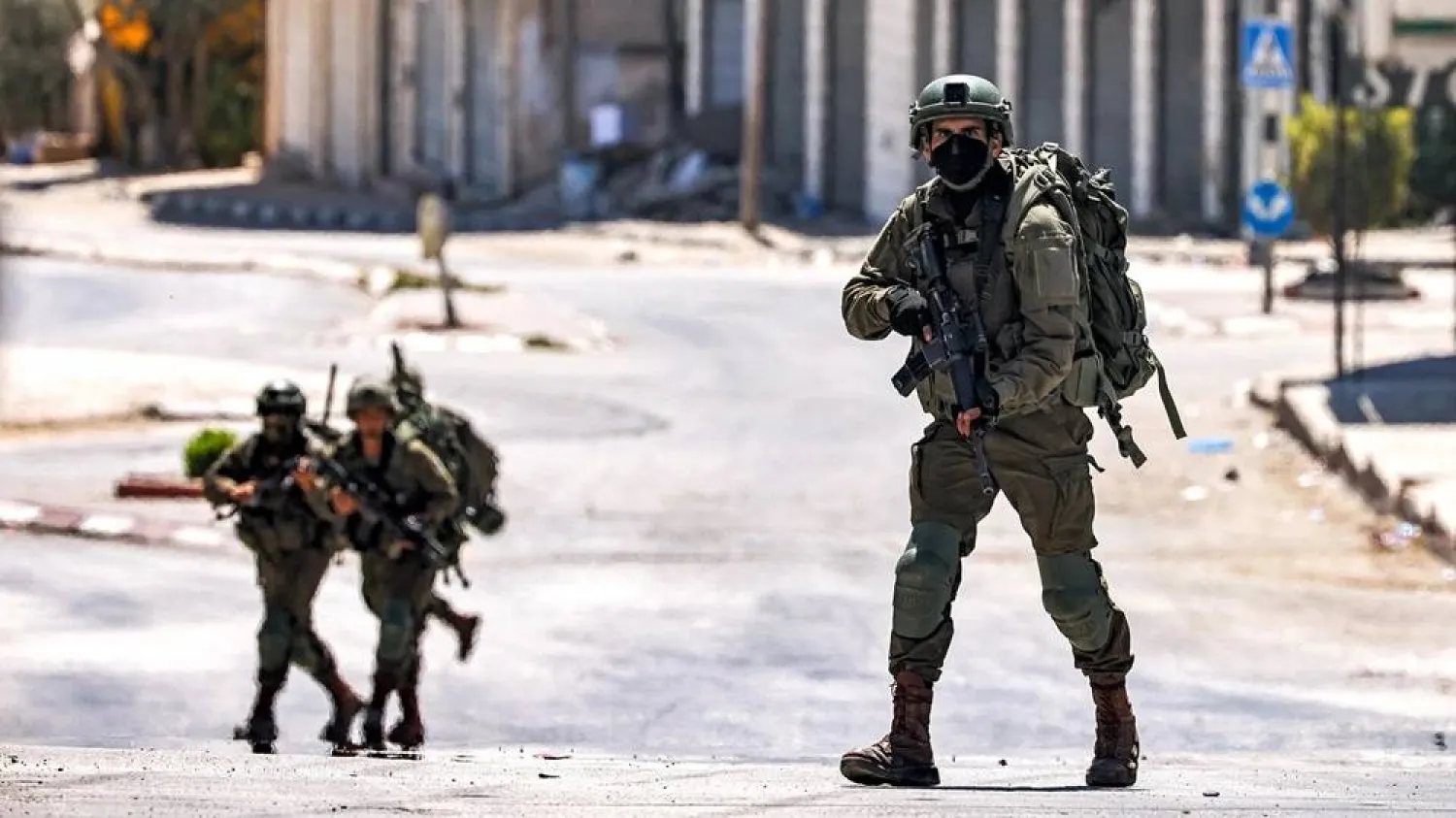
Israeli soldiers in Tubas in the north of the occupied West Bank on September 11, 2024. (AFP)
TT

Israeli Likud Party Ministers Urge Netanyahu to Annex West Bank

Israeli soldiers in Tubas in the north of the occupied West Bank on September 11, 2024. (AFP)

Cabinet ministers in Prime Minister Benjamin Netanyahu's Likud party called on Wednesday for Israel to annex the Israeli-occupied West Bank before the Knesset recesses at the end of the month.

They issued a petition ahead of Netanyahu's meeting next week with US President Donald Trump, where discussions are expected to center on a potential 60-day Gaza ceasefire and hostage release deal with Hamas.

The petition was signed by 15 cabinet ministers and Amir Ohana, speaker of the Knesset, Israel's parliament.

There was no immediate response from the prime minister's office. Strategic Affairs Minister Ron Dermer, long a confidant of Netanyahu, did not sign the petition. He has been in Washington since Monday for talks on Iran and Gaza.

"We ministers and members of Knesset call for applying Israeli sovereignty and law immediately on Judea and Samaria," they wrote, using the biblical names for the West Bank captured by Israel in the 1967 Middle East war.

Their petition cited Israel's recent achievements against both Iran and Iran's allies and the opportunity afforded by the strategic partnership with the US and support of Trump.

It said the October 7, 2023, Hamas-led attack on Israel demonstrated that the concept of Jewish settlement blocs alongside the establishment of a Palestinian state poses an existential threat to Israel.

"The task must be completed, the existential threat removed from within, and another massacre in the heart of the country must be prevented," the petition stated.

Most countries regard Jewish settlements in the West Bank, many of which cut off Palestinian communities from one another, as a violation of international law.

With each advance of Israeli settlements and roads, the West Bank becomes more fractured, further undermining prospects for a contiguous land on which Palestinians could build a sovereign state long envisaged in Middle East peacemaking.

Israel's pro-settler politicians have been emboldened by the return to the White House of Trump, who has proposed Palestinians leave Gaza, a suggestion widely condemned across the Middle East and beyond.



Egypt, Syria Boost Rapprochement Through Reconstruction, Economic Cooperation

Egyptian Foreign Minister Badr Abdelatty with his Syrian counterpart Asaad al-Shaibani during a meeting in New York last September. (Egyptian Foreign Ministry)
TT

Egypt, Syria Boost Rapprochement Through Reconstruction, Economic Cooperation

Egyptian Foreign Minister Badr Abdelatty with his Syrian counterpart Asaad al-Shaibani during a meeting in New York last September. (Egyptian Foreign Ministry)

Egypt and Syria are seeking to strengthen bilateral cooperation and expand economic and trade partnerships, following a series of visits and meetings at various levels in recent weeks.

Egypt’s Foreign Minister Badr Abdelatty stressed his country’s “commitment to actively contributing to efforts to rebuild Syria.”

In a phone call with his Syrian counterpart, Asaad al-Shaibani, he highlighted the importance of building on the results of a recent visit by an Egyptian economic delegation to Damascus and following up on its outcomes in a way that serves the interests of both countries, according to a statement Thursday by Egypt’s Foreign Ministry.

In January, Damascus hosted the first Egyptian-Syrian Economic and Investment Forum, with the participation of 26 leaders from Egyptian chambers of commerce and the business community. The forum aimed to establish effective partnerships between the two countries’ commercial institutions and explore prospects for cooperation in trade, industry, services, infrastructure and reconstruction.

The Federation of Egyptian Chambers of Commerce said the forum sought to create Syrian-Egyptian-European alliances through the Union of Mediterranean Chambers, as well as to promote Syrian exports to Africa via the Federation of African Chambers.

During their call, Abdelatty and Shaibai also discussed ways to advance and develop bilateral relations across various fields, particularly in the economic and trade sectors.

Meanwhile, Syria’s Minister of Economy and Industry Nidal al-Shaar met with Egypt’s chargé d’affaires in Damascus, Ambassador Osama Khadr, to discuss ways to develop economic relations and partnerships.

According to the Syrian Arab News Agency (SANA), the talks addressed opportunities to expand economic cooperation, boost trade exchange and enhance collaboration across multiple sectors.

Al-Shaar stressed the importance of strengthening economic ties between Syria and Egypt and activating areas of cooperation in a way that serves mutual interests and supports market activity in both countries.

Former Egyptian assistant foreign minister Youssef El-Sharkawy said Egyptian-Syrian rapprochement is primarily driven by economic considerations.

Existing trade agreements between the two countries need to be activated to enhance cooperation, he remarked, adding that Cairo has continued to support Damascus both politically and economically.

In remarks to Asharq Al-Awsat, El-Sharkawy said economic cooperation represents a key avenue for strengthening rapprochement and improving political understanding, particularly amid evolving regional dynamics that require ongoing coordination with all parties.

Egypt remains committed to supporting the stability and sovereignty of Syria and its neighbors, especially Lebanon, he stressed.

According to Egypt’s Foreign Ministry, the call between Abdelatty and Shaibani also addressed the volatile regional situation amid escalating military tensions. Abdelatty pointed to Egyptian and regional efforts to contain tensions and de-escalate developments linked to Iran.

There has been progress in economic and trade cooperation between the two countries, according to Ayman El-Ashry, head of the Cairo Chamber of Commerce, who noted that the Syrian government is offering significant incentives to Egyptian investors.

Syrian President Ahmad al-Sharaa also met with an Egyptian business delegation during its January visit to Damascus, expressing appreciation for Egypt’s support, including its hosting of Syrian refugees during its civil war.

The World Bank estimates the cost of rebuilding Syria at around $216 billion, including $75 billion for housing, $59 billion for non-residential buildings and $82 billion for infrastructure.


No ‘Positive Signs’ as Israel Refuses to Tie Ending War on Lebanon to Iran

 In this photo released by the Lebanese Presidency press office, Lebanese President Joseph Aoun, right, shakes hands with Egyptian Foreign Minister Badr Abdelatty in Baabda, east of Beirut, Lebanon, Thursday, March 26, 2026. (Lebanese Presidency press office via AP)
In this photo released by the Lebanese Presidency press office, Lebanese President Joseph Aoun, right, shakes hands with Egyptian Foreign Minister Badr Abdelatty in Baabda, east of Beirut, Lebanon, Thursday, March 26, 2026. (Lebanese Presidency press office via AP)
TT

No ‘Positive Signs’ as Israel Refuses to Tie Ending War on Lebanon to Iran

 In this photo released by the Lebanese Presidency press office, Lebanese President Joseph Aoun, right, shakes hands with Egyptian Foreign Minister Badr Abdelatty in Baabda, east of Beirut, Lebanon, Thursday, March 26, 2026. (Lebanese Presidency press office via AP)
In this photo released by the Lebanese Presidency press office, Lebanese President Joseph Aoun, right, shakes hands with Egyptian Foreign Minister Badr Abdelatty in Baabda, east of Beirut, Lebanon, Thursday, March 26, 2026. (Lebanese Presidency press office via AP)

Lebanese President Joseph Aoun reiterated on Thursday the need for the state to impose its authority throughout its territories and impose monopoly over weapons as part of an initiative to launch direct negotiations with Israel to end the war.

Egyptian Foreign Minister Badr Abdelatty said that his country was carrying out “intense” contacts, including relaying messages between Iran and the United States, and communicating with Israel, to ease the tensions and prevent the regional conflict from expanding.

Abdelatty was in Beirut where he met with Aoun and several officials as part of Egypt’s efforts to support Lebanon and contain the regional and international escalation.

He conveyed to Aoun President Abdel Fattah al-Sisi's support and “full solidarity with Lebanon, its leadership and people.”

He stressed that Egypt stands by Lebanon during its plight.

“Cairo will not spare an effort to offer political, diplomatic and humanitarian support and it is constantly working with various concerned parties to ease the tensions and avert a deterioration,” added the FM.

‘Unencouraging’ signs

Sources monitoring Abdelatty’s meetings in Beirut said the signs were “unencouraging” and that the political and military circumstances “are not positive” when it comes to Lebanon, especially with Israeli Prime Minister Benjamin Netanyahu’s refusal that the war on Lebanon be included in US-Iran negotiations on ending the regional conflict.

He is insisting on his position to eliminate Hezbollah regardless if a ceasefire is reached between Washington and Tehran, said the sources, meaning the war on Lebanon will stretch on.

They warned that the Lebanese front may witness further escalation in the coming phase.

Abdelatty echoed these concerns, telling reporters in Lebanon that “diplomacy continues, but it has not reached tangible results.”

“Some sides are seeking calm and exploring the possibility of negotiations, so progress may be achieved in the future,” he revealed.

Aoun

Aoun underscored his initiative aimed at ending the military escalation and the Israeli occupation of southern regions, as well as the Lebanese state imposing its authority throughout its territories.

The initiative is based on consolidating security and stability across Lebanon’s borders and preventing any armed presence outside the state, he added. Illegal weapons will be seized to ensure state monopoly over arms and that it alone has control over decisions of war and peace.

“Lebanon does not want to be an arena for the wars of others,” he declared. “Lebanon’s official position reflects a clear desire to keep the country out of regional conflicts.”

He warned that Israel’s failure to respond to his proposal means that the military escalation will continue, deepening the suffering of the people, especially those in the South.

“The Lebanese people are united in refusing to be dragged to civil war,” Aoun added. The army and security forces are carrying out their duties in preserving civil peace and protecting the people, especially the displaced in shelters.

Referring to the continued escalation, he lamented that “might is still prevailing over reason.”

Humanitarian aid

Abdelatty announced that Egypt has sent nearly a 1,000 tons of humanitarian aid to Lebanon that include medical and food products and shelters for the displaced.

“The aid reflects the Egyptian people’s solidarity with the Lebanese people and their keenness on easing their suffering,” the FM stressed.

“Egypt is ready to meet all the demands of our brothers in Lebanon, on the humanitarian, political or diplomatic levels. It will not relent in maintaining its efforts to end the hostilities and restore calm,” he added.


Iraq Condemns Any ‘Aggression, Targeting’ of Gulf States, Jordan

An Iraqi soldier stands guard at the site of a destroyed healthcare center in the Habbaniyah military base, which was targeted by in an airstrike killing seven security personnel and wounding 13 others, in Habbaniyah, west of Baghdad on March 26, 2026. (AFP)
TT

Iraq Condemns Any ‘Aggression, Targeting’ of Gulf States, Jordan

An Iraqi soldier stands guard at the site of a destroyed healthcare center in the Habbaniyah military base, which was targeted by in an airstrike killing seven security personnel and wounding 13 others, in Habbaniyah, west of Baghdad on March 26, 2026. (AFP)

Iraq on Thursday condemned the targeting of the Gulf states and Jordan, a day after these countries issued a joint statement demanding Baghdad act to prevent attacks from its territory.

The Iraqi foreign ministry "affirms the government's categorical condemnation of any aggression or targeting of the Gulf countries and the Kingdom of Jordan", it said in a statement, adding it was prepared to "work jointly to address them (attacks) responsibly and swiftly".

Iraq was committed to taking the "necessary measures to manage the security challenges", it added.

On Wednesday, Saudi Arabia, the United Arab Emirates, Qatar, Kuwait, Bahrain and Jordan issued a joint statement demanding that Baghdad act immediately to prevent attacks from its territory by Iran-backed armed groups.

Iraq has been drawn into the war sparked by US and Israeli strikes against Iran on February 28.

Pro-Tehran Iraqi groups have said they have targeted US interests in the country, as well as the wider region.

Kuwait and Jordan have both said they have been targeted by Iraqi armed factions.

A shadowy group called Saraya Awliyaa al-Dam (Guardians of the Blood Brigades), which claims to be part of the Tehran-backed Islamic Resistance in Iraq, has claimed attacks on the two countries.

On Wednesday, reacting to the joint statement, the group said attacks "by the Islamic Resistance strictly target the American presence" in the Gulf nations and Jordan.