


Violence in Southern Syria Fueled by Tribal, Sectarian Tensions

A military training course for reconciliation factions within the Eighth Brigade, backed by Hmeimim, in Busra al-Sham, eastern Daraa (Archive – Ahrar Houran Gathering). 
TT

Violence in Southern Syria Fueled by Tribal, Sectarian Tensions

A military training course for reconciliation factions within the Eighth Brigade, backed by Hmeimim, in Busra al-Sham, eastern Daraa (Archive – Ahrar Houran Gathering). 

Amid escalating lawlessness and revenge killings in Syria’s Daraa province, the Internal Security Forces leadership has dismissed at least 200 personnel for committing “behavioral violations and transgressions inconsistent with the institution’s values and principles.”

In an official statement, authorities announced the launch of a comprehensive reform plan aimed at training staff and improving professionalism, pledging zero tolerance for misconduct that damages the security agency’s reputation or exceeds legal authority.

These measures follow growing unrest in Daraa and Suwayda, sparked by clashes at a checkpoint in Al-Masmiyah, north of Daraa, along the Damascus–Suwayda highway. Checkpoint personnel were accused of abuse, extortion, and arbitrary fees imposed on passing vehicles.

According to residents, many of the checkpoint guards are former members of the Eighth Brigade - once overseen by Russia and Military Intelligence - and have continued practices reminiscent of the old regime, including intimidation and extortion. After the government’s collapse, they were incorporated into the new security forces through tribal and family connections to avoid accountability for past crimes.

Locals say these abuses are often driven by tribal and sectarian rivalries, further eroding trust in the security apparatus.

On Tuesday, reinforcements from Damascus attempted to take control of the Al-Masmiyah checkpoint but were met with armed resistance, prompting authorities to close the highway to protect civilians. In Al-Sanamayn, security forces deployed to six locations after a surge in killings.

One grieving mother recorded a video plea to Syrian President Ahmada al-Sharaa, demanding justice for her son, who was shot dead while praying. She revealed that two of his brothers and their father had also been killed.

The Violations Documentation Office of the Ahrar Houran Gathering reported 17 assassinations by unknown gunmen in Al-Sanamayn since the regime’s fall. Meanwhile, Daraa 24 Network documented 38 killings in June alone - double the toll in May - including 23 civilians, with violence ranging from shootings to disputes and accidents involving weapons misuse.

According to Ahrar Houran, many of the killings are carried out by armed groups exploiting tribal conflicts once fueled by the previous regime, alongside frequent kidnappings, robberies, and sporadic abuses by security personnel.

The Internal Security leadership pledged to continue reforms, enforce discipline, and improve training to restore public trust, emphasizing that professionalism and respect for the law remain top priorities in rebuilding the security institution.
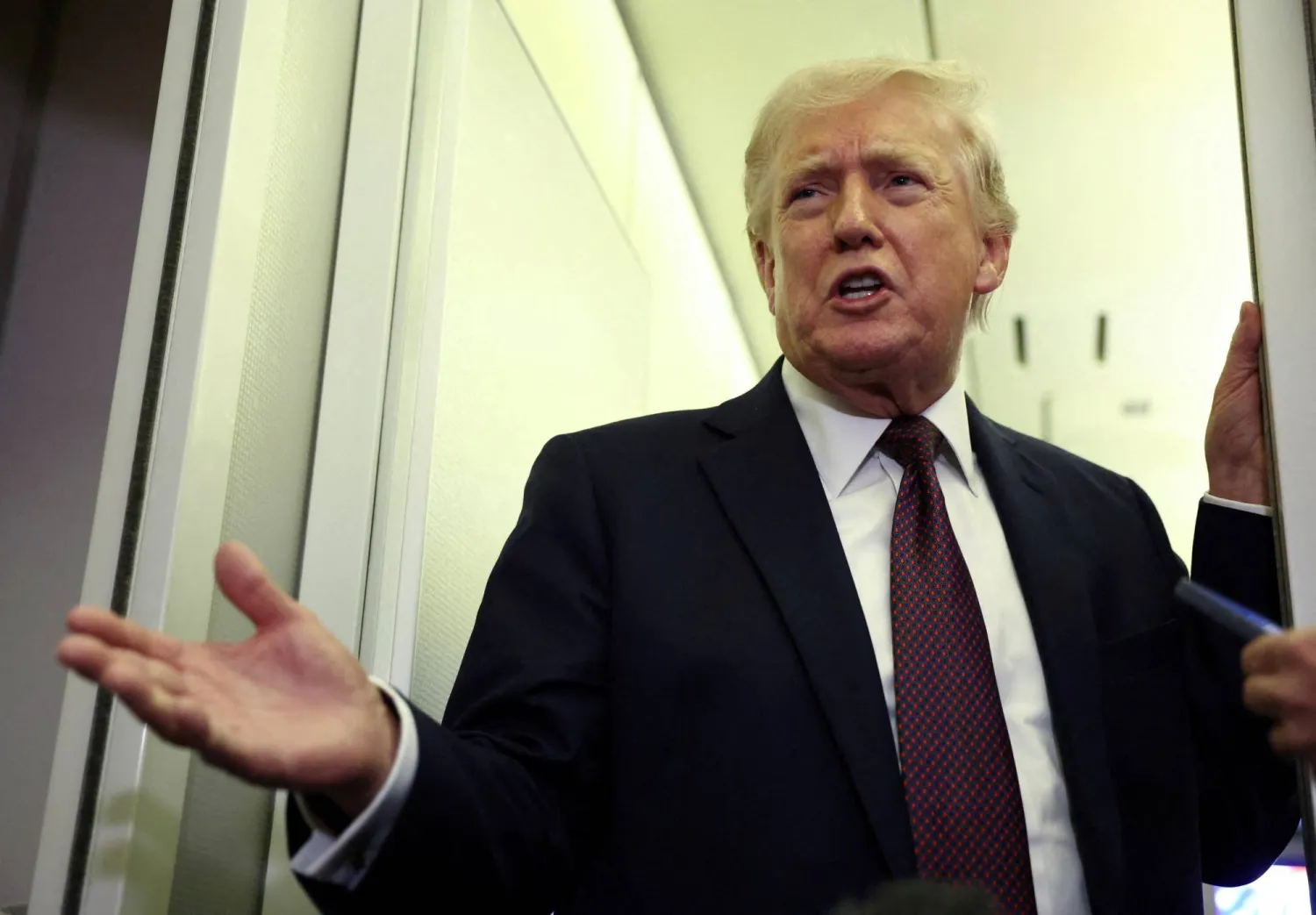


Trump Warns Israel and Iran Not to 'Blow It' after New Strikes Threaten Emerging Ceasefire Deal

US President Donald Trump speaks to reporters aboard Air Force One on a flight back to Washington March 15, 2026. REUTERS/Kevin Lamarque/File Photo
TT

Trump Warns Israel and Iran Not to 'Blow It' after New Strikes Threaten Emerging Ceasefire Deal

US President Donald Trump speaks to reporters aboard Air Force One on a flight back to Washington March 15, 2026. REUTERS/Kevin Lamarque/File Photo

US President Donald Trump on Sunday urged no further attacks by anyone after Israel's military said it launched strikes on Hezbollah targets in Beirut's southern suburbs, potentially complicating efforts to finalize a deal to end the US-Iran war.

The Public Health Emergency Operations Center said three people, including two women, were killed, and 16 were wounded.

Trump reacted on social media and said Israeli strikes on Beirut "should not have happened" as he vowed a regional peace deal was at hand, though he did not confirm reports it would be signed during the day.

"We are very close to a Deal that will bring peace to the region, including to Lebanon, and all sides should stand down," Trump said on social media.

"This could be the beginning of a long and beautiful peace -- Let's not blow it!"

The deal in its current form is a deep disappointment to Israel's government, which has been sidelined in negotiations led by Pakistan and others. The last time Israel struck the Beirut suburbs a week ago, it set off the most serious escalation of fighting between Iran and Israel since the tenuous ceasefire took hold April 7.

Trump, who had said the deal could be signed Sunday, has pressed Israeli Prime Minister Benjamin Netanyahu to stop hitting Lebanon hard while a deal is near, but the prime minister has defied him.

Netanyahu's office said the strikes were in response to Hezbollah attacks on northern Israel. Israel’s military said Hezbollah launched three projectiles, releasing footage where an audible boom was followed by rising smoke. There was no immediate comment from the Iranian-backed Hezbollah.


Trump to Meet Sisi at G7 Summit in France

US President Donald Trump holds a meeting with Egypt's President Abdel Fattah al-Sisi during a summit on Gaza in Sharm el-Sheikh on October 13, 2025. (AFP)
TT

Trump to Meet Sisi at G7 Summit in France

US President Donald Trump holds a meeting with Egypt's President Abdel Fattah al-Sisi during a summit on Gaza in Sharm el-Sheikh on October 13, 2025. (AFP)

US President Donald Trump is set to hold talks with Egypt's President Abdel Fattah al-Sisi on the sidelines of the G7 summit in France this month, the Egyptian presidency said on Sunday.

In a statement, the presidency said Sisi is expected to hold a series of meetings with world leaders during the summit, "including a bilateral meeting with US President Donald Trump".

It added that Sisi's meetings would focus on "discussing ways to resolve international geopolitical crises and address their repercussions on trade, energy and supply chains".

The G7 summit will be one of the first major international gatherings since the United States and Israel launched a war against Iran in late February, upending the Middle East and widening transatlantic tensions.

French President Emmanuel Macron, who is hosting the summit in the city of Evian on June 15-17, said that leaders from Egypt, Saudi Arabia, Qatar and the United Arab Emirates had been invited to discuss the Middle East war, according to the French presidency.

Saudi Crown Prince Mohammed bin Salman said he would not attend the summit due to "prior commitments", the Saudi Press Agency (SPA) reported on Thursday.

The G7 brings together the leaders of Britain, Canada, France, Germany, Italy, Japan and the United States, along with invited leaders from several other countries, including Brazil and India.

Macron is due to arrive in Evian on Sunday evening, with other leaders, including Trump, expected on Monday.

Leaders are set to have a packed agenda of potentially explosive issues, including efforts to end the war in Iran and re-open the key Strait of Hormuz shipping bottleneck.


Arab League Warns of Devastating Effects of Attacking Education in Occupied Territories

Arab League headquarters in Cairo (The League's official Facebook page)
TT

Arab League Warns of Devastating Effects of Attacking Education in Occupied Territories

Arab League headquarters in Cairo (The League's official Facebook page)

Assistant Secretary-General and Head of the Palestine and Occupied Arab Territories Sector at the Arab League Ambassador Dr. Faed Mustafa stressed that targeting education in the occupied Palestinian territories, particularly in the Gaza Strip, cannot be regarded as merely a side effect of war.

He asserted that it represents part of a systematic plan aimed at erasing the Palestinian national identity and depriving future generations of their awareness, culture, and sense of belonging. He warned that what he described as educational genocide would have devastating consequences extending to generations to come, SPA reported.

He made the remarks during his speech at the opening of the 111th Session of the Committee on Educational Programs for Arab Students in Occupied Arab Territories, which kicked off today at the headquarters of the General Secretariat of the Arab League in Cairo.

Mustafa noted that Palestinian efforts to resume the educational process, particularly in the Gaza Strip, face major challenges due to the blockade, Israeli restrictions, and shortages of educational supplies. These circumstances have compelled the concerned authorities to resume classes in partially damaged schools, as well as in tents and temporary educational centers with limited resources.

He called on the international community and relevant institutions to fulfill their obligations toward rebuilding the Palestinian educational system, ensuring sustainable funding for United Nations Relief and Works Agency for Palestine Refugees in the Near East (UNRWA), and supporting psychological and educational recovery programs.

Mustafa stressed that saving Palestinian education is a national, humanitarian, and moral duty that requires concerted local, regional, and international efforts.
