

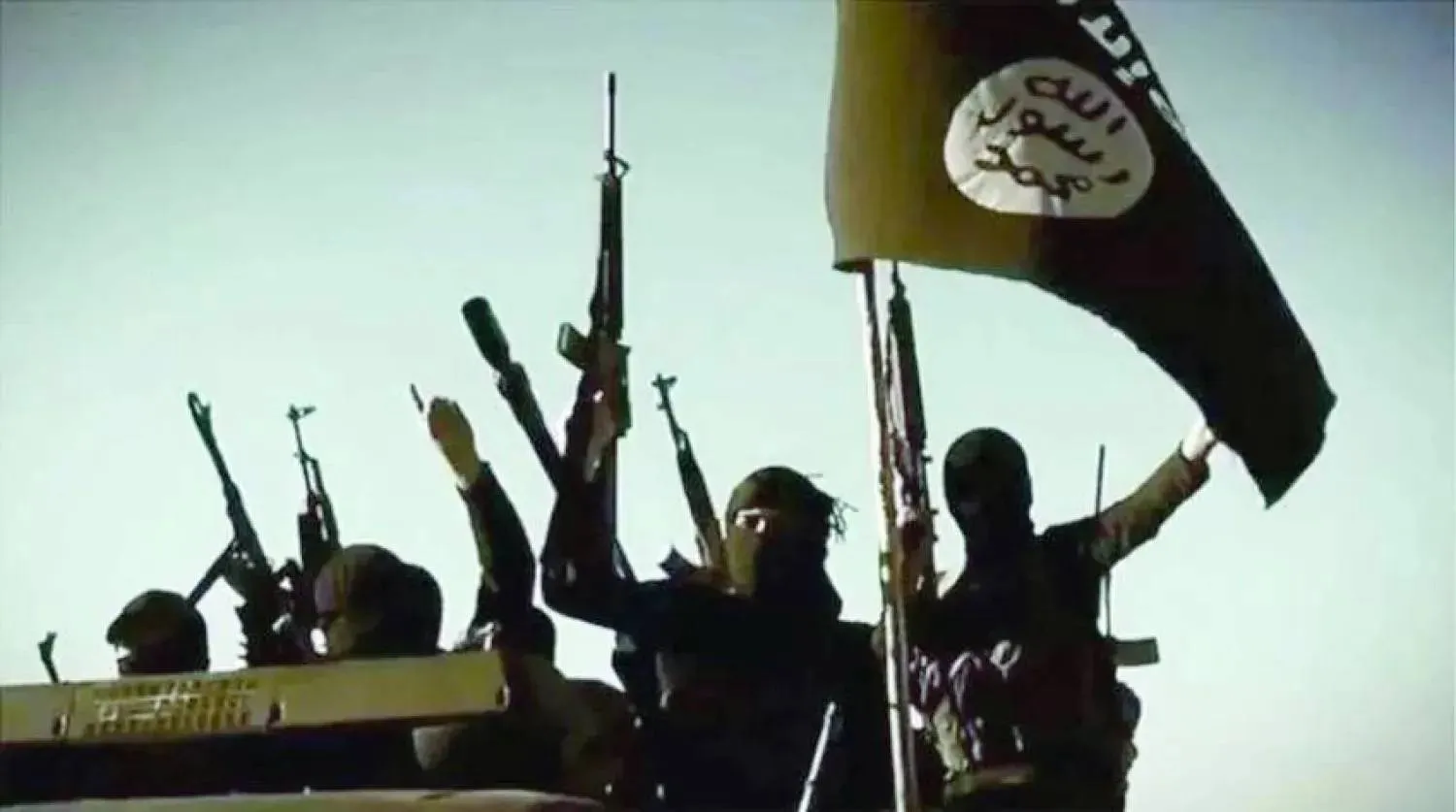

UN Experts: ISIS and al-Qaida Threat is Intense in Africa, with Growing Risks in Syria

ISIS fighters/file photo (AFP)
TT

UN Experts: ISIS and al-Qaida Threat is Intense in Africa, with Growing Risks in Syria

ISIS fighters/file photo (AFP)

The threat from ISIS and al-Qaida extremists and their affiliates is most intense in parts of Africa, and risks are growing in Syria, which both groups view as a “a strategic base for external operations,” UN experts said in a new report.

Their report to the UN Security Council circulated Wednesday said West Africa's al-Qaida-linked Jama’at Nasr al-Islam wal-Muslimin group, known as JNIM, and East Africa's al-Qaida-linked al-Shabab have continued to increase the territory under their control.

The experts monitoring sanctions against the two groups said “the organization’s pivot towards parts of Africa continued" partly because of ISIS losses in the Middle East due to counterterrorism pressures. There are also “increasing concerns about foreign terrorist fighters returning to Central Asia and Afghanistan, aiming to undermine regional security,” they said.

The ISIS group also continues to represent “the most significant threat” to Europe and the Americas, the experts said, often by individuals radicalized via social media and encrypted messaging platforms by its Afghanistan-based Khorasan group.

In the United States, the experts said several alleged terrorist attack plots were “largely motivated by the Gaza and Israel conflict,” or by individuals radicalized by ISIS.

They pointed to an American who pledged support to ISIS and drove into a crowd in New Orleans on Jan. 1, killing 14 people in the deadliest attack by al-Qaida or the ISIS in the US since 2016. In addition, they said, “Authorities disrupted attacks, including an ISIS-inspired plot to conduct a mass shooting at a military base in Michigan,” and the ISIS Khorasan affiliate issued warnings of plots targeting Americans.

In Africa’s Sahel region, the experts said, JNIM expanded its area of operations, operating “with relative freedom” in northern Mali and most of Burkina Faso. There was also a resurgence of activity by ISIS in the Greater Sahara, “particularly along the Niger and Nigeria border, where the group was seeking to entrench itself.”

“JNIM reached a new level of operational capability to conduct complex attacks with drones, improvised explosive devices and large numbers of fighters against well-defended barracks,” the experts said.

In East Africa, they said, “al-Shabab maintained its resilience, intensifying operations in southern and central Somalia” and continuing its ties with Yemen’s Houthi rebels. The two groups have reportedly exchanged weapons and the Houthis have trained al-Shabab fighters, they said.

Syria, the experts said, remains “in a volatile and precarious phase,” six months after the ouster of President Bashar Assad, with unnamed countries warning of growing risks posed by both ISIS and al-Qaida.

“Member states estimated that more than 5,000 foreign terrorist fighters were involved in the military operation in which Damascus was taken on Dec. 8,” the experts’ 27-page report said.

Syria’s new interim President Ahmad Al-Sharaa has promised that the country will transition to a system that includes Syria’s mosaic of religious and ethnic groups under fair elections.

As for financing, the experts said the Hayat Tahrir al-Sham group takeover in Syria was considered to pose financial problems for ISIS and likely to lead to a decline in its revenues.

Salaries for ISIS fighters were reduced to $50-$70 per month and $35 per family, “lower than ever, and not paid regularly, suggesting financial difficulties,” said the experts, who did not give previous salaries or family payments.

They said both al-Qaida and ISIS vary methods to obtain money according to locations and their ability to exploit resources, tax local communities, kidnap for ransom and exploit businesses.

While the extremist groups predominantly move money through cash transfers and informal money transfer systems known as hawalas, the experts said ISIS has increasingly used female couriers and hawala systems where data is stored in the cloud to avoid detection, and “safe drop boxes” where money is deposited at exchange offices and can only be retrieved with a password or code.



Aoun Stresses Keenness on Keeping Lebanon out of 'Suicidal Adventures'

17 January 2025, Lebanon, Baabda: Lebanese President Joseph Aoun speaks during a press conference at Baabda Palace. (dpa)
TT

Aoun Stresses Keenness on Keeping Lebanon out of 'Suicidal Adventures'

17 January 2025, Lebanon, Baabda: Lebanese President Joseph Aoun speaks during a press conference at Baabda Palace. (dpa)

Lebanese President Joseph Aoun stressed on Tuesday that his country has "cleaned vast areas south of the Litani River of illegal weapons".

Speaking to the diplomatic corps, he added that the plan to impose to state monopoly over arms and control over all of Lebanese territories "has been unprecedented in 40 years".

Lebanon is keen on preventing itself from being dragged into "suicidal adventures, whose price we paid dearly for in the past," he declared.

Without referring to Hezbollah, Aoun described as an "adventure" the Iran-backed party's decision to launch the "support war" against Israel in October 2023 in solidarity with Hamas in Gaza.

Aoun did not touch on Hezbollah's refusal to lay down its weapons in areas north of the Litani, which is the second phase of the state's plan to impose state monopoly over arms.

Aoun made his remarks days after Hezbollah Secretary-General Sheikh Naim Qassem declared that the party would not lay down its weapons, deepening the rift between the president and the party.

Informed sources had previously told Asharq Al-Awsat that relations between the two sides had cooled in recent weeks with contacts between them at the "bare minimum".

Continuing his address to the diplomatic corps, Aoun said that since he was elected to office a year ago, Lebanon has not made a single violation of the ceasefire with Israel, save for two "individual incidents".

The authorities have since arrested the perpetrators, he added. In the meantime, the army is the sole party in control of the South.

He stressed that the army succeeded in imposing its control over the South "despite all provocations, ongoing Israeli attacks, criticism and accusations of treason."

The ceasefire, he noted, was agreed in November 2024, before he assumed office. "It is an international agreement that we respect" and that will prevent Lebanon from being dragged into "suicidal adventures," he went on to say.

Aoun hoped that during his second year in office, all Lebanese territories would come under the authority of the state alone and that all Lebanese prisoners held by Israel would be released. He hoped that reconstruction of areas destroyed by Israel in the war would kick off.

He also hoped that the entire country would come under the control of the armed forces alone, "so that Lebanon would not be dragged into the conflicts of others."


Syrian Military, SDF Announce New Truce After Guards Leave Camp Housing ISIS Families

Members of the Syrian army ride a vehicle en route to al-Hassakeh, following the withdrawal of the Syrian Democratic Forces, Syria, January 20, 2026. (Reuters)
TT

Syrian Military, SDF Announce New Truce After Guards Leave Camp Housing ISIS Families

Members of the Syrian army ride a vehicle en route to al-Hassakeh, following the withdrawal of the Syrian Democratic Forces, Syria, January 20, 2026. (Reuters)

Guards from the Kurdish-led Syrian Democratic Forces (SDF) abandoned a camp Tuesday in northeast Syria housing thousands of people linked to the ISIS group, and the Syrian military said that allowed detainees to escape.

Hours later, the Syrian government and the SDF announced a new four-day truce after a previous ceasefire broke down. The two sides have been clashing for two weeks, amid a breakdown in negotiations over a deal to merge their forces together.

The al-Hol camp houses mainly women and children who are relatives of ISIS members. Thousands of accused ISIS militants are separately housed in prisons in northeast Syria.

Syria's interior ministry accused the SDF of allowing the release of “a number of detainees from the ISIS militant (group) along with their families.” The AP could not independently confirm if detainees had escaped from the camps or how many.

The SDF subsequently confirmed that its guards had withdrawn from the camp, but did not say whether any detainees escaped. The group blamed “international indifference toward the issue of the (ISIS) terrorist organization and the failure of the international community to assume its responsibilities in addressing this serious matter."

It said its forces had redeployed in other areas "that are facing increasing risks and threats” from government forces.

An official with the US military’s Central Command who spoke on condition of anonymity because they were not authorized to speak publicly said, “We are aware of the reports and are closely monitoring the situation.”

The SDF and the government also traded blame over the escape Monday of ISIS members from a prison in the northeastern town of Shaddadi.

The Syrian defense ministry in a statement said it is prepared to take over al-Hol camp and the prisons and accused the SDF of using them as “bargaining chips.”

At its peak in 2019, some 73,000 people were living at al-Hol camp. Since then the number has declined with some countries repatriating their citizens.

Sheikhmous Ahmad, a Kurdish official overseeing camps for displaced in northeastern Syria, told The Associated Press that the al-Hol's current population is about 24,000, about 14,500 of whom are Syrians and nearly 3,000 Iraqis.

He added that about 6,500 from other nationalities are held in a highly secured section of the camp, many of whom are die-hard ISIS supporters who came from around the world to join the extremist group.

Government and SDF trade blame over prison break

Earlier Tuesday, Syria's interior ministry said that 120 ISIS members had escaped Monday from the prison in Shaddadi, amid clashes between government forces and the SDF. Security forces recaptured 81 of them, the statement said.

Also Tuesday, the SDF accused “Damascus-affiliated factions” of cutting off water supplies to the al-Aqtan prison near the city of Raqqa, which it called a “blatant violation of humanitarian standards.”

The SDF, the main US-backed force that fought ISIS in Syria, controls more than a dozen prisons in the northeast where some 9,000 ISIS members have been held for years without trial.

ISIS was defeated in Iraq in 2017 and in Syria two years later, but the group’s sleeper cells still carry out deadly attacks in both countries.

Under a deal announced Sunday, government forces were to take over control of the prisons from the SDF, but the transfer did not go smoothly.

New ceasefire deal announced

The Syrian military announced Tuesday evening a new four-day ceasefire. The SDF confirmed the deal and said “it will not initiate any military action unless our forces are subjected to attacks.”

Elham Ahmad, a senior official with the Kurdish-led local administration in northeast Syria, told journalists Tuesday that an earlier ceasefire had fallen apart after SDF leader Mazloum Abdi requested a five-day grace period to implement the conditions and Syrian Interim President Ahmed al-Sharaa refused.

She blamed the government for violating the agreement but called for a return to dialogue.

In response to a journalist's question regarding whether the SDF had requested help from Israel - which previously intervened in clashes between government forces and groups from the Druze religious minority last year - Ahmad said “certain figures” from Israel had communicated with the SDF. She added that the SDF is ready to accept support from any source available.

A statement from al-Sharaa’s office said government forces will not enter Kurdish-majority areas until plans are agreed upon for their “peaceful integration” and that Kurdish villages will be patrolled by “local security forces drawn from the residents of the area.”

It said Abdi will put forward nominees from the SDF for the posts of deputy defense minister, governor of al-Hassakeh province, representatives in the parliament, and for other positions in Syrian state institutions.

SDF disappointment

SDF officials have expressed disappointment that the US did not intervene on their behalf. The group was long the main US partner in Syria in the fight against ISIS, but that has changed as the Trump administration has developed closer ties with al-Sharaa's government.

US envoy to Syria Tom Barrack in a statement Tuesday urged the SDF to move forward with integration into the new Syrian government and army and appeared to warn the Kurdish-led force that no help would be coming from Washington if it continued fighting.

He said SDF's role as the primary anti-ISIS force "has largely expired, as Damascus is now both willing and positioned to take over security responsibilities” and that “recent developments show the US actively facilitating this transition, rather than prolonging a separate SDF role."

Since toppling Bashar al-Assad in December 2024, Syria’s new leaders have struggled to assert full authority over the war-torn country. An agreement was reached in March that would merge the SDF with Damascus, but it didn’t gain traction.

Earlier this month, clashes broke out in the city of Aleppo, followed by the government offensive that seized control of Deir Ezzor and Raqqa provinces, critical areas under the SDF that include oil and gas fields, river dams along the Euphrates and border crossings.

Al-Sharaa postponed a planned trip to Germany Tuesday amid the ongoing tensions.


Gaza Committee Faces Israeli Hurdles as it Seeks Pressure from Mediators

Destroyed buildings in Gaza, as seen from Israel, January 20, 2026. (Reuters)
TT

Gaza Committee Faces Israeli Hurdles as it Seeks Pressure from Mediators

Destroyed buildings in Gaza, as seen from Israel, January 20, 2026. (Reuters)

The committee tasked with administering the Gaza Strip has begun work in Cairo, but its planned entry into the enclave has been blocked by Israel, a move mediators are seeking to head off as part of the second phase of the Gaza ceasefire agreement that began in mid-January and has drawn objections from Prime Minister Benjamin Netanyahu.

The ban followed Israel's objection to the White House announcement of leaders who will play a role in overseeing the next steps in Gaza.

Experts speaking to Asharq Al-Awsat said these objections represent major obstacles that complicate the second phase, which includes an Israeli withdrawal from Gaza, the launch of reconstruction, the deployment of stabilization forces, and the disarmament of Hamas.

They warned the obstacles could delay or derail implementation, stressing that pressure from the international community and mediators could push Washington to neutralize any Israeli hurdles.

Israel’s Haaretz newspaper quoted sources on Tuesday as saying Netanyahu’s government is refusing to allow members of the Palestinian “technocrats committee” to enter Gaza.

It said the committee members had been scheduled to enter the enclave this week via the Rafah crossing to assume civil administration duties by the end of the week.

The report said the committee’s members continue to hold meetings in Cairo, while mediators, particularly Egypt, are working with the United States to secure approval for the committee’s entry into Gaza by the end of the month.

Qatar’s Foreign Ministry spokesman Majed al-Ansari said at a press conference in Doha on Tuesday that the international community must pressure Israel to allow the technocrats committee to enter Gaza.

Hamas said in a statement on Tuesday that government bodies in Gaza have begun taking steps to facilitate the work of the national committee and hand over authority.

It stressed it has placed no preconditions on forming the committee or starting its work, but expects “independent professional and technical performance.”

Ahmed Fouad Anwar, a member of the Egyptian Council for Foreign Affairs and an academic specializing in Israeli affairs, said the Israeli ban is part of a pattern of obstacles Israel has attempted to impose at every stage of the Gaza agreement, as it did during the first phase.

He said he expects US pressure to prevent the continued ban on committee members.

Palestinian political analyst Nizar Nazzal said Israel wants an administrative committee stripped of authority and willpower, adding that the ban is calculated and deliberate.

He nevertheless expects the committee to eventually enter Gaza to begin work, saying Israeli leaks appear to be a media bubble aimed mainly at domestic audiences.

Reuters reported that Israeli Finance Minister Bezalel Smotrich urged Netanyahu on Monday to shut down the US-led multinational coordination center supporting President Donald Trump’s plan to end the war in Gaza, calling for Hamas to be given a final ultimatum to disarm or face the destruction of the enclave.

The White House announced on Friday the formation of an 11-member Gaza Executive Board, including Egyptian intelligence chief Hassan Rashad, Turkish Foreign Minister Hakan Fidan, UN Special Coordinator for the Middle East Peace Process Sigrid Kaag, UAE Minister of State for International Cooperation Reem Al-Hashimy, and Israeli-Cypriot billionaire Yakir Gabay.

A day after Trump announced the executive bodies, Netanyahu’s office said the move was made without coordination with Israel and runs counter to its policy, adding that Foreign Minister Gideon Saar would raise the issue with his US counterpart Marco Rubio.

Anwar said Israeli objections began even before the second phase of the Gaza plan, with Netanyahu’s government demanding the return of the last remains of Israeli hostages and the disarmament of Hamas.

He said the phase began nonetheless without Washington responding to those demands, predicting that Israel would try to obstruct the second phase, while the US continues to ignore them.