
Iran’s sway over Iraq’s Shiite political landscape is weakening as the Najaf religious establishment, led by Cleric Ali al-Sistani, asserts greater influence, challenging Tehran’s efforts to preserve its armed proxies and obstruct state-led reforms.
Despite pressure from Iran’s Revolutionary Guards to resist internal reforms – particularly those aimed at disarming rogue militias and integrating the Popular Mobilization Forces (PMF) into the state – sources close to the Shiite clergy say Najaf has grown increasingly alarmed by what it views as a political system on the brink of collapse.
Speaking to Asharq Al-Awsat since late July, political insiders described a “silent confrontation” between two competing visions for Iraq's Shiite community. One is backed by the pro-Iran Coordination Framework that dominates government.
The other is quietly advanced by Najaf, which sees urgent need for reform amid regional volatility.
“The system is facing its most serious test since 2003,” one religious source said. “It is losing its ability to sustain itself,” they added.
Hezbollah Brigades Threaten Government
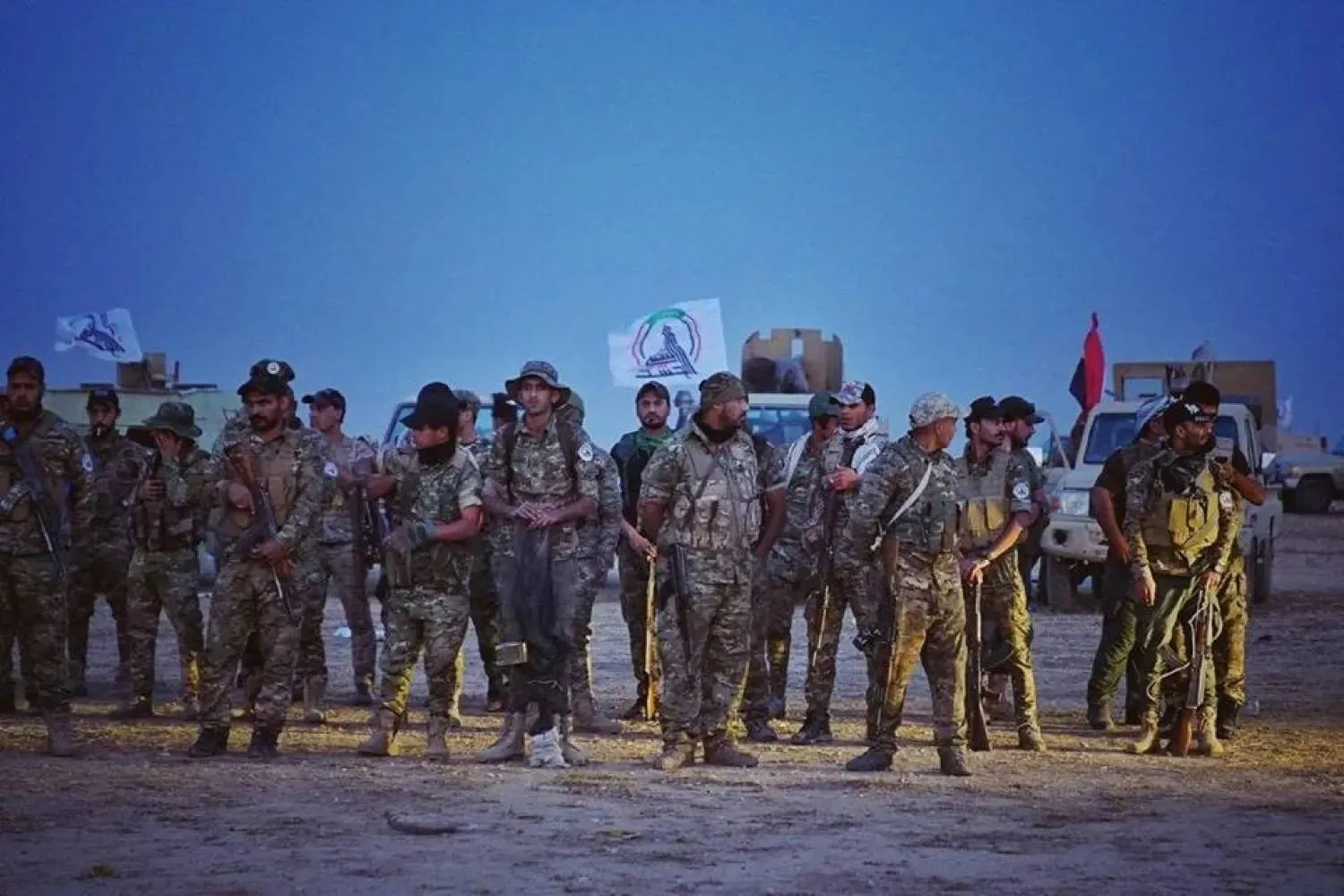
Tensions flared in late July when Kataib Hezbollah, a powerful Iranian-backed militia, lashed out at Prime Minister Mohammed Shia al-Sudani, accusing him of provoking a confrontation with security forces.
The group released a video showing its field commander, Jamal Mahlel, warning the premier that his hopes for re-election were doomed.
“You will not have a second term,” Mahlel said, echoing threats once directed at former PM Haider al-Abadi.
The video, reportedly leaked by the group itself, followed a rare armed clash on July 27 between Kataib Hezbollah and Iraqi security forces over alleged land seizures near Baghdad. While details remain murky, the confrontation prompted the group to declare the end of its security operations in the capital’s southern belt – a symbolic retreat from areas long used as power bases by Iran-backed factions.
The fallout was significant. In a lengthy statement, militia spokesman Abu Ali al-Askari condemned the government’s actions, accusing the army of attacking “a group of youths” with heavily armed forces and armored vehicles.
“These areas were part of what was once called the Baghdad Belt,” said Askari, acknowledging a loss of ground. “A mistake was made, and the cost was high.”
Tehran Calls for Readiness, Sees Another War Looming
At the same time, Iranian officials warned allied factions to prepare for “imminent danger.” According to two militia sources, senior figures from the Revolutionary Guards – including Quds Force commander Esmail Qaani – urged Iraq’s groups to resist disarmament, describing it as a critical moment while Iran rebuilds its military capabilities.
One of the sources said Tehran’s message was unequivocal: “Every weapon will matter in the next war.” The same warning, he added, was also conveyed to Lebanon’s Hezbollah.
On July 29, Supreme Leader Ali Khamenei declared that Iran would take “great strides in deepening religious faith and advancing scientific knowledge” – a statement widely interpreted as reaffirming Iran’s ideological commitment to regional influence, including its nuclear and ballistic missile programs.
An internal document leaked from Kataib Hezbollah appeared to confirm preparations for “escalation – either internally or externally.” Analysts believe the leak was deliberate, part of a coordinated campaign to send a message to both Baghdad and Washington amid shifting geopolitical dynamics.
A senior Coordination Framework leader acknowledged that the US stance was becoming increasingly aggressive.
“Washington is playing brinkmanship,” he said. “This isn’t just about the factions anymore – the entire ruling coalition is under pressure.”
US Pushback on PMF Law Raises Stakes
Tensions rose sharply in late July after US Senator Marco Rubio warned that a proposed Iraqi law formalizing the PMF would entrench Iranian influence. During a call with Sudani, Rubio voiced concerns about legitimizing militias the US deems a threat.
Days later, acting US Ambassador Steven Fagin told deputy parliament speaker Mohsen Al-Mandalawi that the law would “empower terrorist groups.” On August 5, State Department spokesperson Tammy Bruce described the legislation as a “hostile act” that could trigger harsh sanctions.
The Coordination Framework official admitted US pressure could become “suffocating,” especially as Washington appears to treat the Iraqi political system as a battlefield where some actors have become unacceptable.
Najaf Reemerges as a Counterweight
As Iran struggles with the fallout from its confrontation with Israel and a weakened proxy network post-October 7, the Najaf religious establishment has quietly regained influence in Baghdad. Sources close to the clerical leadership said Najaf views the current trajectory as dangerous for Iraq’s Shiites.
A senior cleric close to Sistani’s office said the religious leadership believes “the fate of Iraq’s Shiites should not be tied to rogue militias,” especially amid fears of renewed ISIS activity spilling over from Syria.
On July 17, Sistani’s representative, Abdul Mahdi al-Karbalai, appeared publicly for the first time in five years, calling for an end to militia activity and stronger state institutions.
According to officials familiar with behind-the-scenes discussions, a senior government figure met Karbalai shortly after the speech and was given a clear message: disarmament of militias and PMF integration must proceed in a way that respects fighters’ dignity and protects their livelihoods.
The message also included fiscal warnings – urging the government to curb chaotic spending and rethink Iraq’s foreign alignments to shield the country from external shocks.
From Soleimani to Sistani: Power Shifts in Baghdad
For years, key decisions in Baghdad were shaped by visits from Qasem Soleimani, the late Quds Force commander. But one Coordination Framework leader noted that the balance of power has shifted.
“Today, those kinds of strategic meetings are happening between Najaf and Baghdad – not Tehran,” he said.
He added that while Iran is desperate to retain its Iraqi foothold amid setbacks in its nuclear program, Najaf’s growing assertiveness is changing the rules of the game.
Sudani Under Pressure to Act
Caught between American opposition, Iranian expectations, and Najaf’s reform push, Sudani faces a narrowing path. His political survival may depend on how he handles the future of the PMF – a sensitive issue with no easy solutions.
Sources involved in high-level discussions say the US recognizes the risks of disbanding tens of thousands of fighters, many of whom were instrumental in the fight against ISIS. But Najaf insists that Iraq must not delay legal and institutional reform any longer.
“This is a historic responsibility,” one clerical source said. “If political leaders fail to act, the consequences will be severe.”
Analysts warn the PMF file has become a political time bomb ahead of elections. As Sudani weighs his next move, even his allies admit he must navigate a shifting regional landscape – or risk not just his office, but the future of Iraq’s post-2003 political order.