

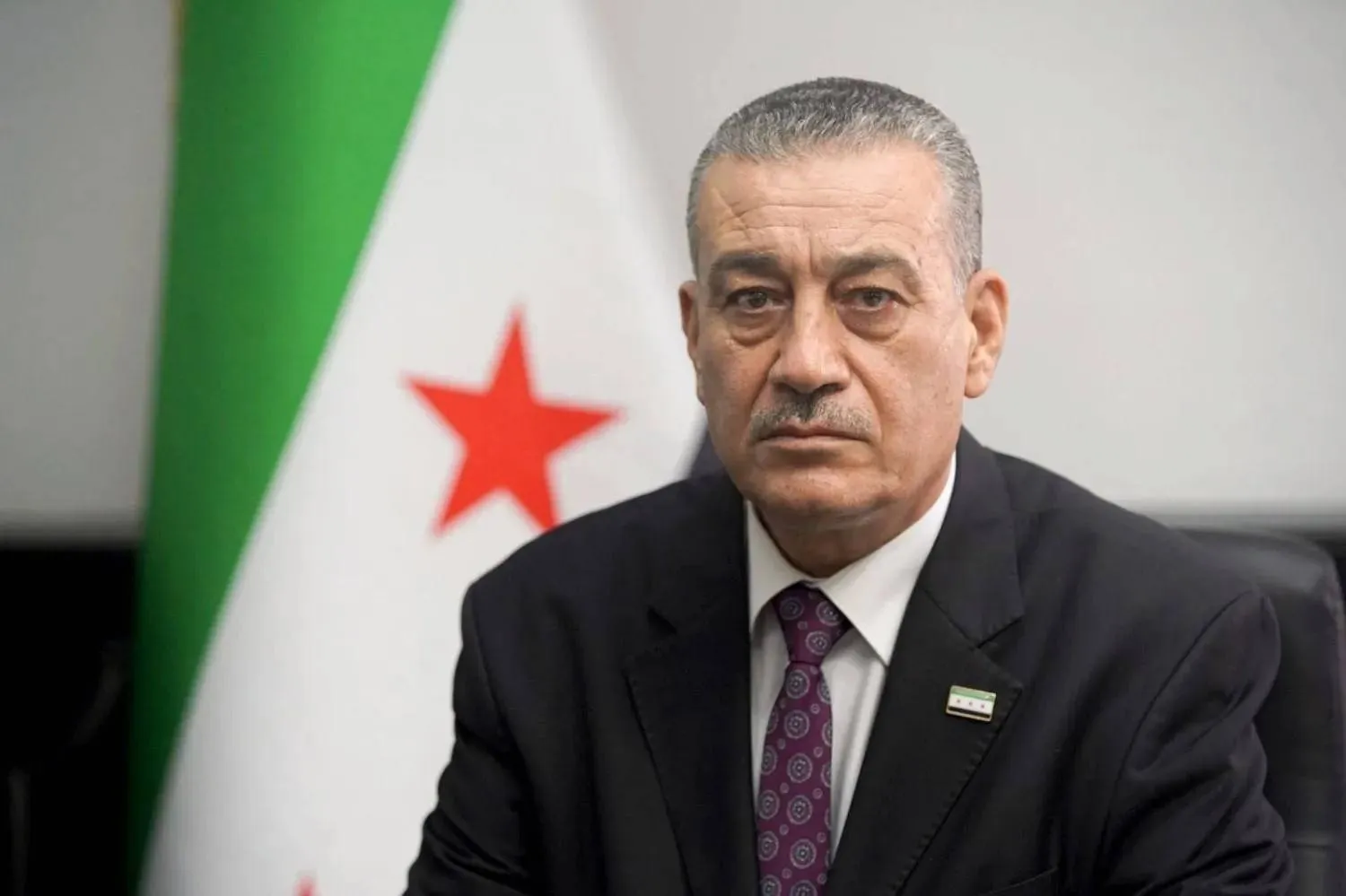

Syria’s Transitional Justice Head: Accountability to Cover Assad Father, Son Terms

Brig. Gen. Abdel Baset Abdel Latif (Archive Photo)
TT

Syria’s Transitional Justice Head: Accountability to Cover Assad Father, Son Terms

Brig. Gen. Abdel Baset Abdel Latif (Archive Photo)

Syrian courts have opened war crimes investigations against four senior officials from the former Assad regime, in the most significant step yet toward transitional justice since the government created a national body to address past abuses.

The cases, announced by Syria’s attorney general in late July, target figures accused of atrocities against civilians during decades of Baathist rule.

They include Atif Najib, the former political security chief in Daraa whose men helped spark the 2011 uprising; former Grand Mufti Ahmad Badr al-Din Hassoun; ex-interior minister Mohammad al-Shaar; and security officer Ibrahim al-Huwija.

Shaar, who had fled abroad, surrendered to authorities in February, according to circulating reports and officials familiar with the matter.

The prosecutions come before the newly established National Authority for Transitional Justice has even completed forming its governing council, raising questions about whether the trials fall under its mandate.

But the head of the authority, Brigadier General Abdel Baset Abdel Latif, told Asharq al-Awsat in Damascus that the prosecutions were launched “in coordination between the authority and the Ministry of Justice,” dismissing doubts over the state’s willingness to hold perpetrators accountable.

Assad-era Crimes Under Scrutiny

The Syrian President issued a decree on May 17 creating the authority to investigate violations committed under the rule of Bashar al-Assad and Hafez al-Assad, prosecute those responsible and provide reparations to victims. The decree described transitional justice as “a cornerstone for building a state of law and a guarantee of victims’ rights.”

Abdel Latif, 62, was born in Deir al-Zor and studied law at Aleppo University before obtaining higher degrees in policing and legal sciences. A former police commander in Qamishli, he defected from the government in 2012 and later became secretary general of the opposition National Coalition before returning to state institutions after the fall of the Assad regime.

He said the authority was drafting a transitional justice law expected to pass after parliamentary elections. Trials will cover crimes defined under the Geneva Conventions, including genocide, war crimes, torture, forced disappearances and chemical weapons use.

The authority’s mandate covers violations committed up until Dec. 8, under the terms of the presidential decree, but excludes events thereafter, which will be handled by transitional government ministries such as defense, justice and interior.

Its remit includes Assad-era crackdowns on protests from 2011, repeated chemical weapons attacks, indiscriminate bombardment of cities with barrel bombs, arbitrary arrests and systematic torture in detention centers. It also covers atrocities dating back to the 1980s under Assad’s father Hafez, including the 1982 Hama massacre that killed more than 30,000 people, as well as mass killings in Jisr al-Shughour, Aleppo’s Masharqa district and Tadmor prison.

“Families in Hama ask if our work will include the massacres of the 1980s, which the world overlooked because there was no media coverage then,” Abdel Latif said. “We assure them the authority will listen to everyone.”

Legal Process, Int’l Support

Since its creation in May, the authority has received about 120 applications from Syrians seeking to join its work. A 16-member council will be appointed in the coming weeks, with remaining applicants assigned to specialist committees. Abdel Latif said victims’ rights would remain at the heart of its mission.

The body plans to launch an electronic platform and hotline to receive complaints, while witness protection measures are being designed. Complaints will be referred to committees tasked with gathering evidence and preparing case files for judicial proceedings.

Abdel Latif said he had met with representatives of more than 20 countries and 30 Syrian and international civil society groups over the past two months. He urged foreign partners to help set up a reparations fund, arguing that rebuilding war-shattered homes should be considered part of compensation.

“The old regime destroyed the country and left a huge burden,” he said. “The state alone cannot bear this. We hope reconstruction can be included in reparations, at least partial restoration of damaged homes, to console victims and help them recover.”

Syrian NGOs, he added, had built valuable expertise on transitional justice, human rights and missing persons. They will work alongside academics and historians on a “national memory committee” to preserve documentation for future generations and guard against repeating abuses.

Accountability for Assad?

Asked if the authority could pursue Bashar al-Assad and his brother Maher, both now outside the country, Abdel Latif said millions of Syrians were waiting for them to face justice.

“That requires a lot of work to collect and organize evidence legally, and some patience, because nothing comes easily,” he said.

He added that while the decree specifies crimes committed by the Assad regime, Syrians victimized by non-Syrian armed groups during the conflict also have the right to submit complaints. Since the former regime enabled the entry of many of those groups, the authority will consider such cases.

Balancing Justice, Reconciliation

Abdel Latif said transitional justice in Syria must follow two parallel tracks: accountability for grave crimes, and eventual reconciliation to allow society to heal.

“In many countries, transitional justice took five to eight years,” he said. “Our priority is to balance accountability and reconciliation, so that Syrians can be certain justice has run its course before moving toward national healing.”

The authority’s initial mandate is five years, though extensions are possible if its work is not complete. Abdel Latif said the first steps would involve outreach to the provinces most devastated by conflict, though opening branches in all 14 provinces was not currently feasible.

“Justice for the victims is the foundation of our work,” he said. “Only once justice is seen to be done can Syria move toward reconciliation and lasting peace.”



In a First, Armed Gang in Gaza Forces Displacement of Residents

 A Palestinian woman receives donated food at a community kitchen in Deir al-Balah, central Gaza Strip, Thursday, Dec. 25, 2025. (AP)
A Palestinian woman receives donated food at a community kitchen in Deir al-Balah, central Gaza Strip, Thursday, Dec. 25, 2025. (AP)
TT

In a First, Armed Gang in Gaza Forces Displacement of Residents

 A Palestinian woman receives donated food at a community kitchen in Deir al-Balah, central Gaza Strip, Thursday, Dec. 25, 2025. (AP)
A Palestinian woman receives donated food at a community kitchen in Deir al-Balah, central Gaza Strip, Thursday, Dec. 25, 2025. (AP)

In an unprecedented development, an armed gang active in Gaza City forced inhabitants of residential bloc to evacuate their homes under threat of arms.

Field sources told Asharq Al-Awsat that identified the gang as the “Rami Halas Group”. At dawn on Thursday, its members opened fire in the air in the Hayy al-Tuffah neighborhood in eastern Gaza City. The area is located near Israel’s so-called yellow line that separates Hamas- and Israel-held parts of Gaza.

The gang members came back hours later at noon and demanded that the residents evacuate, giving them until sunset to comply and threatening to shoot anyone who doesn’t.

The sources said the gunmen did not directly approach any of the residents for fear of being attacked. They used loudspeakers to demand that they evacuate to areas a few hundred meters away, claiming these were Israeli orders.

Israeli forces are deployed some 150 meters from the area where the residents were located.

The residents, who had only just returned to their homes after the ceasefire, indeed started to evacuate towards western parts of Gaza City.

The sources said over 240 residents were forced to quit what remains of their damaged homes.

They revealed that Israeli forces had on Tuesday and Wednesday night dropped yellow barrels, devoid of explosives, in those regions. They did not ask residents to evacuate.

The sources said the gang made the evacuation order ahead of Israel’s plan to occupy the area, which had been previously declared as safe.

They accused Israeli forces of resorting to such tactics in recent weeks to further expand the yellow line border and occupy more areas in Gaza.


Syria Says Kills Senior ISIS Leader, Arrests Operative Near Damascus

A photo of a Public Security operation in Aleppo against an ISIS cell (File – Facebook)
TT

Syria Says Kills Senior ISIS Leader, Arrests Operative Near Damascus

A photo of a Public Security operation in Aleppo against an ISIS cell (File – Facebook)

Syrian authorities on Thursday said forces killed a senior leader in the ISIS group and arrested another operative in fresh operations near capital Damascus in coordination with the US-led coalition.

Syrian security and intelligence forces, working in coordination with the international coalition, conducted what the interior ministry described as a "precise security operation" in the Damascus countryside, AFP reported.

"The operation resulted in neutralising the terrorist Mohammad Shahada, known as 'Abu Omar Shaddad', who is considered one of the prominent ISIS leaders in Syria," it added.

"This operation comes as confirmation of the effectiveness of joint coordination between the national security agencies and international partners."

Later Thursday, the interior ministry said security forces "in joint coordination with international coalition forces" arrested "the leader of a terrorist cell affiliated with the ISIS organization" elsewhere near Damascus, seizing weapons and ammunition.

Late Wednesday, authorities said they captured Taha al-Zoubi, also known as Abu Omar Tabiya, an ISIS leader in the Damascus region, along with several of his men, also in a joint operation with the US-led coalition.

The interior ministry also said on Thursday that security forces had arrested three members of an ISIS-affiliated cell in Aleppo province.

A December 13 attack killed two US soldiers and an American civilian. Washington blamed the attack on a lone ISIS gunman in Syria's Palmyra.

In retaliation, US forces conducted strikes targeting scores of ISIS targets in Syria.

The strikes killed five members of the militant group, according to the Syrian Observatory for Human Rights.

In November, during a visit by interim President Ahmed al-Sharaa to Washington, Syria officially joined the US-led coalition against ISIS.


Israeli Settler Attack Injures Palestinian Baby, Five Arrested

Israeli settlers attacked farmers and volunteers harvesting olives on a Palestinian farm in Burin, near Nablus, on November 8, 2025. © Observers
TT

Israeli Settler Attack Injures Palestinian Baby, Five Arrested

Israeli settlers attacked farmers and volunteers harvesting olives on a Palestinian farm in Burin, near Nablus, on November 8, 2025. © Observers

Israeli security forces announced on Thursday the arrest of five Israeli settlers over their alleged involvement in an attack on a Palestinian home that injured a baby girl in the occupied West Bank.

The eight-month-old infant suffered "moderate injuries to the face and head" in the late Wednesday attack, according to the official Palestinian news agency Wafa.

It blamed the attack on "a group of armed settlers", accusing them of "throwing stones at homes and property" in the town of Sair, north of Hebron, AFP reported.

A statement from the Israeli police said that five suspects had been arrested for their "alleged involvement in serious, violent incidents in the village of Sair".

Israeli security forces had received reports of "stones being thrown by Israeli civilians toward a Palestinian home", adding a Palestinian girl was injured.

"The preliminary investigation determined the involvement of several suspects who came from a nearby outpost," the statement said, referring to Israeli settlements not officially recognized by Israeli authorities.

All Israeli settlements in the West Bank are considered illegal by the international community.

Some are also illegal under Israeli law, though many of those are later given official recognition.

Almost none of the perpetrators of previous attacks by settlers have been held to account by the Israeli authorities.

A Telegram group linked to the "Hilltop Youth", a movement of hardline settlers who advocate direct action against Palestinians, posted a video showing property damage in Sair.

More than 500,000 Israelis currently live in settlements in the West Bank, occupied since 1967, as do around three million Palestinians.

Violence involving settlers has risen in recent years, according to the United Nations, and October was the worst month since it began recording such incidents in 2006, with 264 attacks that caused casualties or property damage.

The violence in the West Bank, a territory occupied by Israel since 1967, has surged since Hamas' October 7, 2023 attack, which triggered the Gaza war.

Since the start of the war, Israeli troops and settlers have killed more than 1,000 Palestinians in the West Bank, including many militants as well as dozens of civilians, according to an AFP tally based on figures from the Palestinian health ministry.

According to official Israeli figures, at least 44 Israelis, both soldiers and civilians, have been killed in Palestinian attacks or Israeli military operations in the same period.