




Each time Hezbollah faces a political challenge tied to its role in Lebanon, the group falls back on a familiar tool: sectarian mobilization. Political disputes are recast as attacks on the Shiite community, shifting the confrontation from legal or constitutional grounds to sectarian identity.
Lebanese have seen this formula at work for more than two decades, most vividly whenever debate turns to Hezbollah’s arsenal or its regional role.
In the latest flare-up over a government decision to enforce a monopoly on arms by the state, Hezbollah framed the move not as a constitutional or legal issue, but as an attempt to “disarm the Shiites.”
Analysts say that narrative raises the cost of challenging the group, by making political opposition appear as a confrontation with an entire sect rather than a party.
“Hezbollah has relied since its inception on sectarian mobilization inside the Shiite community, using it at every political or security crossroads,” said Mona Fayyad, a professor of political psychology.
She told Asharq Al-Awsat that such rhetoric “has turned into a tool for stirring the street, especially in moments of tension or key decisions, like the recent one on state control of arms.”
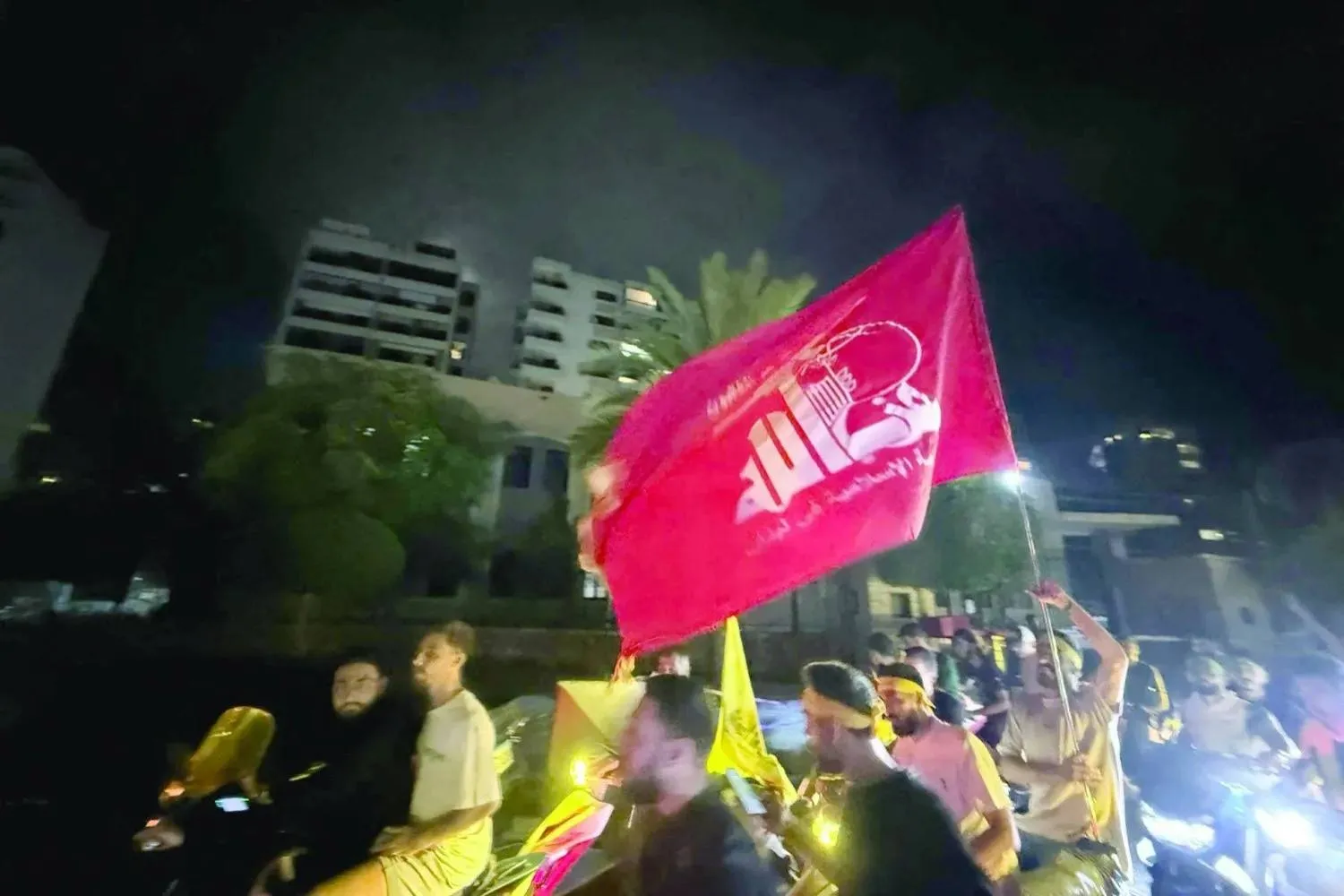
Images of Hezbollah supporters riding motorbikes and waving flags through Beirut’s southern suburbs after the decision reflected an effort to stage “a street versus street” confrontation, she said.
“This strategy is not new. Since the late 1980s Hezbollah has sought to eliminate rivals, starting with Amal, and shifted from an ‘Islamic state’ discourse to one adapted to Lebanese realities, while maintaining sectarian substance,” Fayyad added. “Through welfare and social institutions, it bound a wide base of followers who march behind it no matter what.”
That structure, she said, created a solid ground for Hezbollah’s project but also trapped the community in a one-dimensional narrative that silences criticism.
Political analyst Hareth Sleiman said the motorbike rallies did not reflect a Shiite consensus, nor an organized mass movement, but “managed acts by marginal groups Hezbollah uses to send political messages.”
“These groups come largely from the city’s underclass and are mobilized through intermediaries, with limited logistical support – a fuel fill-up, a charged phone – to perform in the street,” Sleiman said. “The aim is to suggest that the entire Shiite community is furious, while in reality the silent majority disagrees with these tactics.”
He described the rallies as “a fabricated threat” – not a genuine sectarian clash but a short-lived show orchestrated by networks linked to the party.
Observers say Hezbollah has succeeded in blurring the line between itself and the Shiite community in public perception, making it difficult to separate the party’s fate from that of the sect. The main beneficiary, they argue, is Iran.
“Iran uses the Lebanese arena as a tool in its regional struggle,” said Fayyad, noting that Tehran is indifferent to whether such mobilization sparks internal strife. “As long as Lebanon remains a card in its hand, the tensions don’t matter.”
She said this does not necessarily mean full-scale sectarian war, but raises the risk of street scuffles during moments of tension. The difference now, she added, is that the Lebanese army has both political cover and the capacity to keep order.
Still, Fayyad believes Hezbollah’s ability to rally Shiites en masse is waning. A growing number are unwilling to take to the streets for the group, she said, recognizing that such moves serve only a narrow circle tied to Iran’s project.
“The arms that Hezbollah portrays as the Shiite community’s weapons are in fact Iranian weapons, used to serve external objectives,” she said. “Clinging to that equation keeps Lebanon hostage.”


