


Israel Demands UN-backed Monitor Retract Gaza Famine Report

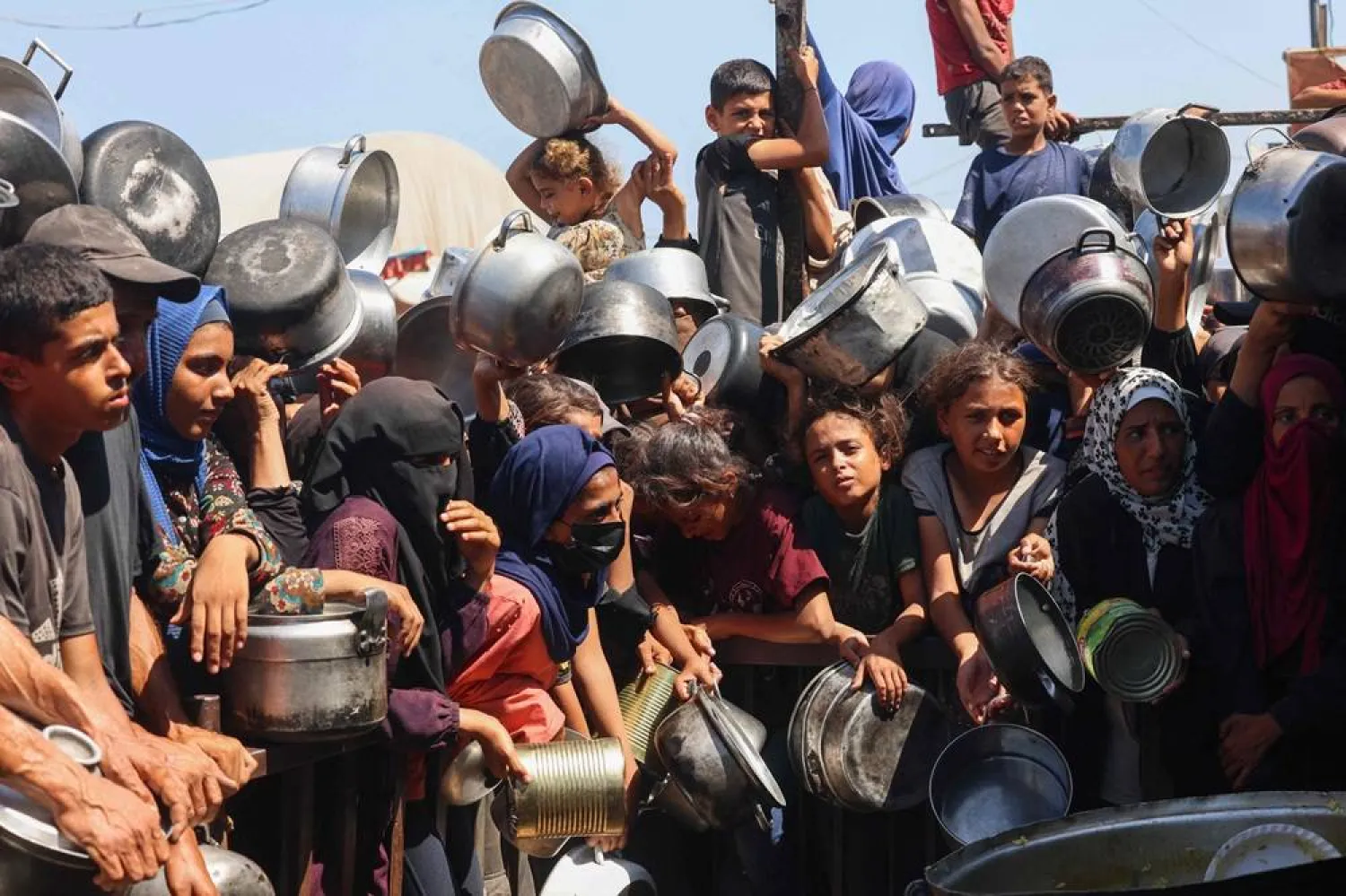
Palestinian women and children wait to receive food portions from a charity kitchen in Khan Younis in the southern Gaza Strip on August 27, 2025. (AFP)
TT

Israel Demands UN-backed Monitor Retract Gaza Famine Report

Palestinian women and children wait to receive food portions from a charity kitchen in Khan Younis in the southern Gaza Strip on August 27, 2025. (AFP)

Israel on Wednesday called on UN-backed hunger monitor the Integrated Food Security Phase Classification Initiative (IPC) to immediately retract a report which determined that famine was present in parts of Gaza.

"Israel demands that the IPC will retract immediately its fabricated report and publish a notice," the director general of Israel's foreign ministry, Eden Bar Tal, told a press conference.

He said Israel would share "evidence" of misconduct in preparing the report with IPC's donors if the organization fails to heed "within a short time".

Bar Tal called the IPC a "politicized" institute that is "working for an evil terror organization", referring to the Palestinian group Hamas whose 2023 attack on Israel triggered the ongoing war in the Gaza Strip.

The United Nations officially declared a famine in Gaza on Friday, blaming "systematic obstruction" of aid by Israel during more than 22 months of war.

The Rome-based IPC said famine was affecting 500,000 people in the Gaza governorate, which covers about a fifth of the Palestinian territory including Gaza City.

The IPC projected that the famine would expand to Deir al-Balah and Khan Yunis governorates by the end of September, covering around two-thirds of Gaza.

Israel has severely restricted aid allowed into Gaza and at times completely cut it off during the war.

Israeli Prime Minister Benjamin Netanyahu has dismissed the IPC's findings as an "outright lie".

He said Israel "does not have a policy of starvation", citing figures on aid it had allowed into Gaza.

COGAT, an Israeli defense ministry body which oversees civil affairs in the Palestinian territories, has argued that the IPC's findings relied on "partial data and unreliable sources".

Jean-Martin Bauer, director of the UN World Food Program's food security analysis, defended the IPC, saying it was the "gold standard" for these kinds of assessments.



Hadhramaut Official Says National Shield Advances, STC Withdrawal Leaves Security Gap

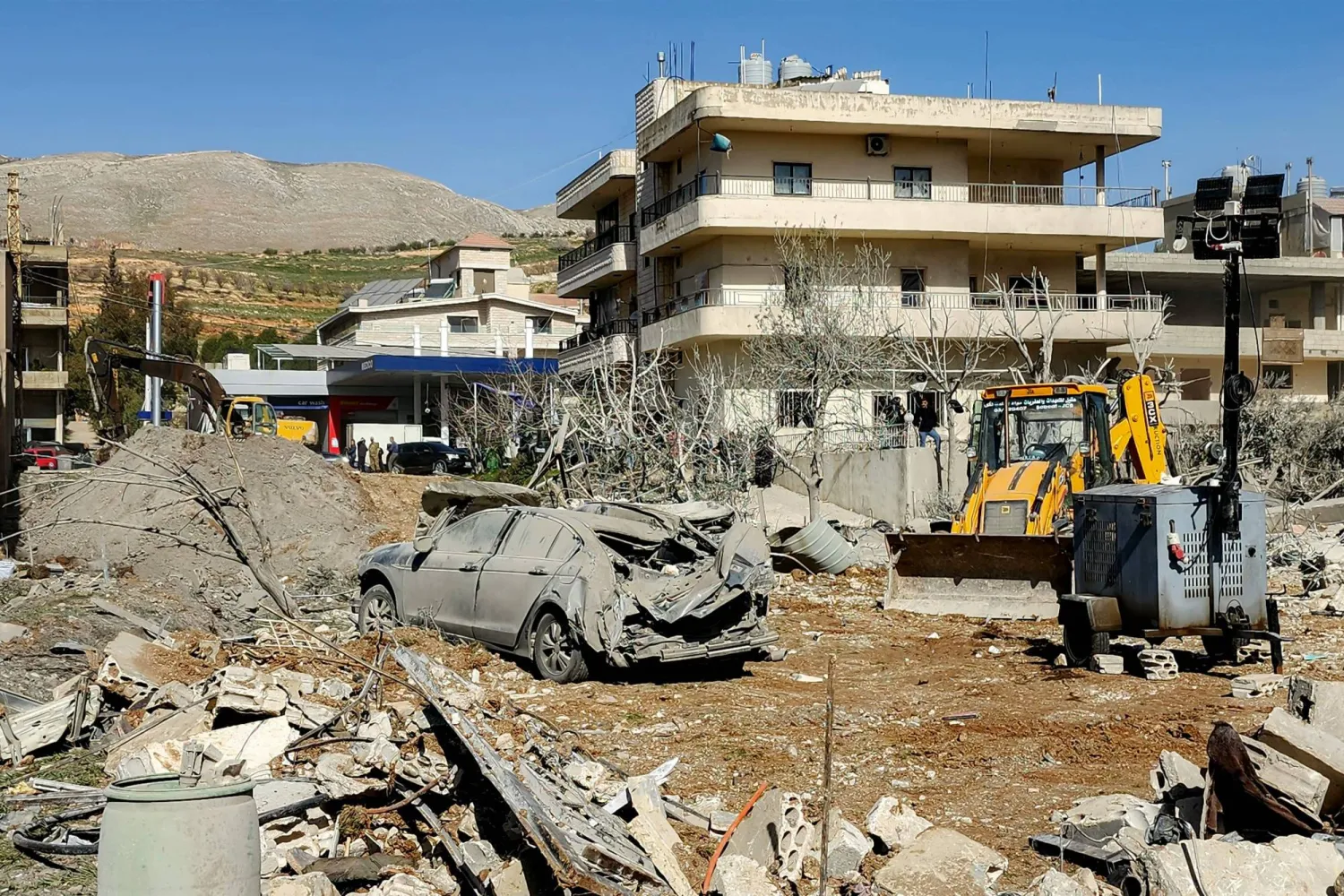
Residents of Al Mahrah governorate voiced support for Yemen’s presidential decisions (Saba News Agency)
TT

Hadhramaut Official Says National Shield Advances, STC Withdrawal Leaves Security Gap

Residents of Al Mahrah governorate voiced support for Yemen’s presidential decisions (Saba News Agency)

A Yemeni local authority official confirmed that the National Shield forces had taken full control of the 37th Brigade camp in al-Khasha and pushed on to the city of al-Qatn, moving toward the strategic city of Seiyun in Hadhramaut.

Abdulhadi al-Tamimi, assistant undersecretary of Hadhramaut governorate for valley and desert affairs, told Asharq Al-Awsat that withdrawing forces loyal to the Southern Transitional Council had left a security vacuum at several military sites, saying local authorities, in coordination with residents, were working to address and fill the gap.

Al-Tamimi, who is in Hadhramaut, stated that forces from the Hadhramaut Tribes Alliance and the Hadhramaut Protection Forces are preparing to move toward the coastal area, specifically Mukalla, to support the Hadhrami Elite Forces in maintaining security and preventing clashes with withdrawing STC forces.

The Hadhramaut official thanked Saudi Arabia for its support of Yemen, and Hadhramaut in particular, which he said had endured difficult times.

“We welcome our brothers in the National Shield forces and salute the support of our elder sister, the Kingdom of Saudi Arabia, under the leadership of the Custodian of the Two Holy Mosques and the Crown Prince and Minister of Defense, for supporting Yemen and backing Hadhramaut, which lived through difficult days due to the invasion of hordes of STC militias into the Hadhramaut Valley and Desert,” he said.

“Those areas had been far from the conflicts Yemen went through and were spared thanks to the wisdom of their people, but this time they came treacherously, seized control of the First Military Region and wreaked havoc there.”

Al-Tamimi stated that the National Shield forces moved at dawn on Friday, following the failure of all de-escalation efforts and attempts to persuade STC leaders to withdraw.

“Unfortunately, many of the STC forces present did not comply with the request to withdraw, leave their weapons and return from where they came, so clashes occurred with support from Saudi air power, and control was taken of the major base, the 37th Armored Brigade camp,” he said.

He added that the forces then advanced to al-Qatn and were heading toward Seiyun, noting that several areas where STC forces had been present were hit by airstrikes, forcing them to flee, most notably the First Military Region.

Al-Tamimi said the rapid withdrawal of STC forces left a security vacuum at camps such as al-Suwayri.

He added that there was also a separate movement on the Hadhramaut, Plateau by the Hadhramaut, Tribes Alliance, led by Sheikh Amr bin Habrish, and the Hadhramaut, Protection Forces, which were joined by many Hadhrami officers and commanders after they took control of the Ghayl bin Yamin camp.

“We are preparing to head to the Hadhramaut, coast to reinforce the Hadhrami Elite Forces there so they are not attacked by the withdrawing force,” he said.

Al-Tamimi stated that the local authority had instructed all districts to form emergency committees to address the situation and secure vital areas until the National Shield forces arrive.

Meanwhile, hospitals in Seiyun received eight wounded people and one fatality as a result of the military developments in Hadhramaut, on Friday, according to local sources.

The Second Military Region issued a statement saying that camps and military sites under its command would remain fully under its responsibility, describing itself as part of the military institution.

The commander of the Second Military Region had previously declared loyalty to the STC, while the statement suggested a shift in position.

The Second Military Region said the Hadhrami Elite Forces “have carried out their national and security duties since their establishment, pledging full commitment to protecting the Hadhramaut coast and its people, maintaining security and social peace, and safeguarding public and private property.


Sudan: How One Hospital Saved Thousands of Lives Amid War

Al Nao Hospital Director Dr. Jamal Eltaeb (Asharq Al-Awsat)
TT

Sudan: How One Hospital Saved Thousands of Lives Amid War

Al Nao Hospital Director Dr. Jamal Eltaeb (Asharq Al-Awsat)

As Sudan’s war dragged on and fighting engulfed the capital Khartoum, the health system collapsed almost entirely. Hospitals shut their doors one after another, until only a single facility remained in operation in the city of Omdurman.

Al Nao Hospital, perched west of the city on the front line of fierce military confrontations, became the capital’s last functioning emergency hospital, receiving the wounded, responding to urgent cases, and saving thousands of lives under relentless fire.

Despite severe security and psychological pressure, a small group of doctors, health workers, volunteers, and technicians held out to keep the hospital running amid indiscriminate shelling, falling rockets and artillery rounds, severe shortages of supplies, power and water outages, the collapse of communications, and an ever-increasing flow of emergency cases.

Throughout the siege and restrictions imposed on the hospital, doctors, medical staff, and volunteers treated the wounded using just three worn-out ambulances.

Their meals were limited to beans and lentils for breakfast and dinner, as no restaurants were operating in the surrounding area, which was saturated with the smell of blood and gunpowder.

Their efforts earned them the Aurora Prize for Awakening Humanity, which is awarded to individuals who risk their lives, freedom, or health to save others.

Harsh days

The field hospital demonstrated its ability to function in the darkest of times.

“I was deeply affected by the deaths of children, and they were in large numbers,” hospital director Dr. Jamal Eltaeb told Asharq Al-Awsat.

“We were receiving more than 100 cases a day, sometimes within a single hour, around 4,000 a month, with injuries ranging from severe to minor, and we treated large numbers of wounded.”

Eltaeb said the hospital began operating on April 17, 2023, just days after the outbreak of the war, through an initiative launched by young volunteers and with extremely limited capabilities to treat the wounded.

“The injuries caused by indiscriminate shelling shook me deeply, especially among children and women,” he said.

“The deaths of young children were the most painful. Even if you are a doctor, you never get used to seeing children with amputated limbs or their abdomens torn open.”

Drowning in chaos

While the streets of Omdurman sank into chaos, the hospital remained alive with activity.

“We worked with the medical staff available and the limited medicines we had,” Eltaeb said. “The Dutch organization Doctors Without Borders provided us with major support.”

He added that after the war began, he moved from Khartoum to Omdurman as a volunteer, before Khartoum State’s health ministry personally asked him to formally manage the hospital in July 2023.

Alongside colleagues Dr. Amir Mohammed Al-Hassan, a specialist in internal medicine and cardiology, and Dr. Yasser Shamboul, a specialist in internal medicine, he began work with limited resources.

“Ministries and institutions were absent,” Eltaeb said.

“The wounded, the sick, the elderly, and children accept no excuses. They just want someone to treat them.”

Painful scenes

In February 2025, a powerful explosion rocked a popular market in Omdurman, quickly flooding the hospital’s emergency room with bodies and injured victims. “That was one of the most difficult days,” Eltaeb said.

“Sabreen Market was crowded with shoppers. We received around 170 injured people in less than two hours, transported by trucks because there was no ambulance service.”

Those who attempted to help were not doctors or health workers, he said, leading to chaotic transport that mixed the dead with the wounded.

Hospital staff sorted the bodies from the living inside the trucks and confirmed 48 deaths, alongside patients with varying injuries, some of whom lost limbs or were left with permanent disabilities.

“But thank God, we saved the lives of the rest,” he said.

The hospital itself came under indiscriminate shelling, yet doctors and medical staff insisted on continuing their work.

Eltaeb said several hospital workers were killed by shelling and rockets, one volunteer died inside the adjacent mosque, two security guards were killed, and a soldier was wounded by a sniper’s bullet inside the hospital.

Aurora humanitarian prize

The Aurora Foundation for Awakening Humanity awarded its 2025 prize, worth $1 million, to Dr. Jamal Eltaeb in recognition of his efforts managing a hospital that served as a final medical line of defense in Khartoum during the armed conflict.

The prize is one of the world’s leading humanitarian awards, honoring those who risk their lives, freedom, or health to save others and alleviate suffering in situations of conflict, crimes against humanity, or human rights violations.

“I do not know who nominated me for this prize,” Eltaeb said. “I was selected from among 880 nominees without my knowledge. When the shortlist was reduced to 25 people, I learned that I had been nominated.”

He said the prize committee searched for him by sending inquiries to hospitals across Europe, looking for a doctor named Jamal Eltaeb. A colleague in anesthesia in London emailed a message to a fellow doctor at Al Nao Hospital, who forwarded it to him.

“When I read the message, I thought it was some kind of joke and did not reply,” he said. After being encouraged to respond, he shared his contact details and received a call the following day, as the shortlist narrowed to 15, then four, before he was named the final winner.

“The prize does not represent me personally,” Eltaeb said. “It represents the hospital family, the doctors, administrators, and workers. I was only leading them. I am no more deserving of this prize than they are.”


Hamas to Asharq Al-Awsat: Gaza Arms Are Light, Pose No Threat to Israel

Hamas fighters in Gaza (Reuters)
TT

Hamas to Asharq Al-Awsat: Gaza Arms Are Light, Pose No Threat to Israel

Hamas fighters in Gaza (Reuters)

Senior sources in Hamas have played down what they described as an Israeli “scare tactic” over the group’s weapons, rejecting Israeli demands to disarm as a condition for moving to the second phase of a ceasefire in the Gaza Strip.

The sources told Asharq Al-Awsat that Hamas possesses only light weapons in Gaza that have no real impact and pose no genuine threat to Israel, and are barely sufficient to confront Israeli forces. They said such arms could not be used to carry out large-scale attacks, such as the Oct. 7, 2023, assault.

They said fighters from armed factions mainly have Kalashnikov and M16 rifles and similar light weapons, along with a very limited number of anti-armor rounds and improvised explosive devices, most of them individual and small in size.

The sources added that the group has lost almost all of its rockets, mortars and similar weapons after the vast majority were used during two years of fighting, while Israeli forces destroyed stockpiles they uncovered.

The sources said Israel was using the weapons issue to avoid complying with the ceasefire agreement and moving to the second phase, in order to preserve long-term strategic security goals, including keeping its forces inside Gaza, particularly east of the so-called yellow line designated as a withdrawal line in the first phase.

Israeli Prime Minister Benjamin Netanyahu said in an interview with Fox News that there were currently 20,000 Hamas fighters in Gaza armed with Kalashnikov rifles and holding around 60,000 weapons. He said they also used them against civilians in Gaza who opposed their rule.

Disarmament means taking all their weapons and getting rid of them, and dismantling hundreds of kilometers of terror tunnels, Netanyahu said, adding that Hamas refused to do so.

According to Israel’s Channel 13, Netanyahu conveyed those figures to US President Donald Trump, who was said to be shocked by the numbers and stressed the need to dismantle the entire arsenal before any next steps.

Commenting on Netanyahu’s remarks, the Hamas sources said he was trying to influence US thinking on the second phase by making various claims, including about light weapons, in an effort to broaden the concept of disarmament in Gaza and force the resistance to hand over everything it has, even personal arms.

They said Israel’s insistence on stripping Palestinian factions of all weapons aimed to turn Gaza into a pacified area, raising a white flag and stripping it of the means of resilience and resistance that have long defined the enclave under occupation.

“Netanyahu will achieve nothing of the sort,” the sources said. “As he failed before, he and many Israeli leaders will fail again.”

Asked whether that meant Hamas rejected disarmament, the sources said discussions were ongoing with mediators and that a number of ideas were still being developed toward an agreement on weapons within the framework of a broad Palestinian national consensus.

On what remains of Hamas’ tunnel network, the sources said the issue was also under discussion and negotiation, adding that the movement was not seeking to obstruct the transition to the second phase or any of its provisions, but not at the expense of core Palestinian principles.

Israel’s Yedioth Ahronoth reported on Friday that Israeli military chief of staff Eyal Zamir expressed doubts in a security discussion held before Netanyahu’s trip to the United States about the ability of an international stabilization force to disarm Hamas.

Zamir said Israeli forces were operationally ready to carry out the task themselves through another military operation in Gaza, a view Netanyahu reportedly shares as the US administration seeks to exhaust all options for such a step.

The report came as Israel continues to discover more tunnels in Gaza despite the end of the two-year war. One discovery surprised officials due to its proximity to the border with the Kissufim area, east of central Gaza.

Yedioth Ahronoth said the tunnel was about 800 meters from the settlements, within the buffer zone between Gaza and Israel that Israel intends to keep under its control in any future scenario.

The Israeli army has opened an investigation into when it was dug and why it was not detected earlier, given the presence of permanent Israeli military sites on both sides of the border. The tunnel was exposed after heavy rainfall, the paper said.