



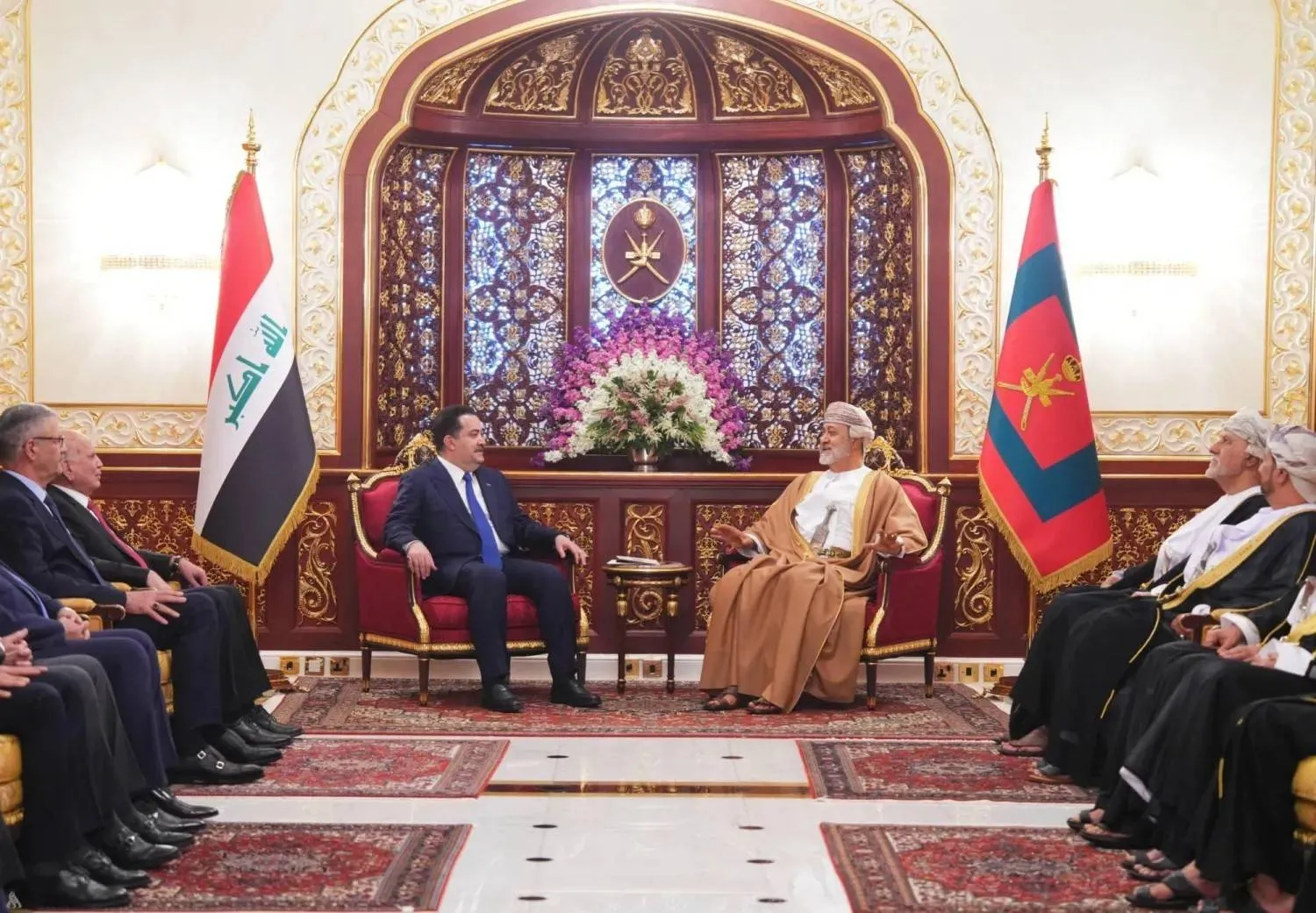

Iraq and Oman signed memorandums of understanding (MoUs) covering multiple sectors during Iraqi Prime Minister Mohammed Shia Al-Sudani’s visit to Muscat, as both countries emphasized the need to halt the spread of conflict in the region.
Al-Sudani met Sultan Haitham bin Tariq at Al-Hosn Palace in Salalah on Wednesday. In a statement from his office, the Iraqi premier said he stressed Baghdad’s desire to strengthen bilateral ties and reaffirmed his government’s commitment to contributing to regional stability.
Al-Sudani praised Oman’s stance advocating an end to aggression and the promotion of stability, while Sultan Haitham highlighted Muscat’s intent to expand cooperation with Iraq across all sectors. He instructed Omani ministers to translate the MoUs into concrete, collaborative projects.
The Omani ruler also expressed support for Iraq’s regional initiatives, commending Baghdad’s efforts to curb the spread of conflict and consolidate peace in the region.
According to Oman News Agency, the two leaders “reviewed avenues for cooperation and partnership in diverse fields, particularly energy and investment, with the aim of benefiting the peoples of both countries.”
A senior Iraqi diplomatic source told Asharq Al-Awsat that Al-Sudani’s visit was part of Iraq’s effort to chart a new course in regional diplomacy, aiming to lower tensions in consultation with regional and international partners.
Bilateral relations between Baghdad and Muscat have remained largely unaffected since 2003, despite Iraq’s shifting geopolitical landscape. Both governments have sought to enhance partnerships through the Iraq-Oman Joint Committee, which last met in Baghdad in 2024.
Expanding a Multi-Sector Partnership
Ahead of his departure from Baghdad, Al-Sudani told reporters that preparatory meetings had paved the way for MoUs in energy, tourism, oil storage and refining, industry and defense localization, maritime transport and port management, scientific research, education, tax avoidance, urban planning, housing, youth and sports, trade, export development, competition promotion, and anti-monopoly measures.
Since taking office, the Iraqi government has focused on strengthening ties with neighboring states through bilateral and multi-polar partnerships and productive diplomacy, Al-Sudani said, praising Oman’s consistent official and public support for Iraq during times of challenge.
He added that Iraq is enjoying a period of relative stability, clear regional positions, urban and economic development, and is keen to involve Oman and other Arab countries in long-term investment and development partnerships.
Sources familiar with the visit said discussions in Muscat would also address regional security and ways to prevent war between Iran and Israel amid ongoing tensions. Iraqi officials are particularly concerned about the potential impact of any new regional conflict on the upcoming elections scheduled for Nov. 11.
Iranian Envoy Visits Baghdad Amid Regional Tensions
Meanwhile, Iranian Deputy Foreign Minister Saeed Khatibzadeh arrived in Baghdad on an unannounced visit, meeting Iraqi Foreign Minister Fuad Hussein and National Security Adviser Qasim Al-Araji.
According to sources, Khatibzadeh discussed regional developments following the recent 12-day conflict with Israel, underscoring threats posed by Israel and the United States and calling for joint measures to address shared risks facing Iran and Iraq.
