



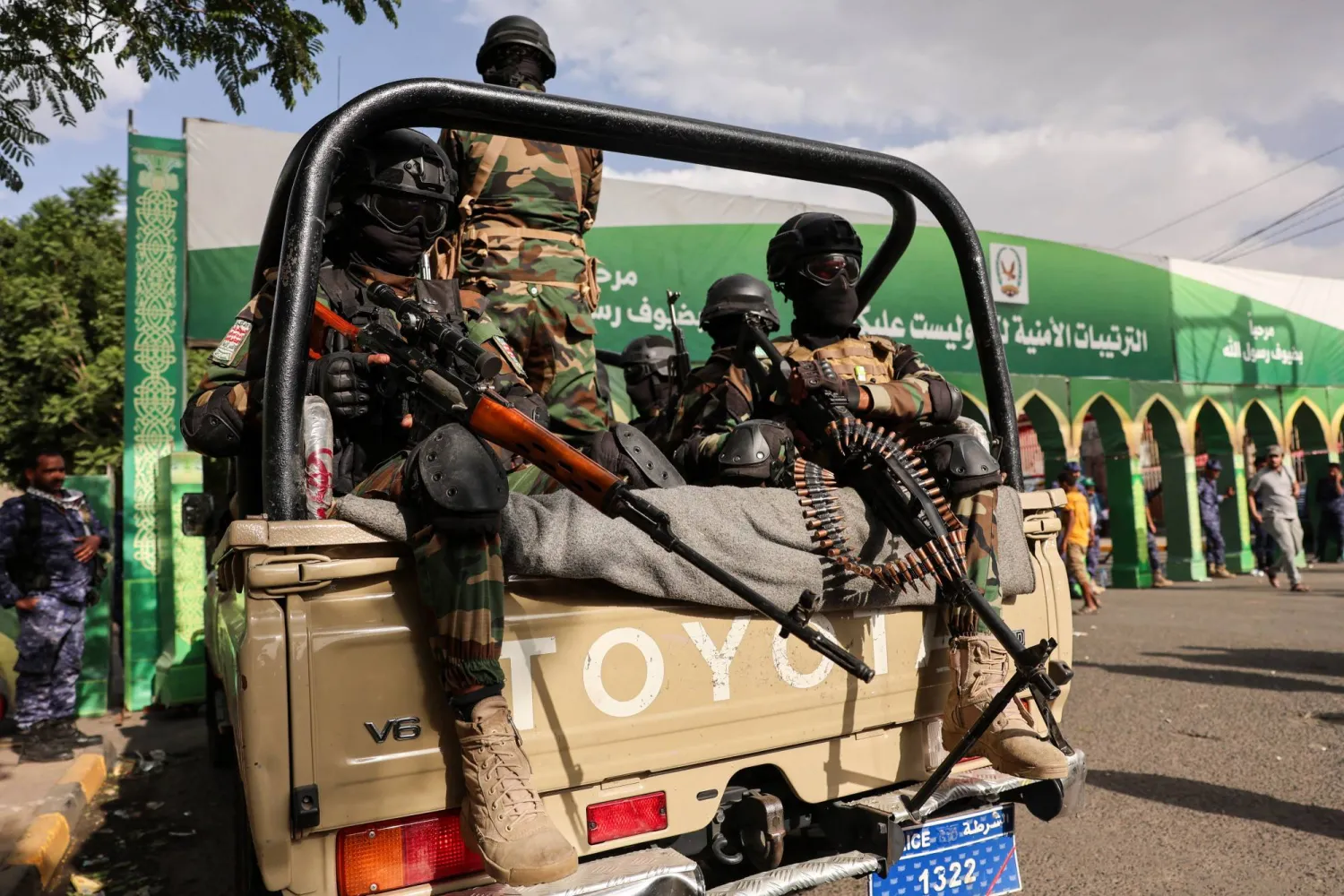

Yemen’s information minister accused Iran on Sunday of smuggling materials used in chemical weapons production to areas controlled by the Houthi movement, saying Revolutionary Guard experts were directly overseeing the construction of a secret facility to manufacture internationally banned arms.
Minister Moammar al-Eryani said in a statement that “confirmed sources” indicated the Houthis had begun preparing the materials to mount on ballistic missiles and drones. He warned the move marked an “unprecedented escalation” that could unleash catastrophic scenarios for Yemen, the wider region and the international community, with the risk of war crimes and possible genocide.
Eryani said the introduction of such weapons went beyond the Houthis’ existing use of drones and missiles against civilians inside Yemen and in neighboring countries. The development, he added, posed “a graver threat” to international peace and security and constituted a flagrant violation of the Chemical Weapons Convention and UN Security Council resolutions on Yemen.
The minister said the warning was consistent with recent comments by Iran’s defense minister acknowledging the establishment of weapons factories and infrastructure abroad.
He accused Tehran of turning Yemen into “secret laboratories for chemical and biological materials and an advanced Revolutionary Guard base that threatens regional security, international shipping and global energy supplies.”
Yemen’s government has repeatedly accused Iran of entrenching a direct military presence in Houthi-held areas.
The United States and allied navies, along with Yemeni government forces, have in recent years intercepted shipments of Iranian missile parts, guidance systems and drones bound for the Houthis. UN reports have also linked Tehran to supplying advanced weapons and technology in violation of Security Council resolutions.
Eryani warned that Houthi control of large parts of Yemen, including stretches of the Red Sea coast, represented a mounting threat over time. “Every day the international community delays decisive action, the costs rise and the security, economic and humanitarian risks to the region and the world multiply,” he said.
He urged the United Nations, the Security Council, the Organization for the Prohibition of Chemical Weapons and international partners to investigate the alleged chemical smuggling, stop what he called Iran’s “blatant violations” and impose punitive measures. He also called for stronger support for Yemen’s internationally recognized government to restore authority across the country.
“Any complacency in confronting this scheme will allow Iran to entrench a dangerous reality, turning Yemen into a backroom workshop for prohibited programs and a permanent launchpad for Iranian terrorism,” he said.


