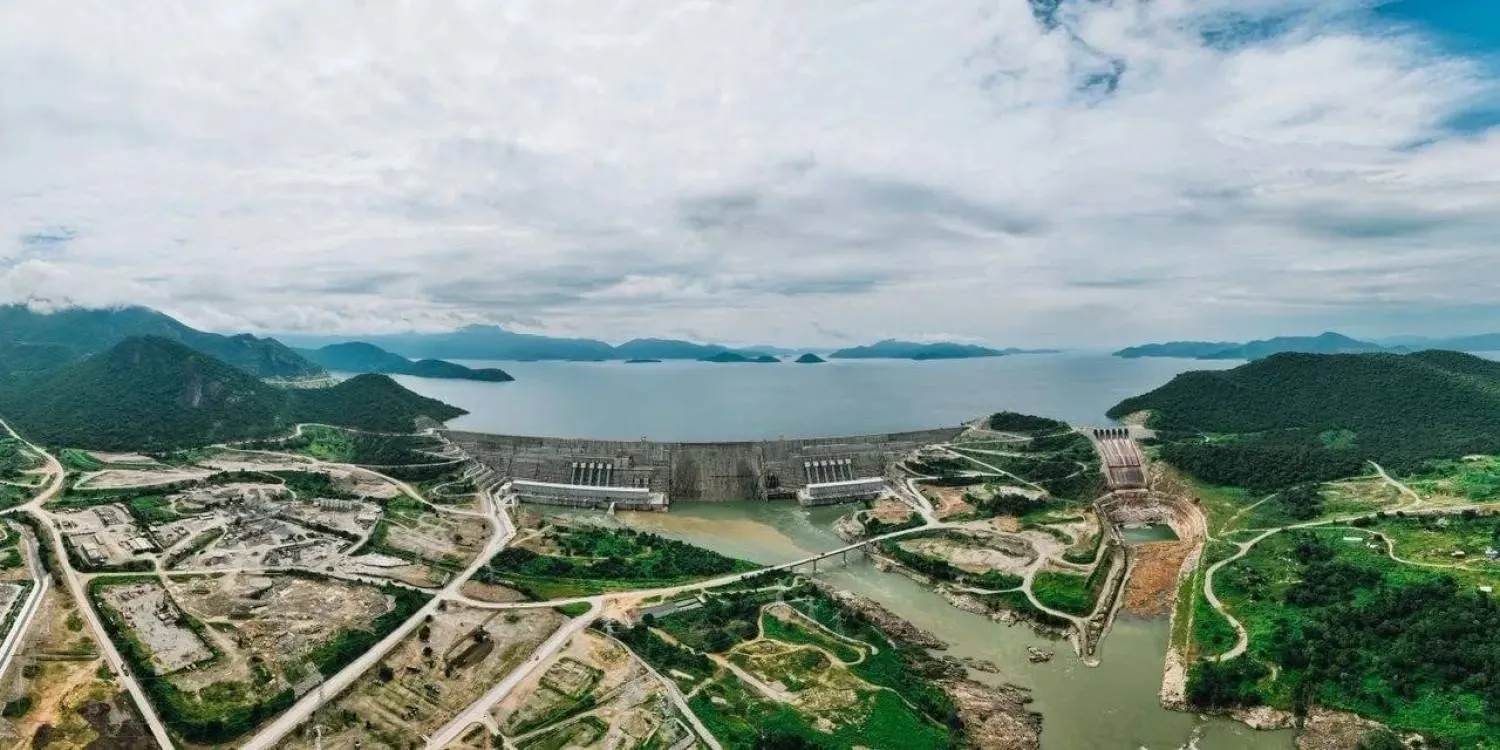

Egypt told the UN Security Council on Tuesday it would not compromise on its “existential interests” in the River Nile, escalating a long-running dispute after Ethiopia formally inaugurated its massive Grand Ethiopian Renaissance Dam (GERD).
Ethiopian Prime Minister Abiy Ahmed presided over the opening ceremony, hailing the multi-billion-dollar project as a “source of inspiration” and declaring that Addis Ababa had “prevailed against those who threatened it in disregard of international law.”
The government said Ethiopians “do not use the river to harm others,” rejecting accusations from Cairo and Khartoum that the dam could endanger their historic shares of Nile waters.
Egypt’s Foreign Ministry dismissed the inauguration as an attempt to give the project “a false cover of legitimacy,” calling it a unilateral move that violates international law and a 2021 Security Council statement urging the three countries to reach a binding deal on filling and operating the dam.
“Egypt will not allow Ethiopian attempts to dominate management of the river unilaterally,” the ministry said, adding it reserved the right to take “all measures guaranteed under international law and the UN Charter to defend the existential interests of its people.”
Ethiopia began building GERD in 2011 on the Blue Nile, the main tributary of the Nile, despite objections from downstream Egypt and Sudan.
Cairo, which relies on the river for almost all its fresh water, says the dam threatens its vital share, while Addis Ababa argues it is essential for development and power generation.
Talks sponsored by the African Union collapsed in 2021 without agreement, prompting Egypt to appeal to the Security Council.
Egypt told the Council it had exercised “maximum restraint” for years by choosing diplomacy over confrontation. But it accused Ethiopia of obstruction and of using the project as a political tool “to rally its domestic audience against a fictitious enemy.”
Former Egyptian assistant foreign minister Mohamed Hegazy said the inauguration amounted to “an unprecedented hostile unilateral act,” warning that Cairo could again seek UN intervention or pressure Ethiopia through international partners.
Water expert Diaa El-Din El-Qousi told Asharq Al-Awsat that the inauguration was “a political ploy” since construction was not fully complete, but cautioned that Egypt’s water security could be at risk if future floods are low. “Egypt will not allow the dam to operate at its expense,” he said.
Ethiopia last March invited Egypt and Sudan to resume negotiations, but the offer was ignored after years of failed talks.
Egyptian President Abdel Fattah el-Sisi has repeatedly said that “Nile waters are a red line.”