




US envoy Tom Barrack escalated his rhetoric on Sunday, saying Lebanon was in a “difficult” situation and accusing the government of “inaction” in disarming the Hezbollah group.
In an interview with Sky News Arabia, he said there were good people in government, but they haven’t really done anything to disarm the Iran-backed party, raising questions about what the future holds for Lebanon.
He made his remarks on the eve of the one-year anniversary of the eruption of the war between Israel and Hezbollah. A ceasefire was reached in November and called among other things for the disarmament of the party.
Barrack warned that Israel will not withdraw from the Lebanese territories it occupied during the war and that Hezbollah was rebuilding its strength.
The government will have to assume the responsibility for this, he added in blunt remarks.
As much as $60 million a month is flowing to Hezbollah “from somewhere” during this period, he went on to say. The Lebanese people believe that Hezbollah is not rebuilding its strength, but it is.
Barrack stressed that the US will not intervene to confront Hezbollah, whether through its forces or the Central Command.
Moreover, he said the Lebanese army is a “good organization”, but it is not “well-equipped” to handle the threat.
“Hezbollah is our enemy, and Iran is our enemy. We need to cut off the heads of these snakes and stop their funding,” Barrack urged.
Israel refuses to negotiate
It remains to be seen how Barrack’s comments will be reflected on the ground. Retired Major General Abdul Rahman Chehaitli said the situation is obvious and that Israel sees no room for negotiations.
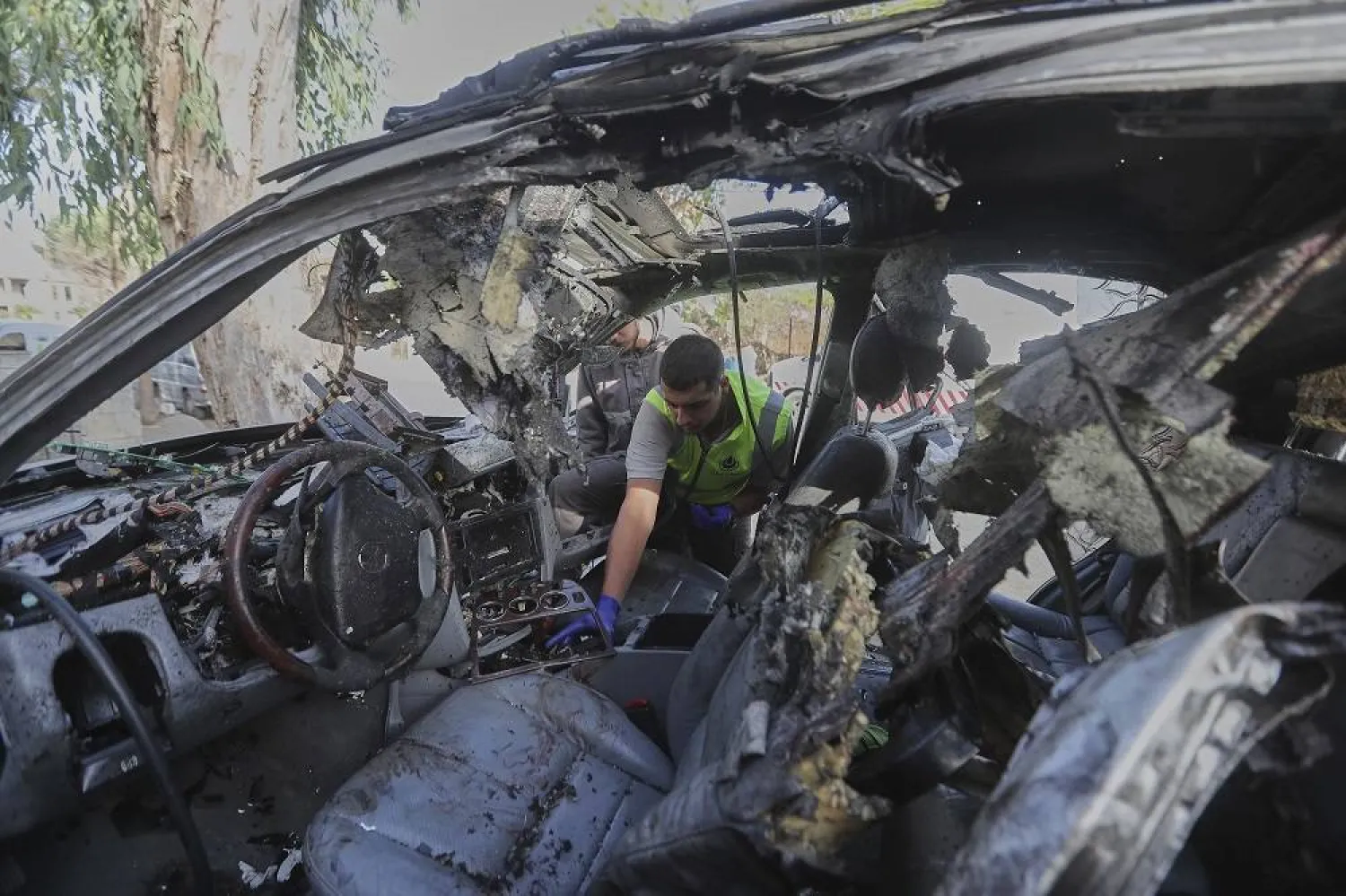
“It will respond through escalation and strikes, the latest of which was the Bint Jbeil massacre on Sunday,” he told Asharq Al-Awsat.
Five people were killed in the strike, including four children.
The Israeli military said it was targeting a Hezbollah member, and that he “operated from within a civilian population.” It acknowledged that civilians were killed and that it was reviewing the incident.
Chehaitli added: “The negotiations we used to see when [US envoy] Amos Hochstein was here are over. Now, we have dictates made to Lebanon and it has to choose whether to implement them or face war.”
“The government chose negotiations and implementing the dictates within Lebanon’s means. It seems Israel is not pleased with this and its answer was clear: the Lebanese state must carry out the Israeli dictates or Tel Aviv will continue its attacks, demonstrated in the Bint Jbeil massacre that took place hours after Barrack’s comments and the ceasefire follow up committee met,” he remarked.
Pressure
Dr. Sami Nader, Director of the Levant Institute for Strategic Affairs, said Israel was pressuring Lebanon to implement the government’s pledge to impose state monopoly over weapons and disarm Hezbollah because the army plan it has adopted to that end does not set a deadline for disarmament.
On the one hand, the army is being encouraged to follow through with the plan, but on the other, there is dissatisfaction because it has not set a deadline, he told Asharq Al-Awsat.
The situation and balance in power allows Israel to carry out this escalation. Lebanon needs to read and understand the situation, he stressed.
Criticism of govt
The Shiite duo of Hezbollah and its ally Amal used the Bint Jbeil attack to slam the government.
Amal’s Development and Liberation bloc MP Ashraf Beydoun said the “massacre is a flagrant violation of international law.
He called on the state to assume its responsibility in protecting civilians, especially those in the South, against these repeated attacks.
Hezbollah MP Ibrahim Moussawi slammed the state, saying: “A state that cannot protect its people, especially its children, cannot be relied upon. A state that claims to be capable of defending and protecting the nation by tearfully pleading with the Americans, cannot be relied upon.”
“The Bint Jbeil massacre is evidence of its complete incompetence,” he declared in a post on the X platform.


