


UN Adds 68 Companies to Blacklist for Alleged Complicity in Rights Violations in Israeli Settlements

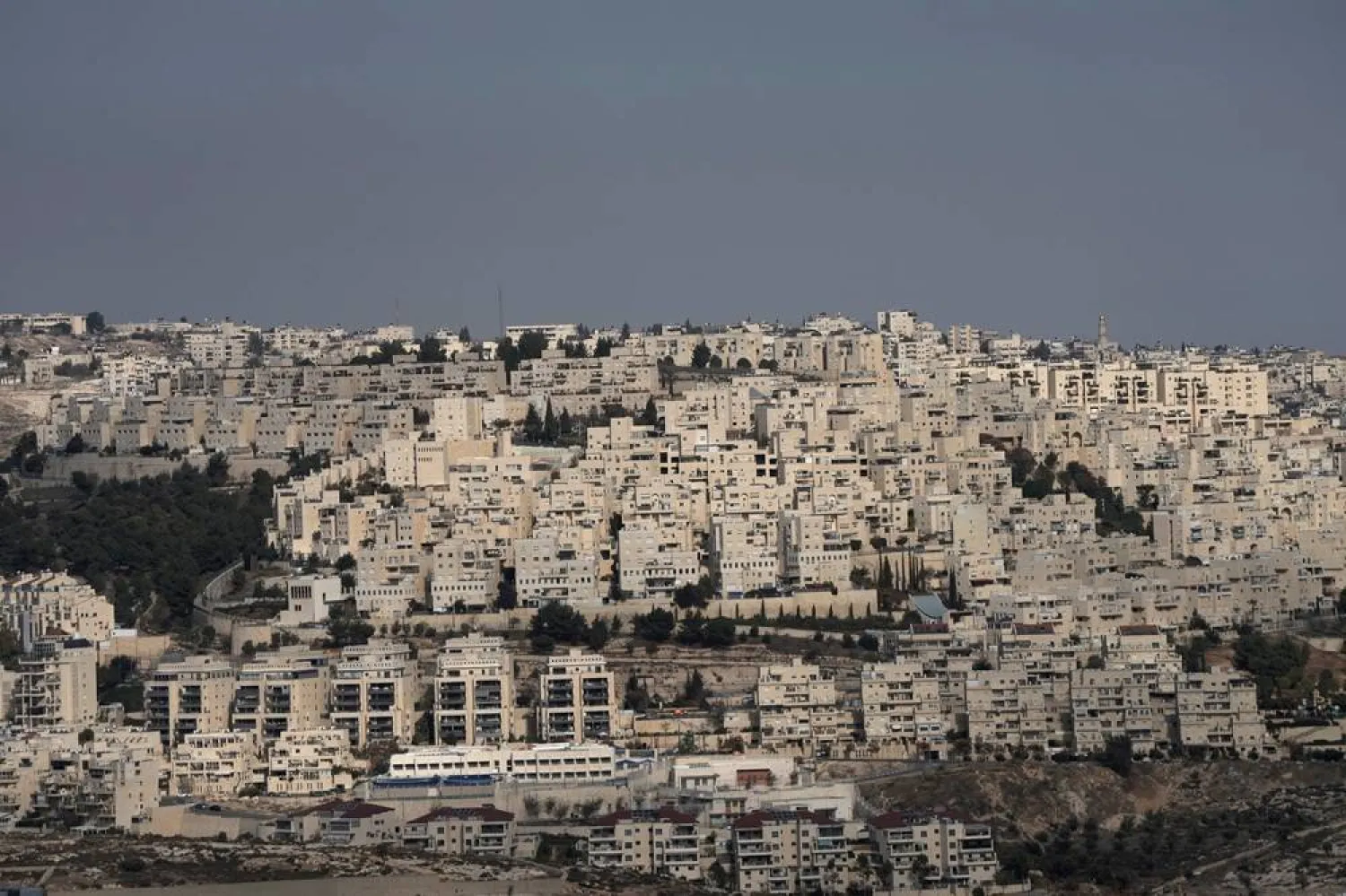
The Israeli settlement of Har Homa, seen from the West Bank city of Bethlehem, Tuesday, Dec. 17, 2024. (AP)
TT

UN Adds 68 Companies to Blacklist for Alleged Complicity in Rights Violations in Israeli Settlements

The Israeli settlement of Har Homa, seen from the West Bank city of Bethlehem, Tuesday, Dec. 17, 2024. (AP)

The United Nations has added nearly 70 more companies to a blacklist of firms from 11 countries that it says are complicit in violating Palestinian human rights through their business ties to Israeli settlements in the occupied West Bank.

The new list spotlights companies that do business that's deemed supportive of the settlements, which are considered by many to be illegal under international law. It includes an array of companies like vendors of construction materials and earth-movers, as well as providers of security, travel and financial services.

“Businesses working in contexts of conflict have a due diligence responsibility to ensure their activities do not contribute to human rights abuses,” said Ravina Shamdasani, spokesperson of the UN human rights office. “We call on businesses to take appropriate action to address the adverse human rights impacts of their activities.”

The list now contains 158 companies — the vast majority Israeli. The others are from the United States, Canada, China, Britain, France, Germany, Spain, Portugal, the Netherlands and Luxembourg.

Israel said it “categorically rejects” the publication. “This database is meant to serve as a blacklist against businesses that have committed no wrongdoing,” the Israeli diplomatic mission in Geneva said in a statement. “We call on friends not to yield to this ugly attempt to blacklist Israeli firms.”

The UN office said it had advised the companies of their listing and given them a right of reply.

The blacklist was born of a vote by the UN’s Human Rights Council, which has no legal authority or ability to force companies to act. Its main goal is to name and shame businesses with ties to the settlements. It is not clear what impact inclusion on the blacklist has had on companies’ bottom lines.

Some companies put on the list, others taken off Newcomers to the list include German building-materials company Heidelberg Materials, Portuguese rail systems provider Steconfer, and Spanish transportation engineering firm Ineco. Among those still on the list are travel-sector companies US-based Expedia Group, Booking Holdings Inc. and Airbnb, Inc.

Heidelberg Materials, in an email to The Associated Press, said it and subsidiary Hanson Israel — which was also added — were not active in the occupied Palestinian territories, and that as a result it considered their inclusion to be “not justified."

Steconfer protested that it has a “neutral, apolitical role” as a business and asked the UN rights office to reconsider. Its work on a Jerusalem rail transport project is “technical, indirect, and strictly limited to improving public transportation for all residents, without discrimination,” it added in a statement.

While 68 new companies were added Friday, seven were taken off. A total of 215 business enterprises were assessed in this round, but hundreds more could get a look in the future.

Among the seven companies taken off the list were transportation company Alstom of France, and travel service providers eDreams of Spain and Opodo of Britain.

Israel's growing isolation

The rights council passed a resolution nearly a decade ago to create the list, and Israel has sharply criticized it since. The revision could further isolate Israel at a time when some of its European allies have recognized an independent Palestinian state over Israel's conduct of its war against Hamas in Gaza.

Months in the making, the revised list comes as Israel has made veiled threats to annex parts or all of the West Bank and has approved plans to build thousands of new settlement homes there.

The government approved a controversial settlement project last month that would effectively split the West Bank in two, a step that would all but bury hopes for a Palestinian state in the territory.

The international community says dividing the territory as part of a two-state solution would leave Israel as a country with a solid Jewish majority and allow the Palestinians to realize their right of self-determination.

The alternative, many say, is an apartheid-like country divided roughly evenly between Israelis and Palestinians in which Jews would rule over the Palestinians.

This is the first revision to the list since 2023, when 97 companies were listed — down from 112 in the original list published in 2020. Among those taken off last time was US-based food and cereal giant General Mills.

The council decided that 10 business activities in the settlements could merit inclusion of a company in the list, such as dumping pollution in Palestinian areas; supplying bulldozing equipment, surveillance gear, and even helping people book travel or lodging in the settlements.

The UN has budgeted enough funding for a single full-time staffer to handle the painstaking, sensitive work of gathering and assessing claims and communicating with companies in question. Claims about hundreds of other companies are awaiting assessment.

With broad international backing, the Palestinians claim the West Bank, east Jerusalem and Gaza for a future independent state.

Israel has said it has no intention of dismantling any of its West Bank settlements.

Over 500,000 Israelis live in the West Bank, in addition to more than 200,000 in east Jerusalem. The postwar future of Gaza, which has suffered massive destruction, remains unclear, though Israeli Prime Minister Benjamin Netanyahu has ruled out an independent Palestinian state.

Israel and the US regularly accuse the Human Rights Council of anti-Israel bias, and the Trump administration has pulled the United States out.



Israel Says US Gaza Executive Board Composition Against its Policy

FILE - A displacement camp sheltering Palestinians on a beach amid stormy weather is seen in Gaza City, Jan. 13, 2026. (AP Photo/Jehad Alshrafi, File)
TT

Israel Says US Gaza Executive Board Composition Against its Policy

FILE - A displacement camp sheltering Palestinians on a beach amid stormy weather is seen in Gaza City, Jan. 13, 2026. (AP Photo/Jehad Alshrafi, File)

Prime Minister Benjamin Netanyahu's office said on Saturday that this week's Trump administration announcement on the composition of a Gaza executive board was not coordinated with Israel and ran counter to government policy.

It said Foreign Minister Gideon Saar would raise the issue with US Secretary of State Marco Rubio.

The ⁠statement did not specify what part of the board's composition contradicted Israeli policy. An Israeli government spokesperson declined to comment.

The board, unveiled by the White House on Friday, includes Turkish Foreign Minister Hakan Fidan. Israel ⁠has repeatedly opposed any Turkish role in Gaza.

Other members of the executive board include Sigrid Kaag, the UN special coordinator for the Middle East peace process; an Israeli-Cypriot billionaire; and a minister from the United Arab Emirates.

Washington this week also announced the start of the second phase of President ⁠Donald Trump's plan, announced in September, to end the war in Gaza. This includes creating a transitional technocratic Palestinian administration in the enclave.

The first members of the so-called Board of Peace - to be chaired by Trump and tasked with supervising Gaza's temporary governance - were also named. Members include Rubio, billionaire developer Steve Witkoff and Trump's son-in-law Jared Kushner.


Sisi Says he Values Trump Offer to Mediate Egypt-Ethiopia Dispute on GERD

FILE PHOTO: US President Donald Trump points as he attends a meeting with oil industry executives, at the White House in Washington, D.C., US, January 9, 2026. REUTERS/Evelyn Hockstein/File Photo
TT

Sisi Says he Values Trump Offer to Mediate Egypt-Ethiopia Dispute on GERD

FILE PHOTO: US President Donald Trump points as he attends a meeting with oil industry executives, at the White House in Washington, D.C., US, January 9, 2026. REUTERS/Evelyn Hockstein/File Photo

Egyptian President Abdel Fattah al-Sisi said he valued an offer by US President Donald Trump to mediate ⁠a dispute over Nile River waters between Egypt and Ethiopia.

In a post on ⁠X, Sisi said on Saturday that he addressed Trump's letter by affirming Egypt's position and concerns about the country's water ⁠security in regards to Ethiopia's Grand Ethiopian Renaissance Dam (GERD).

"I am ready to restart US mediation between Egypt and Ethiopia to responsibly resolve the question of 'The Nile Water Sharing' once and for all," Trump wrote to Sisi in the letter that was also posted on Trump’s Truth Social account.

Addis Ababa's September 9 inauguration of GERD has been a source of anger ⁠in Cairo, which is downstream on the Nile.

Ethiopia sees the $5 billion dam on a tributary of the Nile as central to its economic ambitions.

Egypt says the dam violates international treaties and could cause both droughts ⁠and flooding.

Sudan, another ​downstream country, has expressed concern about the regulation and safety of ⁠its own water supplies and dams.

Sudan's army leader Abdel Fattah al-Burhan also welcomed Trump's mediation offer on Saturday.


Kurds Say Sharaa's Decree Falls Short, Syrian Government Forces Enter Deir Hafer

Syrian army convoys enter the Deir Hafer area in the eastern Aleppo countryside, Syria, after the Kurdish-led Syrian Democratic Forces (SDF) announced the handover of the area west of the Euphrates to the Syrian government, 17 January 2026. EPA/AHMAD FALLAHA
TT

Kurds Say Sharaa's Decree Falls Short, Syrian Government Forces Enter Deir Hafer

Syrian army convoys enter the Deir Hafer area in the eastern Aleppo countryside, Syria, after the Kurdish-led Syrian Democratic Forces (SDF) announced the handover of the area west of the Euphrates to the Syrian government, 17 January 2026. EPA/AHMAD FALLAHA

Syria's Kurds on Saturday said a presidential decree recognizing the minority's rights and making Kurdish an official language fell short of their expectations as Syrian government forces entered the outskirts of a northern town.

In a statement, the Kurdish administration in Syria's north and northeast said the decree issued by President Ahmed al-Sharaa on Friday was "a first step, however it does not satisfy the aspirations and hopes of the Syrian people".

It added that "rights are not protected by temporary decrees, but... through permanent constitutions that express the will of the people and all components" of society.

Al-Sharaa’s decree affirmed that Syrian citizens of Kurdish origin are an integral and original part of the Syrian people, and that their cultural and linguistic identity is an inseparable component of Syria’s inclusive national identity.

The decree commits the state to protecting cultural and linguistic diversity and guarantees Kurdish citizens the right to preserve their heritage, arts, and mother tongue within the framework of national sovereignty.

It recognizes Kurdish as a national language and allows it to be taught in public and private schools in areas where Kurds make up a significant proportion of the population.

It also grants Syrian nationality to all residents of Kurdish origin living on Syrian territory, including those previously unregistered, while ensuring full equality in rights and duties.

The decree further designates Nowruz, celebrated annually on March 21, as an official public holiday.

Syrian government forces entered the outskirts of the northern town of Deir Hafer Saturday morning after the command of Kurdish-led fighters said it would evacuate the area in an apparent move to avoid conflict.

This came after deadly clashes erupted earlier this month between government troops and the US-backed and Kurdish-led Syrian Democratic Forces in the city of Aleppo, Syria’s largest.

It ended with the evacuation of Kurdish fighters from three neighborhoods taken over by government forces.

An Associated Press reporter saw on Saturday government tanks, armored personnel carriers and other vehicles, including pickup trucks with heavy machine-guns mounted on top of them, rolling toward the town of Deir Hafer from nearby Hamima after bulldozers removed barriers. There was no SDF presence on the edge of the town.

Meanwhile, the Syrian military said Saturday morning its forces were in full control of Deir Hafer, captured the Jarrah airbase east of the town, and were working on removing all mines and explosives. It added that troops would also move toward the nearby town of Maskana.

On Friday night, after government forces started pounding SDF positions in Deir Hafer, the Kurdish-led fighters’ top commander Mazloum Abdi posted on X that his group would withdraw from contested areas in northern Syria. Abdi said SDF fighters would relocate east of the Euphrates River starting 7 a.m. (0400 gmt) Saturday.

The easing of tension came after US military officials visited Deir Hafer on Friday and held talks with SDF officials in the area.

The United States has good relations with both sides and has urged calm.