



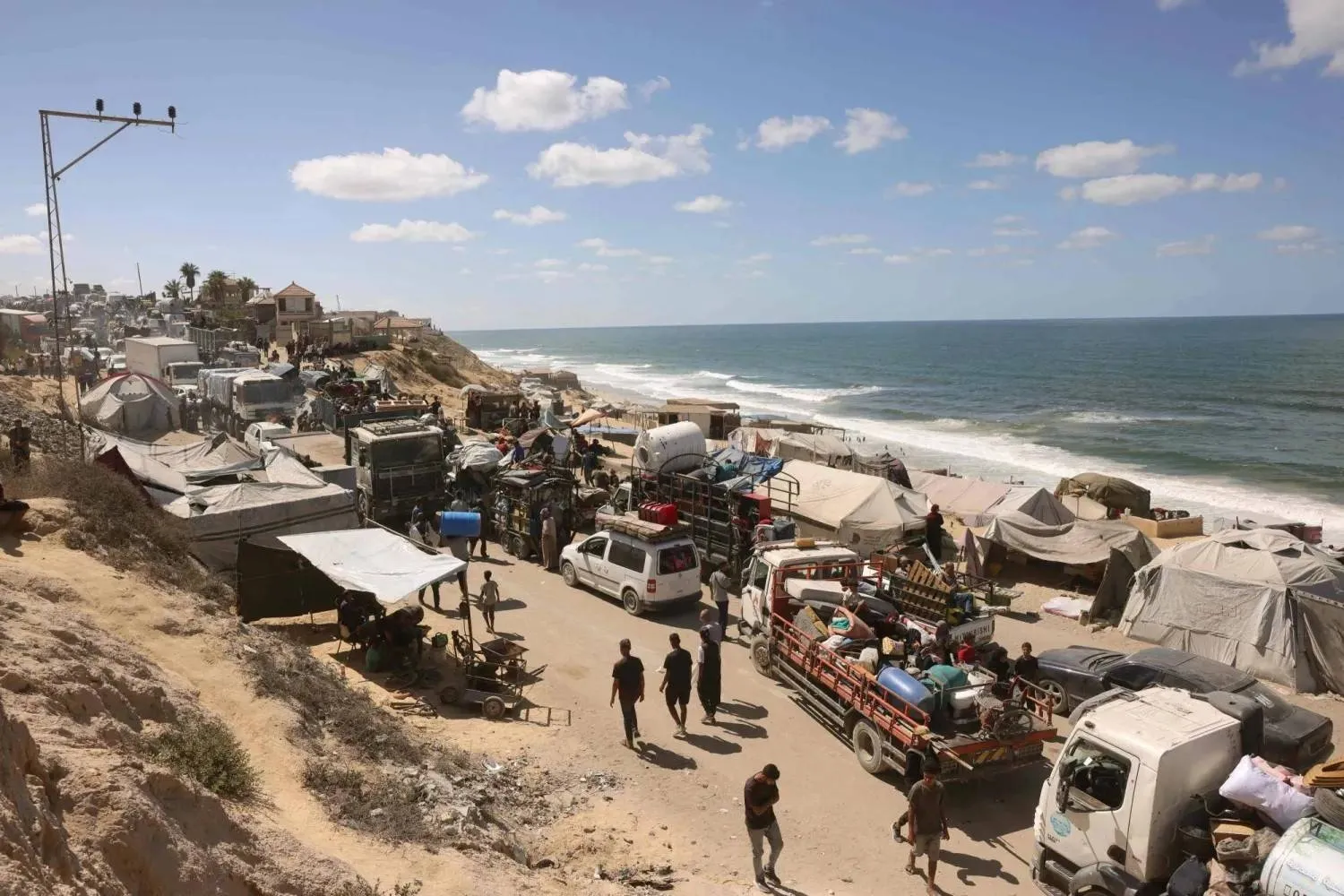

Israel’s military on Wednesday closed northbound traffic on Gaza’s main coastal road, tightening its siege on the enclave’s largest city where hundreds of thousands remain trapped amid bombardment, dwindling food supplies and soaring prices.
The army said Al-Rashid road, which runs along the Mediterranean coast, would remain open only to those moving south. Residents and aid officials said the measure was designed to pressure civilians into fleeing Gaza City toward central and southern areas.
Helicopters and drones opened fire around midday at Palestinians attempting to move north from Wadi Gaza and the road opposite the Netzarim corridor, residents said.
People thought they could move north for supplies, but the army blocked them and opened fire.
The restriction cuts off what aid groups say was the last lifeline for some 270,000 Palestinians still in Gaza City’s western and southern districts, as well as parts of its east near Shejaiya and Zeitoun.
Israel has for weeks been pressing civilians to evacuate southward, designating Al-Rashid road as a “safe corridor.” That route quickly became clogged, with families spending up to seven hours on a trip that once took less than one.
Prices soar, supplies vanish
The immediate impact was felt in Gaza’s markets. Within hours of the army’s announcement, flour and other staples disappeared. Prices of what remained surged beyond the reach of many.
“People were shocked. The goods just vanished, and what little is left is selling at insane prices,” said Ahmed Bakr, from Beach refugee camp west of Gaza City. Residents said they had relied on merchants transporting goods north from central and southern Gaza until the closure took effect.
Israel’s tightening of the blockade comes as famine spreads across the enclave.
The United Nations declared in August that famine was widespread in Gaza and could have been prevented if it were allowed to act, according to UN relief chief Tom Fletcher.
“It is a famine that we could have prevented, if we had been allowed. Yet food stacks up at borders because of systematic obstruction by Israel,” he said.
International monitors say patterns of aid entry suggest Israel has used starvation as a tool, allowing just enough deliveries to claim humanitarian access while creating pressure on civilians to leave.
Military operations intensify
Israeli forces are focusing operations in Gaza City’s north and northwest, as well as parts of the south and eastern neighborhoods including Sheikh Radwan, Beach camp, Sabra, Tel al-Hawa and near Shifa Hospital.
Residents say troops advance and retreat in cycles, intensifying pressure on civilians in a bid to terrify them into leaving.
“Closing the road north is about more than just movement. It’s about cutting off vegetables, flour and every basic need, to force people out,” said another resident.
Israeli Defense Minister Israel Katz said forces were completing control of the western side of the Netzarim corridor and would tighten the siege on the city. He described the closure as a “last chance” for residents to move south, insisting that anyone who remained would be regarded as “terrorists or supporters of terrorists.”
“The Israel Defense Forces are prepared for every scenario,” Katz said. “We will continue operations until all hostages are freed and Hamas is disarmed.”
Aid agencies pull back
The International Committee of the Red Cross (ICRC) said it was suspending operations in Gaza City and relocating staff to southern offices in Rafah and Deir al-Balah due to intensified fighting.
“In Gaza City today, civilians are being killed, forcibly displaced and made to endure dire conditions,” the ICRC said in a statement released on Wednesday.
The organization said its field hospital in Rafah remains a lifeline for the wounded, while teams continue delivering medical supplies to the few clinics still functioning in Gaza City.
“The ICRC has been in Gaza City for decades. Following the latest intensification of hostilities, ICRC teams stayed as long as they possibly could to protect and support the most vulnerable people. The ICRC remains committed to returning as soon as conditions allow,” it said.
“Lives can still be saved today. A cessation of hostilities is imperative and urgent. Under international humanitarian law, civilians must be protected whether they stay or leave Gaza City. Israel, as the occupying power, has an obligation to ensure their basic needs are met,” the statement added.


