


Israeli Fire in the West Bank Killed their Kids. Palestinian Families Want to Know Why

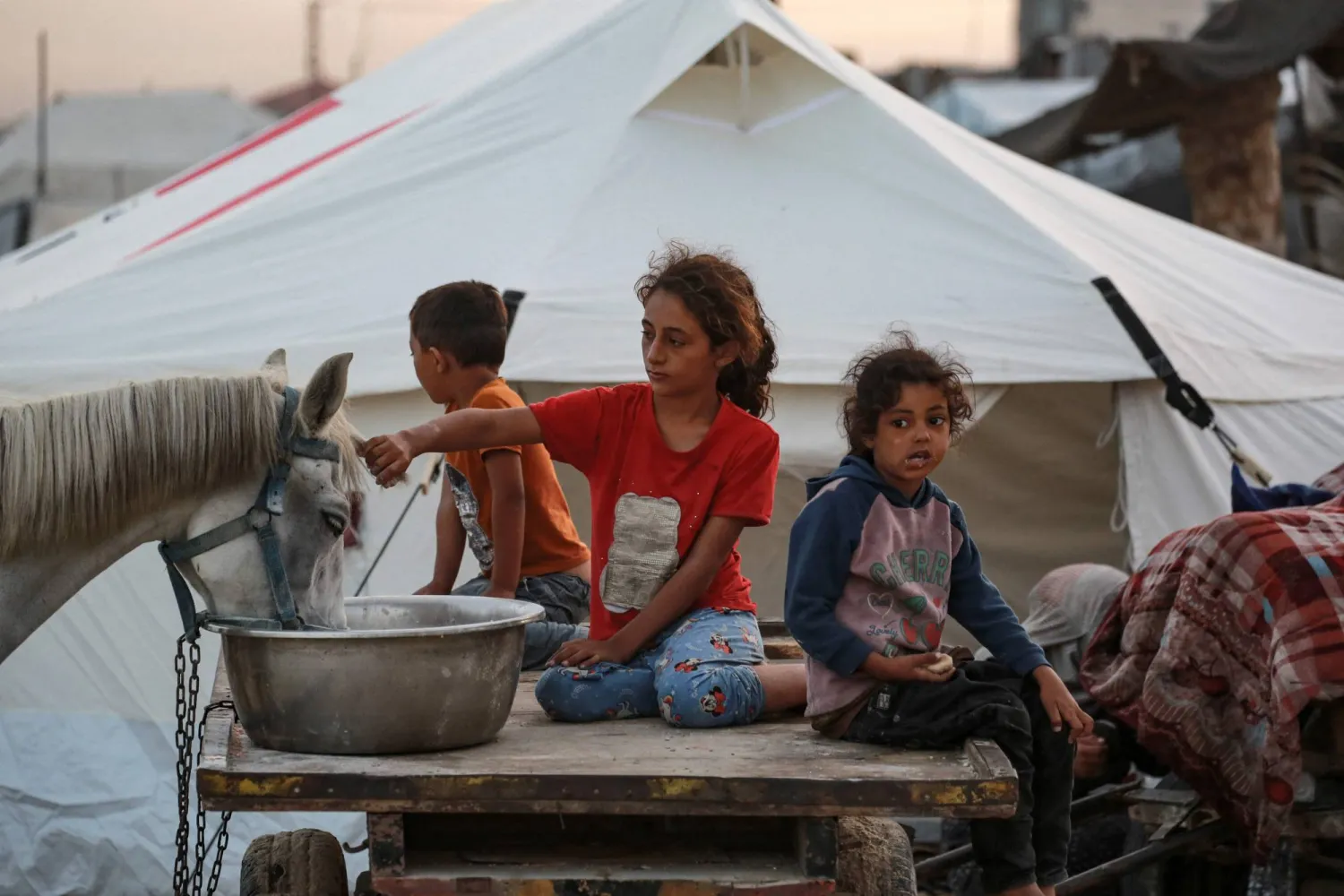
Displaced Palestinian children sit atop a cart as a horse used for transportation drinks water, in Deir el-Balah in the central Gaza Strip, on October 5, 2025. (Photo by Bashar TALEB / AFP)
TT

Israeli Fire in the West Bank Killed their Kids. Palestinian Families Want to Know Why

Displaced Palestinian children sit atop a cart as a horse used for transportation drinks water, in Deir el-Balah in the central Gaza Strip, on October 5, 2025. (Photo by Bashar TALEB / AFP)

One child was shot while sitting on her mother’s lap. Another, hit by an airstrike as he stepped inside his home. Two others, killed while playing outside with friends.

Israeli gunfire has killed at least eighteen children under the age of 15 in the occupied West Bank this year, according to the United Nations. That follows 29 children killed in 2023 and 23 in 2024 — a surge accompanying the outbreak of Israel’s war against Hamas in Gaza on Oct. 7, 2023.

Some were killed during Israeli military raids in dense neighborhoods, others by sniper fire in peaceful areas. The killings have risen as the Israeli military has stepped up operations in the occupied West Bank since the war’s onset in what it calls a crackdown on militants.

The Associated Press spoke with several families whose children were killed this year. With Israel's history of rarely punishing its soldiers for deadly violence, some families doubt there will ever be any accountability.

The military told AP that its rules of engagement “strictly prohibit intentional fire” at civilians, calling claims it targets minors “false” and “baseless.” It said it had launched investigations into some cases.

But it gave no word that any soldiers have been disciplined, and the families say they’ve received little information about how and why their children were killed.

Here are some of their stories, as they’ve told them to AP.

Layla, 2 Tayma Asous, a water engineer and single mother living in a quiet Jenin neighborhood, recalls daughter Layla Al-Khatib as precocious and intelligent — always wanting to play pretend.

On Jan. 25, while Layla sat on Asous' lap before a family meal, an Israeli sniper fired through the second-floor window of the family home. The bullet hit Layla in the skull.

Blood trickled down Layla's head and onto Asous' hijab.

Layla's grandfather grabbed her limp body and ran downstairs, calling for help, as Asous followed in a daze. Four military jeeps were parked outside.

Asous approached the soldiers. She remembers one looked at her and said, “I am sorry.”

Asous says Layla was still breathing when the ambulance arrived, but died on the way to the hospital.

The military said it is still investigating Layla’s case and could not give further details.

Saddam, 10 Saddam Rajab lived with his father, Iyad, in a studio apartment in the restive city of Tulkarem.

The two had a special relationship — Saddam was Iyad's firstborn, the eldest of four. When Iyad was hospitalized with leg injuries, Saddam visited him constantly.

On the evening of Jan. 28, the two were sitting on the roof with friends. Saddam asked for his father’s phone and took it downstairs, stepping outside.

Security camera footage obtained by AP shows what happened next: The boy, standing on the sidewalk with phone in hand, sees something off camera, turns and shots ring out. Saddam falls to the ground, screams “Mama!” and writhes in pain. Struggling on crutches, his father pulls Saddam by the collar of his sweater, leaving behind one of the boy's sneakers — and a bloodstain.

The 10-year-old died from his injuries 10 days later.

The military said investigation findings in the case were submitted to the military Advocate General, which decides whether to file charges. But it didn’t specify their findings.

Amer, 14 Amer Rabee, an American Palestinian teenager born in New Jersey, was killed on a West Bank hilltop in his village of Turmus Ayya. He was picking almonds with friends on April 6, when Israeli soldiers shot him, his father, Mohammed, says.

A security camera in Turmus Ayya, where the population is mostly Palestinian American, captured the sound of 36 gunshots. Amer was killed, his two friends injured.

After Amer died, soldiers stripped off his clothes, put his body in a blue bag and brought it to a military base. Mohammed later opened the bag and identified his body, pockmarked with bullets.

The military declined to say whether the investigation into Amer’s death had concluded. It said its forces had opened fire on “three terrorists,” who it said were throwing stones at a highway and endangering civilians.

Grainy video footage released by the military shows three people, including one who appears to throw something. The video is not timestamped.

A US State Department spokesperson said further investigation was needed to determine what happened.

Ayman, 12 Anwar al-Heimouni, 29, says her son Ayman’s last words to her as he died were, “Mama, they shot me.”

In events captured by two security cameras, Ayman stepped outside his grandfather’s house in Hebron before being shot.

In the footage, three soldiers come up the alley to the house's driveway and appear to spot Ayman's body.

They retreat without offering him aid, joining three other soldiers at the street's end.

The family gathers around Ayman, and relatives carry his body down the street behind the withdrawing soldiers. He died Feb. 21.

Al-Heimouni and her husband, who works in security for the Palestinian Authority, have three other children: Ayem, 3; Tia Lara, 5; and Aysar, 10.

The kids all wear pendants emblazoned with Ayman's face. His mother keeps his bed made, as if he might return at any point.

Military police are investigating Ayman’s case, the military said, but it could not give further details.

Rimas, 13 It was Feb. 21 — day 32 of Israel’s military operation in the Jenin refugee camp — and Rimas Amouri wanted to play outside, despite her mother’s protestations.

Within seconds of stepping outside, gunshots sounded and there was yelling, her mother, Rudeina, says. Rimas had been shot in the back.

“I was screaming, ‘Please calm down, calm down.’ Then they started shooting at me,” Rudeina said.

Ten soldiers surrounded the house, she says, shooting from about 25 meters (yards) away every time she tried to run to her daughter. After 30 minutes, it was too late.

“I came closer and lifted her up. Her face had turned yellow,” Rudeina said. “I knew she was gone.”

Rimas’ father, Omar, says they “needed a special permit from the Israelis” to enter the graveyard and bury her.

Military police are investigating Rimas’ case, the military said, but it could not provide further details.

Ahmad, 14 The Jazar family celebrated Ramadan this year with one person missing.

Ahmad, who wanted to become an interior designer, was shot by Israeli forces in his hometown, Sebastia, on Jan. 19.

Neither of his parents was present when he was shot. Neither knows why he was killed.

“I don’t let my young ones run in the street alone anymore,” his mother, Wafa, said. “I wait at the door whenever they go out, waiting until they are home again.”

Military police are investigating Ahmad’s case, the military said, but it could not provide further details.

Mahmoud, 14 A group of men was huddled outside the Gharbieh house in the Jenin refugee camp on Jan. 14, eating sweets.

It was late and cold, remembers Ashraf Gharbieh, the lone survivor of that night.

His son, Mahmoud, stood up and headed inside to get a spoon. There was a flash of light. The first missile landed. The next came seconds later. Then a third.

Six people died. The elder Gharbieh was left with hearing damage.

The military said the airstrike killed several militants and that it was “aware of claims” that an uninvolved civilian was harmed. It did not say whether it was investigating Mahmoud’s death.

Of his son, Gharbieh says, “I wanted to die with him.”


Israeli Forces Kill Two West Bank Teenagers

Israeli soldiers ride in the Merkava main battle tank at a position in northern Israel along the border with southern Lebanon on November 6, 2025. (Photo by Jalaa MAREY / AFP)
TT

Israeli Forces Kill Two West Bank Teenagers

Israeli soldiers ride in the Merkava main battle tank at a position in northern Israel along the border with southern Lebanon on November 6, 2025. (Photo by Jalaa MAREY / AFP)

The Israeli military said Friday it had killed two suspects it said threw Molotov cocktails in the occupied West Bank village of Judeira overnight.

The Palestinian health ministry identified the dead as two 16-year-old boys.

The military said in a statement that a unit deployed in the area "eliminated" the individuals, a word Israeli officials generally use when suspects are killed.

The army published a surveillance camera video in which two individuals are seen throwing a burning object over a wall matching the appearance of the one separating the area near Judeira from a road used by Israelis.

Though located in the West Bank, which Israel has occupied since 1967, Judeira is surrounded by roads and lands that are effectively annexed by Israel.

The Ramallah-based Palestinian health ministry identified the two individuals as Mohammed Ateem and Mohammed Qasim, both 16.

In a statement, the ministry added that the Israeli army had retrieved the two teenagers' bodies.

On Wednesday, the military killed another teenager who it said had thrown an explosive device at Israeli troops.

In a statement Friday, the military said it had killed three militants and arrested 60 "wanted individuals" this week in the occupied West Bank.

Violence in the West Bank has soared since the war in Gaza broke out in October 2023.


Piles of Garbage and Seeping Sewage Pollute Devastated Gaza

Displaced Palestinians sit next to their destroyed homes in Khan Yunis camp in the southern Gaza Strip, 05 November 2025. EPA/HAITHAM IMAD
TT

Piles of Garbage and Seeping Sewage Pollute Devastated Gaza

Displaced Palestinians sit next to their destroyed homes in Khan Yunis camp in the southern Gaza Strip, 05 November 2025. EPA/HAITHAM IMAD

Stinking mounds of fly-covered garbage lie strewn throughout Gaza amid the rubble from Israel's devastating military campaign, spilling out along roadsides and between the tents where most of the shattered enclave's people live. Government services such as rubbish collection ceased as soon as the war began and although they are partially returning since the truce last month, the massive extent of destruction means any more thorough cleanup lies far in the future, said Reuters.

"I don't smell any fresh air. I smell a foul odor in my tent. I can't sleep. My children wake up in the morning coughing," said Mahmoud Abu Reida, gesturing at the dumpster by the tent he shares with his wife and four children in Khan Younis.

Rotting garbage, sewage-filled pools, hazardous waste from bomb sites and noxious smoke from burning cloth and plastic have birthed a fetid environment for Gazans.

"The scale of the waste problem in Gaza is huge," said Alessandro Mrakic, head of the Gaza office of the UN development agency UNDP.

Waste landfill sites were already full before the start of the war and three major dump sites were located along the border with Israel in areas that are now off limits to Palestinians, he said. "We're talking about 2 million tons of waste - untreated - all across Gaza," Mrakic said, adding that the risks to the environment, to the aquifer that much of Gaza's water comes from, and to the population's health were "immense".

Many people complain of gastric diseases and skin complaints from diarrhea to rashes, sores, lice and scabies, and doctors in the tiny, crowded Palestinian territory say pollution is to blame.

"Skin diseases have spread a lot because of overcrowding in tents and the tents are next to garbage dumps," said Sami Abu Taha, a dermatologist at the Kuwaiti field hospital in Khan Younis, lamenting the lack of medicine to treat such ailments.

One of Abu Reida's children has been repeatedly to the hospital, he said, where doctors had told him the boy was suffering from a bacterial infection that likely came from the rubbish container by the tent.

BOMBARDMENTS SMASH INFRASTRUCTURE

In another part of Khan Younis, Mahmoud Helles was sitting in his tent with his children - a sewage-filled pond standing nearby.

"We find nowhere to stay but in such places," he said, showing a rash of red spots on his arm and hand.

"This place is very, very difficult - it is full of diseases and epidemics because of war remnants, piles of garbage, and the lack of sewage treatment," he said.

Much of Gaza's wastewater and sewage infrastructure was badly damaged by Israel's bombardment and ground operations, leaving people to use open latrines that flood when it rains.

The United Nations is developing plans to deal with the waste problem, including considering options for processing plants that can generate electricity from waste, Mrakic said.

"Immediate action is needed, mainly through access of machinery, equipment, that will allow us to properly perform the job on the ground," he added.


Britain Removes Sanctions on Syria’s President, Interior Minister 

29 March 2025, Syria, Damascus: Syria's President Ahmed al-Sharaa speaks during the ceremony announcing the new Syrian government at the People's Palace. (dpa)
TT

Britain Removes Sanctions on Syria’s President, Interior Minister 

29 March 2025, Syria, Damascus: Syria's President Ahmed al-Sharaa speaks during the ceremony announcing the new Syrian government at the People's Palace. (dpa)

Britain removed sanctions on Syrian interim President Ahmed al-Sharaa on Friday, after the United Nations Security Council did the same ahead of his meeting with US President Donald Trump on Monday.

Britain said in the same statement that it was also lifting sanctions on Syria's interior minister Anas Khattab.

Both men had formerly been subject to financial sanctions targeted at ISIS and al-Qaeda.

"I think he's doing a very good job," Trump said on Thursday of Sharaa. "It's a tough neighborhood, and he's a tough guy, but I got along with him very well. And a lot of progress has been made with Syria."

"We did take the sanctions off Syria in order to give them a fighting shot," he told reporters in Washington.
