
Iraqi security forces have carried out a sweeping operation that led to the arrest of several senior figures linked to the dissolved Baath Party in southern Iraq. The crackdown comes as Iraq’s electoral judiciary continues to disqualify hundreds of candidates from the upcoming parliamentary elections on various charges, including alleged affiliation with the outlawed party.
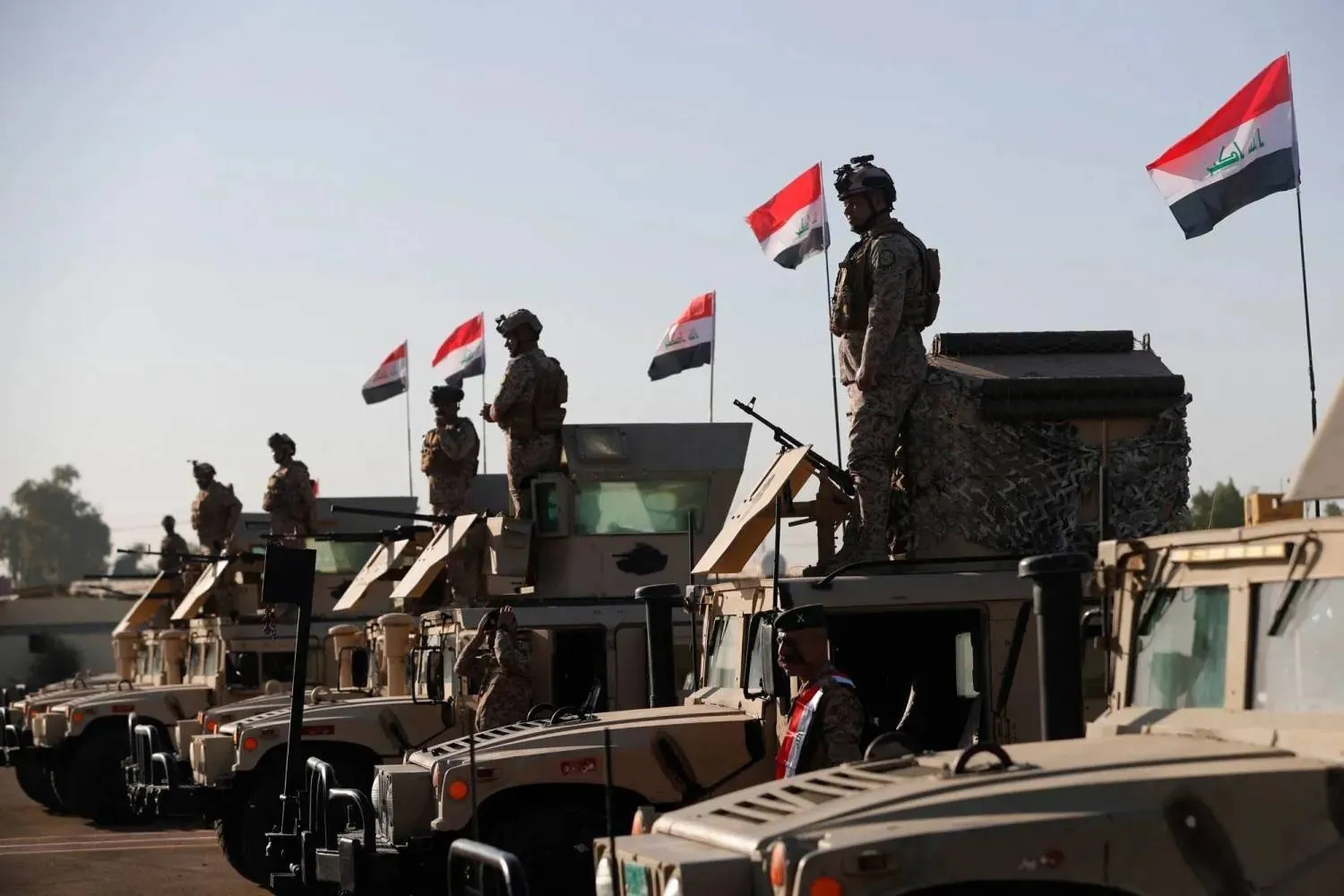
The National Commission for Accountability and Justice — the body responsible for enforcing the ban on Saddam Hussein’s Baath Party — said in a statement on Wednesday that intelligence units from the Popular Mobilization Forces (PMF), in coordination with the Dhi Qar Police Command, executed a “highly precise intelligence operation” that resulted in the arrest of several prominent Baathist leaders in Dhi Qar Province, in southern Iraq.
According to the statement, the operation was “the largest of its kind in Nasiriyah in recent years,” and came after “close monitoring of individuals who were secretly attempting to reorganize the activities of the outlawed party.”
The commission added that the campaign forms part of “ongoing efforts to uproot remnants of Baathist ideology and hold accountable those attempting to revive the era of repression and dictatorship that Iraqis suffered under the former regime.”
The arrests coincided with a new wave of political controversy over decisions by the election commission to exclude a number of candidates and former MPs, some of whom have served multiple terms, after reviewing their records and alleging ties to the banned party.
Although the disqualifications have also cited reasons such as violations of legal regulations or moral conduct, the majority of exclusions have been based on claims of Baathist affiliation. Iraq’s Parliament passed the 2016 law banning the Baath Party, dissolved entities, and “racist or terrorist” organizations, but accusations of Baathist ties continue to surface more than 20 years after Saddam Hussein’s fall.
Many analysts and political observers say the Baath issue resurfaces in nearly every election cycle, used both as a political weapon and as a tool to rally Shiite voters. “Invoking the Baath threat serves as a means of settling scores with rivals on one hand, and of mobilizing the Shiite base on the other,” one political observer told Asharq Al-Awsat.
Accusations have even reached Prime Minister Mohammed Shia al-Sudani himself, after an old photo circulated showing him at a pre-2003 administrative meeting with a portrait of Saddam Hussein in the background. Al-Sudani denied any Baathist connection, noting that his father was executed by the former regime.
The Baath Party was officially dissolved in 2003 by US administrator Paul Bremer, who established the “De-Baathification Commission,” later renamed the National Commission for Accountability and Justice, the same body now leading efforts to prevent the return of the former regime’s ideology to Iraq’s political system.